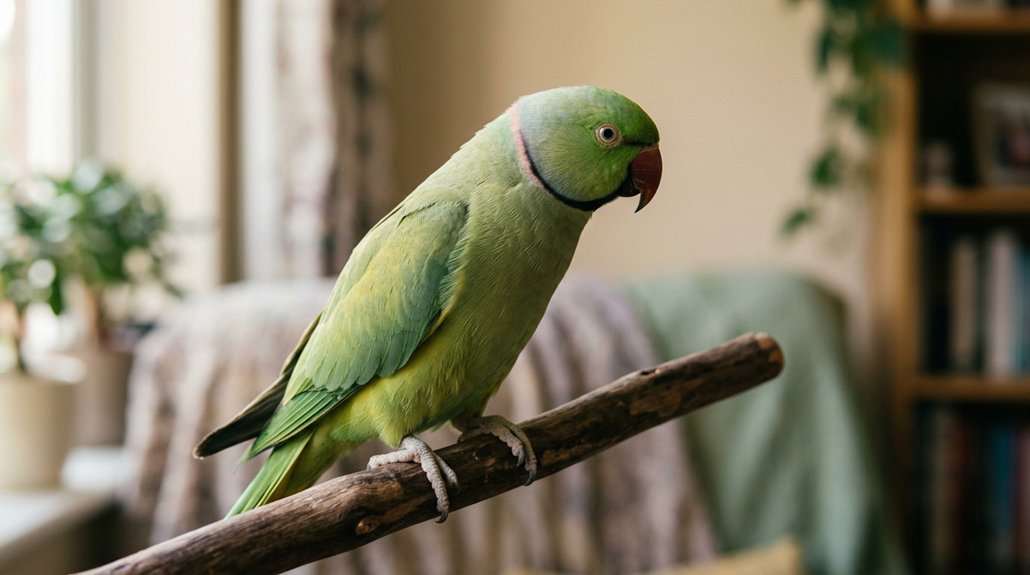
You can reduce excessive noise in pet birds by keeping a consistent sleep schedule with 10–12 hours of darkness, feeding a vet-recommended diet, and providing daily foraging, toys, and supervised out-of-cage time. Remove triggers such as late-night noise, fumes, and routine disruptions. Reinforce quiet with immediate treats, and never reward screaming with attention. If your bird becomes suddenly louder, quiet, fluffed, or stops eating, seek an avian veterinarian; there’s more to the pattern than volume alone.
Key Takeaways
- Keep a consistent sleep schedule with 10–12 hours of uninterrupted darkness in a quiet, dim room.
- Provide daily enrichment, foraging toys, chewables, and supervised out-of-cage time to reduce boredom and loneliness.
- Don’t reward screaming; reinforce silence immediately with treats and gradually lengthen quiet intervals.
- Remove triggers like late-night noise, household fumes, routine disruptions, and sudden environmental changes.
- See an avian veterinarian promptly if noise changes suddenly or the bird shows lethargy, weight loss, fluffed feathers, or abnormal droppings.
Why Birds Get So Loud
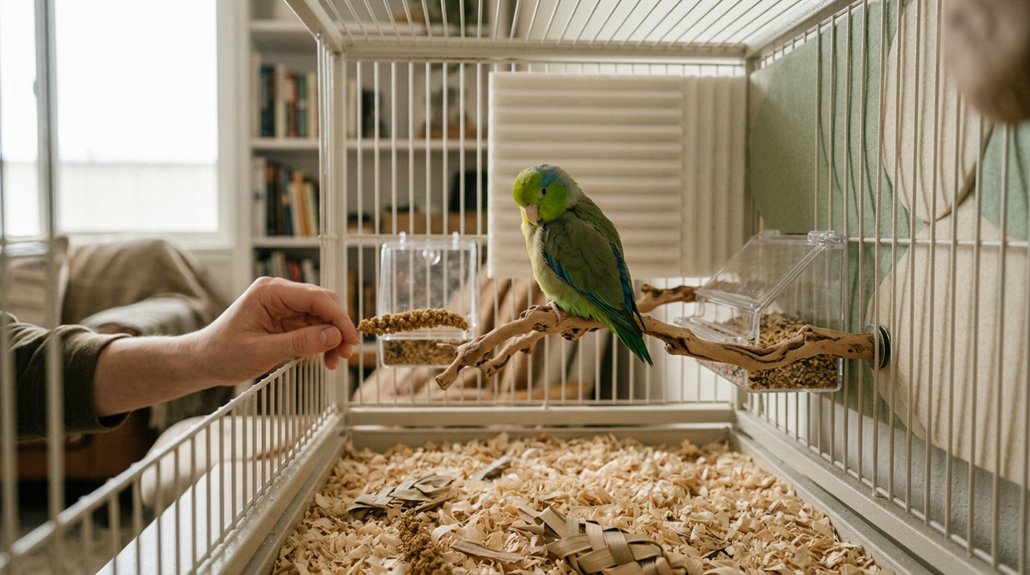
Birds often get loud for reasons that are normal, not naughty: in the wild, parrots rely on high-volume contact calls to keep track of flock members, and species such as macaws and cockatoos are built to make those sounds. You’re seeing evolutionary signaling shaped by habitat acoustics, where distance, vegetation, and flock spacing favor piercing vocalizations. Dawn and dusk often bring peak calling because foraging and regrouping rhythms naturally intensify. If the volume rises suddenly, or the screaming seems frantic, you should consider pain, illness, or a nutritional deficit and arrange a veterinary exam. Persistent calling can also reflect boredom, loneliness, or routine disruption. Like many social birds, your parrot may vocalize more when interactions change. Also, screaming can be learned if noise brings attention, food, or other rewards.
How to Stop Bird Screaming at Home
To reduce screaming at home, start by making sure your bird is getting enough uninterrupted sleep—often 10–12+ hours for parrots—by keeping the cage in a quiet, dark room overnight and minimizing TV or other household noise that can trigger dawn and dusk calling.
- Remove environmental triggers: cover the cage as needed, reduce sudden noise, and keep routines stable.
- Use planned ignoring: don’t look, move, or offer food during screams; reward quiet immediately, starting with 2–3 seconds.
- Teach a substitute behavior: reinforce a whistle, trick, or calm call with brief sessions and consistent household rules.
If screaming is sudden, persistent, or paired with appetite, droppings, or behavior changes, you should schedule a vet check to rule out illness and limit neighbor complaints.
Fix Sleep, Diet, and Enrichment
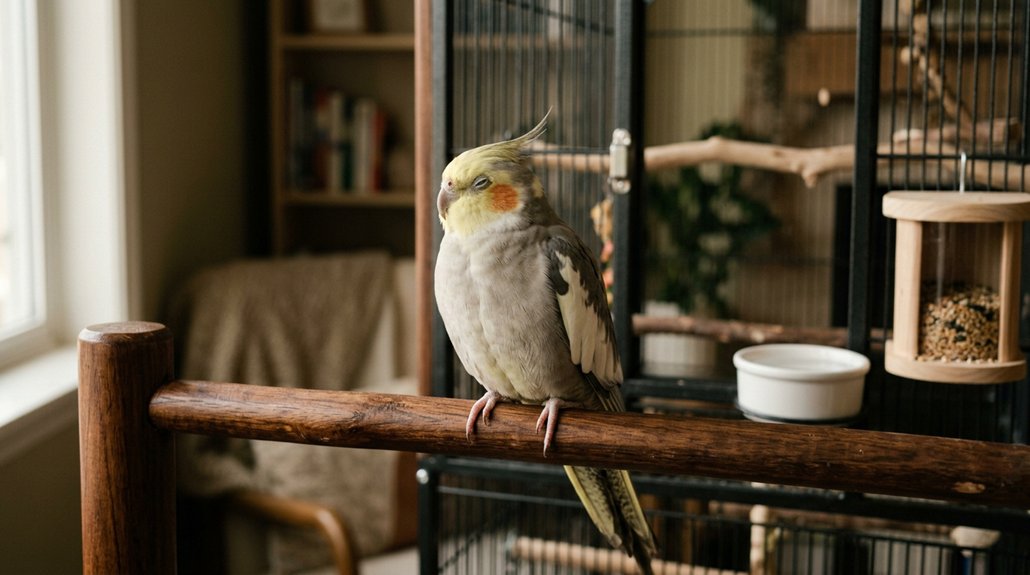
You should prioritize a consistent sleep routine, giving your bird a quiet, dark, uninterrupted period that matches its species’ needs. You should also correct the diet with veterinary guidance and use pellets, vegetables, fruit, and safe seeds in appropriate proportions, since poor nutrition can worsen irritability and vocalizing. To reduce boredom and excess energy, you should add daily foraging and rotating enrichment, then track changes in a diary so you can see what’s helping and notice when veterinary evaluation is needed.
Better Sleep Routine
A consistent sleep routine often reduces excessive vocalizing in pet birds. You should aim for a fixed consistent lights out and wake time daily, because irregular nights can trigger screaming and night frights. Most parrots need 10–12 hours of uninterrupted darkness duration, so keep the cage in a quiet, dim room or use a cover to block household light and noise.
- Set the same bedtime every night.
- Provide 10–12 hours of dark, uninterrupted sleep.
- Prevent late-night TV, talking, or movement near the cage.
When you keep sleep predictable, your bird’s stress usually drops and daytime noise can improve. If loud vocalizing continues despite proper sleep, you’ll need to assess diet, enrichment, and possible medical causes with an avian veterinarian.
Diet And Enrichment
Once sleep is consistent, look closely at diet and enrichment, because poor nutrition and boredom can both drive agitation and loud vocalizing. You should feed a veterinarian-recommended diet: a pellet base, fresh vegetables and fruits, and only limited seeds or nuts. Offer novel food pairings to increase interest without overfeeding. Use food-filled puzzle feeders and rotate foraging toys daily, giving at least 30–60 minutes of challenging activity during waking hours. Provide chewable wood, shreddable paper, varied perches, and seasonal enrichment, then rearrange items weekly to prevent habituation. Schedule predictable interaction and two or more supervised out-of-cage sessions each day so attention needs are met. When your bird stays mentally engaged and nutritionally balanced, screaming driven by frustration or hunger often decreases.
Train Quiet Behavior
Use positive reinforcement to shape quiet behavior by rewarding the first 2–3 seconds of silence after a scream, then gradually extending the quiet interval. You can also teach an incompatible cued behavior, such as step-up or target-touch, and reward it consistently so your bird learns to do that instead of screaming. During screams, don’t look at, speak to, or touch your bird; re-engage and reward the moment it’s quiet so you don’t reinforce the noise.
Positive Reinforcement
Train quiet behavior with positive reinforcement by catching brief silent moments and rewarding them immediately with a high-value treat or verbal praise, even after just 2–3 seconds of calm. Use preference testing to identify the strongest reinforcer, then pair it with clicker conditioning for precise timing.
- Reward silence first, then lengthen the required quiet interval gradually: 2 seconds, then 5, then 10.
- Teach an incompatible cue, such as step up or wave, and reinforce it every time; it can’t occur during screaming.
- Run several 3–5 minute sessions daily with consistent cues, while ignoring screaming as a planned non-response. Track quiet bouts in a diary and expect temporary extinction bursts; stay consistent across all household members.
Reward Quiet Moments
After you’ve established positive reinforcement, focus on catching and rewarding quiet moments immediately. If your bird is silent for just 1–2 seconds, deliver a high-value treat, praise, or a clicker training marker so silence becomes predictive of reward. Then extend the criterion gradually: 2 seconds, then 5, then 10, reinforcing small gains rather than waiting for long quiet spells. Pair a consistent soft whistle or word with each reward so the bird can learn a distinct cue for silence. Keep environmental cues stable, and have every household member follow the same protocol. This consistency reduces confusion and helps the quiet response strengthen reliably. Reward only the quiet interval you want, and time the reinforcement precisely to shape calmer vocal behavior.
Avoid Reinforcing Screams
When your bird screams, resist the urge to rush over, talk, or offer a treat, because any attention—even a reprimand—can reinforce the behavior. During ignore displays, withhold response until silence appears. Then use precise timing windows: within 1–2 seconds of the first quiet moment, deliver a treat, praise, or brief interaction. This catch-and-reward method teaches that calm behavior earns access. Expect an extinction burst, with louder or longer screaming for days; stay consistent and reward only quiet moments.
- Ignore screaming completely.
- Reinforce the first quiet pause.
- Teach a substitute cue, like step-up or whistle.
All household members must follow the same rule. Inconsistent responses weaken training and prolong noise reduction. Over weeks, you’ll shape longer quiet intervals and reduce screaming.
Don’t Accidentally Reward Screaming
Screaming in pet birds is often maintained by accidental reinforcement, because even brief attention, food, removing a cover, or a reprimand within seconds of the vocalization can increase the behavior’s likelihood. To reduce it, you should ignore attention during screams: don’t speak, touch, or offer treats until your bird is quiet, even for 2–3 seconds. That brief silence lets you reinforce the behavior you want. Expect an extinction burst at first; your bird may get louder or try new tactics before the pattern weakens. Stay consistent and don’t switch strategies. You should also teach alternative responses, such as a whistle, step-up, or a quiet cue, and reward them immediately. Make sure everyone in the household follows the same plan.
When Bird Noise Needs a Vet
Not all bird noise is behavioral, and some changes in vocalization signal illness or distress. You should seek an avian vet promptly if your bird suddenly screams, paces, stops eating, fluffs up, droops its wings, or shows abnormal droppings. A normally talkative bird that goes quiet, sounds less complex, or becomes lethargic or thin needs assessment, too. Recurrent feather-plucking, skin damage, or altered screaming can reflect parasites, allergies, or nutritional deficiency.
- Urgent exam: pain, infection, toxins.
- Check home hazards: fumes, night frights, recent changes.
- If behavior persists after behavioral counseling, get environmental assessment, diet review, and testing.
Frequently Asked Questions
How to Stop Birds From Making so Much Noise?
You can reduce noise by using consistent training schedules, environmental enrichment, and quiet rewards. Make certain 10–12 hours’ sleep, ignore screaming, and rule out illness if vocalizing’s sudden or persistent.
What Is the 3 3 3 Rule for Birds?
The 3-3-3 rule means you wait 3 seconds of silence, then reward it. You gradually extend quiet to 3 minutes. In behavior training, add environment enrichment and stay consistent despite temporary screaming.
How to Make Birds Less Noisy?
You can make birds less noisy by improving sleep, providing environment enrichment, and using training consistency. When your bird rests, forages, and earns attention only for quiet behavior, vocalizing usually drops noticeably over time.
Why Do Pet Birds Make so Much Noise?
You hear so much noise because your bird’s vocal development and territory signaling are natural; wild flock calls, dawn-dusk rhythms, attention-seeking, boredom, stress, illness, or learned reinforcement can all increase frequent loud vocalization.
Conclusion
By correcting sleep, diet, and enrichment, you can often reduce excessive noise in your bird. For example, a cockatiel that screams at dawn may quiet down after a consistent 10-hour sleep schedule, a balanced diet, and daily foraging toys. You should also avoid reinforcing screaming and reward calm vocalizations instead. If your bird’s noise changes suddenly or seems distress-driven, you’ll want a veterinarian to rule out pain, illness, or other medical causes.