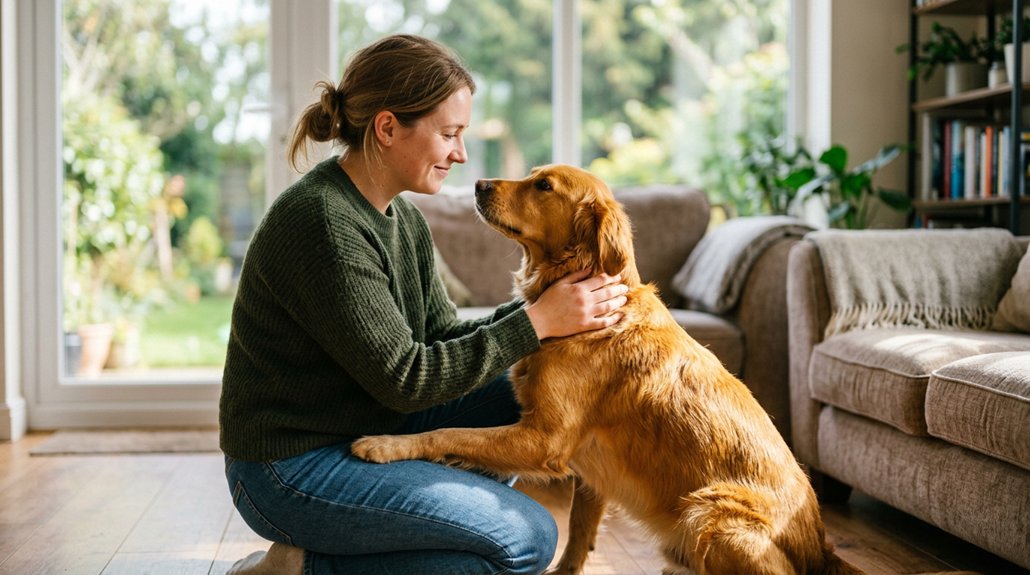
To handle clingy dog behavior, first identify if anxiety or insecurity is the cause. Offer gradual exposure to alone time and use interactive toys to promote independence. Create a comforting space with familiar items and maintain a consistent routine. Socialization opportunities and basic training commands can bolster confidence and encourage independence. Observe your dog’s behavior in context to differentiate between clinginess and anxiety. Discover practical strategies to manage and support your dog’s independence more effectively.
Key Takeaways
- Gradually expose your dog to short separations to build confidence and reduce dependency.
- Provide interactive toys and puzzles to promote independent play and mental stimulation.
- Establish a consistent routine with regular exercise to reinforce calm behavior.
- Create a positive safe space with familiar items to comfort and reassure your dog.
- Use positive reinforcement to reward and encourage solitary activities and independent exploration.
Practical Strategies to Manage Clinginess in Dogs
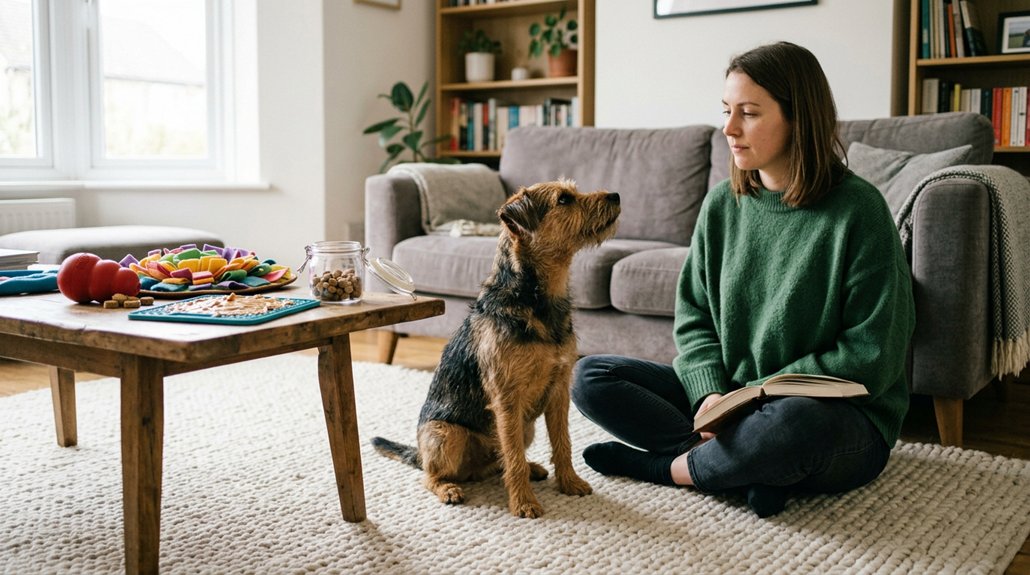
Handling clingy dog behavior can be challenging, but there are effective strategies that can help. Begin with gradual exposure to separations, starting with short intervals away from your dog. This helps them incrementally build confidence in being alone. Boost self-entertainment by providing interactive toys and puzzle games, encouraging your dog to enjoy solitary play.
Ensure your dog has socialization opportunities by introducing them to new environments and friendly dogs, which can reduce over-reliance on you for companionship. Create a safe space with familiar toys and treats to make their alone time positive. Consistent routines with regular exercise help manage excess energy, while reinforcing calm behavior. Reward independence and calmly ignore clingy actions, guiding your dog toward self-soothing.
Identifying Common Causes of Dog Clinginess
Understanding why your dog is clingy is key to addressing the behavior effectively. Behavioral triggers often stem from learned behaviors; excessive affection may inadvertently build a dependency. Emotional bonds play a significant role, especially for breeds like Cavalier King Charles Spaniels and Golden Retrievers, genetically predisposed to strong human attachment. Environmental changes, such as a new home or family member, can amplify insecurity, prompting clinginess due to adjustment stress. In senior dogs, cognitive decline or sensory loss increases their reliance on your presence. Another common cause is stress or anxiety from loud noises or separation; dogs latch onto you for comfort and reassurance. By identifying these causes, you can begin to understand your dog’s needs and tackle their clinginess more effectively.
How to Differentiate Between Clinginess and Anxiety
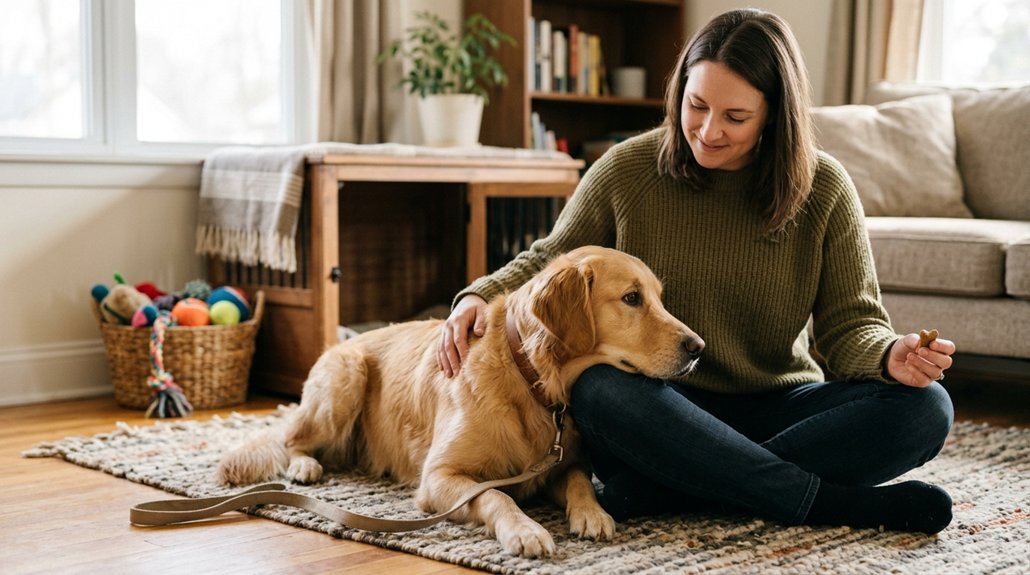
While it’s easy to mistake a clingy dog for one with anxiety, the distinction lies in their responses to separation. Analyzing behavioral patterns and stress signals can help clarify your dog’s needs. Anxiety is marked by distress reactions when left alone, while clinginess doesn’t involve such panic. Here’s how you can differentiate:
- Separation Response: Clingy dogs manage alone time without panic, unlike anxious ones who exhibit frantic behaviors.
- Behavioral Signs: Watch for pacing, excessive drooling, and escape attempts, which typically indicate anxiety rather than clinginess.
- Destruction Level: Anxiety may lead to destructive acts, whereas clingy dogs don’t usually resort to such behaviors.
- Context and Reassurance: Clingy dogs seek comfort but don’t suffer extreme stress when you’re out of sight, helping identify the issue.
Boosting Dog Independence Through Exercises
To foster independence in your dog, it’s crucial to balance mental and physical exercises that encourage them to function independently. Utilize puzzle toys for mental stimulation, allowing your furry friend to engage in problem-solving that doesn’t rely on your constant presence. Complement this with basic commands, like the “place command,” which encourages obedience and calmness, reinforcing your dog’s ability to enjoy solo activities confidently.
Encouraging Solo Activities
If you’re dealing with a clingy dog, boosting their independence through exercises can be a game-changer. One effective method is encouraging solo activities. Solo play not only enriches your dog’s time alone but also stimulates mental agility. Treat exploration is a wonderful way to motivate your dog to venture from your side. Scatter treats or toys around the house as engaging targets for your dog to find.
Here’s how to foster independence:
- Introduce interactive toys: Engage them in self-play with treat-dispensing toys.
- Create a comfort zone: Designate a safe space filled with familiar items and toys.
- Practice alone time gradually: Start with short periods and increase as comfort grows.
- Use positive reinforcement: Reward them with treats when they play alone successfully.
Utilizing Puzzle Toys
Puzzle toys are a fantastic tool for enhancing your dog’s independence, offering mental stimulation and reducing clingy behavior. By introducing puzzle toy benefits like the Seek-A-Treat line, you’re providing your dog with a chance to develop problem-solving skills during interactive play. These toys keep your pet occupied, decreasing their reliance on you for constant entertainment. Homemade versions, using muffin tins and tennis balls, offer a cost-effective way to engage your dog’s mind without shelling out extra cash. Similarly, devices such as Tether Tug allow your dog to enjoy active, independent play. Regular exposure to these engaging activities not only builds your dog’s confidence but also nurtures their ability to self-entertain, gradually reducing their clinginess over time.
Incorporating Basic Commands
While puzzle toys offer a fantastic way to keep your dog mentally stimulated and reduce their dependence on you, incorporating basic commands can further enhance their independence. Training commands like “sit,” “stay,” and “place” helps establish boundaries and confidence. Here’s how to boost independence through command reinforcement and training consistency:
- Teach “place”: Encourage your dog to relax in a designated area, providing structure and independence from needing to be near you.
- Use positive reinforcement: Treats and praise motivate rewarding compliance, shifting focus from constant proximity to solo exploration.
- Regular practice: Routine sessions guarantee training consistency, transforming short separations into calm downtime.
- Mental engagement: Training not only aids obedience but fosters mental stimulation, alleviating clinginess born out of boredom or unfocused energy.
Designing a Safe and Comfortable Space for Your Dog
Designing a safe and comfortable space for your dog is key in addressing clingy behavior, and a well-managed crate can offer numerous benefits. By stocking the crate with familiar items and using positive reinforcement, you can create a welcoming and appealing environment for your dog. Keep the crate accessible with the door open so your dog feels in control, enhancing their sense of security while gradually fostering independence.
Crate Training Benefits
When creating a safe and comfortable space for your dog, embracing crate training offers numerous benefits that can greatly ease clingy behavior. A crate provides crate comfort, giving your dog a secure environment that becomes their personal safe space. Here’s how:
- Security and Relaxation: Crates promote a sense of safety, allowing your dog to relax without anxiety.
- Positive Associations: Encourage positive feelings by placing treats, toys, and comfy bedding inside the crate.
- Fostering Independence: Keep the crate door open so your dog can enter and leave freely, nurturing self-reliance.
- Connection and Inclusion: Position the crate where your dog can see family members, ensuring they feel involved even in their sanctuary.
Regular crate time can help ease clinginess over time.
Positive Crate Experiences
Crafting a positive crate experience for your dog involves more than just providing a physical space; it requires creating an environment that your pet can naturally gravitate towards. Start by ensuring crate comfort with plush bedding and familiar toys. Items that carry your scent can be especially soothing. Keep the crate door open when not in use, allowing your dog to explore and understand it as a secure retreat. Feeding meals or offering treats inside the crate fosters positive associations, making your dog more receptive to spending time there. Positioning the crate where your pup can see family members lowers anxiety and reinforces security. Gradually extend time spent inside through short training sessions to cultivate independence without stress.
Enhancing Crate Appeal
One of the key elements in creating an appealing crate environment is to focus on its comfort and allure. Start by enhancing crate comfort with familiar items that reduce stress and create positive associations. Here’s how you can design a stress-reducing, cozy haven for your dog:
- Tantalize with treats: Place favorite treats and toys inside, enticing your dog to explore and relax.
- Freedom at first: Keep the crate door open so your dog can freely enter and exit, reducing anxiety.
- Strategic placement: Position the crate where your dog can see you, fostering a sense of security.
- Soft bedding: Line the crate with a cozy blanket or mat, making it an inviting space that feels like a safe haven.
Increase crate time during enjoyable experiences to boost confidence and relaxation.
Using Toys and Games to Encourage Independence
While it may be endearing to have your dog constantly seeking your attention, it’s important to encourage some level of independence to guarantee their emotional well-being. Interactive play with a diverse range of toys can be pivotal in promoting self-sufficiency. Puzzle games challenge them mentally, providing engagement without your constant involvement. Offering toy variety, like tugging and fetching options, satisfies different playing styles and can diminish clingy tendencies.
Incorporate games gradually, rewarding your dog when they engage alone. Problem-solving toys, such as Seek-A-Treat, encourage exploration and independent play, boosting confidence.
| Toy Type | Activity | Benefit |
|---|---|---|
| Puzzle games | Mental challenge | Enhances self-play |
| Tug toys | Tug of war | Diverse play styles |
| Fetch toys | Fetching | Physical energy boost |
| Trick toys | Hide-and-seek | Confidence building |
| Training toys | Solo reward | Independence emphasis |
When to Seek Help From Professionals
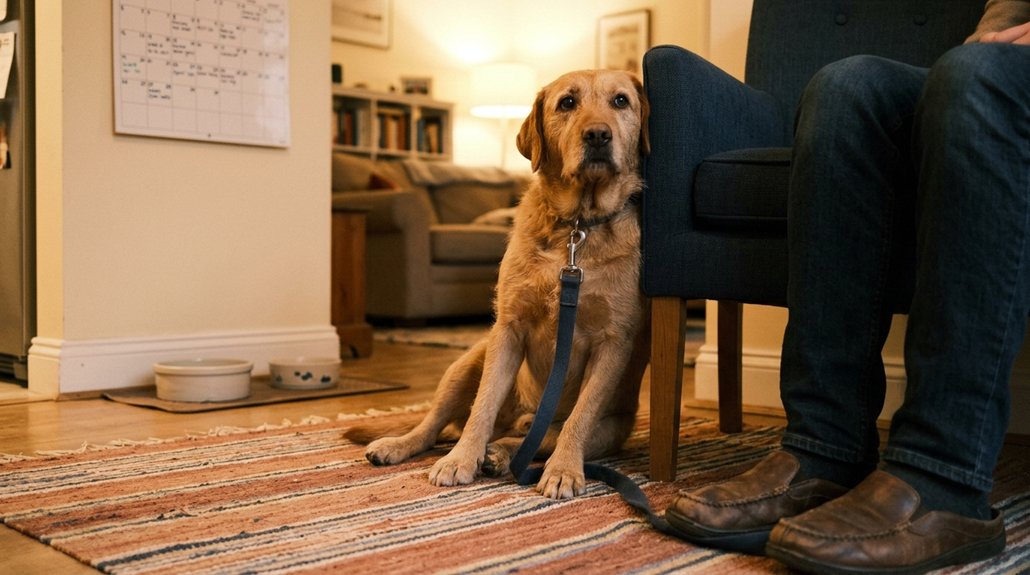
Why is it that some dogs cling to their owners despite efforts to encourage independence? Severe clinginess might signal the need to consult professionals. Recognizing the signs and urgency can be essential for your dog’s well-being. Here’s when to seek help:
- Severe Symptoms: Excessive whining, destructive behavior, or self-injury when left alone need immediate attention to rule out medical or behavioral issues.
- Separation Anxiety: Frantic pacing or aggression when you leave indicates separation anxiety that requires specialist intervention.
- Sudden Changes: Noticeable, abrupt clinginess may hint at cognitive dysfunction or health problems, demanding urgent veterinary evaluation.
- Ineffective Interventions: If basic strategies fail, finding resources like experienced trainers or behaviorists can offer tailored solutions, helping foster your dog’s independence.
Frequently Asked Questions
How Do I Get My Dog to Stop Being so Clingy?
Start by addressing your dog’s separation anxiety through short separations. Gradually incorporate reinforcement training, rewarding calm, independent behavior. Create a safe space with familiar items and maintain consistent routines to help decrease their clinginess over time.
How Do You Say “I Love You” in Dog Language?
You say “I love you” in dog language by mirroring their signs of affection. Use gentle strokes, and speak softly. Engage in play, return their tail wags, and meet their puppy eyes with warmth and understanding.
Which Breed of Dog Is the Most Clingy?
When it comes to clingy dog breeds, it’s a toss-up. Italian Greyhounds, Cavaliers, and Vizslas are known for sticking to you like glue. Signs of clinginess include constant shadowing and a need for physical contact.
Do Dogs Forgive You for Yelling at Them?
Dogs don’t entirely “forgive” yelling, as it leaves lingering consequences on their behavior. They associate yelling with fear and confusion. Rebuild their trust through consistent positive reinforcement, routine, and quality time. It’s vital for restoring confidence.
Conclusion
Imagine your dog, content and relaxed, snoozing in their cozy bed, instead of constantly shadowing your every move. You’ve explored the root of their clinginess, distinguishing it from anxiety, and gently guided them towards independence. Picture them engaged with puzzle toys or joyfully playing, confident in their own space. Your journey together strengthens your bond, yet allows you both the freedom to breathe. Remember, if overwhelmed, don’t hesitate to reach out for professional guidance.