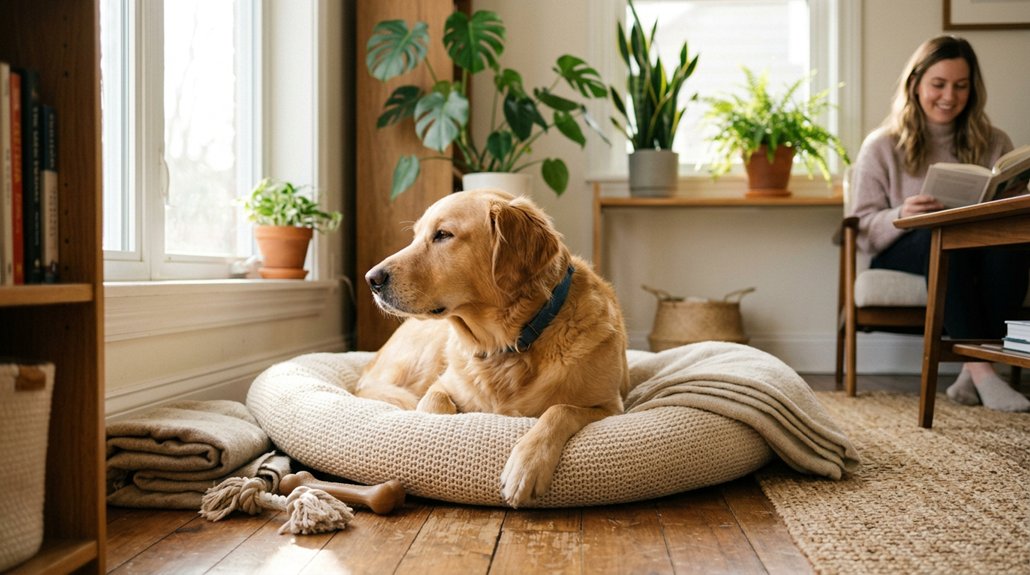
Creating a positive environment for your dog involves understanding their body language to foster calm, utilizing positive reinforcement techniques like treats and praise to build trust, and establishing a consistent routine for enhanced security. Designate a stress-free retreat with comforting elements like soft bedding and calming scents. Engage in play and quiet relaxation to strengthen your bond, and make grooming a gentle, reassuring experience. By applying these practices, you’ll reveal deeper insights into your dog’s well-being.
Key Takeaways
- Recognize and respond appropriately to body language cues to ensure your dog feels secure and understood.
- Use positive reinforcement techniques consistently to build trust and encourage desired behaviors.
- Establish a predictable routine with regular meals, walks, and playtime to reduce anxiety.
- Designate a tranquil space with comforting elements where your dog can retreat during stressful times.
- Make grooming experiences enjoyable by incorporating treats and monitoring stress signals to maintain your dog’s comfort.
Understand Dog Body Language to Create Calm
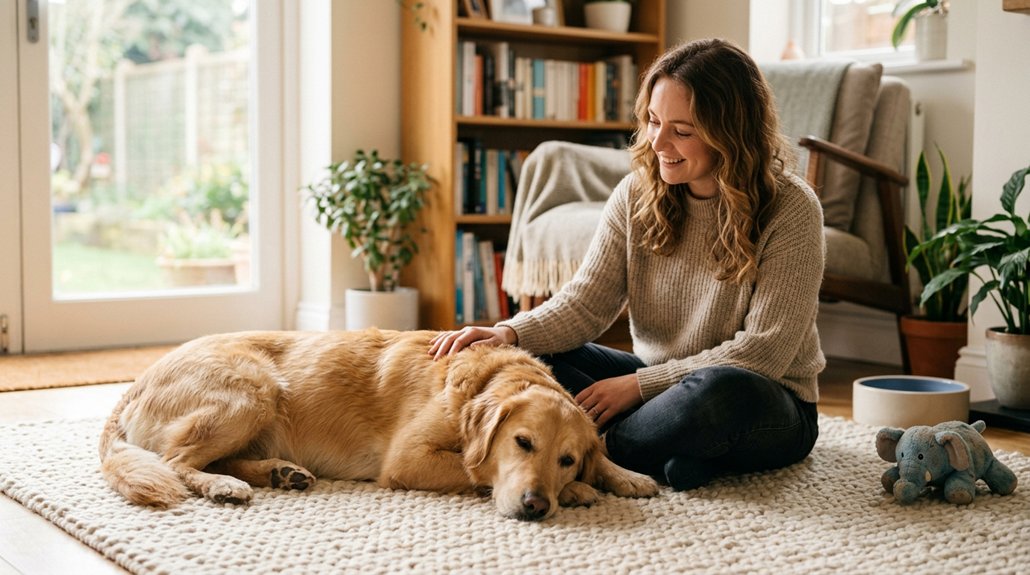
Although you might think understanding your dog’s emotions can be challenging, learning to read its body language is fundamental for creating a calm environment. Recognizing tail wagging signals and ear positioning clues is essential. A loose wagging tail usually means your dog is content, whereas a stiff, high-held tail indicates alertness or discomfort. Ear positioning clues are just as telling; relaxed ears often mean relaxation, while perked ears may suggest attentiveness or unease. If you notice stress signals like yawning, lip licking, or turning away, it’s important to address your dog’s emotional needs immediately. By responding appropriately to these cues, you create a secure environment that minimizes anxiety, fosters well-being, and enhances your bond with your furry friend.
Use Positive Reinforcement for Trust and Safety
Incorporating positive reinforcement is a simple yet powerful method to nurture trust and establish safety between you and your dog. By using treats, praise, or playtime to reward desired behaviors, you create a loving bond that helps reduce anxiety and fear. Consistency in your reward schedules is essential; dogs thrive on routine and predictability. Remember, ideal timing is key—deliver rewards immediately after the behavior to guarantee your dog makes the right connection.
Steer clear of punishment-based tactics, as these can damage trust and cause confusion. Instead, celebrate small victories—your dog’s progress, no matter how modest, deserves recognition. For added support, consider attending training classes focused on positive reinforcement to enhance effective communication and deepen your understanding of your dog’s needs.
Create a Stress-Free Retreat for Your Dog
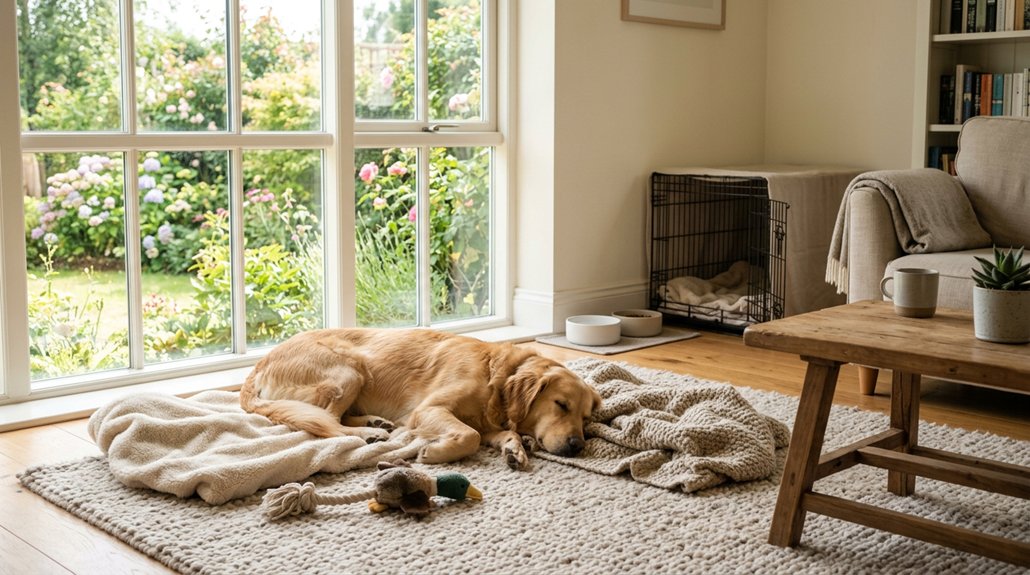
Designating a tranquil relaxation zone for your dog is essential in crafting a stress-free retreat. Start by using soft bedding and familiar blankets to guarantee they feel cozy and secure, and consider adding calming scents like lavender to enhance the soothing atmosphere. Remember, your dog should have constant access to this comforting sanctuary, reinforcing it as their safe space whenever they need a break from overwhelming situations.
Designated Relaxation Zone
One of the most thoughtful ways you can support your dog’s mental health is by establishing a designated relaxation zone in your home. Designate a quiet area away from high-traffic zones and loud noises to reduce stress and anxiety. Enhance this space with relaxation techniques and sensory stimulation—think comfy bedding, soft blankets, and favorite toys to create a cozy atmosphere. Dim lighting and soothing music further elevate the calming experience.
Encourage your dog to retreat here during stressful times, like thunderstorms. This reinforces associations with safety and comfort. Keep the zone easily accessible, and use positive reinforcement, like treats and praise, to make it more inviting. This dedicated space promotes stability and well-being, turning relaxation into a shared journey of tranquility.
Calming Scent Options
When considering ways to create a stress-free retreat for your dog, it’s vital to recognize the soothing power of calming scents like lavender and chamomile. These scent choices can markedly reduce anxiety, transforming your home into a sanctuary for your dog’s well-being. Essential oils such as bergamot and frankincense offer stress-relief properties, ideal for diffusion in your dog’s favorite areas. You might explore scent-based products specifically designed for dogs like calming sprays and calming collars infused with pheromones, which provide added comfort.
Incorporate these calming scents into your dog’s bedding or resting spots to foster a sense of security. Always verify products are dog-safe, excluding harmful additives, as certain oils can be toxic if ingested or applied wrongly.
Comfortable Sleeping Arrangements
After enhancing your dog’s environment with calming scents, it’s equally important to focus on creating comfortable sleeping arrangements. Choose a spacious, cushy bed suited for your dog’s size and sleeping habits to foster ideal canine comfort. Place this designated sleeping area in a quiet corner, away from household noise, ensuring a soothing sleeping environment. Familiar scents, like a blanket or a worn piece of clothing, can boost security and ease stress. Sticking to a consistent sleeping routine is essential; predictability instills a sense of safety. Finally, regularly clean the bedding to ward off dirt and allergens, prioritizing your dog’s health and well-being. These thoughtful adjustments transform their sleeping area into a stress-free retreat, promoting peaceful, restorative rest.
Develop a Consistent Routine for Security
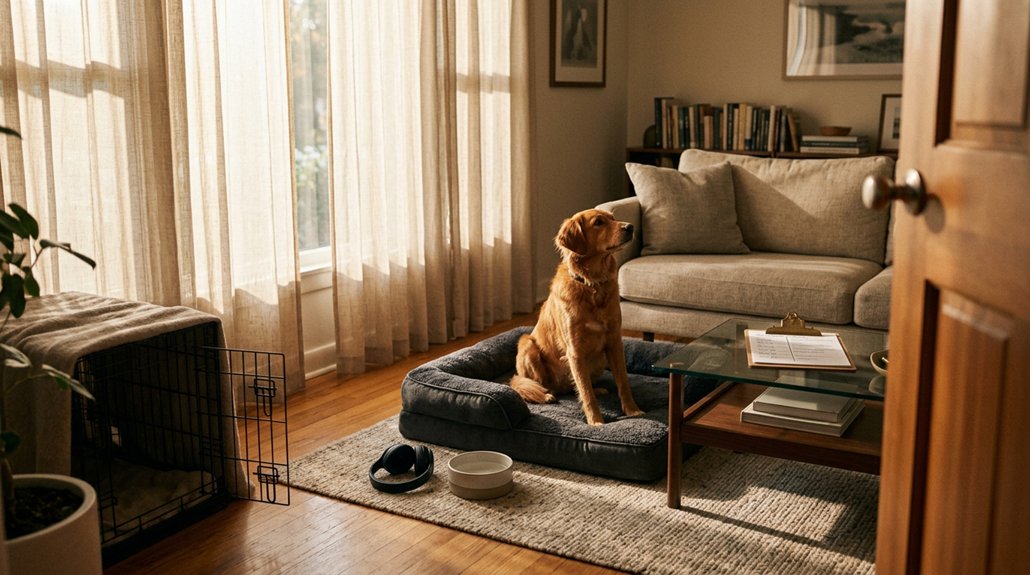
Creating a consistent routine for your dog is essential to promote a secure and happy environment. Dogs thrive on predictability, and establishing a schedule for meal timing and predictable activities can greatly reduce their anxiety. Consistency is key, as it helps them understand what to expect daily, easing shifts and making training smoother.
Here’s how to implement an effective routine:
- Set specific meal times: Feed your dog at the same times each day to stabilize their metabolism and digestion.
- Schedule regular walks: Consistent walk times improve physical health and instill a sense of security.
- Include daily playtime: Designate time for play to engage their mind and strengthen your bond.
- Establish bedtime rituals: Regular nighttime routines help them unwind and get quality rest.
Enhance Bond Through Play and Relaxation
Building a strong bond with your dog requires balancing interactive games and shared relaxing moments with them. Engage in activities like fetch and scent exploration to keep their body and mind active while also spending quiet time cuddling or listening to calming music together. This combination of active play and relaxation not only boosts emotional connection but guarantees your dog feels secure and loved in their environment.
Engage in Interactive Games
Release a world of fun and bonding with your dog by engaging in interactive games that are tailored to their instincts and energy levels. Activities like interactive puzzles and scent games can sharpen your dog’s problem-solving skills while providing mental stimulation. Here’s how you can enrich your dog’s life:
- Interactive Puzzles: Offer puzzle toys to challenge your dog and slow down mealtimes, promoting better digestion.
- Scent Games: Play “Find It” to utilize your dog’s natural scenting abilities and enhance their instincts.
- Scent Walks: Focus on exploration during walks to reduce stress and let your dog savor the environment.
- Play-Integrated Training: Combine training with play elements to reinforce desirable behaviors and prevent boredom.
These activities strengthen your bond and transform playtime into an enriching experience.
Share Relaxing Moments Together
While interactive games offer excitement and mental stimulation for your dog, it’s equally important to embrace quieter moments that enhance your relationship. Sharing cuddle time or enjoying quiet moments in the yard can help reinforce trust and foster a deeper bond between you both. Try engaging in low-energy activities like gentle petting or light grooming. These actions create a calming atmosphere, promoting mutual relaxation and comfort. Playful activities like a mild tug-of-war seamlessly blend fun with the relaxation that follows, ensuring your dog feels both physically and mentally at ease. Incorporating massage or gentle touch during these tranquil times enhances your dog’s feelings of safety and emotional well-being. By focusing on quality downtime, you nurture an authentic connection, essential for a trusting relationship.
Incorporate Scent Exploration Activities
Understanding the world through scent is an essential part of a dog’s life, making scent exploration activities an enriching addition to your routine. Scent games and scent walks are fantastic ways to boost mental stimulation and strengthen your bond with your dog. Here’s how you can incorporate these engaging activities:
- “Find It” Game: Hide treats or toys around the house and let your dog use their sniffing skills to locate them. This enhances problem-solving abilities.
- Scent Walks: Allow your dog time to explore and sniff during walks, reducing stress and promoting relaxation.
- Create Scent Trails: Use essential oils or safe scents to create trails for your dog to follow, building confidence.
- Routine Engagement: Regular scent-related activities can prevent boredom and destructive behaviors, improving overall well-being.
Make Grooming a Gentle, Trust-Building Experience
Creating a positive grooming experience for your dog isn’t just about keeping them clean—it’s a valuable opportunity to reinforce your bond and build trust. Start with grooming techniques that cater to their preferences, whether it’s gentle ear scratches or belly rubs. Use this time for trust exercises by pairing sessions with treats and praise, transforming grooming into a source of comfort.
Start early in their life to foster cooperative care, making vet visits less stressful. Keep an eye on their body language; signs like yawning or lip licking mean it’s time to pause or adjust. Your gentle touch during these moments not only maintains health but reassures them, strengthening the bond and ensuring a positive, stress-free experience.
Frequently Asked Questions
What Is the 3-3-3 Rule With Dogs?
The 3-3-3 rule in dog adjustments, especially in rescue changes, describes three phases: first three days of stress, next three weeks for routine building, and three months for trust development, revealing their true personality. Be patient.
What Is the 7 7 7 Rule With Dogs?
The 7-7-7 rule guides you through helping your dog adjust over time. Establish calm spaces within the first week, gradually increase social interactions over seven weeks, and by seven months, they’ll be a well-adjusted family member.
How Do I Say “I Love You” in Dog Language?
Did you know 60% of communication is non-verbal? To say “I love you” in dog language, use gentle vocal communication, observe dog body language, offer belly rubs, or play their favorite game to strengthen your bond.
Do Dogs Lower Your Cortisol?
Yes, dogs can lower your cortisol levels. Engaging with a dog provides cortisol reduction and offers stress relief. Petting or playing enhances well-being by fostering a sense of connection, which is invaluable for your mental health.
Conclusion
Imagine a world where every wag and wiggle from your beloved canine is a proof of the care and understanding you’ve cultivated. By mastering their body language, embracing positive reinforcement, and offering a serene sanctuary, you’re not just a pet owner—you’re a trusted ally. Add to this a predictable routine, playful bonding moments, and gentle grooming, and you’ll open up a thriving connection. Are you ready to transform your dog’s world into a paradise of security and joy?