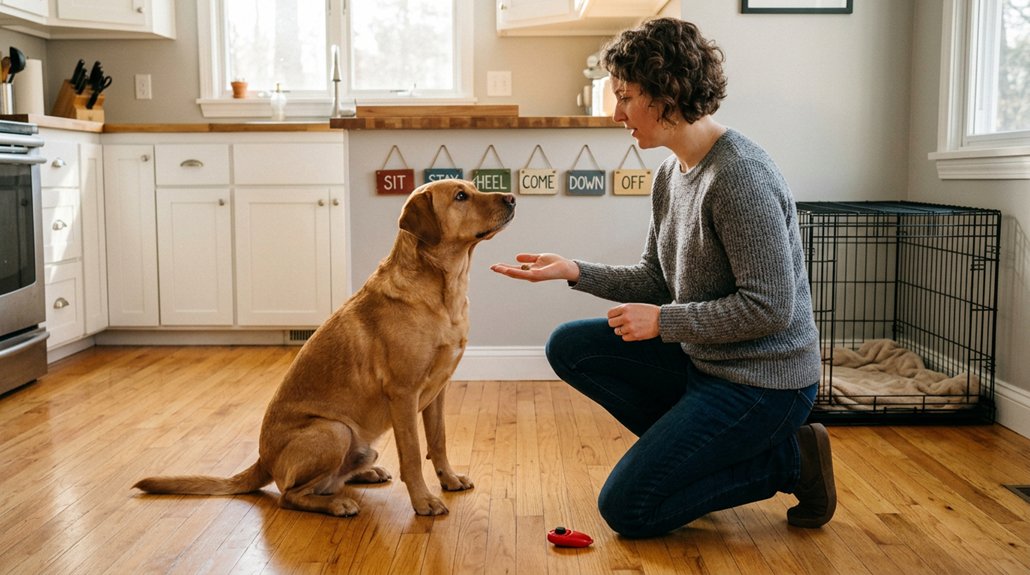
To create a structured routine for a well-behaved dog, establish consistent daily schedules with regular feeding, bathroom breaks, and short training sessions. Use clear and consistent command language, reinforced by immediate rewards, to set expectations and build trust. Balance mental stimulation with physical exercise to address social and behavioral challenges. Confidence and respect in leadership foster cooperation and obedience. Implement these strategies, and you’ll soon discover more effective methods to enhance your dog’s behavior.
Key Takeaways
- Establish predictable daily routines to enhance emotional stability and foster security in dogs.
- Provide clear boundaries and confident leadership to maintain respect and trust.
- Use consistent command language and involve family to ensure uniform behavior cues.
- Practice positive reinforcement with immediate rewards to encourage desired behaviors and build trust.
- Combine structured socialization and tailored exercise strategies to promote well-rounded development and confidence.
Why Consistent Structure Enhances Dog Behavior
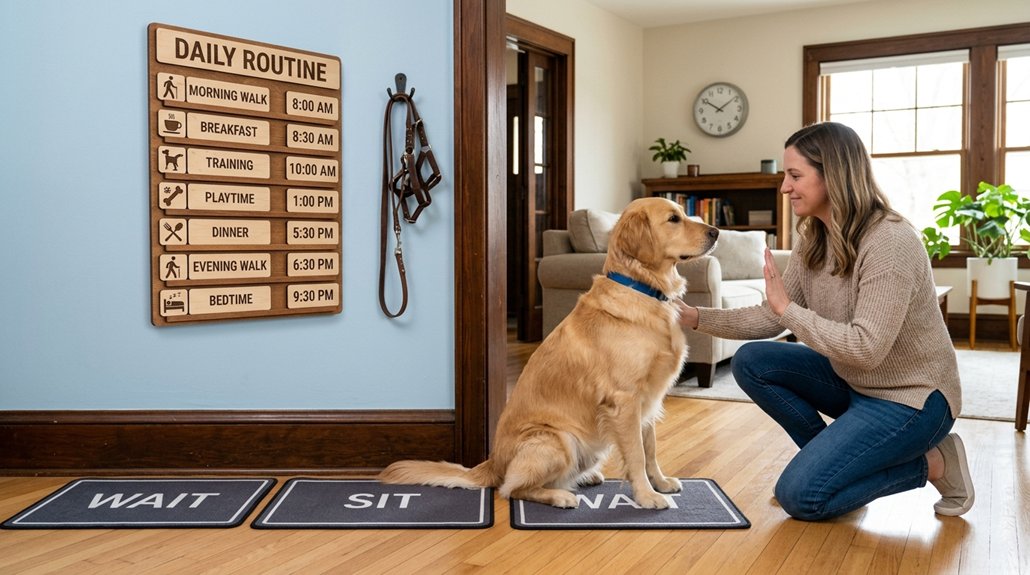
When it comes to enhancing a dog’s behavior, consistent structure plays a pivotal role. Establishing predictable routines helps dogs understand expectations, which in turn fortifies their behavioral patterns. This reduction in uncertainty adds emotional stability to your dog’s life, helping them feel secure and obedient. By adhering to structured schedules, you effectively reinforce commands, making learning more efficient. You’ll notice improved behavior as your dog becomes less reactive in various situations. Plus, consistent enforcement of rules and boundaries discourages undesirable actions. Regular evaluation and adjustment are key; they guarantee your strategy aligns with your dog’s evolving needs, reinforcing positive habits over time. Embracing a structured approach crafts an environment where both you and your dog thrive effortlessly.
Implementing Groundwork for Long-term Success
Laying the groundwork for your dog’s long-term success starts with establishing daily routines and consistent interactions. These groundwork techniques form the behavioral foundations that every dog, regardless of breed, size, or age, will benefit from. By consistently applying your handling decisions during the initial period, you set the tone for desirable behavior. It’s crucial to focus on rigorous groundwork sessions, particularly for new adult dogs, where isolation and fulfilling only basic needs help instill early boundaries and respect.
Implement these techniques with every interaction to solidify positive owner-dog relationships. Effective groundwork doesn’t just shape your dog’s future behavior, but also boosts your confidence in managing them. This enhanced assurance guarantees control, leading to greatly improved behavior outcomes in the long run.
Building Leadership With Confidence and Respect
Effective canine leadership, like the sturdy mast of a ship, hinges on confidence and respect. Your dog requires a leader who uses assertive yet kind leadership styles to guide them through their role in the family. Building trust involves setting clear boundaries without aggression, ensuring your dog understands what’s expected. Respect is key, as dogs intuitively recognize consistent guidance and respond positively to it. You’ll want to develop confidence through regular interactions that reinforce their role, preventing confusion and unwanted behaviors. Remember, inconsistency undermines respect, so maintaining steady leadership in your daily routine is essential. By clearly establishing your role, you foster a harmonious relationship with your dog, avoiding behavioral issues and nurturing a peaceful household environment.
Daily Scheduling to Strengthen Routine and Predictability
A structured daily schedule can considerably enhance your dog’s behavior by establishing routine and predictability. Begin by setting regular feeding and bathroom breaks, ensuring your dog’s essential needs are met consistently. Incorporate short training sessions to reinforce commands, gradually introducing new elements while bolstering previously learned skills. Schedule activities at balanced intervals, mixing mental stimulation and physical exercise for a well-rounded routine. Daily check-ins are crucial; assess your dog’s progress and responsiveness to the structure. Adapt to your dog’s needs with flexibility adjustments when necessary, maintaining engagement and effectiveness. Evaluate and modify the schedule regularly, staying attuned to your dog’s behavioral cues. A predictable routine provides your dog with security, fostering confidence and a positive approach to learning.
Utilizing Commands for Clear Boundaries
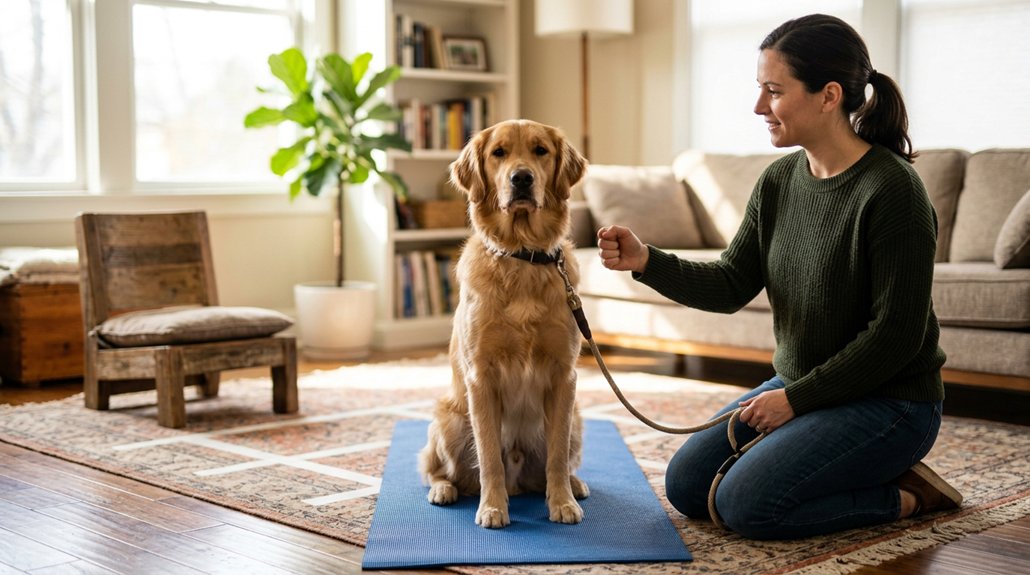
To establish clear boundaries with your dog, it’s essential to use consistent and simple command language that they can easily understand. Repeating commands like “Sit,” “Stay,” and “Wait” in various situations helps your dog learn what behaviors are expected at different times. Regular reinforcement with immediate rewards solidifies these commands, ensuring your dog behaves predictably and maintains good conduct in any environment.
Consistent Command Usage
Establishing command consistency is essential when aiming to create clear boundaries for your dog. To guarantee effective training, all family members must be involved in using the same commands consistently. Command variations from different people can confuse your dog and disrupt learning. Utilizing clear and specific instructions like “sit,” “stay,” and “down” not only establishes boundaries but also promotes obedience. Consistent Command Usage creates a predictable environment similar to routine benefits seen in preschoolers. Reinforcing commands with positive rewards enhances your dog’s association with compliance and clarity in their role within the pack. Regular practice during daily interactions solidifies understanding, helping your dog recognize their place in the household structure. Family involvement is key to achieving consistent and effective training.
Simple Command Language
Harness the power of simple command language to establish clear boundaries for your dog. For command effectiveness, use consistent phrases like “Sit,” “Stay,” and “Come.” This language clarity helps your dog understand your expectations. It’s essential to guarantee everyone in your household uses the same commands to prevent confusion, promoting a cohesive environment where your dog thrives. Avoid mixed commands, such as using “Down” instead of “Lay,” which can impede your dog’s comprehension.
When giving commands, a firm and calm tone reinforces authority, encouraging prompt responses. Seamlessly blend command practice into daily routines to enhance structure. This approach builds your dog’s ability to anticipate what’s expected in various scenarios, resulting in a well-behaved pet that confidently follows your lead.
Reinforcement Through Repetition
Building a robust command language sets the stage for reinforcing your dog’s understanding of boundaries through repetition. Consistently using the same commands across all family members prevents confusion. You’ll enhance their reliability by practicing these commands in varied environments. Command variations, with training games, are essential; they teach your dog to adapt while ensuring the core commands remain clear. Immediate positive reinforcement, whether through treats or praise, strengthens the tie between the command and the desired action. Establish routines by incorporating commands into daily activities.
| Training Activity | Benefits |
|---|---|
| Sit before Meals | Signals patience and control |
| Wait at Doors | Prevents rushing or accidents |
| Fetch as a Game | Builds command response speed |
| Stay for Safety | Helps in emergency situations |
| Recall with Variations | Improves attention span |
Regular routines and games improve your dog’s obedience markedly.
Why Positive Reinforcement Works Wonders
When you use positive reinforcement to encourage desired behaviors in your dog, you’re not only teaching commands but building a strong, mutual understanding between you and your pet. By consistently rewarding good behavior with treats or praise, you’re reinforcing a sense of trust and clear communication. This approach fosters both obedience and a relaxed, confident demeanor in your dog, making them more receptive to learning and adapting to various environments.
Encouraging Desired Behaviors
Embrace the power of positive reinforcement to cultivate desired behaviors in your dog. Reward variety is key: mix treats, playtime, and praise to keep your dog engaged and enthusiastic to comply. Use behavior tracking to monitor improvements and adjust strategies if needed. Immediately reward correct actions, helping your dog associate them with positive outcomes. Here’s how to effectively encourage desired behaviors:
- Reward immediately after the desired action for effective learning.
- Track behavior changes to measure progress and modify approaches.
- Combine different rewards (treats, play, praise) to cater to unique preferences.
- Reinforce calmness and gentleness to promote a relaxed demeanor.
- Ignore negative behaviors while consistently rewarding positives.
Consistent, thoughtful reinforcement fosters calm and gentle behaviors, building a strong trust between you and your dog.
Building Mutual Understanding
Understanding the power of positive reinforcement takes dog training to a new level. By relying on canine intuition, you can build a strong bond through trust and cooperation. Rewarding desired behaviors such as calmness and obedience not only encourages these habits but also helps your dog learn to understand cues. When their achievements are immediately acknowledged, it reinforces the action-reward connection, creating a positive emotional experience.
Using positive reinforcement consistently lets you redirect your dog’s focus to appropriate behaviors, reducing anxiety and promoting better conduct.
Here’s how it impacts:
| Benefit | Emotional Response |
|---|---|
| Builds Trust | Deep Connection |
| Encourages Cooperation | Joyful Partnership |
| Reduces Anxiety | Calm Interaction |
Keep these benefits in mind to create clearer communication and a well-behaved companion.
Addressing Socialization and Common Challenges
Though socializing your dog is essential for their overall development, it’s important to establish your leadership role before introducing them to a variety of people and environments. A dog trained in handling distractions will excel in social exposure scenarios. Here are ways to manage this process effectively:
- Lead by example to assert your authority before social interactions.
- Create structured interactions by monitoring who your dog meets initially.
- Correct attention-seeking conduct toward strangers to discourage negative patterns.
- Schedule playdates with well-behaved dogs to bolster social confidence.
- Introduce new experiences gradually to minimize reactive behaviors in unfamiliar settings.
These strategies help your dog adapt smoothly to new environments and people, reinforcing positive behavior through consistent exposure and leadership.
Exercise Strategies to Complement Training Outcomes
Incorporating a well-rounded exercise routine into your dog’s daily life can dramatically boost the effectiveness of training outcomes. Combining physical activities, like walks and fetch, with mental stimulation through interactive games or puzzles is vital. Tailor these routines to your dog’s breed, age, and energy level, since an under-exercised dog is more prone to misbehavior. Structured play sessions where commands are integrated help reinforce obedience and boundaries, allowing energy to be spent in a controlled manner. Additionally, blend aerobic exercises with relaxation techniques, such as quiet time after play, to teach your dog an “off” switch. This approach guarantees your dog remains calm and focused even during less active moments, leading to improved behavior overall.
Observing Behavioral Shifts for Tailored Training
Why should dog owners pay close attention to their pet’s behavior? Understanding your dog’s behavioral triggers is key to fostering a well-behaved animal. By using observation techniques, you can notice signals like pacing or alertness that indicate your dog’s needs. This attention helps pinpoint when it’s time for outdoor activities or attention, reducing undesirable actions like barking or jumping. Implement tailored training strategies based on these observations to align with your pet’s natural instincts.
- Identify behavioral patterns: Relate actions to specific triggers.
- Document reactions: Keep notes on your dog’s responses to stimuli.
- Establish routines: Consistent feeding and exercise mitigate unwanted behaviors.
- Monitor changes: Adjust strategies based on new behavior insights.
- Intervene promptly: Act on signals timely to manage behavior.
Communicating Consistently to Build Trust
When you communicate consistently with your dog, you build a foundation of trust that’s essential for effective training. Use the same verbal cues and consistent messages for clear behavior expectations. Consistency requires family involvement; everyone should use the same communication style. Patience in training is key—trust exercises don’t yield immediate results, but each positive interaction strengthens this bond. Regularly practicing cue variations guarantees your dog understands different commands, enhancing this trust. Reward calm behaviors and ignore unwanted actions, reinforcing trust in your leadership. Evaluate training methods frequently to maintain clear, effective communication. Relaxation techniques within daily routines help manage your dog’s anxiety, guaranteeing they anticipate needs and respond positively to consistent guidance. Trust building fosters a well-behaved companion.
Frequently Asked Questions
What Is the 3-3-3 Rule With Dogs?
The 3-3-3 rule is an essential guide for the dog adaptation process. During the three-day settling period, dogs adjust to new environments. At three weeks, they show their true selves, and by three months, they’ve fully adapted.
How to Provide Structure for a Dog?
Providing structure for your dog is like creating the backbone of civilization itself. Establish ironclad routines, enforce consistent commands relentlessly, and cultivate an environment where predictability reigns supreme. Your dog thrives on dependable actions and unwavering expectations.
What Is the 10-10-10 Rule for Dogs?
The 10-10-10 Rule entails dedicating 10 minutes each to dog training, structured play, and mental stimulation daily. This practical approach fosters behavior modification, ensuring your dog is well-behaved and responsive. Stick to it consistently.
What Are the 4 F’s of Dog Behavior?
The 4 F’s of dog behavior—Fight, Flight, Fear, and Flee—aren’t popular dance moves but reactions to stimuli. Don’t fear; understanding these can turn your dog’s food motivation into a tool against fearful behaviors efficiently.
Conclusion
Creating a consistently structured setting isn’t just smart; it’s essential. With clear commands, consistent communication, and confident leadership, you’ll craft a calm, confident companion. Scheduling shapes predictability, adaptability, and accountability, while socialization spurs successful social skills. Exercise energizes effort and eases anxiety, enhancing training outcomes. Observe openness to adjust approaches, ensuring effective engagement. By fostering a faithful foundation, you’re ensuring your dog not only follows but flourishes, creating a harmonious household for years to come.