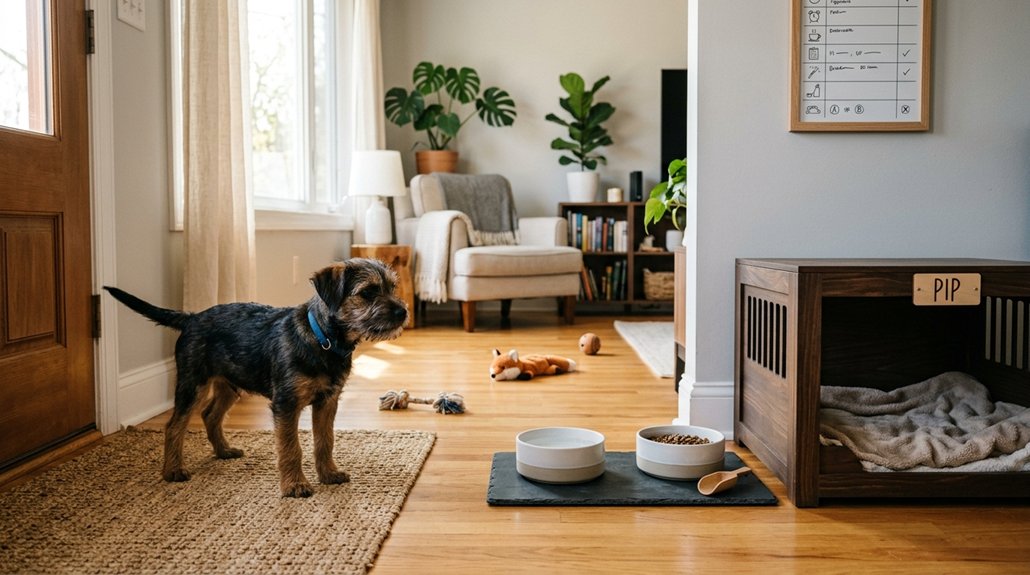
Creating structure for your new dog involves setting consistent daily routines for meals, potty breaks, and exercise. Define clear boundaries around furniture and use crate training for security. Implement positive reinforcement to encourage good behavior and guide social interactions with both family and strangers. Regular physical and mental engagement is essential, as is tracking progress and adjusting training techniques. Start with these foundational steps, and you’ll soon discover more valuable strategies for success.
Key Takeaways
- Establish a consistent daily routine for meals, potty breaks, and exercise to provide predictability and reduce anxiety.
- Use physical barriers and commands to define dog-friendly spaces and enforce boundaries consistently.
- Introduce crate training for a secure space and supervise indoors to guide immediate behavior correction.
- Utilize positive reinforcement with rewards like treats and praise to encourage desired behaviors and build confidence.
- Gradually introduce socialization, monitoring body language, and rewarding calmness during initial interactions with people.
Set Predictable Routines for Your Dog
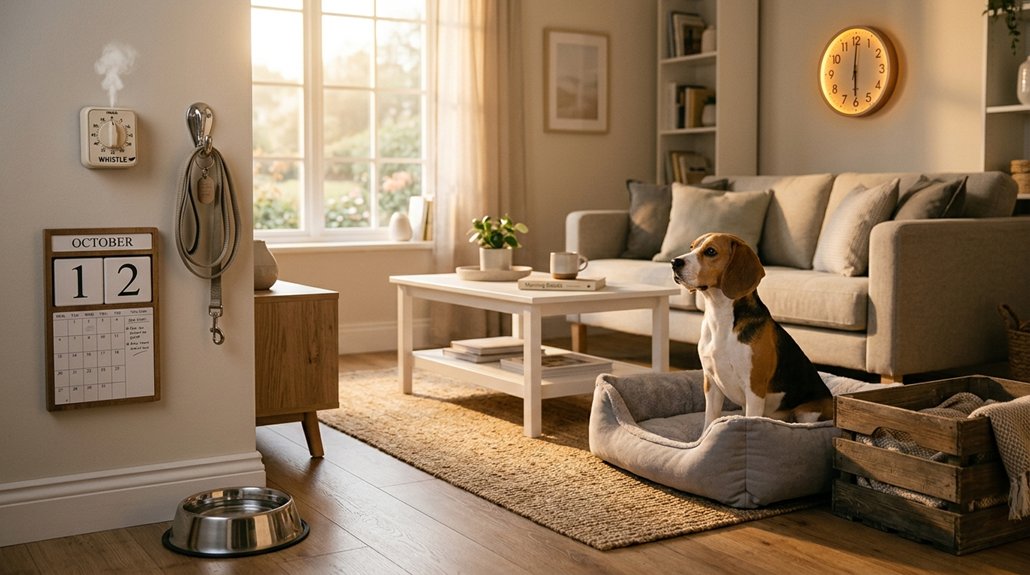
To create an ideal environment for your new dog, setting predictable routines is vital. Begin by establishing a consistent daily routine that includes meal times, potty breaks, and play sessions. A structured feeding schedule guarantees your dog knows exactly when to expect their meals, reducing any anxiety they might have around food. Regular exercise is important; implement walks that incorporate training exercises, offering physical and mental stimulation while reinforcing learned behaviors. Crate training can be integrated into the routine, providing designated periods for rest and relaxation. Use consistent cues and commands during these activities to build confidence and understanding. Predictability leads to a harmonious relationship and helps your dog feel secure knowing what comes next in their daily routine.
Define Boundaries Around Furniture and Spaces
Once you’ve established a predictable routine for your new dog, the next step is setting boundaries around furniture and spaces in your home. Start by clearly designating areas with furniture accessibility, allowing the dog in some spaces while restricting others. Use physical barriers like baby gates or a leash to prevent access to off-limits areas until they understand the rules. Consistency is vital for boundary reinforcement. Firmly teach commands such as “off” or “place” to guide your dog’s behavior when they approach furniture or restricted zones. Each time your dog respects these boundaries, reinforce their behavior with praise or treats. This consistency not only fosters trust and respect but also helps your dog clearly grasp what’s expected of them.
Use Positive Reinforcement During Training
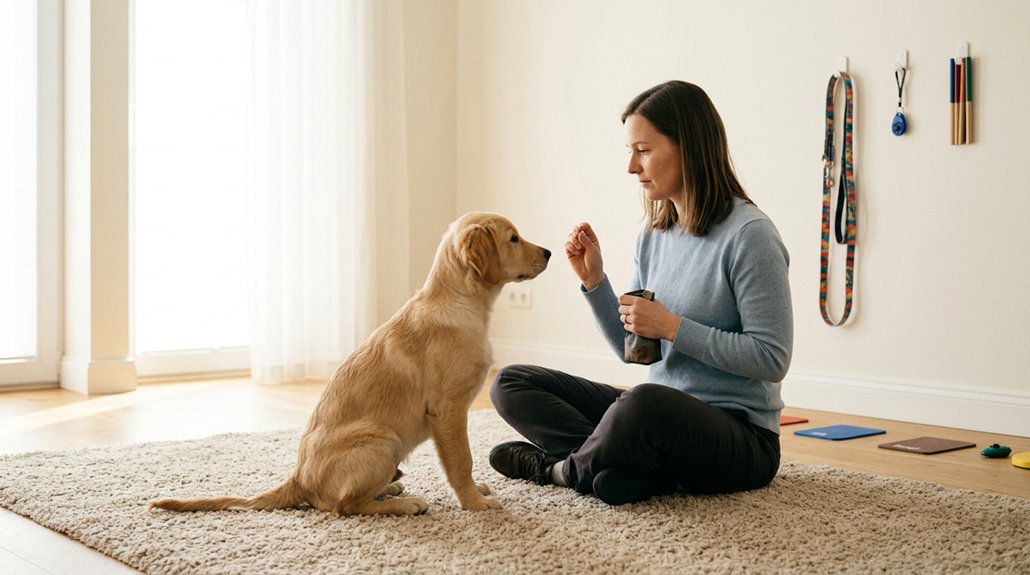
When training your dog, leveraging positive reinforcement can considerably enhance their learning experience and behavior outcomes. Start with clicker training to mark desired behaviors precisely, followed by a reward. Establish a reward hierarchy by using high-value treats for challenging tasks and standard ones for easier commands. This motivates your dog to learn quicker and builds strong behavioral foundations.
Use consistent rewards to solidify actions like sitting or waiting calmly, ensuring your dog understands expectations. Always wait for calmness before rewarding; this reduces attention-seeking and encourages desired actions. Integrating praise or play as rewards not only balances treats but strengthens the bond between you and your dog. A positive environment lowers anxiety, fostering a smoother, enjoyable training journey for both.
How to Implement Crate Training and Plus Indoor Supervision
To effectively implement crate training, begin by introducing the crate the moment your new dog arrives, turning it into a haven where they can develop a reassuring sense of security and learn boundaries. Pair their mealtime with crate usage to foster positive associations, preventing food aggression and encouraging tranquility. Maintain rigorous indoor supervision by keeping your dog on a leash inside, allowing immediate correction of misbehavior and gradually granting more freedom as they consistently demonstrate good behavior.
Benefits of Crate Training
Crate training offers several benefits that are essential for a harmonious relationship between you and your new dog. Establishing training safety and crate comfort is key. A crate provides a secure and comforting environment, helping your dog acclimate to their new home while preventing unwanted behaviors when unsupervised. Introduce the crate gradually; encourage your dog to enter willingly by using treats and positive reinforcement, ensuring they see it as a safe haven.
Using the crate during feeding can prevent food aggression, promoting a healthy bond as your dog learns meal-time patience. Crate training is also instrumental in establishing a structured routine, offering predictability that can reduce anxiety and improve behavior in your dog, setting a strong foundation for their development.
Effective Indoor Supervision
Since bringing a new dog home can be an overwhelming experience for both the pet and the owner, establishing effective indoor supervision alongside crate training is essential. Start by using the crate as a safe space to help your dog acclimate. Follow these steps for a smooth adjustment:
- Attach a leash upon crate exit: This maintains control and prevents undesired behavior around the house.
- Limit indoor freedom: Gradually introduce indoor spaces as privileges following good behavior, incorporating bonding activities.
- Engage with indoor games: Supervise playtime to reinforce rules and structure while strengthening your bond.
- Consistent supervision: Keep a watchful eye to address misbehaviors promptly, reinforcing your role as the pack leader.
Implementing these strategies establishes trust and creates a well-structured environment.
Establishing Boundaries Indoors
An effective indoor environment not only relies on supervision but also on establishing clear boundaries for your new dog. Start with crate training, making the crate a happy retreat where your dog eats and rests—this reduces anxiety and reinforces a positive association. Indoors, keep your dog leashed initially to uphold indoor etiquette, maintaining control while they learn the household rules.
Set furniture restrictions early. For example, consistently enforce boundaries by keeping them off the couch or beds unless expressly allowed. This solidifies hierarchy and respect. Employ structured supervision by watching behavior closely; if misbehavior arises, re-crate or leash immediately. Use commands like “place” to teach your dog where to calmly stay during interactions or when guests visit, reinforcing the importance of boundaries.
Gradually Introduce Socialization Experiences
To effectively socialize your new dog, start by managing the timing and setting of all interactions, ensuring they remain calm and positive. Begin with brief introductions to familiar family members before gradually extending to less familiar people and environments. Reinforce these social engagements by rewarding your dog with treats and praise whenever they show confidence and calmness.
Controlled Interaction Timing
Beginning with a structured approach to interaction timing with your new dog, it’s essential to establish yourself as the primary focus of attention. Controlled exposure in the first days helps reinforce your leadership role while gradually introducing others into your dog’s world. Follow these steps for success:
- Limit Initial Contact: Start slowly by focusing interactions on you, allowing your dog to find comfort in your presence before meeting others.
- Gradual Desensitization: Introduce family and visitors one at a time, maintaining calm and treating positive responses.
- Monitor Body Language: Observe for stress or fear, intervening when necessary to reinforce boundaries.
- Increase Complexity Over Time: As comfort grows, gradually incorporate more complex social scenarios, aiding in confident development and social skills.
Positive Social Engagement
Successfully managing initial interaction timing with your new dog lays the groundwork for positive social engagement. Begin by introducing your dog to different environments and friendly, calm individuals and pets slowly. Gradual exposure is key to building their confidence and social skills. Make sure interactions are short to prevent overwhelming them. As your dog observes and engages, employ positive reinforcement techniques. Treats and praise can reward dog behavior that is calm and appropriate, forming positive associations with socialization. You should limit initial interactions with strangers, emphasizing your leadership role to provide assurance. Monitor your dog’s body language meticulously. If they show signs of stress or discomfort, intervene promptly. This careful approach helps create a solid foundation for their future social engagements.
Encourage Exercise and Mental Engagement Daily
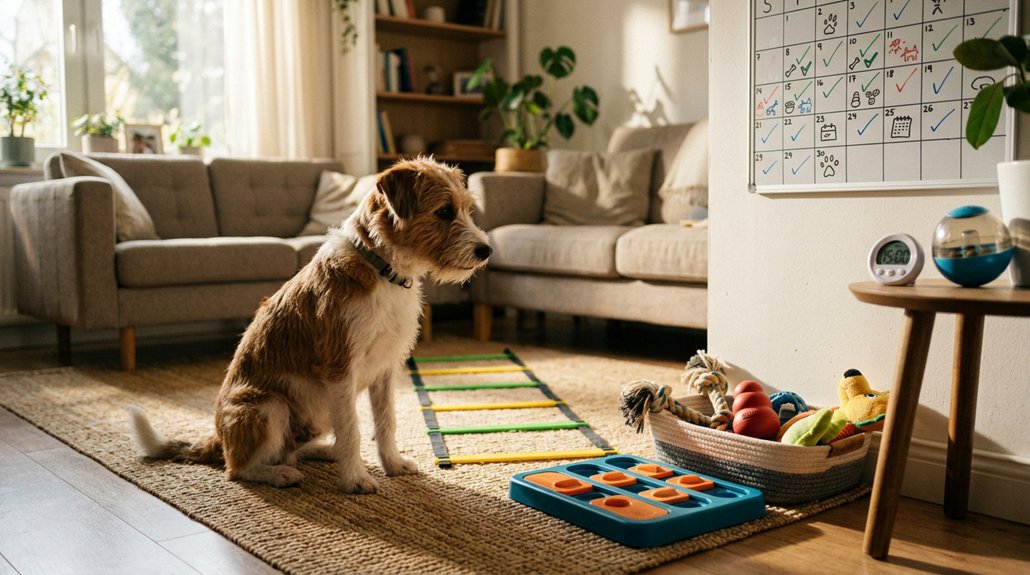
Jump into a routine that combines physical activity and mental engagement for your new dog. Structured exercise and mental challenges play an essential role in their development. To achieve this balance, consider the following engaging activities and interactive routines:
- Exercise Variety: Incorporate regular dog sports like agility or fetch sessions to provide physical stimulation and enhance fitness.
- Mental Challenges: Use food puzzles and interactive toys to keep your dog mentally active and deter boredom-induced behaviors.
- Structured Walks: Introduce training commands during walks, reinforcing obedience while offering them a structured exercise.
- Routine Importance: Establish a daily schedule with varied activities to keep them interested and engaged, ensuring it includes both safe indoor and outdoor exploration.
These practices support a well-balanced, engaged pet.
Track Progress and Refine Training Methods
While engaging your new dog with daily exercise and mental challenges, it’s just as important to keep a close eye on how well they’re adapting to these routines. Conduct regular behavioral assessments to identify areas that require improvement. By documenting each session, you’ll track your dog’s progress in adhering to commands. Use this data to make informed training adjustments, ensuring consistent advancement. Positive reinforcement is key, so note which rewards elicit the best responses and refine your techniques based on these observations. Establish a feedback loop with measurable goals, allowing for strategic recalibration of your approach as necessary. Your dog’s responses will guide you to refine tactics, focusing on methods that resonate and yield the most effective results.
Frequently Asked Questions
What Is the 3-3-3 Rule for Dogs?
The 3-3-3 rule outlines a dog’s settling period and behavioral adjustment phases: initial three-day survival mode, three-week trust-building, and three-month integration, where their true personality emerges as they bond and adapt to their environment.
What Is the 7 7 7 Rule for Dogs?
The 7 7 7 rule helps a puppy’s adjustment with behavioral expectations. In seven days, they get familiar; seven weeks, learn routines; seven months, they’re settled. Keep consistent training and patience for best results.
How to Provide Structure for a Dog?
To provide structure for your dog, establish a consistent daily routine with set times for meals, walks, and rest. Combine training with commands for mental stimulation, use positive reinforcement for desired behaviors, and maintain training consistency.
What Is the 10 10 10 Rule for Dogs?
The 10-10-10 rule, akin to The Odyssey of dog behavior, offers significant training techniques through stress management. In your dog’s first month, focus on isolation, gradual socialization tips, and fostering a structured routine for successful adaptation.
Conclusion
Remember, “slow and steady wins the race” when creating structure for your new dog. By setting predictable routines, defining boundaries, employing positive reinforcement, and utilizing crate training alongside supervision, you’ll build a solid foundation. Gradually introduce socialization and maintain daily exercise and mental engagement to keep your dog happy and healthy. Track your progress, tweaking methods as needed, and you’ll foster a well-behaved companion. With patience and consistency, you’ll nurture a fulfilling bond with your furry friend.