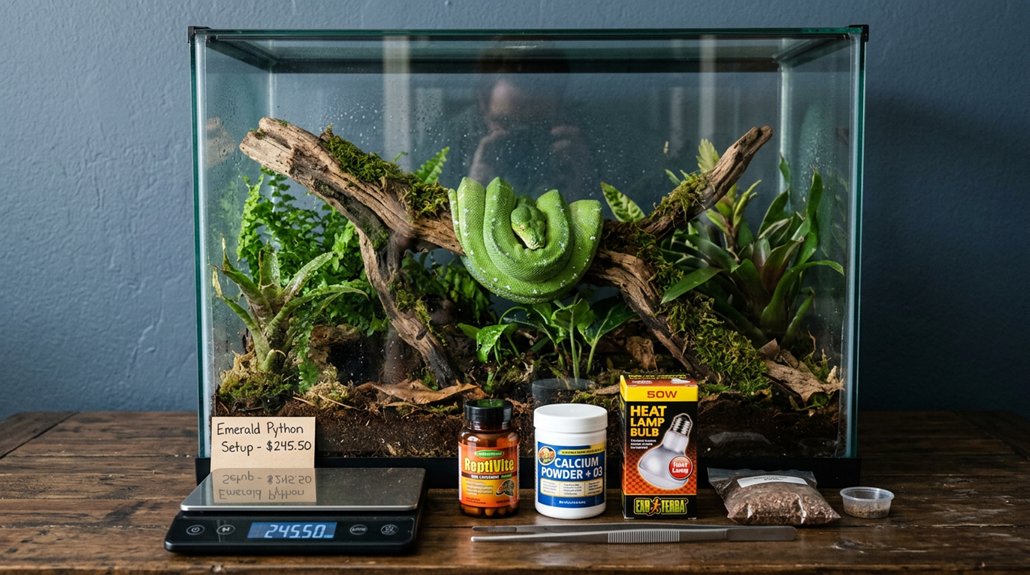
Owning a reptile involves both initial and ongoing costs. You can start with a wide range for purchases: small lizards might be $10, while rare snakes could be over $500. Setting up an enclosure, including heating and lighting, might cost $50 to $200. Monthly upkeep, including food, supplements, and vet visits, can vary based on species. You’ll find that proper budgeting guarantees your reptile’s health and happiness. Dive deeper to uncover detailed budgeting tips and care advice.
Key Takeaways
- Initial reptile purchase and enclosure setup can cost between $110 and over $1,200, depending on species size and rarity.
- Monthly upkeep costs, including food, heating, and lighting, range from $70 to $250.
- Veterinary check-ups and emergencies can cost from $50 to several hundred dollars, with a financial buffer recommended.
- Enclosure maintenance includes cleaning every 4-6 weeks, costing around £7.99 for disinfectants.
- Dietary costs vary by species, with supplementation needed every 3-6 months to ensure nutritional health.
How Much Does It Cost Monthly to Own a Reptile?
Owning a reptile can be an enchanting yet financially engaging endeavor, especially when considering the monthly costs. Carefully planned feeding schedules are essential, with food expenses ranging from $10 to $50, contingent on species and dietary requirements. You’ll need reptile accessories like calcium supplements, priced around £7.99 every 3-6 months, to guarantee your pet receives essential nutrients. Maintaining your reptile’s environment with regular enclosure cleanings using pet-safe disinfectants also incurs costs of approximately £7.99. Additionally, the need for consistent heating and lighting—averaging $50 to $200 monthly—guarantees their ideal living conditions. Occasional veterinary check-ups, though infrequent, can add $50 to $200 to your budget, emphasizing the importance of integrating these expenses into your monthly financial planning.
What Are the Initial Costs for Reptile Owners?
While monthly expenses for reptile care demand careful attention, the initial investment lays the groundwork for a successful pet-keeping journey. The purchase price for reptiles varies greatly; small lizards may cost around $10, whereas rarer snakes can exceed $500. Popular options like leopard geckos and bearded dragons typically range from $30 to $150. A proper enclosure is essential, with costs spanning $50 for small reptiles to over $500 for larger ones. You’ll also need heating and lighting equipment, which can add another $50 to $200 to your total. A common mistake is overlooking these initial costs or failing to contemplate their impact on future budgeting. Buyer considerations should include long-term care, ensuring you’re prepared for ongoing expenses.
Setting Up the Right Enclosure for Your Reptile
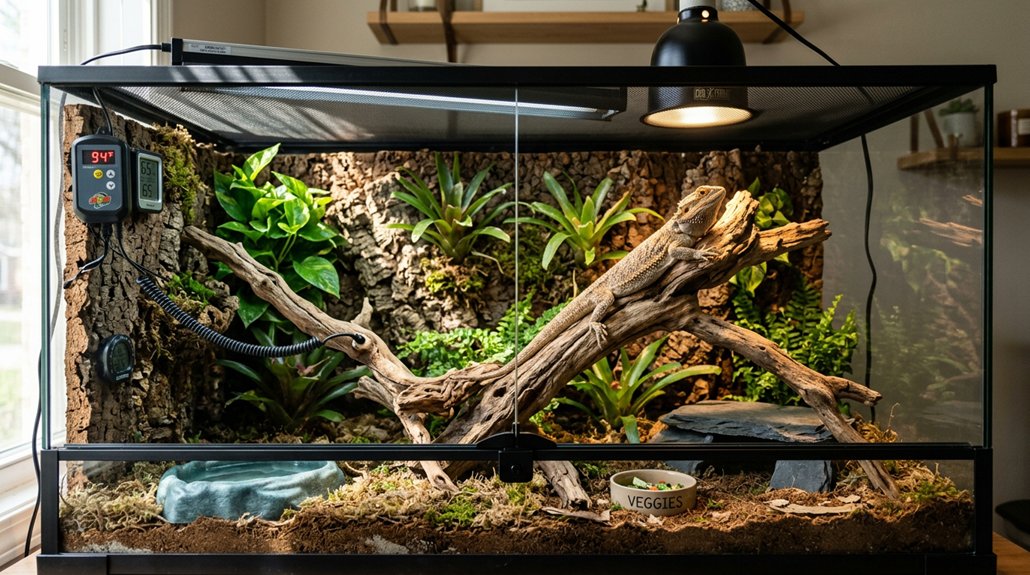
When setting up an enclosure for your reptile, consider that size directly impacts both cost and their health; small reptiles can thrive in 10 to 20-gallon enclosures starting at $50, while larger species may require setups exceeding $500. Essential components like heating elements and humidity controls are vital for mimicking their natural habitat, with initial costs ranging from $50 to $200. Regular maintenance, including cleaning every 4-6 weeks, is necessary to prevent health issues and guarantee a safe environment, adding to the ongoing financial commitment you should anticipate.
Enclosure Size Requirements
Choosing the correct enclosure size is essential for the well-being of your reptile. Small reptiles typically need a 10 to 20-gallon tank, while larger species require much more room. It’s critical to evaluate species specific requirements, as improper sizing can lead to stress and health issues. Plan for future enclosure upgrades as your reptile grows.
Here’s a quick reference on enclosure costs:
| Reptile Size | Enclosure Size | Estimated Cost |
|---|---|---|
| Small | 10-20 gallons | $50+ |
| Medium | 40-60 gallons | $150+ |
| Large | Customized habitat | $500+ |
Essential Setup Components
Though setting up the right enclosure for your reptile involves intricate planning, it guarantees the animal’s health and comfort. Choosing appropriate enclosure materials is an essential step—glass tanks (10 to 20-gallon costing around $50 and up) suit small reptiles, while larger species may need custom-built options that can reach $500. Habitat customization is imperative; including climbing structures or humidity control fosters a natural and stimulating environment. Heating and proper UVB lighting, costing between $50 and $200, are indispensable for regulating temperature and supporting crucial processes like calcium absorption. Prioritize understanding your reptile’s unique habitat needs, ensuring the enclosure’s size and design align with species-specific living requirements for ideal well-being.
Maintenance and Upkeep Tips
Proper maintenance of a reptile’s enclosure is crucial for the health and longevity of the animal. Start by selecting an appropriately sized tank; small reptiles might need a 10 to 20-gallon setup costing at least $50, while larger species could require $500 enclosures. Incorporate essential enclosure accessories, making sure they mimic natural habitats—add climbing structures and maintain humidity levels to promote natural reptile behavior. Invest in external heat sources and UVB lighting, important for calcium absorption, ranging between $50 and $200. Regular cleaning every 4-6 weeks involves pet-safe disinfectants and replacing bedding. Research specific species’ habitat needs thoroughly to understand varied requirements for space, temperature, and humidity. This attention to detail guarantees a thriving environment for your reptile companion.
Heating and Lighting: What You Need to Know
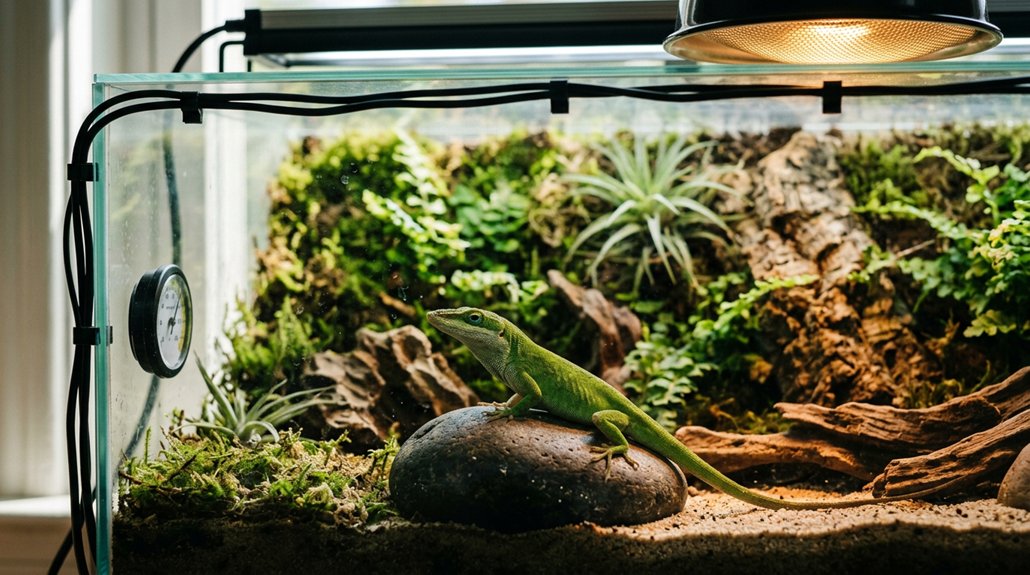
To maintain your reptile’s health, it’s essential to equip their habitat with appropriate heating devices like lamps or ceramic heaters, along with UVB lighting for proper calcium metabolism. The initial costs for this equipment can vary considerably—typically between $50 to $200—depending on your reptile’s specific needs. To optimize both efficiency and expense, consider investing in a thermostat to regulate energy consumption effectively.
Essential Equipment for Reptile Care
When setting up a habitat for your reptile, understanding the importance of heating and lighting is vital for their well-being. Reptiles are ectothermic, relying on external heat sources to regulate their body temperature. Essential supplies like lamps, heating pads, or ceramic heaters are fundamental to mimic their natural environment. Investing in UVB lighting is equally important, as it supports calcium absorption and overall health. You’ll need this lighting on a consistent 12-hour cycle daily. Without proper heating, reptiles risk serious health issues. Furthermore, ideal reptile habitats often require features for humidity control, contributing to initial setup costs. Regular monitoring and equipment replacement are necessary, as these factors guarantee the best conditions and contribute to ongoing maintenance expenses.
Cost-Effective Solutions for Heating
Embracing cost-effective solutions for heating your reptile’s habitat not only guarantees their well-being but can also relieve financial strain. Prioritize energy efficiency by selecting ideal heating sources and utilizing them judiciously. A thermostat, for instance, offers substantial benefits by minimizing excessive power use, which directly translates to lower electricity bills. Proper setup and maintenance are paramount to prevent health complications in reptiles. To effectively manage costs and promote efficiency, consider the following:
- Invest in energy-efficient bulbs like a 39W UVB tube, which should run for 12 hours daily, balancing energy use and reptile health.
- Use a thermostat to regulate a 100W heat bulb’s operation, reducing unnecessary energy consumption.
- Schedule regular equipment checks to maintain ideal functionality.
These practices facilitate financial savings while fostering a healthy environment.
Reptile Dietary Expenses Explained
Although the allure of owning a reptile is undeniable, understanding the intricacies of their dietary expenses is crucial for prospective owners. Dietary varieties and feeding schedules differ considerably among species, influencing the overall cost. Monthly food expenses can span from $10 to $50. For instance, Bearded Dragons often require 4-8 boxes of live food weekly, like crickets at £2.20 per box or locusts at £3.30. Dietary supplements, including calcium and vitamin powders, must be factored in, as they are essential for health maintenance and need replenishment every 3-6 months. Snakes typically incur lower feeding costs, contrasting with reptiles demanding more complex diets. Proper monitoring of food intake guarantees pets receive adequate nutrition, safeguarding their well-being and longevity.
Estimating Veterinary Bills for Reptiles
When estimating veterinary bills for reptiles, it’s essential to account for routine check-up costs, which typically range from $50 to $200, and can help detect underlying health issues early. Emergencies, however, can be notably more expensive, especially if specialized treatment is required, and rapid intervention might prevent more severe problems. To guarantee responsible ownership, it’s wise to maintain a financial buffer for unforeseen veterinary expenses, as reptiles are adept at concealing illnesses.
Routine Check-Up Costs
How can you guarantee your reptile remains in peak health? Regular visits to a vet are key. These health assessments, costing between $50 and $200, depending on complexity and region, are essential. Reptiles often conceal illnesses, emphasizing the veterinary importance of check-ups. They can help in early detection of hidden issues before they escalate. Why should you consider routine check-ups?
- Early Detection: Identify potential health problems before they become severe.
- Specialized Care: Some species need extra evaluations, which might increase costs, but are critical for specific health needs.
- Cost Management: Understand that regular visits can prevent expensive treatments associated with neglected health.
Consult a qualified vet familiar with reptiles for the best care advice.
Emergency Care Expenses
Reptile emergency care expenses can quickly escalate, making it essential to plan for potential veterinary bills ahead of time. Emergencies require swift action; implementing effective emergency protocols is critical. Often, reptiles don’t show illness until the condition is serious, hence following veterinary advice without delay guarantees the best care. While basic check-ups approximate $50-$200, emergencies can exceed several hundred dollars due to complex procedures. This variation necessitates understanding of your local veterinary services and their costs. Preparing financially for unforeseen health issues shows responsible ownership.
| Service Type | Estimated Cost Range | Action Required |
|---|---|---|
| Basic Check-Up | $50 – $200 | Regular Monitoring |
| Emergency Visit | $300+ | Follow Emergency Protocols |
| Complex Procedure | Variable | Obtain Veterinary Advice |
Specialized Treatment Needs
Understanding the financial landscape of reptile care requires careful consideration of both emergency expenses and the specialized treatment needs they might entail. Preparing for veterinary bills involves acknowledging the potential for routine check-ups and unforeseen treatments due to sudden health issues. Basic check-ups can range from $50 to $200, providing preventive care and guidance on specialized dietary needs. Emergencies, especially with complex illnesses, can escalate costs into the thousands, underscoring the need for funds in reserve.
- Routine Vet Visits: Infrequent but essential, routinely monitor health and dietary changes.
- Emergency Care: Prompt action can prevent heightened costs; spotting issues early is key.
- Behavioral Therapy: Address stress-related behavioral changes with tailored therapies for long-term health.
These can jointly mitigate costs and guarantee peak reptile well-being.
Comparing Costly Species: Snakes, Lizards, and Iguanas
While considering the costs associated with reptile ownership, it is vital to understand the financial differences among snakes, lizards, and iguanas. Snake ownership can involve annual reptile expenses ranging from $250 to $450, largely due to the varying feeding needs, care requirements, and enclosure tips specific to each species. Lizards, on the other hand, present annual costs between $190 and $260, making them a more budget-friendly option in some cases. When evaluating iguana costs, anticipate spending $250 to $350 per year, factoring in their specific housing options and care requirements. Initial purchase prices also vary, with snakes potentially exceeding $1,000 and lizards being as low as $15. Thorough veterinary care, heating, and lighting are essential ongoing expenses for all these reptiles.
Planning for Your Reptile’s Future Costs
As you commence planning for your reptile’s future costs, it’s crucial to incorporate a range of financial considerations into your budget. Begin by focusing on not only the initial acquisition expense but also the subsequent costs that come with care and maintenance. Consider these factors:
- Habitat Investment: Initial enclosure setup can be costly, from $50 to $500+, varying by species.
- Ongoing Expenses: Monthly food costs, between $10 and $50, and annual care expenses, totaling $190 to $450, are important components.
- Emergency Preparedness: Unexpected veterinary expenses necessitate a financial safety net or explore reptile insurance options for cost mitigation.
Implement effective budgeting strategy tips to guarantee your reptile enjoys a well-supported, long-term habitat.
Budgeting Tips for Affording Your Reptile
When planning your reptile’s future costs, it’s important to develop a methodical approach to budgeting that exceeds mere initial expenditures and covers ongoing financial commitments. Start your reptile budget by accounting for setup costs, which can vary between $50 for compact tanks and $500 for expansive enclosures. In your financial planning, include annual care expenses, estimating $250 to $450 for snakes and $190 to $260 for lizards. Budget monthly for food, allocating $10 to $50 for species-specific diets. Factor in $50 to $200 per year for heating and lighting, essential for reptile health. Don’t forget a contingency fund for veterinary care, as routine check-ups can cost between $50 and $200, vital for early illness detection and treatment.
Is a Reptile Right for Your Lifestyle and Budget?
How do you determine if a reptile is the right fit for your lifestyle and budget? Consider both reptile compatibility and the necessary lifestyle adjustments. First, assess the financial commitment:
- Initial Costs: Reptile species vary in price, from $10 for small lizards to over $500 for rare snakes. Don’t overlook enclosure costs, ranging from $50 to $500.
- Ongoing Expenses: Budget annually between $190 and $450 for care, covering food, veterinary visits, and habitat maintenance, with food costs from $10 to $50 monthly.
- Utility Costs: Consider heating and lighting expenses, essential for reptile well-being, running approximately £7.99 monthly.
Evaluate these aspects to guarantee a reptile thrives in your home without straining your budget or requiring impractical lifestyle changes.
Frequently Asked Questions
How Expensive Is Owning a Reptile?
Reptile ownership varies widely in expense, depending on initial setup, maintenance expenses, dietary needs, and habitat lighting. Consider veterinary care, insurance options, long-term commitment, and species differences for precise costs. It’s a scientifically detailed financial commitment.
How Much Does a Bunny Cost per Month?
You’ll spend about $85 monthly on a bunny, covering bunny care and supplies like litter, hay, pellets, and vegetables. Including vet visits and home-proofing, costs can rise, especially if you’ve got more than one rabbit.
What Makes Lizards Happy?
Lizards’ happiness hinges on enclosure enrichment and meeting dietary needs. Provide spacious, natural-like habitats for climbing and hiding. Guarantee balanced diets of insects, veggies, and supplements. These elements promote their well-being, keeping them active and content.
How Much Does It Cost to Buy a Reptile?
You’ll find that purchasing a reptile costs between $10 and $500, depending on the species. Along with initial setup for the enclosure and equipment, these expenses can considerably vary based on your choices and regional availability.
Conclusion
Owning a reptile might seem financially challenging, but coincidentally, it aligns well with budgeting strategies that emphasize sustainable pet care. With an understanding of initial setup costs and consistent monthly expenses, you can guarantee your reptile thrives without overspending. By comparing species and accounting for future costs, you’re better prepared for effective financial planning. Ultimately, embracing a reptile fits perfectly if you love analytical decision-making, ensuring that your lifestyle and budget harmonize with this unique pet companion.