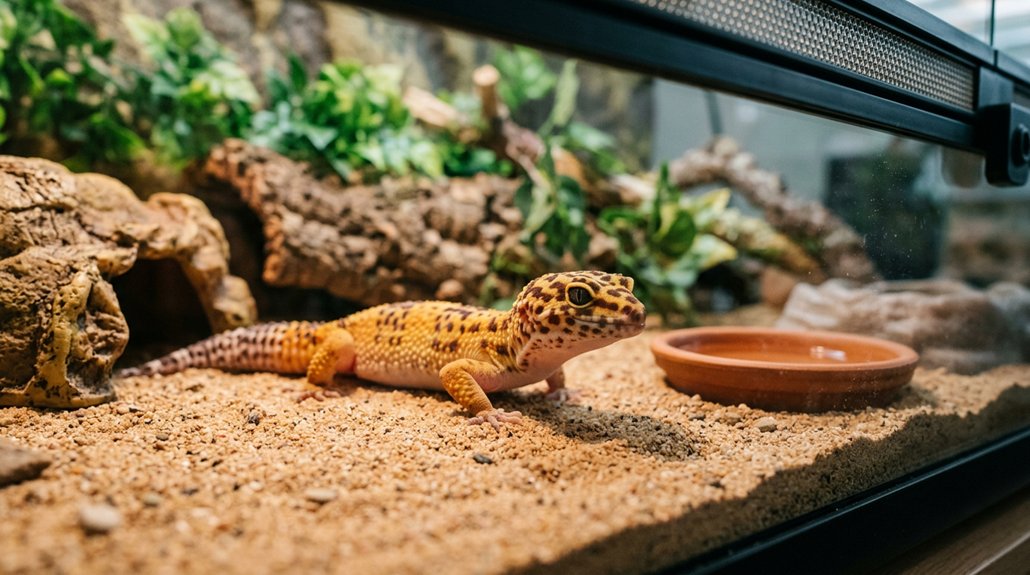
To care for a leopard gecko, start with a minimum 20-gallon tank, ensuring good air circulation and safe substrate like reptile carpet or tile. Establish a temperature gradient: 94-97°F warm zone, 70-77°F cool zone, using under-tank heaters. Maintain 30-40% humidity with a hygrometer and provide humid hides for shedding. Feed a balanced diet of gut-loaded insects, dusted with calcium and multivitamins. Regular cleaning and health monitoring are essential for your gecko’s thriving, and there’s much more to discover.
Key Takeaways
- Use a minimum 20-gallon tank with front-opening access for optimal gecko habitat.
- Maintain temperature gradient: warm zone 94-97°F, cool zone 70-77°F, humidity 30-40%.
- Incorporate hiding spots and safe substrates like reptile carpet or tile.
- Feed live insects, dust with calcium, and gut-load for nutritional balance.
- Conduct daily spot-cleaning and provide a humid hide for shedding support.
Choosing the Perfect Tank for Your Gecko
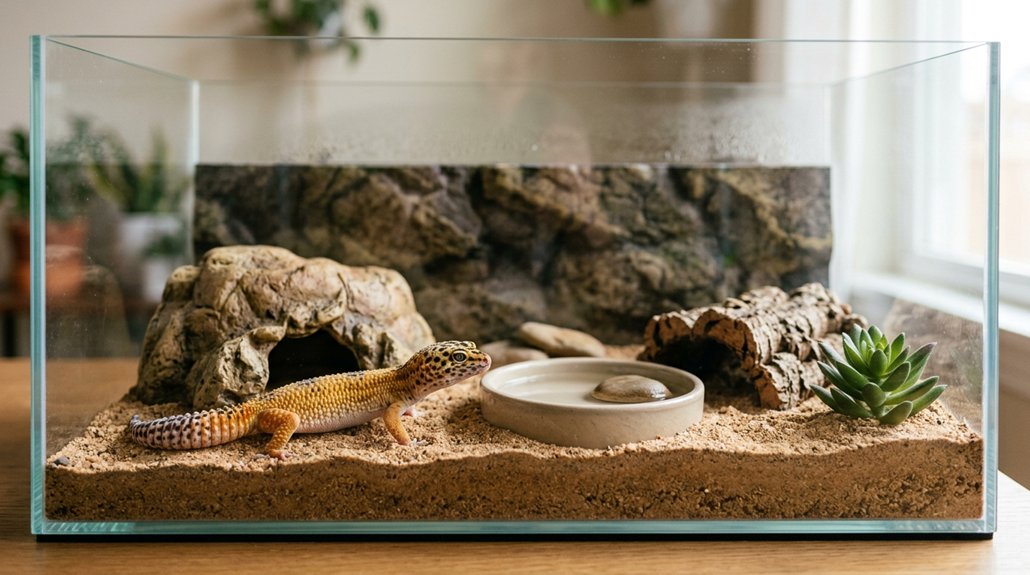
Selecting the appropriate tank for your leopard gecko is essential to guaranteeing its health and well-being. Start with a minimum tank size of 20 gallons for a single or pair of female geckos. If you’re housing multiple geckos, opt for larger tank dimensions to avert territorial disputes. Enclosure materials should include front-opening access to minimize stress during handling, combined with screen tops or wall vents to enhance air circulation. A safe substrate, like reptile carpet or tile, promotes cleanliness and maintains stable humidity. Add logs, caves, and plants to provide climbing and hiding features for environmental enrichment. These elements contribute to your gecko’s comfort and security, creating an ideal habitat that supports its natural behaviors. Prioritizing these factors will guarantee a healthy, thriving leopard gecko.
Setting Up Temperature and Humidity for Your Gecko’s Habitat
To guarantee your leopard gecko thrives, it’s vital to meticulously set up temperature and humidity parameters within their habitat. Establish a temperature gradient using basking surfaces with a warm zone of 94-97°F and a cool zone of 70-77°F. Utilize an under-tank heater or heat lamp, ensuring nighttime temperatures don’t drop below 60°F. Employ two strategically placed thermometers to precisely monitor these gradients.
Humidity regulation is equally important. Maintain ambient humidity levels between 30-40% using a digital probe hygrometer. Significantly, provide a humid hide with substrate moistened to 70-80% to aid in shedding. Constantly monitor and adjust both temperature and humidity to foster a comfortable and scientifically optimized environment for your gecko’s well-being.
Must-Have Accessories for Leopard Gecko Tanks
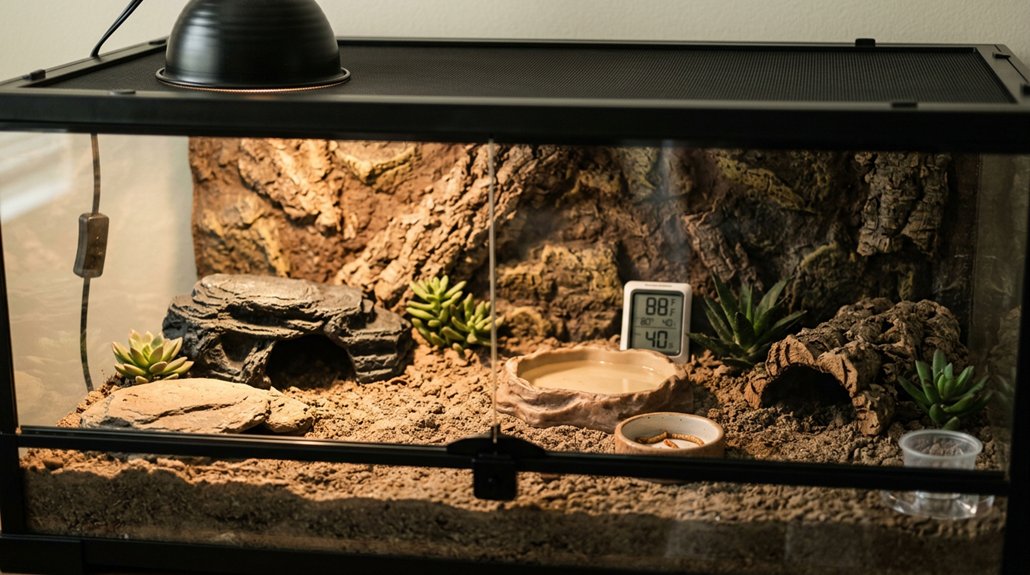
To guarantee your leopard gecko remains healthy and stress-free, equipping its tank with key accessories is essential. Use thermometers to precisely monitor temperature gradients, while a hygrometer will help you track humidity, maintaining levels between 10-30%. Incorporate various hiding spots and choose an appropriate substrate to imitate the gecko’s natural environment and fulfill its behavioral needs.
Essential Hiding Places
When setting up a leopard gecko’s habitat, ensuring an abundance of hiding places is crucial for their comfort and stress reduction. Leopard geckos thrive with hiding spots that mimic their natural environment, catering to their security needs and reducing territorial stress. For ideal enclosure enrichment, provide at least two to three hides, such as reptile caves, rocks, or artificial plants. This is particularly essential in multi-gecko habitats. A humid hide filled with moistened substrate types, positioned on the enclosure’s cool side, addresses their humidity needs and supports a proper shedding environment. Regularly altering the placement of these hides stimulates exploration opportunities, encouraging natural behaviors and providing the necessary comfort. Such strategic enrichment greatly enhances the gecko’s overall well-being in captivity.
Temperature and Humidity Tools
Accurate temperature and humidity management is necessary for maintaining a healthy leopard gecko environment. To guarantee precise temperature monitoring, employ two digital thermometers—one at the enclosure’s warm side and another at the cool end. This setup confirms ideal temperature gradients important for your gecko’s well-being. Achieve effective humidity control by using a hygrometer; aim to maintain ambient humidity at 30-40%, with a moist hide reaching 70-80%. Separate thermometers and hygrometers ensure precision in evaluating essential conditions. Incorporate a shallow water dish to subtly aid hydration and contribute indirectly to humidity control. Periodic replacement of UVB bulbs every 12 months guarantees continued health benefits, supporting calcium absorption—crucial for your gecko’s vitality.
Ideal Substrate Options
With the environmental conditions finely tuned, let’s focus on one of the foundational elements of leopard gecko care: selecting the ideal substrate. You have several substrate types to contemplate, with a mix of 60% organic topsoil and 40% play sand being exemplary for burrowing and moisture retention. Avoid using loose substrates like gravel or wood chips, as these can lead to digestive impaction if ingested. For a bioactive setup, guarantee a substrate depth of at least 4 inches, supporting a vibrant ecosystem with organisms like isopods and springtails. Enhancing the substrate with bark chips, leaf litter, and sphagnum moss will improve drainage and humidity. To promote healthy shedding, place a humid hide filled with moistened substrate on the enclosure’s cool side.
Feeding Your Gecko Right: Dietary Needs and Supplements
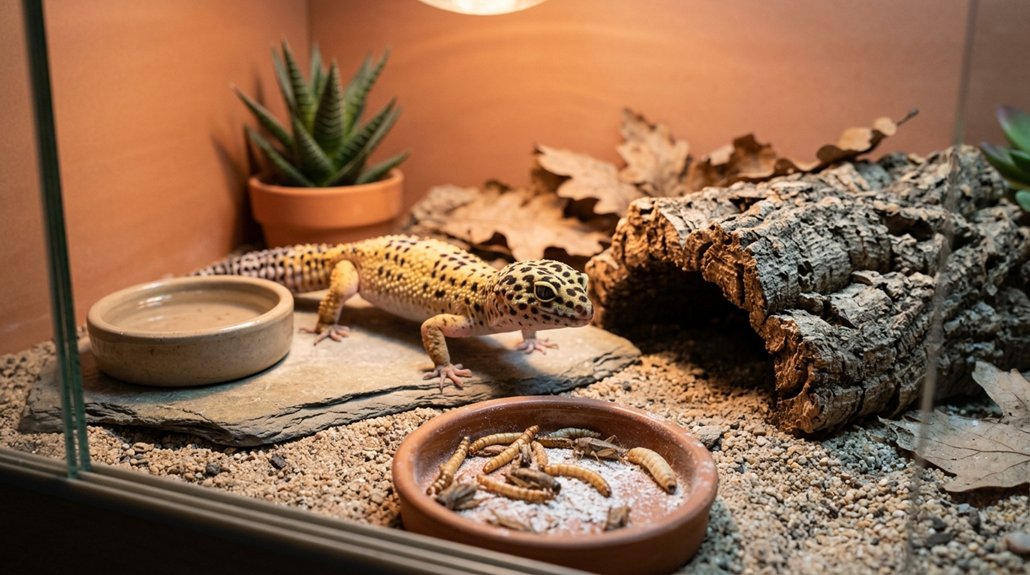
Understanding the dietary needs and supplements required for your leopard gecko is vital for maintaining its health and longevity. Leopard geckos are insectivores, thriving on a diet that consists primarily of a diversity of live insects. A balanced feeding schedule is important; juveniles require daily feeding, while adults can be fed every other day. Confirm that you select insects such as crickets, mealworms, and roaches, as they should be gut-loaded to provide the best nutrition.
- *Insect Size and Quantity:* Offer two insects per inch of your gecko’s length, making sure they aren’t wider than the gecko’s head.
- *Supplementation:* Dust insects with calcium (with vitamin D for juveniles) every alternate feeding.
- *Multivitamins:* Provide multivitamins once or twice weekly, avoiding fruits or vegetables.
Regular monitoring prevents uneaten insects from stressing your gecko.
Building Trust With Your Leopard Gecko
Caring for your leopard gecko doesn’t stop at meeting its dietary needs; building trust is equally important to guarantee a healthy and stress-free life. Start by allowing your gecko at least two weeks to acclimate to its new environment, promoting stress reduction and trust building. During this period, regularly check on it without handling, familiarizing your gecko with your presence and observing gecko behavior. When you begin handling, use gentle handling techniques: introduce your hand slowly to let the gecko approach. Opt for slow movements to avoid startling it. Hand-feeding can reinforce positive associations, as your gecko learns to see you as a caretaker. Over time, these techniques will deepen the bond, fostering a confident and trusting relationship.
Ensuring Your Gecko’s Health: Maintenance and Monitoring
To guarantee your leopard gecko’s health, routine maintenance and monitoring are essential components of their care regimen. Implementing structured hygiene practices involves daily spot-cleaning the habitat and ensuring the removal of soiled materials to minimize bacterial growth. Regular health monitoring is important to identify early signs of issues, and observing your gecko’s shedding process is key for preventing retained skin. Provide a humid hide to support this natural cycle.
Routine care, including daily habitat cleaning and health monitoring, ensures your leopard gecko thrives healthily.
Key Steps:
- Daily Spot-cleaning: Remove old food and waste to maintain cleanliness and prevent health hazards.
- Weekly Deep-clean: Change the substrate and disinfect the enclosure to eliminate harmful bacteria.
- Behavioural Observations: Note any changes in appetite or physical condition and schedule annual veterinary check-ups for thorough health assessments.
Why Leopard Geckos Make Great Pets for Beginners
If you’re a beginner looking for a reptile that’s easy to handle, leopard geckos are an excellent choice due to their manageable size and sociable nature. Their low-maintenance care requirements make them particularly appealing, as they primarily eat gut-loaded insects and thrive in a moderate-sized habitat. Additionally, their unique ability to blink, thanks to functional eyelids, gives them a familiar, relatable presence that simplifies daily interaction and care.
Easy To Handle
Among the array of pet reptiles, leopard geckos stand out due to their approachable nature and ease of handling, making them superb companions for beginners. Their calm temperament allows for simple handling techniques, beneficial for children and adults alike. Engaging with them requires minimal effort, yet they exhibit fascinating social behaviors. They primarily recognize owners through smell, forming a bond over time without demanding constant interaction. These unique lizards can blink and close their eyes, providing them with enchanting visual appeal.
With a lifespan ranging from 10–20 years, they can grow between 6–10 inches in length, offering a long-term pet commitment. Consider the following advantages:
- Efficient handling techniques make them user-friendly.
- Social behaviors enhance interactive experiences.
- Their distinctive eyes increase their visual charm.
Low Maintenance Needs
While some pets demand constant upkeep, leopard geckos are remarkably low-maintenance, making them ideal for novice reptile enthusiasts. These sociable creatures require only minimal daily interaction, allowing you to enjoy their presence without the stress of constant engagement. Simply checking in on them regularly suffices, reducing the risk of owner stress. Their dietary regimen is straightforward—an adult leopard gecko thrives on a diet of live, gut-loaded insects fed every other day. This simplifies feeding routines considerably. Additionally, they flourish in basic terrarium setups, which require less frequent maintenance compared to other reptile habitats. With an average lifespan of 10–20 years, leopard geckos provide long-term companionship without demanding excessive care, ensuring a manageable and rewarding pet ownership experience.
Frequently Asked Questions
How to Take Care of a Leopard Gecko for Beginners?
You’ll need to create an environment with a proper temperature gradient and provide a feeding schedule with calcium-dusted insects. Habitat enrichment, like hides and climbing structures, is key to your leopard gecko’s health and enrichment.
Can Geckos Hear You?
Yes, geckos can hear you with the precision of a radar, thanks to their advanced hearing capabilities. Their communication includes chirps and barks, demonstrating their ability to respond to and recognize auditory cues effectively.
Can a Leopard Gecko Go 4 Days Without Eating?
Yes, a leopard gecko can go 4 days without eating, but it’s not ideal. Monitor its feeding frequency, watch for unusual gecko behaviors or stress factors, and consider health indicators. Prolonged fasting requires veterinary attention.
What Is Needed for a Leopard Gecko Set Up?
You’ll need heating options for temperature control, such as a heat lamp or pad. Include habitat decor like hides and climbing structures. Choose suitable substrate types like organic soil and play sand. Maintain appropriate humidity levels using misting.
Conclusion
Caring for a leopard gecko can feel like maneuvering through the wild west of reptile care, but with the right setup, you’re well on your way to success. From selecting the ideal tank and maintaining temperature and humidity, to choosing the perfect accessories and diet, you’re ensuring your gecko’s well-being and health. By understanding their needs and building trust, leopard geckos can become cherished companions, proving they’re stellar, low-maintenance pets even for beginners. Keep calm and gecko on!