Boarding a horse each month varies widely, costing between $150 and $2,500. Costs hinge on the type—pasture, partial, or full board—and your geographic location, with urban centers demanding higher fees. Additional expenses like specialized feed and veterinary care can add $50 to $500 more. Hidden costs such as facility repairs or extra services elevate expenses further. To fully grasp these financial implications and make informed decisions, you’ll want insights from various other considerations.
Key Takeaways
- Full board costs range from $600 to over $2,500 monthly depending on services and location.
- Partial board requires owner participation and typically costs between $400 and $700 per month.
- Pasture boarding is a more affordable option, with costs ranging from $150 to $400 monthly.
- Urban locations increase boarding costs, often exceeding $2,000 due to higher demand.
- Additional monthly expenses include specialized feeds, veterinary care, and potential facility repairs.
What Is Horse Boarding?
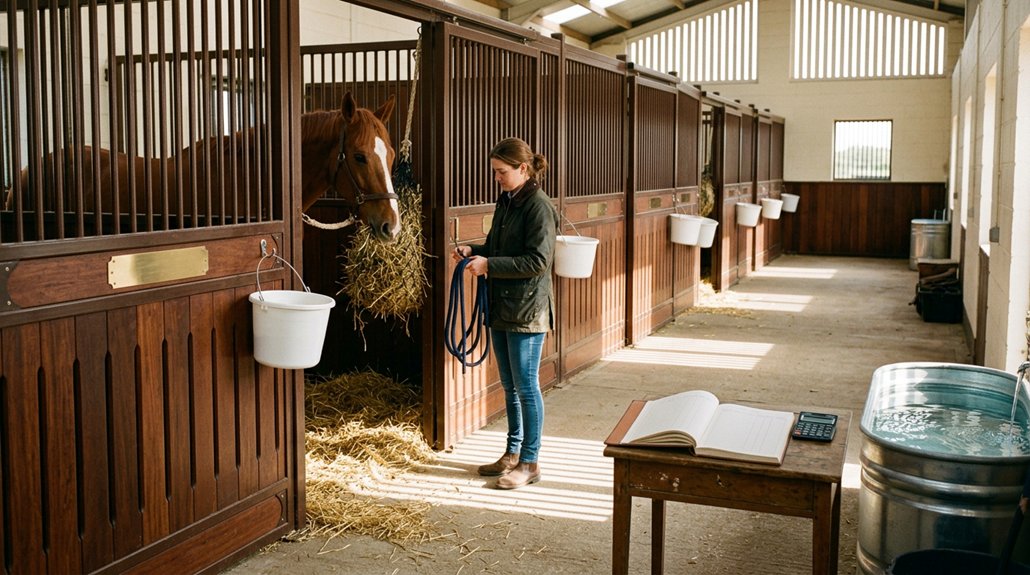
Horse boarding refers to the service of providing shelter and care for horses at a designated facility. At its core, boarding basics revolve around offering not just stalls or sheds, but also secure turnout areas for horses to exercise safely. Horse welfare is paramount, ensuring that each horse’s physical and mental needs are met. You’ll find that these facilities vary widely in the level of care offered, from self-care options, where you’re responsible for daily tasks, to full-service boarding that covers everything from feeding to grooming. Amenities like grooming stalls, wash racks, and riding arenas are commonly available, but they can notably influence the monthly cost. A thorough boarding contract is essential to clearly define services, responsibilities, and costs, ensuring everyone’s on the same page.
Understanding Horse Boarding Options
When considering horse boarding options, you’ll find a wide range of choices tailored to different needs and budgets, from full-service to self-care arrangements. It’s important to analyze cost factors such as geographical location, facility quality, and the specific services and amenities offered, as these elements markedly impact monthly expenses. By understanding what’s included in each boarding type, you’ll be better equipped to select an option that aligns with your financial and care preferences.
Types of Boarding Options
Selecting the right boarding option for your horse is essential, as it impacts not only the horse’s well-being but also your monthly budget and level of involvement. Your boarding preferences will influence whether you choose full board, which includes thorough care but can range from $700 to over $2,000. This option minimizes care responsibilities and provides structured attention. Partial boarding offers shared responsibility, typically costing between $400 and $700, giving you flexibility and potential savings. Opting for self-care boarding places daily care entirely on you, potentially reducing costs to $400-$1,000 but requiring substantial commitment. For those prioritizing budget, pasture boarding provides a simple, natural environment for as low as $150 but with less oversight. Review contracts to guarantee clarity on included services.
Cost Factors in Boarding
Although the experience of boarding a horse can be a delightful aspect of equestrian life, costs can vary widely due to several influencing factors. A significant component of cost comparison involves the type of boarding you choose—pasture, partial, or full board. Each option meets different care requirements, impacting monthly expenses. Pasture board, typically cheaper, ranges from $150 to $400, while full board, offering extensive care such as feeding and cleaning, ranges from $700 to $1,200+. Geographic location plays a critical role; facilities in urban areas may charge over $2,000, especially for luxury and training board. Always scrutinize boarding contracts, as additional expenses might include specialized feed or vet visits, potentially escalating the overall cost beyond initial expectations.
Amenities and Services Offered
While understanding cost factors in horse boarding provides a foundation for managing expenses, discerning the amenities and services each facility offers is equally important when choosing the right option. Amenities comparison plays an essential role as they can considerably impact your horse’s well-being and your experience. Consider this when making your decision:
- Indoor and Outdoor Arenas: Evaluate if year-round riding is vital to you, as arena access can enhance training opportunities.
- Wash Racks and Grooming Stalls: It simplifies grooming and promotes good hygiene, directly affecting your horse’s health.
- Safe Turnout Fields: Important for exercise and mental stimulation, impacting your horse’s behavior and well-being.
- Additional Services: Review any extra costs for specialized care like premium feed or veterinary services, pivotal in your service evaluation.
How Location Impacts Boarding Costs
Understanding how location affects boarding costs requires a keen insight into the dynamics of demand and regional economics. Urban pricing is significantly higher due to increased demand and limited space, as seen in places like New York, where monthly costs can exceed $1,300. Conversely, rural savings are compelling, with options in parts of Georgia ranging from $200 for limited services to $650 for full care. The local cost of living further influences these prices, with regions like urban centers reporting boarding fees between $1,900 and $2,200. Meanwhile, pasture boarding in areas with limited availability can cost as low as $400 to $500. Tapping into local community resources helps you grasp specific market dynamics, ensuring informed decisions.
What Drives the Cost of Horse Boarding?
When considering the factors driving horse boarding costs, it’s essential to recognize how location and service offerings influence the monthly fees. Facilities situated near urban centers or premium show circuits often command higher prices due to elevated demand and operational expenses, while the range of amenities and care levels available greatly affects overall cost. You should also remember that expert staff and high-quality facilities come at a premium, with all-inclusive packages generally more costly than self-care options where you take on additional responsibilities to save money.
Location and Services Impact
In the domain of horse boarding, the cost is intricately linked to both location and the breadth of services offered, often leaving potential boarders to navigate a complex financial landscape. Your decision is profoundly affected by:
- Urban Pricing: In cities, expect fees surpassing $1,000, attributed to high-demand land and facilities.
- Rural Affordability: In contrast, countryside boarding might range from $150 to $400, providing more budget-friendly solutions.
- Service Spectrum: Full boarding services (daily feed, stall cleaning) can rise to $1,200+, unlike the more economical self-care options costing $150 to $500.
- Added Amenities: Premium features like indoor arenas and training sharpen the price difference, reflecting enhanced value and care.
Your choice reflects both location dynamics and service expectations.
Care Level and Expertise
Although the cost of horse boarding varies widely, it’s primarily propelled by the level of care and expertise involved. Full board options, which integrate meticulous care services like feeding and stall maintenance, span from $700 to $1,200 per month. These plans reflect care quality, ensuring your horse’s well-being. Facilities with seasoned staff elevate costs, especially in luxury or training board scenarios, often surpassing $1,500 monthly. Partial board configurations, requiring owner involvement, offer savings, priced between $400 and $700. Premium amenities, such as indoor arenas, further escalate costs, reaching $2,500 in coveted areas. When evaluating pricing transparency, remember that geographic location and demand significantly influence fees, especially near urban centers or competition circuits.
Comparing Full Board and Partial Board: Financial Benefits
Deciding between full board and partial board for your horse comes down to weighing the financial benefits against the level of involvement you’re prepared for. A financial comparison reveals a stark contrast in cost analysis between the two.
Weigh financial benefits against involvement when choosing full or partial board for your horse.
- Full board: Costs $700-$1,200+, offering peace of mind with thorough care and professional oversight. You avoid day-to-day chores while your horse enjoys amenities like indoor arenas and professional training.
- Partial board: Ranges from $400-$700, potentially saving you hundreds each month. However, it requires your active participation in feeding and stall cleaning.
- Personal availability: If you’re time-pressed, consider full board for convenience.
- Expertise: Without sufficient experience, full board’s professional care can safeguard your horse’s needs.
Balancing these factors helps guarantee your choice aligns with both financial goals and personal involvement.
Unexpected Expenses: Tackling Hidden Horse Boarding Costs
While contemplating the financial nuances of horse boarding, it’s vital to anticipate the hidden costs that often accompany this responsibility. Unexpected charges can notably affect your budget. Many facilities impose extra fees for specialized feeds and medications, potentially adding $50 to $300 monthly. Additionally, veterinary expenses, including farrier services and dental check-ups, can range from $100 to $500 every few months. Be aware that some contracts exclude necessary services such as blanket changes or grooming, incurring additional costs. Repairs for fencing or stalls can be unexpectedly billed to you. Furthermore, liability insurance, training, or event participation incurs additional expenses. Consequently, scrutinizing these potential hidden charges is key to avoid unwelcome surprises and manage your financial obligations effectively.
Deciding Between Boarding and At-Home Horse Care
As you commence on the decision of choosing between boarding your horse or providing at-home care, it’s important to analyze various critical factors that will shape your choice. Weighing boarding benefits against home challenges is key. Boarding offers professional staff and socialization, ensuring the horse’s well-being, while providing relief from daily care duties. However, the costs, ranging from $150 to over $2,500 monthly, may prompt an evaluation of at-home care. Here’s what to reflect on:
Analyzing boarding benefits versus home care challenges is crucial when deciding the best option for your horse.
- Land availability and infrastructure: Can you provide adequate stabling and pasture space?
- Personal expertise: Do you possess the knowledge for health checks and feeding?
- Time and labor commitment: Are you prepared for the daily grind?
- Companionship needs: Will your horse have appropriate company?
Maximizing Your Horse Boarding Experience
To get the most out of your horse boarding experience, understanding the nuances of available boarding options is essential. Choosing between full care, partial care, and pasture boarding allows you to align your budget management with your horse’s needs. Regular communication with barn staff about care preferences guarantees consistent, quality care and effective health tracking despite staff changes. Engage actively with equestrian amenities such as riding arenas and social events to support your horse activities and foster community connections. Building strong boarding relationships with both staff and fellow boarders cultivates an enriching environment, strengthening mutual trust. Keep track of additional costs like specialized feed and veterinary care to mitigate unexpected expenses, allowing you to focus on enjoying the thorough boarding experience.
Frequently Asked Questions
What Is the Average Monthly Cost to Board a Horse?
You’re looking at average monthly expenses of $400 to $1,200+ to board a horse. Premium boarding amenities in popular areas can push costs beyond $2,000, while more affordable pasture options in rural locales range from $150 to $400.
What Is the 20% Rule in Horse Riding?
The 20% rule in horse riding is a safety precaution recommending that a rider, including tack, should weigh no more than 20% of the horse’s weight. This enhances riding techniques, ensuring the horse’s comfort and preventing injury.
What Is “I Love You” in Horse Language?
Did you know horses have 17 unique vocalizations? “I love you” in horse language includes equine communication like soft nickers, gentle nuzzling, and relaxed posture, reflecting deep horse emotions. These connections reveal their capacity for affection and trust.
What Is the 1/2/3 Rule in Horses?
The 1/2/3 rule in horse care refers to evaluating body condition scores, essential for managing feeding requirements and reducing training costs. It’s important for evaluating insurance considerations and identifying necessary facility amenities to support ideal health.
Conclusion
Boarding a horse is almost like orchestrating a symphony where every detail matters. You’ve explored options and locations, dissecting costs like a maestro scrutinizing every note. While full and partial boards offer different financial rhythms, unexpected expenses can sneak in with the subtlety of a midnight whisper. Choose wisely between boarding and home care; each decision is a brushstroke on the canvas of your equine journey. Maximize your boarding experience—it’s a master class in equestrian artistry!