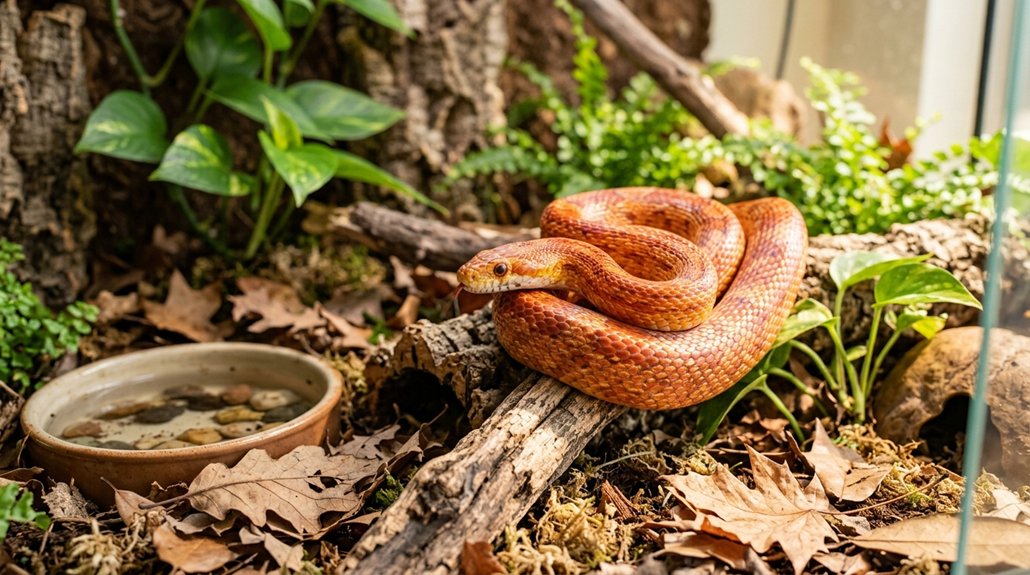
To guarantee your corn snake thrives, set up a 30-40 gallon tank with a secure lid and proper ventilation. Keep the warm side at 85°F and the cool side in the low 70s°F. Feed thawed rodents matching your snake’s mid-body diameter; juveniles every 5-7 days, adults every 10-14 days. Maintain 40-60% humidity, increasing to 70% during shedding. Handle gently and briefly. For those seeking deeper insights, there’s more to understand.
Key Takeaways
- Use a 40-gallon tank with a secure lid for corn snake habitat.
- Maintain a thermal gradient with a warm side at 85°F and a cool side in the low 70s°F.
- Feed thawed frozen rodents, avoiding live prey to prevent injuries.
- Ensure humidity levels are between 40-60%, increasing to 70% during shedding.
- Clean the habitat weekly and provide fresh water daily.
Setting Up the Perfect Corn Snake Habitat
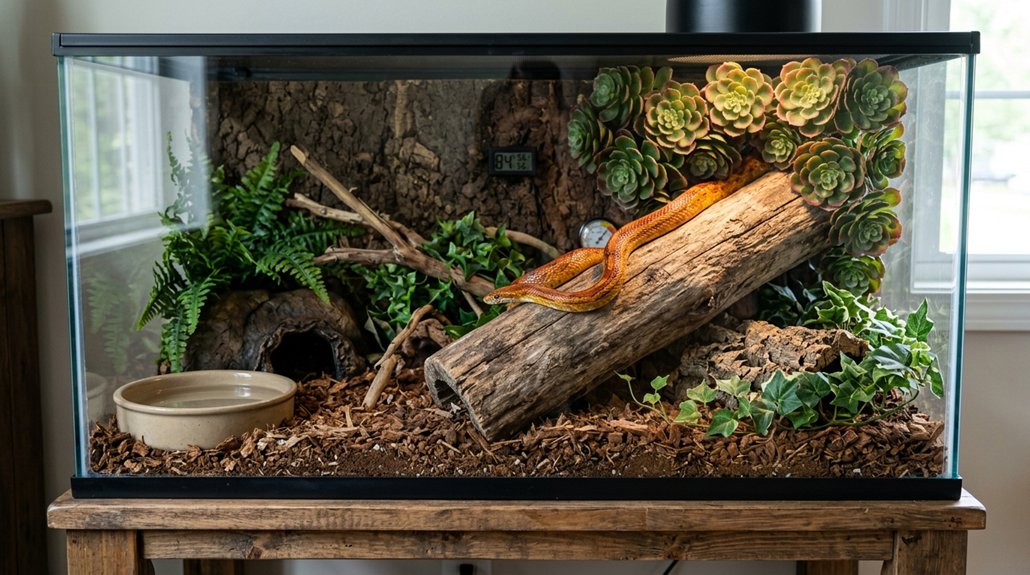
Setting up the perfect corn snake habitat is essential for guaranteeing their health and well-being, and it starts with selecting an appropriately sized enclosure. An adult corn snake thrives in a minimum habitat size of 30-40 gallons, with a 40-gallon breeder tank being ideal. Confirm enclosure safety by choosing a tank with a secure, well-ventilated lid, as these snakes are adept explorers. Maintain a thermal gradient inside, with the warm side at 85°F and the cooler side in the low 70s°F. Humidity should remain between 40% to 60%, increasing to 70% during shedding. Utilize habitat materials such as hides, branches, and plants to provide environmental enrichment, encouraging natural behaviors and fostering a secure, stimulating environment for your corn snake.
Feeding Techniques and Frequency for a Healthy Corn Snake
When establishing a feeding routine for your corn snake, understanding its nutritional needs and habits is vital for guaranteeing ideal health. Feeding preferences should center on thawed frozen rodents, preferably 1 to 1.5 times the diameter of your snake’s mid-body. This sizing minimizes choking risks while providing optimal nutrition. Tailor meal timing according to your snake’s life stage: juveniles demand feeding every 5-7 days, whereas adults thrive on a 10-14 day schedule, adjustable according to health and appetite. Avoid live prey due to potential injuries and aggression. Utilize feeding tongs to prevent accidental bites and foster a secure feeding atmosphere. Make sure fresh water is accessible and replaced daily to maintain hydration, essential during shedding when humidity is critical.
Maintaining Corn Snake Health and Ideal Climate
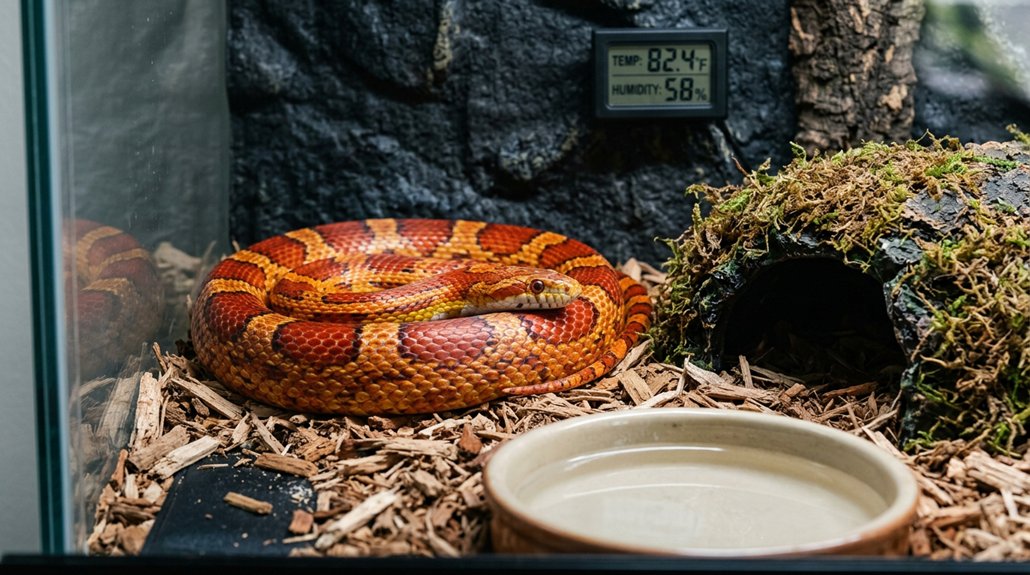
Feeding routines establish a clear dietary foundation for your corn snake, and maintaining its health involves providing an ideal environment. Implement temperature regulation by maintaining a gradient within its enclosure. Confirm the warm end is 85°F, while the cool end remains in the low 70s°F, allowing your snake to effectively manage its thermal needs. Utilize two thermometers to monitor these conditions closely. Humidity management is vital; maintain levels between 40% and 60%. Increase humidity to 70% only during shedding to aid in skin health. Provide a large, shallow water dish, always filled with fresh, clean water, replacing it daily to support hydration. Clean the habitat weekly with appropriate disinfectants to prevent bacterial buildup, guaranteeing an excellent living environment.
Creating the Perfect Environment for Shedding and Growth
Creating ideal conditions for shedding and growth is vital for the health of your corn snake. Effective humidity management is paramount; maintain levels between 40%-60% normally, and increase to around 70% during shedding preparation. Place a humid hide on the enclosure’s cool side with moistened substrate to support shedding and encourage natural behaviors. Monitor temperature gradients, confirming the warm end reaches 85°F and the cool end remains in the low 70s°F for effective thermoregulation. Incorporate a large, shallow water dish, continuously filled with fresh water, to facilitate soaking and hydration. Observe your snake for shedding indicators like dull skin and cloudy eyes, and adjust conditions as needed to prevent complications. Regular assessment guarantees a conducive growth and shedding environment.
Ensuring Your Corn Snake Thrives: Handling and Interaction Guide
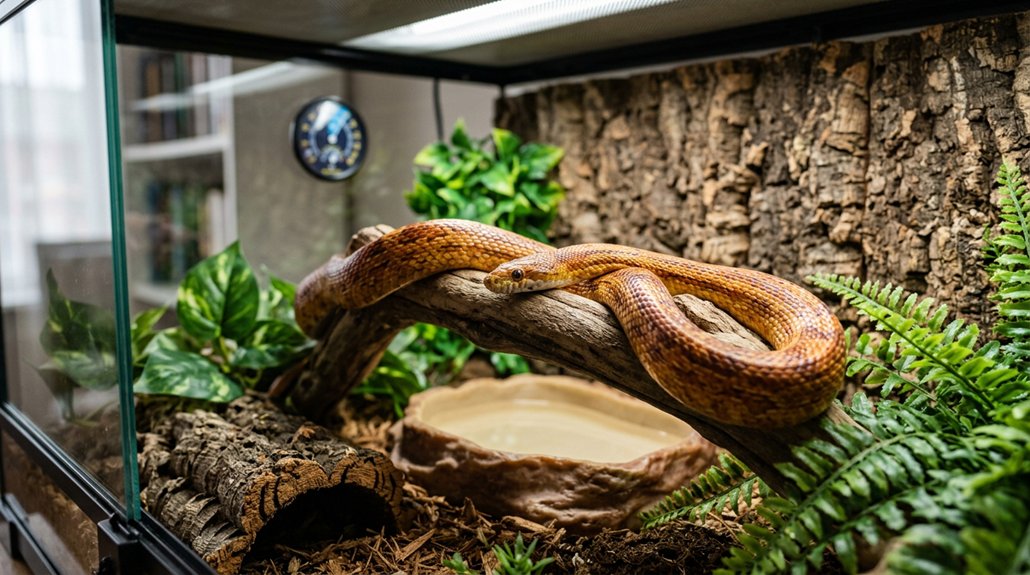
A corn snake’s ability to thrive is substantially influenced by proper handling and interaction practices. Implementing precise handling techniques and socialization tips is essential for minimizing stress and promoting well-being. Begin by waiting at least two weeks after acquisition or feeding to guarantee the snake acclimates. During handling, use both hands to support its body, avoiding the tail to prevent injury. Sessions should be brief, lasting 10-15 minutes, and avoid interaction during shedding or within 48 hours post-feeding. Engage in regular, gentle interactions 1-2 times a week to enhance sociability. Always wash your hands before and after handling to mitigate bacterial transmission, guaranteeing both your corn snake’s hygiene and your ecosystem remain pristine. These practices foster a healthier, more adaptable pet.
Frequently Asked Questions
How Often Should I Clean the Corn Snake’s Enclosure?
You should conduct full enclosure maintenance monthly, with spot cleaning of waste and uneaten food every few days. This cleaning frequency guarantees a hygienic environment, preventing bacteria buildup that can harm your corn snake’s health.
Can Corn Snakes Recognize Their Owners?
Don’t hold your breath; corn snakes’ behavior isn’t geared for owner recognition. They’re primarily driven by environmental cues and survival instincts. While habituation happens, their affinity relies on consistent care and familiar stimuli, not personal attachment.
What Should I Do if My Corn Snake Escapes?
First, secure your home to prevent future escapes. Immediately search warm, dark areas like under appliances. Utilize recovery methods like setting bait and checking regularly. Once found, reinforce the enclosure’s security to enhance escape prevention and containment.
How Long Can Corn Snakes Live in Captivity?
In captivity, your corn snake can live 15-20 years. Lifespan factors include genetics, diet, and environment. Prioritize health considerations such as proper humidity, temperature, and regular vet check-ups to guarantee longevity and enhance quality of life.
Are Corn Snakes Suitable for First-Time Reptile Owners?
Yes, corn snakes are ideal for first-time reptile owners due to their docility, manageable size, and simple care requirements. When compared to other species, they’re one of the best beginner reptiles, offering fewer challenges.
Conclusion
You’ve now got all the tools to make your corn snake’s life as vibrant as a painted masterpiece. From setting up a microcosm that mirrors its natural habitat to mastering the art of feeding, you’re nurturing life through science. Guarantee it thrives with careful climate control, shedding facilitation, and thoughtful interaction techniques. By diving into this well of knowledge, you’re giving your corn snake a thriving, healthy life that resonates with the rhythm of nature itself.