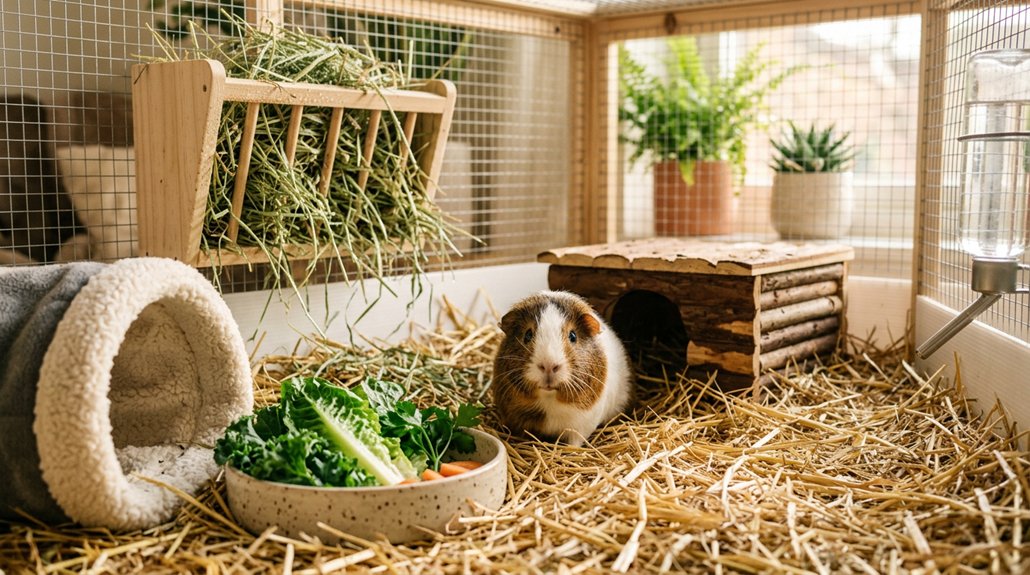
To create a comfortable habitat for guinea pigs, provide at least 7.5 square feet for one and 10.5 for two, using solid flooring. Opt for paper-based or kiln-dried pine bedding, maintain a temperature of 17–20°C, and guarantee good ventilation. Incorporate tunnels, hideouts, and toys for enrichment, and perform daily spot cleaning with weekly deep cleans. Rotating toys and foraging options encourages natural behavior and engagement, fostering health and happiness. Explore more for enriching guinea pig life.
Key Takeaways
- Ensure the habitat provides at least 7.5 square feet for one guinea pig and 10.5 for two.
- Maintain comfortable temperatures between 17–20°C and ensure proper ventilation to prevent respiratory issues.
- Use solid flooring with paper-based or kiln-dried pine bedding for safety and hygiene.
- Incorporate tunnels, hideouts, and chew toys to encourage natural behaviors and enrichment.
- Perform daily spot cleaning and weekly deep cleans with non-toxic materials to maintain habitat hygiene.
Creating a Comfortable Habitat for Guinea Pigs
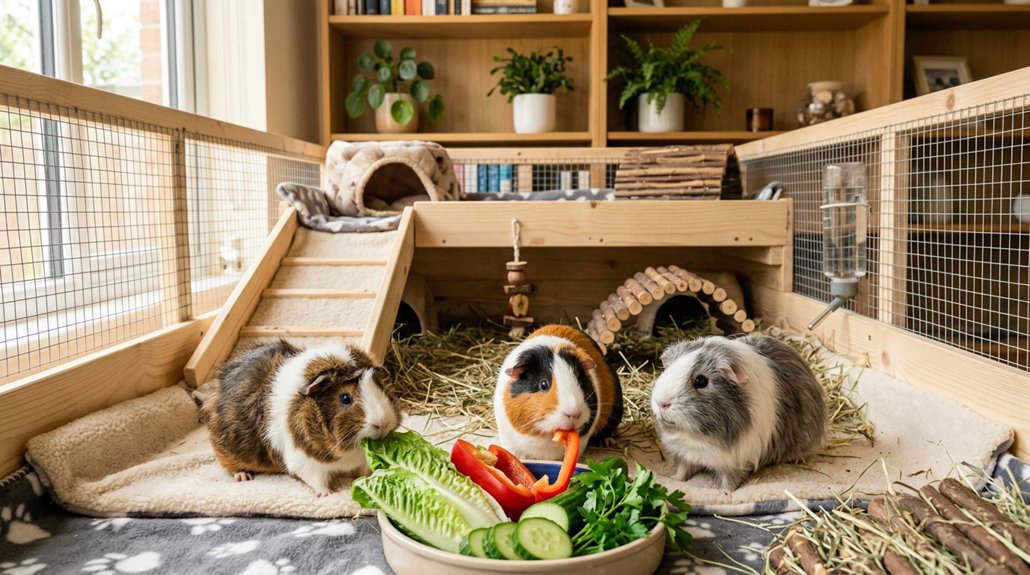
A well-designed guinea pig habitat is important for promoting the health and well-being of these small animals. Providing at least 7.5 square feet of space per guinea pig, plus additional space for multiple pigs, supports healthy movement and reduces stress. When selecting guinea pig bedding, opt for paper-based materials or kiln-dried pine to maintain a clean, dry environment, avoiding cedar or raw pine due to potential respiratory issues. Solid flooring is essential to prevent foot injuries, thereby ensuring a comfortable surface. For habitat enrichment, offer varied elements such as tunnels and hideouts to stimulate curiosity. Regular cleaning, including daily spot cleaning and weekly deep cleans, is critical for hygiene, minimizing illness risk, and encouraging your guinea pigs’ exploratory behavior.
Choosing the Right Space and Location for Your Guinea Pig’s Home
Selecting the ideal space and location for your guinea pig’s home is essential for their health and happiness. Prioritize areas with ample room: at least 7 square feet for one guinea pig, or 10.5 square feet for two. Choose cage materials that facilitate habitat enrichment—such as modular setups with varied textures. Guarantee your enclosure is no less than 30 cm in height to support natural behaviors. Position the habitat in a dry, well-ventilated space, away from heat sources, drafts, or rapid temperature changes.
| Element | Specification |
|---|---|
| Space | 7 sq ft (1 guinea pig), 10.5 sq ft (2 guinea pigs) |
| Height | Minimum 30 cm |
| Climate | Dry, well-ventilated |
| Outdoor Housing | Predator-proof, 1.5 x 1m, separate sleeping areas |
Monitor conditions to adapt to shifting environments appropriately.
Maintaining Guinea Pig Comfort: Temperature and Ventilation
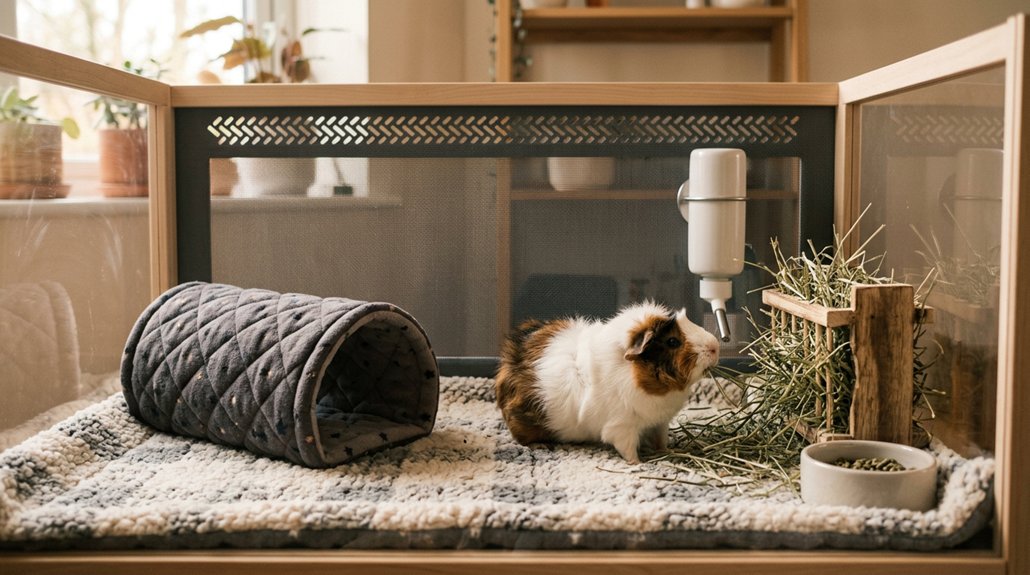
To guarantee your guinea pigs are comfortable, it’s essential to maintain a consistent temperature range of 17–20°C (65–75°F) within their habitat. Avoiding temperature extremes is key, as heatstroke can occur above 26°C and chilling below 15°C. Additionally, guarantee proper ventilation to maintain dry conditions and prevent harmful odor buildup, keeping their respiratory health in check.
Ideal Temperature Range
While guaranteeing the comfort of your guinea pigs, maintaining an ideal temperature range within their habitat is paramount. The best climate lies between 17°C to 20°C (65°F to 75°F). Temperatures exceeding 26°C risk heatstroke, whereas those below 15°C may chill them. To avoid temperature extremes, consider habitat modifications such as insulating materials or climate control devices.
| Temperature (°C) | Temperature (°F) | Condition |
|---|---|---|
| Below 15 | Below 59 | Too Cold |
| 17 to 20 | 65 to 75 | Ideal Range |
| 21 to 25 | 69.8 to 77 | Caution |
| Above 26 | Above 78.8 | Risk of Heatstroke |
Protect habitats from direct sunlight and drafts. Check the indoor environment regularly to guarantee it remains dry, as dampness can cause health issues.
Proper Airflow Practices
Understanding proper airflow practices is essential for maintaining an ideal living environment for guinea pigs, as inadequate ventilation can lead to respiratory issues. Implement effective airflow techniques by ensuring the guinea pig’s housing is well-ventilated to promote fresh air circulation. Utilize ventilation materials like wire mesh tops on solid-sided cages to enable airflow while keeping sides secure. Position the cage away from direct sunlight and heat sources, avoiding both draughts and excess noise, to maintain a comfortable temperature of 17–20°C (65–75°F).
Regularly monitor the environment’s temperature, since levels above 26°C can cause heatstroke, and temperatures under 15°C may lead to chilling. Ensuring a calm and quiet habitat further enhances guinea pig comfort, reducing stress and promoting overall well-being.
Keeping Guinea Pig Habitats Clean
To maintain a hygienic environment and prevent odors in your guinea pig’s habitat, it is crucial to perform daily spot cleaning and weekly deep cleaning. Utilize a dry, dust-free, and absorbent bedding material, ensuring you’re avoiding softwood products that can harm their respiratory health. Always choose non-toxic cleaning materials to prevent potential health risks and dispose of soiled bedding promptly to minimize bacteria growth.
Daily Spot Cleaning
Maintaining a clean guinea pig habitat is essential for their health and well-being, and daily spot cleaning plays an integral role in this process. Implementing efficient spot cleaning techniques guarantees daily hygiene and prevents health issues. Start by removing soiled bedding and uneaten food to maintain a hygienic environment. Use dust-free bedding to prevent respiratory irritation, and replace any damp bedding immediately. Check for droppings in hiding spots and common pathways to prevent odor and bacterial buildup. Consistently clean and refill food and water bowls to avoid contamination—guaranteeing fresh supplies are always available. By integrating these tasks into your routine, you contribute to a healthier living environment for your guinea pigs, fortifying their overall well-being within their habitat.
Weekly Deep Cleaning
Start a thorough weekly deep cleaning routine to guarantee your guinea pigs thrive in a pristine environment. To maintain a proper cleaning frequency, remove all bedding, food bowls, and toys from the enclosure. Use safe products to wash surfaces, eliminating bacteria and maintaining hygiene. Rinse or replace bedding with fresh, absorbent materials like paper-based products or washable fleece liners. Regularly inspect toys and hiding spots for signs of wear to prevent injury.
After cleaning, reorganize the habitat to enrich your guinea pigs’ living area. Consider the arrangement of hiding spots, tunnels, and food sources.
| Task | Frequency | Product |
|---|---|---|
| Remove all items | Weekly | None |
| Clean surfaces | Weekly | Safe cleaning products |
| Replace bedding | Weekly | Absorbent, safe materials |
| Inspect/replace items | Weekly | Visual inspection, safe replacements |
What Every Guinea Pig Needs in Their Home
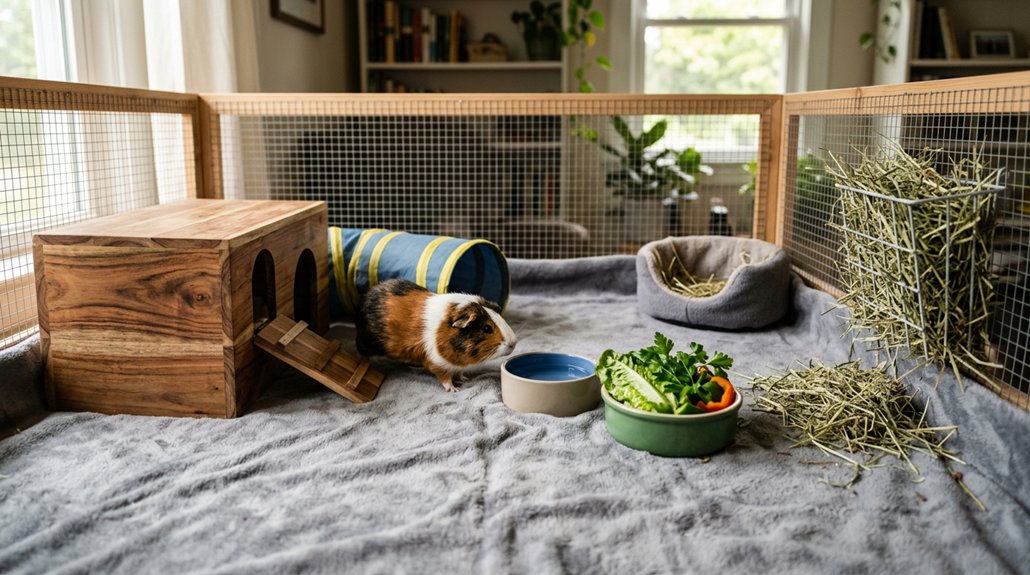
Ensuring your guinea pig’s home is well-equipped involves more than just placing them in a cage; it requires a thoughtful approach to their spatial, environmental, and psychological needs. To meet guinea pig needs, their habitat essentials include ample space—at least 7.5 square feet for one guinea pig, though two require 10.5 square feet. Maintain a stable temperature between 17–20°C in a well-ventilated area to prevent overheating or chilling. Choose safe bedding materials like paper-based products or kiln-dried pine as they’re free from harmful oils. Providing hiding spots and tunnels is crucial, offering security and reducing stress. Finally, daily spot cleaning and weekly deep cleans are indispensable to sustain a healthy environment, ensuring your guinea pig thrives comfortably in their sanctuary.
Enhancing Guinea Pig Life With Toys and Enrichment
Embracing enrichment through toys and varied stimuli is essential for a guinea pig’s cognitive and emotional well-being. Regular toy rotation fosters mental stimulation by preserving an engaging environment, mitigating boredom and stress. Utilize foraging toys during mealtime to replicate natural scavenging behaviors, stimulating physical activity while promoting healthy eating habits. Incorporating cardboard tunnels, chew sticks, and hideaway spots encourages natural behaviors like chewing and exploring, offering guinea pigs opportunities for social play and discovery. Hiding spots are pivotal for their comfort, allowing them to escape or feel secure when threatened. Enriched environments enhance overall happiness and strengthen social bonds, promoting collective interactions among guinea pigs. By systematically varying stimuli, you’ll guarantee your guinea pigs remain active, curious, and contented in their habitat.
Frequently Asked Questions
What’s the Best Habitat for a Guinea Pig?
You’ll need a habitat with suitable space, providing at least 7.5 square feet per guinea pig. Guarantee perfect bedding like fleece for comfort. Design the environment with hiding spots, tunnels, toys, maintaining 17-20°C for best well-being.
What Does Popcorning Mean in a Guinea Pig?
Did you know guinea pig behavior studies show 70% of young guinea pigs exhibit popcorning? This ecstatic leap represents popcorn significance, showing they’re content and secure, a crucial sign of good mental health and a welcoming environment.
What Is the Number One Cause of Death for Guinea Pigs?
The number one cause of death in guinea pigs is often related to untreated obesity-related conditions. Focus on guinea pig health by preventing common illnesses like heart disease, diabetes, and respiratory infections through proper diet, exercise, and veterinary care.
What Are 5 Signs Your Guinea Pig Is Happy?
Your guinea pig’s happiness is evident when they vocalize through purring, display relaxed postures, engage in playful behaviors like popcorning, enjoy social interactions through cuddles, and explore their habitat actively, showcasing their comfort and well-being.
Conclusion
Creating a comfortable habitat for your guinea pigs is vital for their overall well-being. As you’re caring for these little creatures, remember that “an ounce of prevention is worth a pound of cure.” By selecting the right location, guaranteeing ideal temperature and ventilation, and maintaining cleanliness, you’ve laid a strong foundation for their health. Providing essential items and enriching their environment with toys makes certain they’re happy and engaged, offering them a quality life in their cozy home.