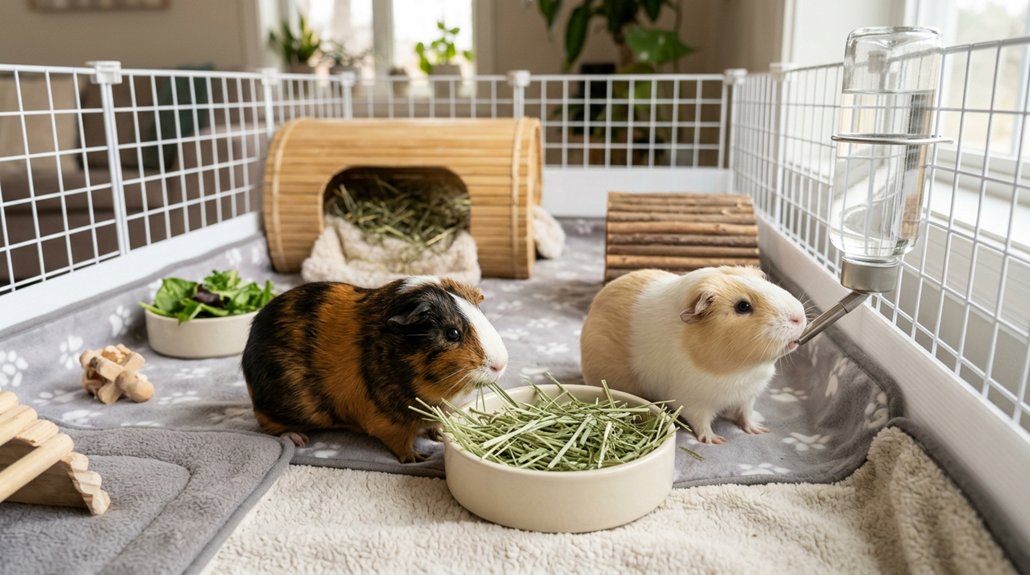
When selecting guinea pig bedding, prioritize soft, absorbent, non-toxic, dust-free materials that also neutralize odors. Fleece liners provide comfort and are reusable, although they need frequent washing. Hemp bedding offers excellent odor control and absorbency, while eco-friendly paper bedding guarantees low dust levels. Avoid pine and cedar shavings due to harmful oils. Choosing the right bedding is essential for your guinea pig’s health and comfort, and optimizing your choice enhances their well-being sustainably. Discover more valuable insights ahead.
Key Takeaways
- Fleece liners offer softness, reusability, and are machine washable, beneficial for guinea pig comfort and eco-friendly practices.
- Hemp bedding provides superior odor control and absorbency, reducing maintenance expenses and enhancing habitat cleanliness.
- Eco-friendly paper bedding, made from virgin fiber, is highly absorbent with low dust levels, ideal for guinea pigs with respiratory sensitivities.
- Kiln-dried aspen wood shavings are natural and absorbent but require frequent changing, increasing long-term costs.
- Avoid pine and cedar shavings due to the presence of toxic aromatic oils harmful to guinea pig health.
Key Requirements for Guinea Pig Bedding
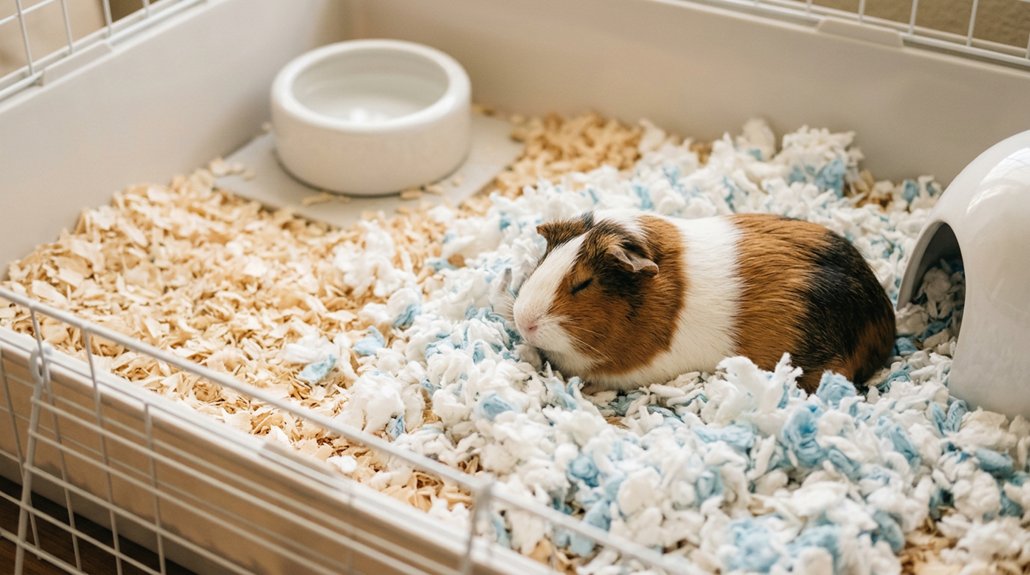
When selecting bedding for guinea pigs, it’s vital to prioritize their health and comfort by focusing on specific requirements. Choose bedding material types that are particularly soft to prevent pododermatitis, guaranteeing guinea pig comfort on their sensitive feet. Highly absorbent options are fundamental as they keep your pet dry, effectively reducing the risk of skin irritations. Always opt for non-toxic bedding, which safeguards against health issues related to chewing and accidental ingestion. Confirming the bedding is dust-free will help prevent respiratory problems, particularly for guinea pigs with sensitivities. Finally, prioritize materials that offer effective odor neutralization; this not only maintains a pleasant environment for your pet but also supports overall hygiene and comfort for you as the owner.
Fleece Liners as Cost-Effective Comfort
Fleece liners offer a trifecta of benefits for guinea pig bedding: comfort, eco-friendliness, and long-term affordability. They provide a plush surface that enhances guinea pig comfort while minimizing the risk of pododermatitis. The perfect fleece insulation consists of three layers designed to guarantee your pet’s well-being:
| Layer | Purpose |
|---|---|
| Soft Top | Comfort and pododermatitis prevention |
| Absorbent Middle | Moisture wicking |
| Water-Resistant | Keeps the cage dry |
Though initial costs are higher, fleece liners become economical with time, approximately $120 annually for a 4×2 C&C cage. They’re machine washable, reducing waste compared to disposable options. For ideal hygiene, launder these liners bi-weekly using a gentle, non-allergenic detergent, guaranteeing a clean and safe habitat for your guinea pigs.
Ensuring Wood Shavings’ Safety for Guinea Pigs
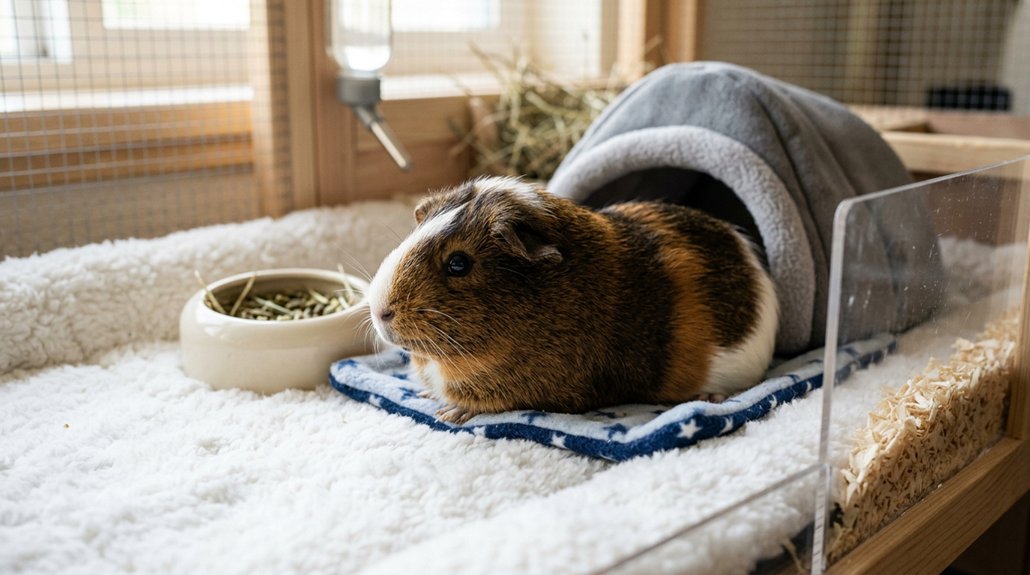
While fleece liners offer an excellent bedding solution, not all guinea pig owners opt for this material. If you’re considering wood shavings, prioritize wood quality and bedding safety. Choose only kiln-dried, dust-extracted options like aspen shavings to protect your pets from respiratory issues. Avoid untreated pine and cedar, as their aromatic oils can be toxic. Monitor your guinea pigs for signs of irritation or distress, as low-quality shavings might harbor harmful particles or sharp edges. Confirm the shavings are additive-free to prevent health risks from chemical exposure. Proper layering, regular cleaning, and maintaining dryness are key to prevent fungal growth. Opt for reputable brands that market their shavings as safe for small animals, confirming compliance with safety standards.
Eco-Friendly Guinea Pig Paper Bedding
For a sustainable and health-conscious choice, eco-friendly paper bedding offers numerous benefits for guinea pig owners. Made from 100% virgin fiber, it contains no harmful dyes or additives. It absorbs moisture efficiently, controlling odors naturally—without added fragrances—guaranteeing your guinea pig’s comfort. In bedding material comparison, paper bedding stands out due to its ultra-low dust levels, especially beneficial for guinea pigs with respiratory sensitivities. Additionally, its compressibility allows it to fluff up, creating a soft, plush layer ideal for cozy nesting. While the initial cost is approximately $22.99, its durability and low maintenance can lead to long-term savings. Choosing eco-friendly paper bedding guarantees a safe environment while reducing potential irritations for your small pet, promoting their overall health.
Hemp vs. Aspen: Natural Odor Control for Bedding
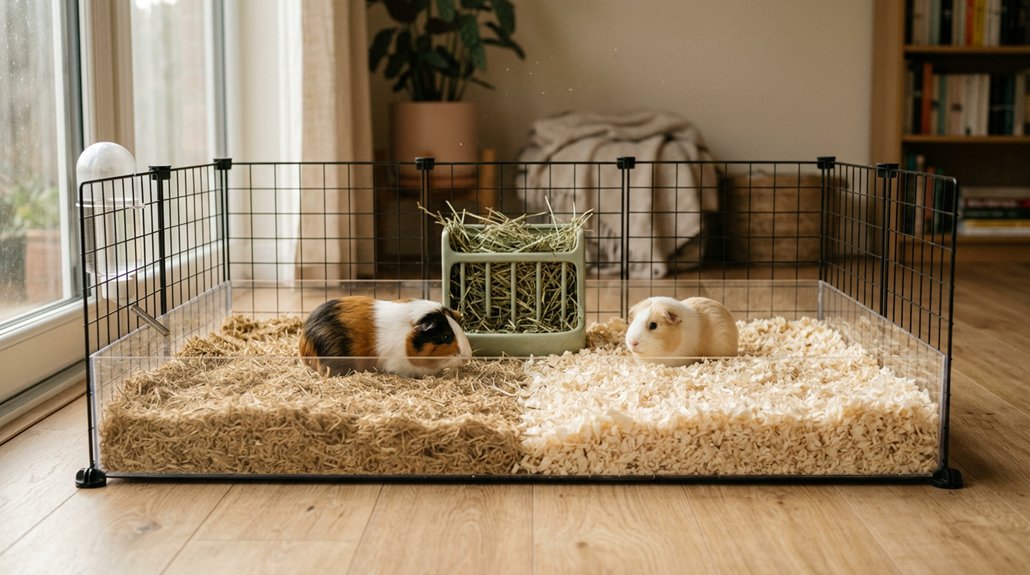
Although choosing the right bedding for your guinea pig can be challenging, understanding the benefits of hemp versus aspen bedding helps you make an informed decision. Hemp bedding, with its ammonia-neutralizing properties, excels in odor control and maintains a fresh environment for your guinea pig. Its high absorbency, derived from the hemp plant’s inner core, aids in moisture retention, providing a cleaner habitat and benefiting guinea pigs with respiratory sensitivities. On the other hand, aspen bedding, while natural and biodegradable, presents some drawbacks like less effective odor management and the need for more frequent changes due to its reduced absorbency. Consequently, hemp bedding offers superior long-term value, not only ensuring better odor control but also reducing overall maintenance expenses.
Hay Bedding: Encouraging Natural Guinea Pig Behaviors
Since guinea pigs thrive on engaging with their environment, incorporating hay bedding into their habitat encourages them to exhibit natural behaviors essential for their well-being. Hay provides your furry friend with opportunities for foraging behaviors, allowing them to search for hidden treats and stimulating mental activity. By using hay as bedding, you also offer them an abundance of natural chew toys—crucial for dental health and preventing boredom. Additionally, hay bedding supports:
- Burrowing instincts: Guinea pigs naturally dig and create tunnels, promoting physical exercise.
- Warm insulation: Hay acts as a natural insulator, keeping them cozy during colder months.
- Organic habitat: Compostable hay contributes to sustainable pet care practices.
Ensure the hay is soft and free from sharp strands, maintaining a safe environment for exploration.
Planning Your Guinea Pig Bedding Budget
While hay bedding presents several benefits for your guinea pig’s natural behavior and health, evaluating your overall bedding budget is an important aspect of responsible pet care. Bedding performance should align with budget considerations. Fleece liners, washed bi-weekly, offer a cost-effective solution. Wood shavings and paper bedding, due to frequent changes, can drain $200-$500 annually. Litter pellets are cost-prohibitive at $1,075 yearly. Examine ongoing costs and shift to reusable options like fleece or hemp to minimize expenses.
Use this table to guide budget considerations:
| Bedding Type | Annual Cost | Performance |
|---|---|---|
| Fleece Liners | $120 | High durability |
| Wood Shavings | $200 | Moderate usage |
| Litter Pellets | $1,075 | Costly expendable |
Balancing performance with expense guarantees sustainable care planning.
Reducing the Environmental Impact of Guinea Pig Bedding
When selecting bedding for your guinea pigs, opting for sustainable alternatives like reusable fleece liners or compostable hemp can considerably reduce environmental waste. Consider eco-friendly disposal methods by composting or sourcing paper bedding from recycled materials, which helps minimize waste generation. By choosing responsibly sourced options and managing supplies efficiently, you contribute to a more sustainable guinea pig care routine.
Sustainable Bedding Alternatives
Exploring sustainable bedding alternatives for guinea pigs not only enhances their well-being but also supports environmental health. Opting for sustainable materials like hemp and paper pellets can markedly decrease environmental impact, as they’re compostable, reducing landfill waste. Here’s why these options stand out:
- Hemp Bedding: This material offers excellent absorption and longevity, extending the bedding lifespan and minimizing the need for frequent replacements.
- Fleece Liners: Although initially more costly, these reusable liners lower your guinea pig’s environmental footprint over time compared to traditional single-use options.
- Recycled Paper Pellets: Choosing bedding made from recycled or plant-based materials can curb habitat destruction and promote responsible resource usage.
Eco-Friendly Disposal Methods
Someone keen on reducing the environmental impact of their guinea pig’s bedding should prioritize eco-friendly disposal methods. Implementing composting methods with biodegradable options like hemp and aspen can greatly minimize landfill waste, as these materials decompose naturally and enrich the soil. It’s advisable to select bedding made from recycled materials, such as paper pellets, ensuring they’re sourced from eco-conscious manufacturers. Using reusable fleece liners can further reduce waste since they last several years and lessen your environmental footprint. You might also consider reusing or repurposing old liners for household tasks. Participating in local community programs that focus on composting pet bedding underscores sustainable practices and helps diminish landfill contributions, enhancing your commitment to an environmentally friendly lifestyle.
Minimizing Waste Generation
As you aim to minimize waste generation from your guinea pig’s bedding, prioritizing the use of reusable materials like fleece liners can be an effective strategy. Fleece benefits include their longevity and washable nature, resulting in considerable reductions in landfill waste compared to single-use options like wood shavings and paper. Here are effective approaches:
- Fleece Liners: Opt for fleece liners that can last years, substantially decreasing disposable consumption.
- Composting Options: Consider eco-friendly bedding like hemp and recycled paper pellets, which can be composted, allowing for waste reduction and sustainable disposal.
- Regular Maintenance: Maintain and clean your bedding consistently to extend its lifespan, further promoting waste minimization.
Choosing the Best Bedding for Your Guinea Pig’s Needs
When selecting the ideal bedding for your guinea pig, it’s essential to evaluate factors like absorbency, cost, and safety to cater to their unique needs. Consider guinea pig preferences alongside bedding comparisons to choose the best option. Fleece liners, with their soft texture and eco-friendly nature, suit indoor habitats but need frequent washing. These have a slightly higher initial cost, so budget accordingly. Hemp bedding offers excellent odor control and absorbency, ideal for long-term use due to its compostable nature. Although paper bedding provides comfort and moisture absorption, it is considerably more expensive annually. Opt for kiln-dried aspen wood shavings if you prefer a natural option; however, frequent changes could inflate costs. Avoid pine and cedar due to harmful aromatic oils.
Frequently Asked Questions
What Is the Main Cause of Death in Guinea Pigs?
Respiratory infections are the main cause of death in guinea pigs, often linked to their environment. You should pay attention to guinea pig health by preventing dust and using appropriate bedding to minimize common diseases and maintain their well-being.
What Can I Put on the Bottom of My Guinea Pig Cage?
You can put bedding materials like fleece liners, paper, hemp, or aspen shavings at the bottom of your guinea pig cage. Guarantee these materials promote cage cleanliness, minimize dust, and offer safety to maintain your guinea pig’s health.
What Bedding Material Is Dust Free for Guinea Pigs?
Imagine your guinea pig moving through an enchanted forest of fleece liners—dust free alternatives embrace them like a nurturing canopy. These options brighten their world, benefiting tiny lungs with healthier, softer bedding that resembles magical creature habitats.
What Should Guinea Pigs Sleep On?
Your guinea pigs should sleep on soft, comfortable bedding. Fleece liners are ideal, supporting their nighttime behavior and bedding preferences. It’s essential for you to maintain and clean bedding regularly to guarantee their health and wellness.
Conclusion
When selecting bedding for your fluffy companions, consider options that guarantee their well-being, minimize unpleasant aromas, and nurture their intrinsic behaviors. Fleece liners, with their plush embrace, provide cost-effective comfort, while eco-friendly paper bedding leaves a lighter footprint. Wooden shavings, hemp, and aspen offer natural safeguards against odors. Ultimately, harmonizing comfort with practicality guarantees a sanctuary where your guinea pigs can thrive. Craft a bedding plan that suits both your pet’s needs and your conscious choices.