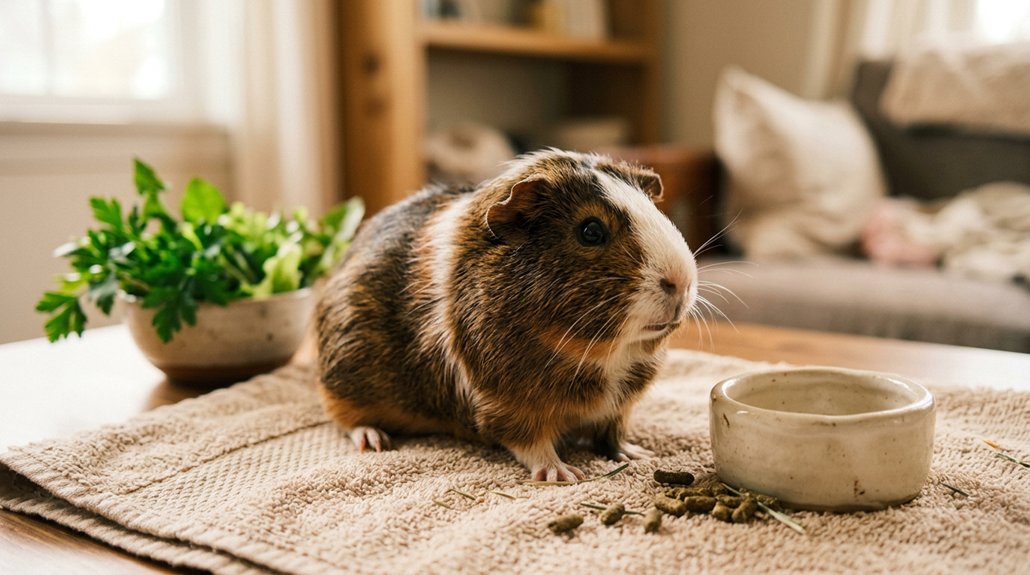
If your guinea pig isn’t eating, it may indicate underlying health problems like dental disease or infections. Watch for critical symptoms such as a cessation of eating or stool production beyond 8–12 hours, and behavioral changes like lethargy or a hunched posture. Guarantee fresh hay and aromatic greens are available, and maintain a stress-free environment. If symptoms persist, consult a vet promptly. This insight can guide necessary actions for your pet’s health. More strategies await you.
Key Takeaways
- Dental disease might cause chewing difficulties, leading to reduced appetite in guinea pigs.
- Infections can suppress appetite and requires monitoring for associated symptoms like lethargy or swollen abdomen.
- Providing fresh grass hay and aromatic greens helps stimulate the guinea pig’s appetite.
- Stress reduction and a tranquil environment can encourage eating in sensitive guinea pigs.
- Immediate veterinary care is needed if eating stops for more than 8-12 hours to prevent dehydration and malnutrition.
Why Your Guinea Pig’s Reduced Appetite Needs Immediate Attention
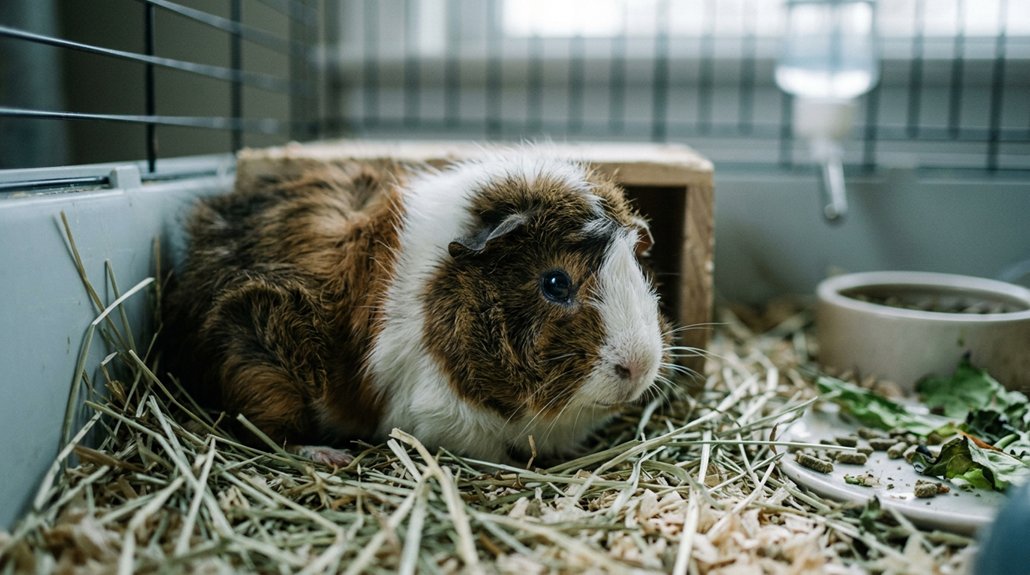
When your guinea pig shows a reduced appetite, it’s crucial to address the issue immediately, as it often signifies underlying health problems that demand prompt intervention. Reduced food intake is a diagnostic red flag for potential dental disease, where overgrown teeth prevent proper chewing and lead to serious complications like gastrointestinal stasis. Additionally, appetite loss can indicate underlying infections, causing metabolic distress if left untreated. Don’t overlook warning signs like weight loss or decreased stool production—they underscore the urgency of immediate veterinary evaluation. Monitor your guinea pig’s weight and consumption regularly. An intake cessation beyond 8-12 hours escalates risks like dehydration and enhances malnutrition probabilities, exacerbating any pre-existing conditions, demanding a swift and thorough diagnostic assessment by a veterinary professional.
Critical Symptoms Indicating Veterinary Care Is Required
Should your guinea pig display critical symptoms such as a cessation in eating or not producing droppings for 8 to 12 hours, immediate veterinary evaluation is essential to prevent life-threatening gastrointestinal stasis (GIS). GIS is often a precursor to severe complications, and a timely intervention can be life-saving. Additionally, pay attention to any behavioral changes such as lethargy, a hunched posture, or teeth grinding, as these symptoms indicate distress. Weight loss with a swollen abdomen and minimal stool production dictate urgent care. Subtle signs like puffed-up fur and reduced activity should not be ignored. If your guinea pig refuses food or water while showing behavioral shifts like hiding or trembling, these could signal a serious condition requiring prompt veterinary action.
Steps to Stimulate Appetite at Home Right Now
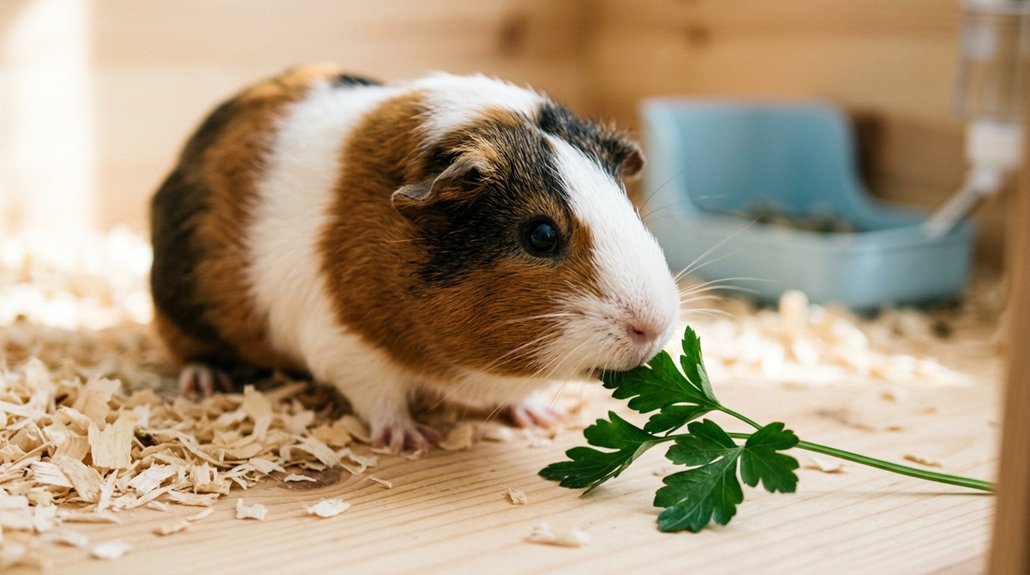
To effectively stimulate your guinea pig’s appetite, it is crucial to understand the primary strategies that promote eating. Prioritize dietary preferences by ensuring fresh grass hay is always available, as its fiber content supports digestive health. Introduce aromatic leafy greens like cilantro or parsley; their scent can engage your guinea pig and boost consumption. Employ feeding techniques such as maintaining a tranquil environment, minimizing stress-inducing factors like loud noises. Conduct routine health checks to discern any discomfort or pain that might suppress appetite. If your pet continues to exhibit feeding reluctance, consider syringe feeding a flavored electrolyte solution or a homemade gruel from pellets and greens to provide necessary nutrients. These methods can help stimulate eating behavior in your guinea pig.
How to Know It’s Time to Call the Vet
Monitoring your guinea pig’s response to appetite-stimulating techniques is important, but recognizing when professional help is needed is critical. If your guinea pig hasn’t eaten or produced droppings for 8 to 12 hours, immediately consider contacting a vet due to the risk of gastrointestinal stasis. Be vigilant for signal behaviors like lethargy, a hunched posture, and teeth grinding, as these indicate distress requiring veterinary care. Quick response to dietary changes and weight loss is necessary, since guinea pigs are sensitive to even slight body condition variations. Abdominal swelling or dehydration symptoms, such as skin tenting, signal urgent intervention. Persistent refusal to eat or drink coupled with concerning symptoms like lack of urine output suggests underlying problems that need expert diagnosis and treatment.
How to Prevent Future Appetite Loss in Guinea Pigs
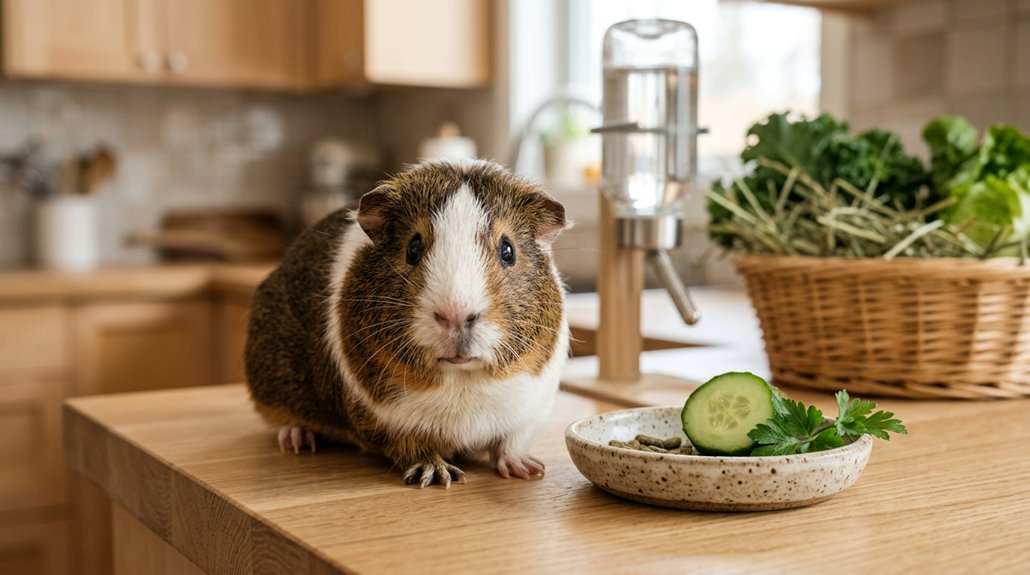
To prevent future appetite loss in guinea pigs, it is vital to establish a consistent feeding routine that includes high-quality grass hay and a variety of fresh vegetables, ensuring an adequate supply of dietary fiber important for gastrointestinal health. Implementing stress reduction strategies is equally important; maintaining a stable environment and providing social interaction with compatible companions can enhance emotional well-being and reduce stress-induced anorexia. Regular veterinary check-ups are recommended to monitor key health aspects like dental condition, as undiagnosed issues are a common trigger for reduced food intake.
Consistent Feeding Routine
While establishing a consistent feeding routine for guinea pigs, it’s important to offer fresh hay, high-quality pellets, and a variety of leafy greens at the same time each day, reinforcing positive eating habits and preventing appetite loss. Implementing a precise feeding schedule is significant for maintaining their gastrointestinal health. Regular monitoring guarantees access to food and water at all times, as they require frequent intake to prevent gastrointestinal stasis. It’s crucial to provide a stable feeding environment:
- Avoid abrupt dietary changes; introduce new foods gradually over several days.
- Make sure the feeding area is clean and comfortable, reducing stress factors.
- Consistently check food and hay quality to prevent contamination.
- Limit disruptions from noise or environmental changes to maintain appetite.
Utilize these strategies for the best dietary regulation.
Stress Reduction Strategies
Even though guinea pigs are resilient creatures, maintaining their stable environment is vital in preventing stress-induced appetite loss. Guarantee a consistent routine with minimal disruptions, as guinea pigs thrive on predictability. Activity enrichment plays an important role in stress reduction, as introducing chew toys and hiding spots alleviates boredom and encourages natural foraging behaviors. Bonded companionship can reduce solitude-induced anxiety, securing their emotional well-being.
| Strategy | Benefit |
|---|---|
| Stable Environment | Reduces stress |
| Activity Enrichment | Encourages natural behavior |
| Bonded Companionship | Decreases anxiety |
Regular handling and gentle socialization decrease anxiety, making them feel secure. Always offer access to fresh hay and a variety of favorite vegetables to cater to their fluctuating dietary preferences. Attention to these stress reduction strategies guarantees your guinea pig maintains a robust appetite.
Choosing the Right Recovery Resources for Your Guinea Pig
Selecting appropriate recovery resources for your guinea pig is essential when they’re not eating, as it helps prevent potentially fatal conditions like digestive slowdown and GI stasis. Commercial feeds, such as Kavee’s Krucial Care, are formulated to be mixed with water for syringe feeding, delivering enriched nutrients like Vitamin C. If these aren’t accessible, consider DIY alternatives:
- Soaked guinea pig pellets: Verify they’re compatible with your pet’s dietary needs.
- Organic baby food: Use only those without harmful ingredients.
- Two-part food to one-part water mix: This consistency facilitates syringe feeding.
- Regular monitoring: Track weight and behavioral changes to detect complications.
A vigilant approach in selection and administration is pivotal for recovering your guinea pig’s health. Confirm timely veterinary consultation if issues persist.
Frequently Asked Questions
How to Treat a Guinea Pig Not Eating?
Evaluate your guinea pig’s health by addressing feeding habits. Provide fresh grass hay, syringe-feed recovery formula, and monitor weight daily. Maintain a stress-free environment and seek veterinary consultation if they haven’t eaten for 8 to 12 hours.
What Are 5 Signs Your Guinea Pig Is Happy?
Ever wonder about your guinea pig’s elusive joy? Look for relaxed posture, social wheeking upon seeing you, a strong appetite, playful popcorn jumping, and clean fur. These behaviors scientifically indicate a happy guinea pig brimming with life.
How Long Can a Guinea Pig Go Without Eating?
Your guinea pig shouldn’t fast beyond 8 to 12 hours, as digestive health relies on constant food intake. Extended fasts risk gastrointestinal stasis and other critical issues. Monitoring food intake and seeking early veterinary intervention is essential.
How to Restore Guinea Pig Appetite?
Why wouldn’t proper hydration rejuvenate their appetite? Guarantee your guinea pig’s water is fresh and abundant, and gradually introduce dietary changes with hydrating veggies like cucumbers. Regularly evaluate their health to diagnose potential underlying issues.
Conclusion
In addressing your guinea pig’s appetite loss, you’re prioritizing its well-being. Have you considered all the telltale signs that hint at immediate veterinary intervention? Identifying critical symptoms and exploring evidence-based appetite stimulants can make all the difference. By implementing preventative measures and choosing appropriate recovery resources, you’ll safeguard your pet’s health. Remember, ongoing monitoring and prompt actions are essential. Ultimately, isn’t your peace of mind—and your guinea pig’s health—worth the effort?