
Your hamster might be biting due to fear, confusion, or stress triggered by sudden movements, loud noises, or unfamiliar scents. To reduce biting, allow acclimatization time, and create a safe, stress-free environment. Speak softly and use positive reinforcement with treats to build trust. Handle gently and avoid sudden intrusions in their space. Gradually implementing these steps can prevent biting and foster a happier hamster. Explore further to uncover additional strategies to enhance your hamster’s comfort.
Key Takeaways
- Hamsters may bite due to fear triggered by sudden movements or loud noises.
- Misinterpreting fingers as food can lead to confusion and unintentional biting.
- Familiarize your hamster with its environment to reduce stress-induced biting.
- Positive reinforcement with treats can encourage friendly behavior and reduce biting incidents.
- Safe handling techniques and minimizing environmental stressors help prevent biting behavior in hamsters.
Common Biting Triggers in Hamsters

If you’ve ever been bitten by a hamster, you know how sudden and surprising it can be. Effective bite prevention starts with understanding common triggers. Sudden movements and loud noises often induce a fear response in hamsters, leading to bites. When planning cage entry, remember that hands approaching from above might be perceived as a threat, prompting territorial reactions.
Additionally, it’s essential to guarantee hands are free from food smells, as hamsters might mistake fingers for treats. Starting with gentle, predictable movements during cage entry can minimize anxiety and reduce risk. Finally, maintaining a stable environment without abrupt changes in scents or sounds is imperative to prevent stress-induced biting. Implementing these measures will create a safer, more comfortable space for both you and your hamster.
Understanding the Reasons for Hamster Biting
Understanding why your hamster bites begins by considering fear and discomfort triggers alongside environmental and scent influences. Quick movements or unexpected sounds can provoke defensiveness, while even familiar hands might inadvertently mimic food scents, causing confusion. Additionally, stress from environmental changes can increase biting as your hamster tries to cope with perceived threats.
Fear and Discomfort Triggers
While small and seemingly innocuous, hamsters can display biting behavior due to fear or discomfort. Understanding these triggers is essential for addressing the issue effectively. Hamsters have a pronounced startle response, often biting if startled by sudden movements or loud noises. This “startle bite” typically occurs when they’re abruptly awakened or touched unexpectedly. Additionally, their territorial instincts can lead to biting if hands invade their space, especially in Syrian hamsters, which perceive it as a threat.
Consider these common fear and discomfort triggers:
- Sudden environmental changes or new scents, which can overwhelm them.
- Approaching from above their line of sight, provoking defensive behavior.
- Mistaking fingers for food due to lingering scents, causing confusion and discomfort.
Identifying these triggers helps prevent fear-induced biting.
Environmental and Scent Influences
When it comes to managing hamster biting behavior, understanding the environmental and scent influences on these small creatures is essential. Hamsters possess a heightened scent sensitivity; unfamiliar human scents and abrupt environmental changes can trigger stress-induced biting. When a hamster perceives unknown scents, it often mistakes hands for threats. To minimize this, use scent-free soap before handling, allowing familiar human scents to reassure the hamster. Make certain your hamster’s habitat includes ample hiding spaces, providing security and reducing stress-induced or territorial biting. Introducing soothing scents, like familiar human pheromones via a tissue, can create a comforting environment, further mitigating aggressive responses. Recognizing these factors enables you to create a stable, scent-consistent environment to help decrease biting behavior effectively.
Steps to Build Trust With Your Hamster
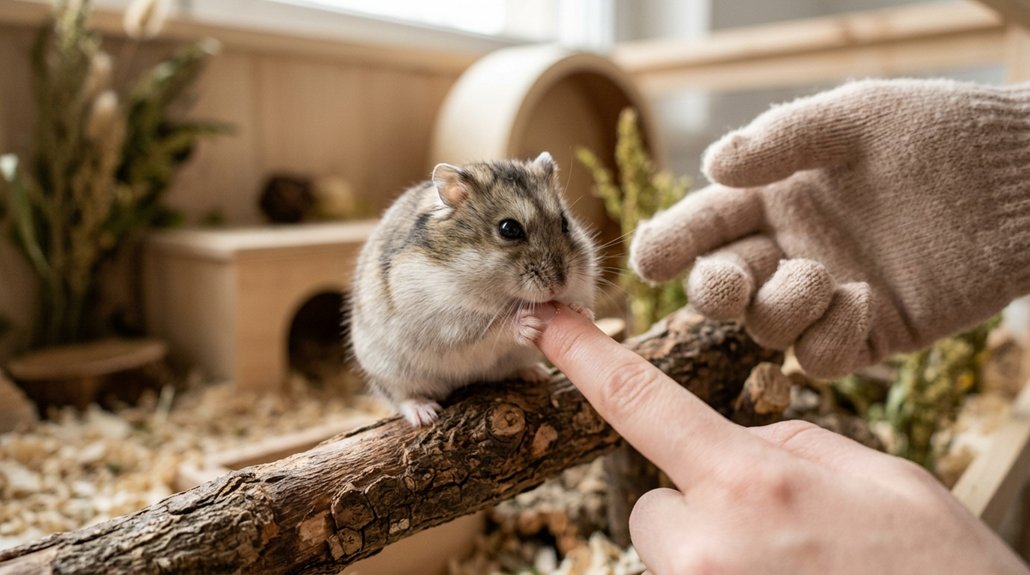
To build trust with your hamster, start by allowing it two to three days to adjust to its new environment, reducing stress. Speak softly near the cage to reinforce a sense of safety and use treats strategically to encourage voluntary interaction, fostering positive associations. Additionally, practice patience through gentle handling sessions that prioritize comfort, ensuring your hamster experiences gradual and stress-free engagement.
Quiet Bonding Techniques
Gaining your hamster’s trust requires patience and a calm approach to effectively introduce quiet bonding techniques. Start by allowing your hamster a week to acclimate to their new environment with minimal physical contact, which reduces stress and fear. Focus on gentle interactions and trust building using these steps:
- Softly talk to them and place your hand near the cage to create familiarity.
- Offer small treats at the cage entrance to encourage your hamster to approach naturally.
- Daily short interaction sessions of 1–3 minutes help associate your presence with positivity.
Always respect your hamster’s mood and retreat if they appear uncomfortable, such as freezing or retreating. Gradually increase interaction duration as they become more at ease.
Patience and Gentle Handling
Building a trusting relationship with your hamster goes beyond quiet bonding techniques, involving both patience and gentle handling. Trust building requires a steady, calm demeanor; allow several days for your hamster to acclimate. Use handling techniques that promote comfort: extend your palm as a resting place, inviting your hamster to climb up voluntarily rather than grabbing from above. This fosters security and confidence. To develop trust, engage regularly by offering treats at the cage entrance, letting them approach at their own pace. Short interaction sessions of 1-3 minutes prevent overwhelming them. Be attentive to their behavior and avoid sudden movements or loud noises. Calm, deliberate actions reduce stress, reinforcing a gentle handling approach that strengthens trust.
Environment for Comfort
Creating a comfortable environment is essential for fostering trust with your hamster. A stable cage setup minimizes stress, ensuring social interaction doesn’t result in bites. To achieve this:
- Quiet Stability: Keep the hamster’s habitat in a quiet area, avoiding frequent changes that may trigger anxiety.
- Hiding Spots and Enrichment: Integrate tunnels and toys to provide security and mental stimulation.
- Observation: Regularly monitor your hamster’s behavior for signs of discomfort or well-being, adjusting the environment when necessary.
Allow your hamster a two to three-day adjustment period in its new cage, refraining from handling during this time. Use a gentle voice and soft movements near the cage to promote security. A well-considered cage setup builds a sense of safety, reducing stress levels and biting.
Practical Ways to Stop Biting

Even though your hamster may exhibit biting behavior, employing practical strategies can effectively address this issue. Start with adjustment strategies by allowing your hamster to explore a familiar surface like a bed or couch. This gradual exposure builds comfort and reduces biting incidents. Positive reinforcement is key; offer treats from your hand at a safe distance, fostering trust without touching. Implement safe handling techniques using a scoop made from a 2-liter soft drink bottle to encourage voluntary interaction. Distraction methods such as softly blowing towards their face can mitigate aggressive reactions. Prioritize patience with short handling sessions, progressively increasing as their comfort improves. These steps will help unlearn biting behaviors, ensuring a harmonious relationship with your pet.
Creating a Safe and Stress-Free Environment
Addressing biting behavior goes beyond direct interaction techniques; the environment you provide plays an important role. A well-considered cage setup can greatly influence your hamster’s demeanor. Make sure to include ample hiding places, giving them a secure retreat and reducing stress-induced biting. Noise reduction is critical; minimize loud disturbances and sudden movements that might cause fear and defensive reactions. Providing enrichment activities encourages natural behaviors, decreasing anxiety and unwanted biting.
A consistent approach to routine handling is fundamental. Predictability in daily interactions and feedings leads to a sense of security, further lowering the chance of biting. Remember:
- Create a calming environment with thoughtful cage setup.
- Include hiding places for mental ease.
- Opt for routine handling and enrichment activities.
These steps foster a safe, stress-free environment.
Responding to Bites: Mistakes and Solutions
When a hamster bites, it is crucial to understand and address the triggers to prevent future incidents. Startle-induced bites stem from sudden movements or loud noises. Implement handling techniques that are gradual and gentle, minimizing these triggers. Pay attention to your hamster’s behavioral cues to distinguish between playful nibbles and aggressive bites, which often result from fear rather than aggression.
Avoid reacting with aggression, yelling, or striking when bitten; such responses amplify your hamster’s stress and fear. Instead, build trust through patience and consistent handling. For preventive measures, wash hands with scent-free soap to eliminate confusing food smells that may cause biting from misidentification. By refining these approaches, you reduce biting frequency, nurturing a more harmonious relationship with your hamster.
Habits for a Happier Hamster
Cultivating a harmonious environment is essential for your hamster’s well-being, leading to reduced biting tendencies. Address their exercise needs by creating ample opportunities for playing time and enrichment activities. This includes a variety of toys and a spacious wheel. Confirm essential habitat enhancements like cozy hiding spots to foster a secure atmosphere. Regular social interaction during their active evening hours enhances trust and familiarity, making them more receptive to contact.
Creating a harmonious environment with toys and interaction reduces hamster biting and builds trust.
Maintain their grooming routines consistently, as this contributes to their overall comfort and health. Here’s how you can promote a happier hamster:
- Provide secure hiding spots to reduce stress and biting.
- Engage in handled social interaction, building trust.
- Establish a routine with minimal environmental changes, confirming security.
These strategies support a happier, bite-free hamster.
Frequently Asked Questions
How Do I Make My Hamster Stop Biting?
To stop your hamster from biting, focus on proper hamster care and observe their behavior. Introduce your presence gradually, use scent-free soap, offer treats, and handle during active hours, ensuring a stress-free environment for your pet.
How Do You Discipline a Hamster for Biting?
You can’t effectively discipline a hamster for biting. Instead, focus on bite prevention through positive reinforcement. Reward calm behavior with treats and gentle handling to build trust. Consistent, patient handling helps them associate human interaction with safety.
What Are the Signs of an Unhappy Hamster?
Unhappy behavior in hamsters includes stress indicators like excessive biting, rapid sniffing, freezing, retreating, and stiffness. You’ll notice decreased activity, increased hiding, and defensiveness. Sudden environmental changes can intensify these behaviors, highlighting your hamster’s discomfort.
What to Do if a Hamster Bites You?
When bitten, remain as still as a statue, avoiding sudden withdrawal. Gently retreat and assess hamster behavior, identifying stress or discomfort. Clean wounds carefully, and adopt bite prevention strategies, like scent-free hands and gentler handling techniques.
Conclusion
Understanding why your hamster bites is essential to fostering a trusting relationship. Many believe biting is inevitable, but that’s not entirely true. By recognizing triggers and building trust, you can reduce biting incidents considerably. Practical strategies, like ensuring a safe environment and responding correctly to bites, are critical. Implementing these steps encourages a happier, more harmonious bond with your pet. Remember, patience and consistency are key; soon, biting will be a rare occurrence in your hamster’s behavior.