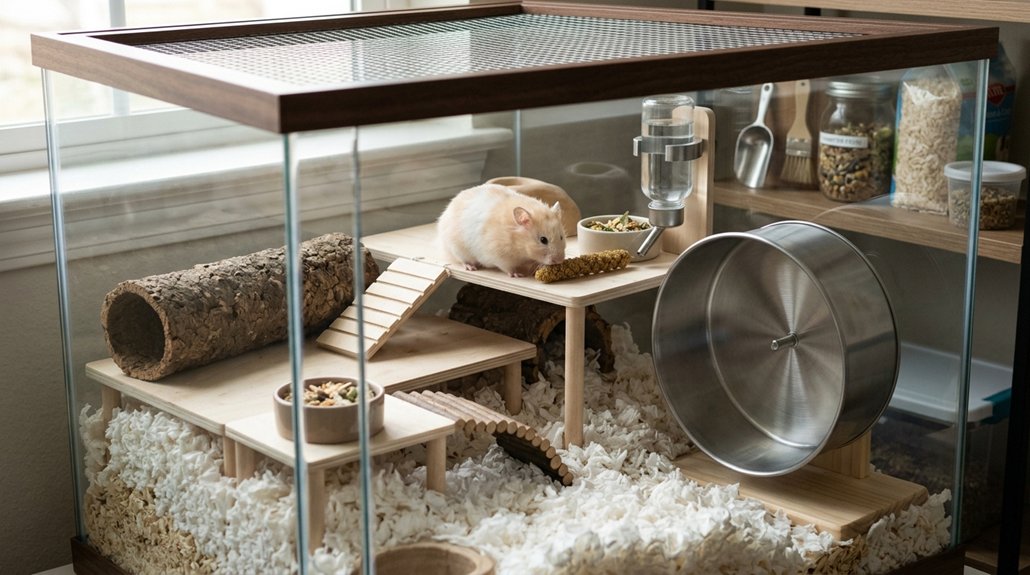
To keep your hamster’s habitat clean, prevent bacteria buildup by sweeping waste and replacing soiled bedding daily. Wash water bowls and clean the exercise wheel with soap and make sure they dry properly. Perform regular spot cleaning by removing soiled bedding and installing corner litter trays for efficient waste management. Use a mini broom or cordless vacuum, and wear gloves for protection. Following these practices will guarantee your hamster’s well-being and might deepen your understanding of ideal care practices.
Key Takeaways
- Perform spot cleaning every few days to maintain hygiene and prevent bacteria buildup.
- Wash and thoroughly rinse water bowls daily to ensure fresh water supply.
- Use dust-free bedding to reduce respiratory issues and maintain cleanliness.
- Secure hamsters in a safe area during cleaning to minimize stress and anxiety.
- Establish a cleaning schedule with mini broom or cordless vacuum to manage messes efficiently.
Why Regular Cleaning Matters for Hamster Wellbeing
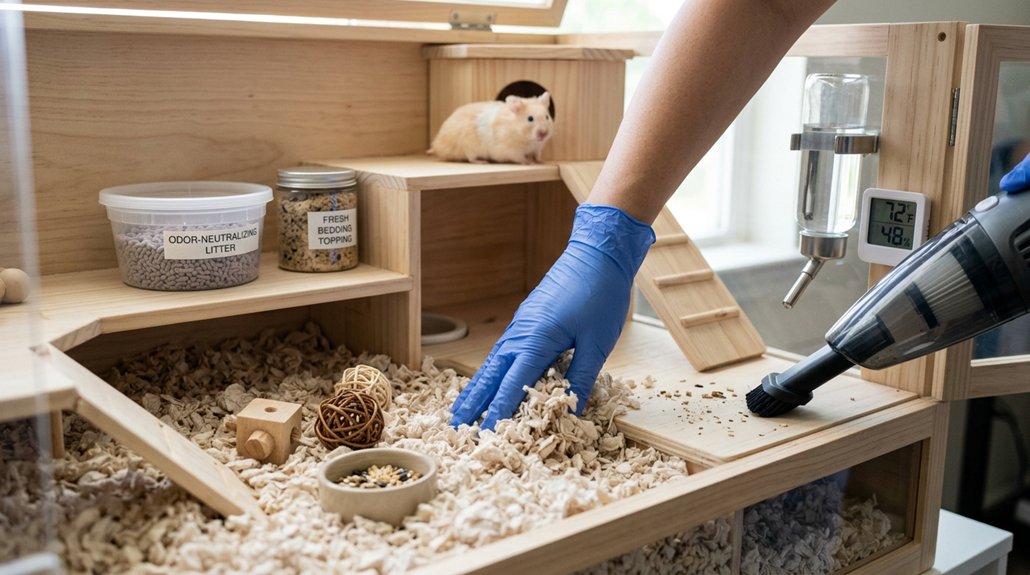
While it may seem trivial, regular cleaning of a hamster’s habitat is essential to their wellbeing. A consistent cleaning routine plays an important role in maintaining hamster health by preventing harmful bacteria buildup that can cause respiratory and skin issues. Stress reduction is another significant benefit, as a clean environment supports familiar scents and stability which are crucial for these creatures. Handling waste through spot cleaning every few days prevents the habitat from turning into an unhygienic setting. This not only guarantees overall cleanliness but also maintains a low-stress environment, preventing anxiety-inducing changes for your hamster. Maintaining hygienic living conditions reduces the risk of illness and behavioral complications, fostering a happier and more active pet capable of expressing natural behaviors comfortably.
Daily Hamster Habitat Cleaning Tasks
To guarantee a healthy environment for your hamster, embrace a daily cleaning routine that targets the fundamental needs of their habitat. Begin by sweeping away seed casings and waste using a mini broom and dustpan, or employ a cordless vacuum to maintain a tidy living space. Replace soiled bedding promptly, concentrating on areas where your hamster frequently urinates, to prevent odors and maintain hygiene. It’s crucial to wash water bowls with soap and rinse thoroughly every day, minimizing bacterial growth. Inspect the exercise wheel routinely, cleaning it with soap and water, and confirm it dries completely to prevent rusting. These tasks, undertaken with regularity, foster a cleaner habitat, contributing to your pet’s overall health and well-being.
How to Perform Spot Cleaning and Manage Stress
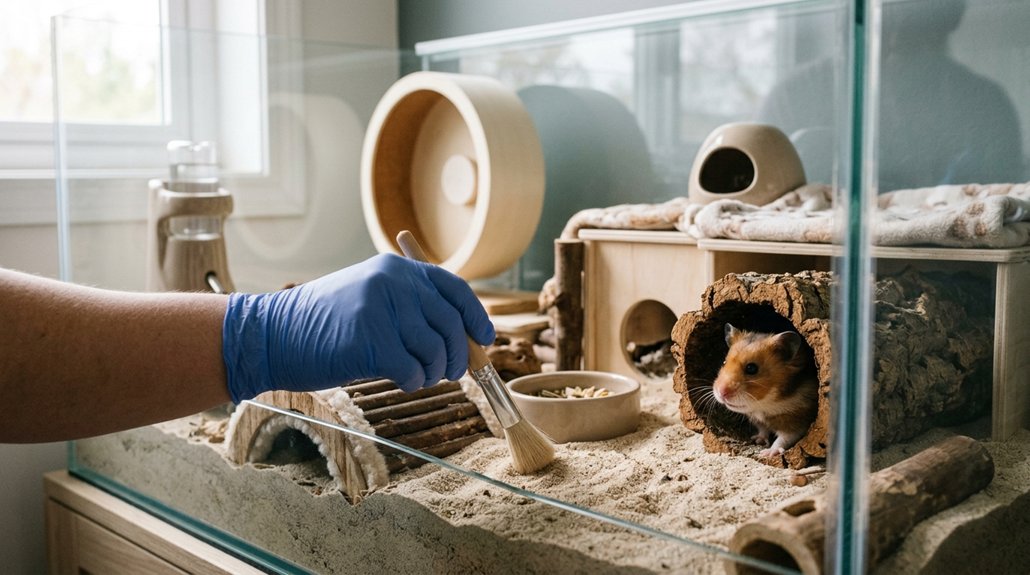
Spot cleaning is an essential part of maintaining a hamster’s habitat, ensuring it remains hygienic while minimizing stress for your pet. Perform spot cleaning every few days by removing soiled bedding, urine, and waste. Focus on areas frequently soiled, such as corners and near the water bottle, to maintain cleanliness efficiently without overwhelming your hamster. To aid in stress reduction, keep a portion of the original bedding to retain familiar scents. During the cleaning process, secure your hamster in a safe area to reduce anxiety, especially if you’re replacing substrate or rearranging cage items. Consider using corner litter trays to manage waste effectively, providing a consistent toilet area that facilitates regular spot cleaning while lowering stress levels.
Selecting the Best Tools for Hamster Cleaning
Having managed the basics of spot cleaning and stress reduction, selecting the right tools is next in creating an ideal environment for your hamster. Establishing a cleaning schedule is paramount; consequently, comparing tools for efficiency is essential. A mini broom and dustpan or a cordless vacuum are excellent choices to swiftly manage loose waste and seed casings. Rubber gloves safeguard your hands during engagement with bedding and water bottles. Investing in a corner litter tray helps manage waste effectively, requiring regular emptying for best hygiene. To clean water bottles thoroughly, use a fuzzy straw cleaner to guarantee disinfection without damage. Always opt for pet-safe cleaning methods, such as using diluted dish soap and warm water, making sure the habitat remains uncontaminated.
Ensuring a Secure and Comforting Environment for Your Hamster
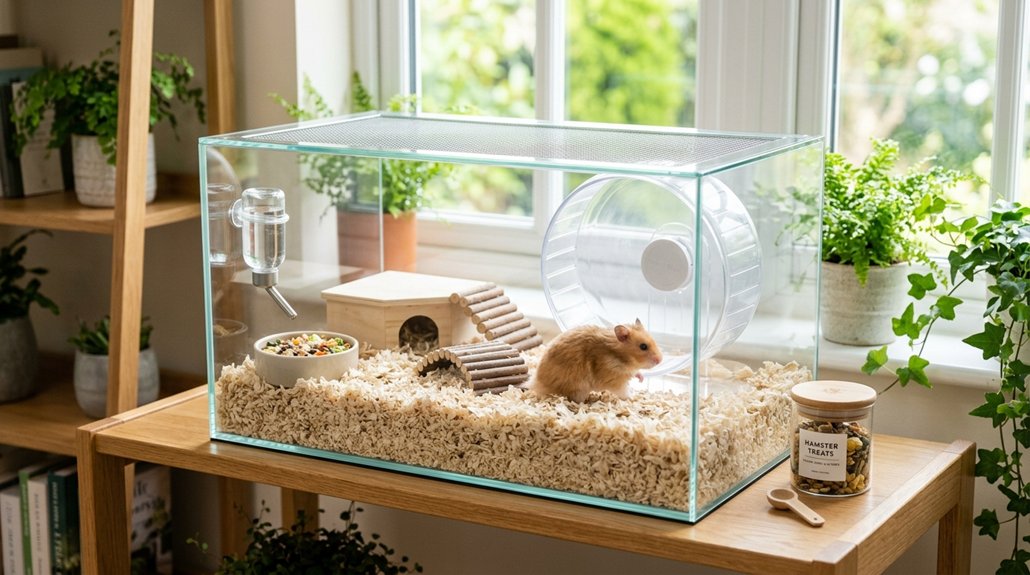
While ensuring a secure and comforting environment for your hamster, it is crucial to reflect on the impact of cleaning and habitat organization on their overall well-being. Maintaining a clean habitat prevents health issues caused by bacteria. Use dust-free bedding types to encourage burrowing and add nesting materials for security.
Regular spot cleaning preserves familiar scents which reduce stress, and consistent habitat layouts prevent disorientation. Consider the elements detailed in the table below to provide a thorough approach:
| Element | Benefit |
|---|---|
| Dust-free Bedding | Reduces respiratory issues |
| Deep Bedding Layer | Enables burrowing, enhancing security |
| Nesting Materials | Offers comfort and insulation |
| Multiple Hiding Spots | Provides secure retreat areas |
| Predictable Layout | Minimizes stress from unfamiliarity |
Implementing these strategies enriches your hamster’s habitat, promoting their health and comfort.
Frequently Asked Questions
How to Clean a Hamster Habitat?
Clean your hamster’s habitat by spot cleaning every few days and thoroughly cleaning monthly. Consider habitat types when managing cleaning frequency. Wash items with soapy water, use pet-friendly cleaner if needed, maintaining some old bedding for familiarity.
What Is the Most Common Cause of Death in Hamsters?
Respiratory infections are the most common cause of death in hamsters. You’re responsible for maintaining clean environments and proper ventilation to prevent these hamster health issues. Understanding common diseases assists in providing ideal care and prolonging their lifespan.
How Long Can You Leave a Hamster Cage Before Cleaning?
Habitually, you shouldn’t let hamster waste accumulate beyond a week. Hygiene helps guarantee good habitat maintenance. Spot clean thrice weekly and do a deep clean once a month to keep the environment safe and sanitary.
Should a Hamster Habitat Be Glass or Plastic?
A glass habitat generally offers better advantages with greater visibility and insulation. While plastic may be lighter, it has disadvantages like potential odor retention and scratching. Prioritize your hamster’s environment by selecting the most suitable option for their needs.
Conclusion
You’ve now become a master of the hamster universe, capable of turning any messy habitat into a sanctuary of cleanliness and comfort. By prioritizing regular cleaning, using the right tools, and managing stress, you’re ensuring your hamster’s environment is as secure as a fortress. A clean habitat isn’t just a luxury; it’s essential for your hamster’s wellbeing. Immerse yourself in this routine with scientific precision, and your hamster will thrive like an Olympic champion in their tiny, cozy world.