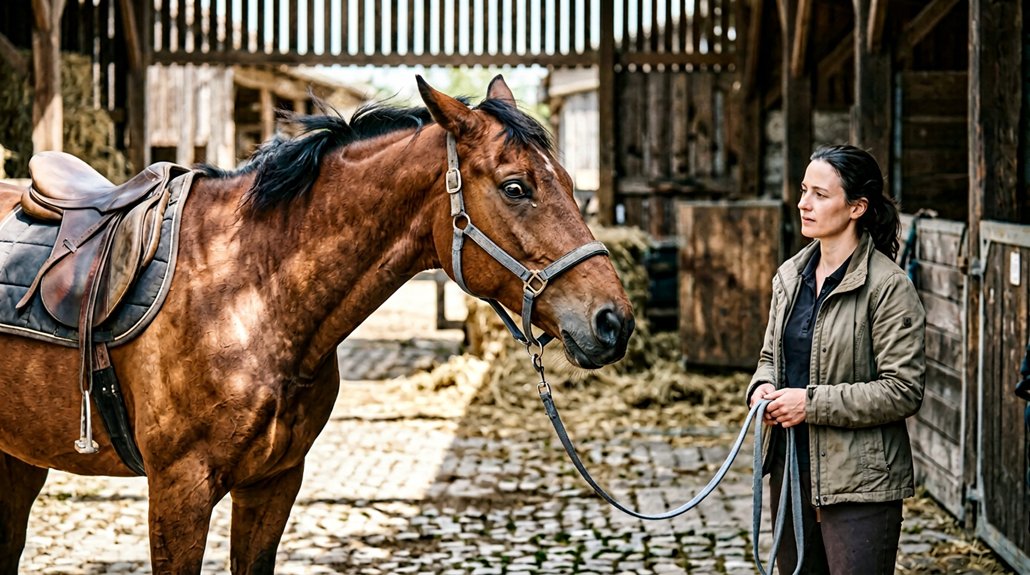
To calm an anxious horse, recognize environmental triggers and physiological signs like increased heart rate and pacing. Set achievable goals, fostering resilience and confidence. Create a secure environment, ensuring consistent routines and gradual exposure to stressors. Use positive reinforcement, rewarding calm behaviors immediately to build trust. Effective communication with precision aids helps the horse feel understood. Employ these strategies to reduce stress, ensuring your horse feels more secure, and explore ways to further enhance their well-being.
Key Takeaways
- Gradually introduce new environments and stimuli to help the horse adjust without overwhelming stress.
- Establish a consistent routine to provide predictability and diminish anxiety in the horse.
- Use positive reinforcement, like treats or praise, to encourage calm behavior and build trust.
- Provide social interaction with other horses to reduce cortisol levels and promote stability.
- Implement boundary training to create a secure environment, enhancing the horse’s sense of safety.
Understand Causes of Horse Anxiety
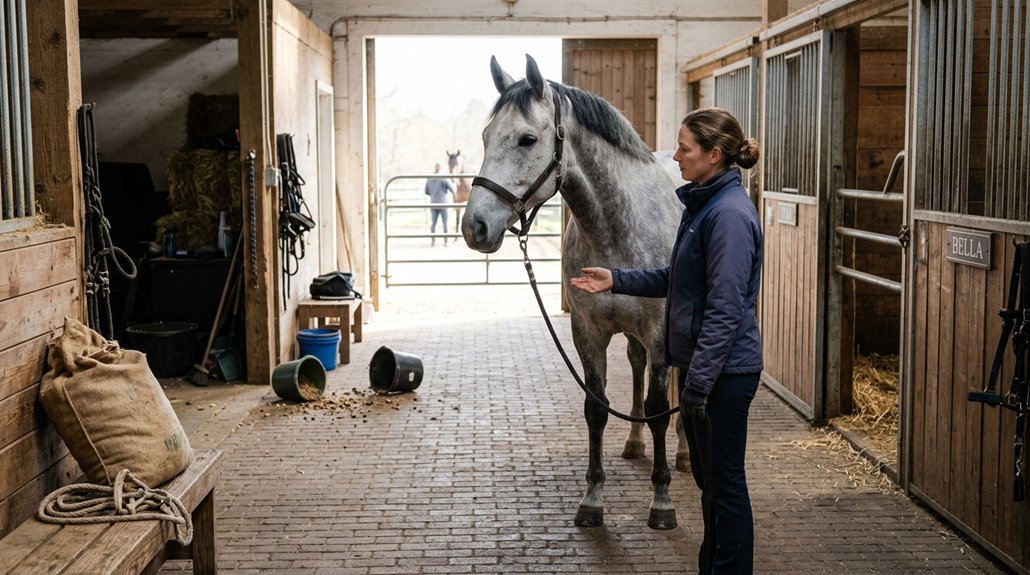
Understanding the causes of horse anxiety is paramount when aiming to manage and alleviate it effectively. You’ll find that environmental triggers are common culprits, often leading to noticeable behavioral changes. Routine disruptions, like sudden changes in social groups or feeding programs, can unsettle your horse, increasing anxiety levels. Off-the-track Thoroughbreds exemplify this, as they frequently exhibit heightened stress evolving to new roles due to unfamiliar settings and tasks. Horses, thriving on routine, find abrupt adjustments in expected energy output particularly challenging. This confusion manifests in behaviors such as bolting or teeth grinding. By closely observing these environmental factors and routine disruptions, you can address the underlying issues more effectively, fostering a more stable, stress-free environment for your horse.
Identify Stress Symptoms in Horses
Pinpointing stress symptoms in horses hinges on a keen observational eye and understanding subtle cues in their behavior and physiology. Recognizing behavioral indicators can help you identify stress triggers early. Observe meticulously for:
- Behavioral Changes: Look for pawing, pacing, weaving, and excessive vocalization. These signs may indicate your horse is feeling anxious or stressed.
- Physiological Responses: Watch for increased heart and breathing rates, sweating, and trembling, as these symptoms often accompany elevated stress levels.
- Body Language Signs: Notice changes in posture such as high head carriage, pinned back ears, wide eyes, and reluctance to eat or drink, indicating discomfort.
Set Manageable Goals for Your Horse
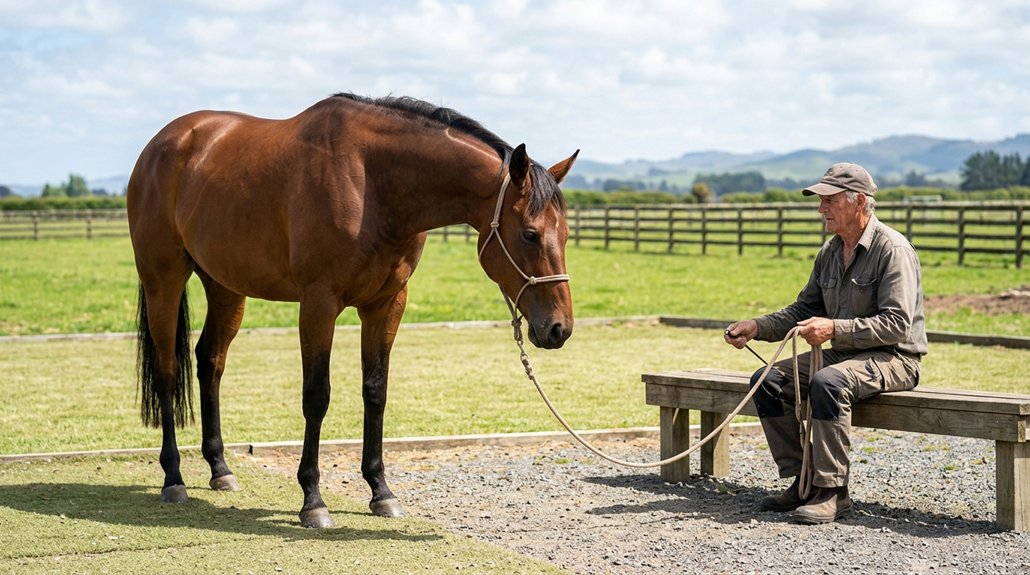
Establishing manageable goals for your horse is an essential step in fostering a stable and calm demeanor. Start by setting clear, achievable expectations that suit your horse’s current training level and mental capacity. This guarantees tasks aren’t overwhelming. Focus on incremental progress—gradually increase task complexity to build resilience and problem-solving abilities. Allow repetition and consistency to reinforce positive behaviors, enhancing your horse’s confidence.
Monitor reactions closely, adjusting goals to align with your horse’s emotional state. This responsive approach keeps the horse engaged and motivated. Remember:
| Strategy | Benefit | Observational Insight |
|---|---|---|
| Clear, Achievable Tasks | Prevent overwhelm | Encourage steady training growth |
| Incremental Progress | Build resilience | Foster problem-solving abilities |
| Monitor and Adjust | Personalized growth | Enhance horse’s emotional readiness |
These techniques create a balanced, confident horse.
Create a Secure Environment With Boundaries
When creating a secure environment for your horse, clear boundaries and consistent rules are essential in reducing anxiety and fostering a sense of safety. To accomplish this, you must focus on defining safe spaces and engaging in effective boundary training. Horses thrive when they know the limits but aren’t constrained.
- Utilize Safe Spaces: Designate specific areas where your horse feels comfortable and secure. Gradually introducing them to new spaces can foster confidence.
- Boundary Training: Implement exercises like guiding your horse through cones or rails. These drills maintain behavioral structure without overwhelming them.
- Consistency: Establish a routine that incorporates these boundary practices. This predictability aids in diminishing anxiety.
Communicate Effectively With Precision Aids
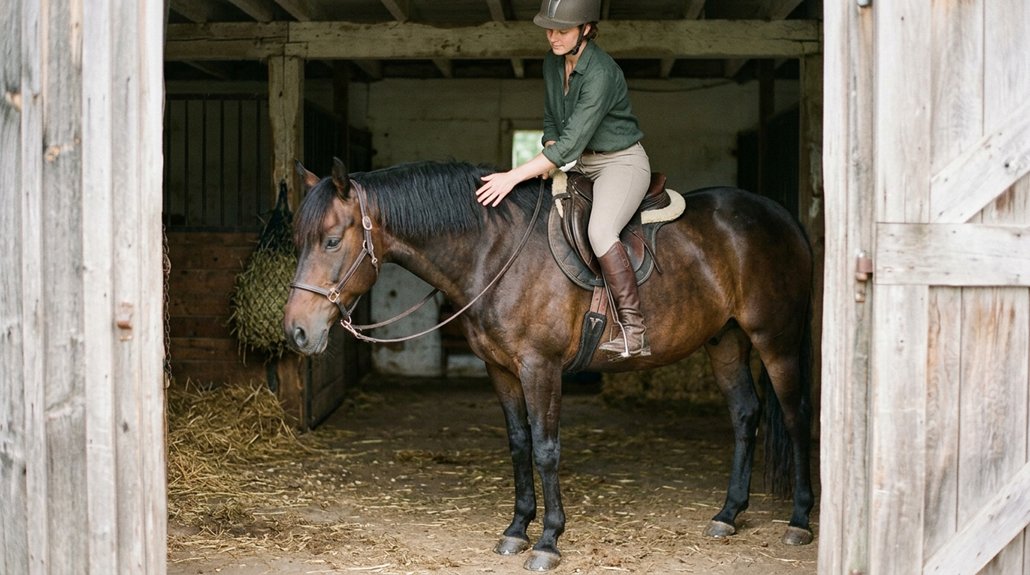
Engage your horse with targeted communication through precise aids to ease their anxiety. Consistent aids, like leg pressure, bit cues, and your body language, establish clarity in your communication. Precision aids guide your horse, making expectations understandable. Immediate pressure release is crucial—reward even slight compliance with an instant release. This action strengthens your horse’s comprehension and fosters a relaxed demeanor. Instead of seeking perfection, reward efforts to build confidence, reducing their anxiety. Clear, simple cues prevent confusion, creating a calm interaction. Your horse thrives on this clarity, as predictable communication reduces stress. Long-term, employing these precise aids consistently nurtures a deeper bond, leading to an environment where your horse’s anxiety diminishes with understanding and trust.
Foster Trust With Your Anxious Horse
Communicative clarity is an essential step in calming an anxious horse, yet fostering trust requires a deliberate approach. Establishing trust involves regular trust building exercises and relational groundwork. Consider these steps:
- Consistency in Handling: Your reliable presence should promote relaxation. Verify that your interactions are predictable, providing a stable environment where the horse can thrive.
- Engage in One-on-One Time: Spend solitary moments with your horse, as this significant bonding increases comfort. Familiarity reduces anxiety, forging a stronger, more secure partnership.
- Focus on Empowerment: Avoid pity, which can lead to dependency. Instead, engage in empowering activities, helping the horse grow its confidence through positive experiences.
Reduce Horse Stress With Effective Strategies
To effectively reduce stress in your horse, consider maintaining a nutritious, fiber-rich diet, as it supports digestive health and consistent energy levels. Social interaction with other horses decreases cortisol levels and fosters social bonds, promoting emotional stability. Additionally, gradual exposure to stressors through desensitization methods helps your horse adjust to new environments, ultimately reducing anxiety over time.
Maintain Nutritious Diet
While the notion of addressing an anxious horse may seem intimidating, focusing on their diet can provide significant relief. A diet consisting of at least 80% fiber-rich forage is essential for promoting digestive health, as it facilitates balanced nutrition and essential stress management. High-starch grains, in contrast, can cause harmful blood sugar spikes and hyperactivity.
Consider these steps:
- Implement Grazing Tools: Use hay nets or slow feeders to extend forage consumption, emulating natural grazing habits.
- Ensure Balanced Diet: Apart from just forage, provide a diet that’s nutritionally aligned with your horse’s species requirements to foster overall well-being.
- Hydration and Observation: Fresh water and monitoring of dietary components are vital in preventing digestive disturbances that might trigger stress responses.
Ensure Social Interaction
The foundation of a horse’s emotional well-being lies in its social instincts, which prioritize communal bonds over isolation. Understanding herd dynamics is essential, as horses naturally form equine hierarchies that, when maintained, contribute to a stable group environment. You should encourage social interactions among horses, since such bonds reduce anxiety and stress. For instance, grooming within a herd offers significant benefits beyond the immediate action—it promotes bonding and lowers stress levels, subsequently decreasing cortisol. Arrange for adequate turnout time, ensuring horses are paired with compatible companions. This not only fosters calm behaviors but also mitigates stress-related health issues. Keep an eye on herd dynamics and make adjustments when necessary to maintain a peaceful and cohesive environment for your horse.
Implement Desensitization Methods
Addressing horse anxiety effectively often involves incorporating desensitization methods, which are critical in helping horses cope with stressors. Begin with desensitization techniques like gradual exposure to specific stressors, such as loud noises or novel environments. This approach allows horses to adapt and remain calm. Accompany it with positive reinforcement to reward calm behavior, creating favorable associations with previously feared stimuli.
Practical steps involve:
- Gradual Exposure: Introduce your horse to unfamiliar equipment and settings in a controlled environment, ensuring they don’t feel overwhelmed.
- Positive Reinforcement: Reward the horse during calm interactions, fostering confidence.
- Development of Routine: Maintain consistent sessions, structuring them predictably to alleviate anxiety related to sudden changes.
Frequently Asked Questions
What Is the 3 3 3 Rule for Anxiety?
The 3-3-3 rule involves observing anxiety triggers over three days, weeks, and months. Develop coping strategies through these phases. Patience helps as behaviors shift, fostering trust and ensuring effective acclimatization, leading to a comfortable adjustment.
How to Calm the Nervous System Quickly?
To quickly calm your nervous system, employ breathing techniques by inhaling deeply and exhaling slowly. Massage therapy can also relax muscles and promote circulation. These methods deliver scientific benefits by activating parasympathetic responses, reducing stress effectively.
What Herbs Are Good for Horses With Arthritis?
Herbs like turmeric work like nature’s paintbrush, painting over joint pain. You can explore herbal remedies including devil’s claw, boswellia serrata, ginger, and yucca root as natural supplements to support your horse’s arthritic symptoms.
What Do Horses Do When They Are Anxious?
When horses are anxious, you’ll notice body language changes like pawing, pacing, or trembling. Identify stress triggers like environmental shifts, as these can exacerbate anxiety. Observing these signs gives insight into managing their stress effectively.
Conclusion
You’ve initiated a journey into your horse’s mind, unraveling the causes of its anxiety. As you carefully observe stress symptoms, you’ll learn to set achievable goals, sculpting a secure environment with well-defined boundaries. By communicating with precision aids, you’ll build an unbreakable bond of trust. Picture a serene horse, its ears flicking back as gentle pressure guides it. Use these effective strategies, and soon you’ll watch anxiety dissipate, transforming into calm confidence.