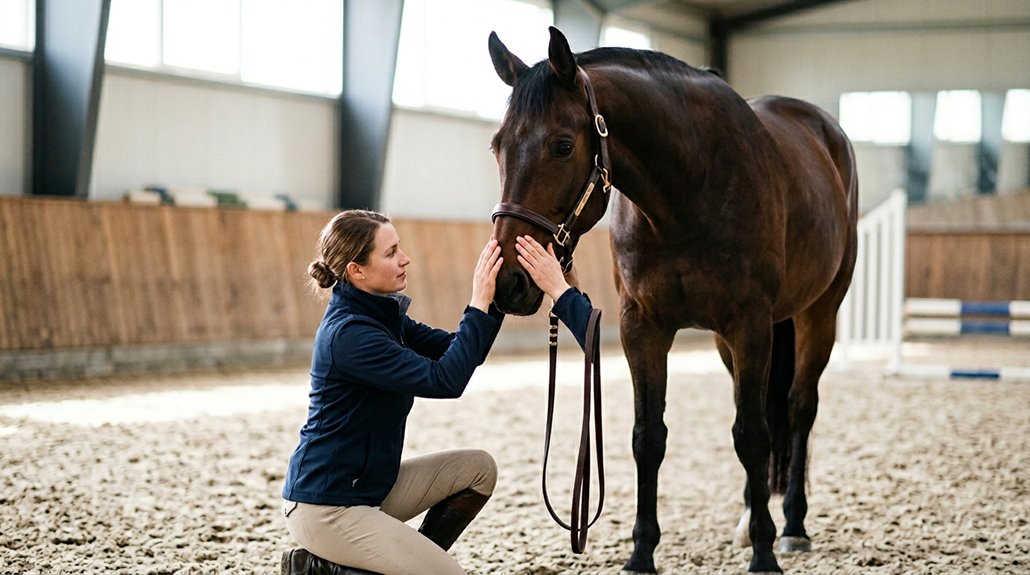
To safely correct bad behavior in horses, focus on positive reinforcement and addressing environmental triggers. Recognize behaviors like cribbing or rearing and use treats or praise to encourage desirable actions. Incorporate enriching activities to manage stress, and gradually expose horses to triggers for desensitization. Guarantee social interaction and stable routine for emotional well-being. Consulting with professionals like behaviorists and veterinarians helps tailor solutions. Discover more strategies to refine your horse’s behavior journey.
Key Takeaways
- Utilize positive reinforcement, like treats or verbal praise, to encourage desirable behaviors and strengthen the bond with your horse.
- Identify and address environmental stressors to prevent behaviors such as cribbing, weaving, and separation anxiety.
- Gradually desensitize horses to triggers through counter conditioning, ensuring relaxation and positive associations.
- Implement engaging groundwork exercises, like lunging and backing up, to redirect energy and promote focus.
- Develop a stable, routine environment with regular outdoor access and social group dynamics to reduce stress-related behaviors.
Identify and Address Common Unwanted Horse Behaviors
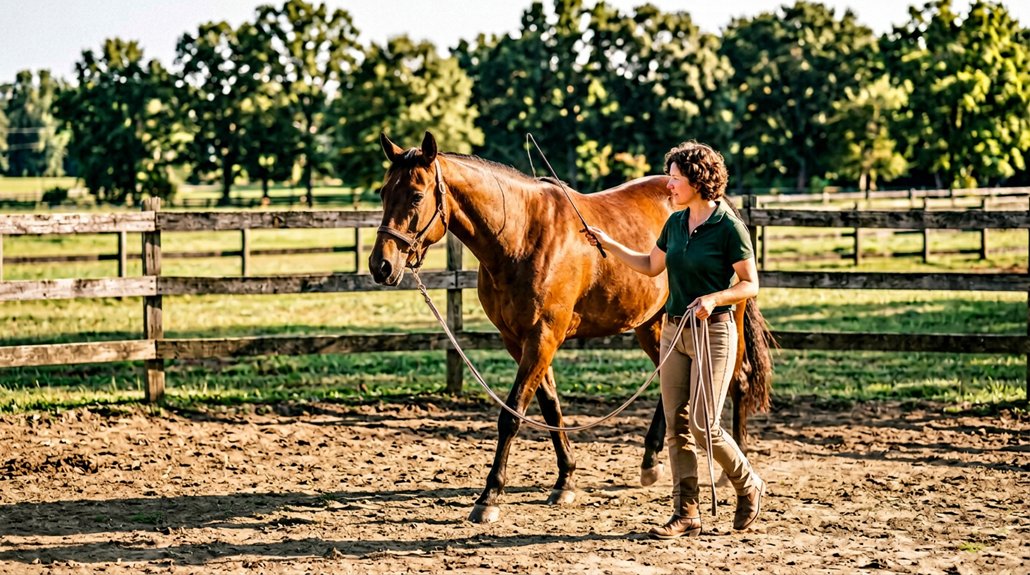
When encountering unwanted behaviors in horses, it’s essential to approach the situation with understanding and expertise. Recognizing behavior triggers like cribbing, weaving, and separation anxiety is key to effective stress management. These behaviors often stem from environmental stressors or past traumas. For cribbing, consider dietary changes, such as increasing long-stemmed forage to manage harmful health consequences associated with increased stomach acidity. Weaving, induced by stress, can be eased by enhancing environmental enrichment, ensuring horses have outdoor access and can see their peers. Address separation anxiety by gradually acclimating horses to brief separations, reducing stress-induced reactions. Prevention is paramount—providing herd management, plenty of outdoor time, and a high-forage diet mimics natural grazing, supporting mental well-being.
Positive Techniques to Correct Horse Behavior
Successfully correcting horse behavior lies in employing positive reinforcement techniques to nurture trust and communication between you and your horse. By focusing on reward techniques instead of punishment, you’re fostering a harmonious relationship. Here’s a concise approach:
Foster trust with your horse through positive reinforcement and reward, not punishment.
- Reward Desirable Behaviors: Use treats or verbal praise to encourage appropriate actions, emphasizing learning over fear.
- Engage in Varied Tasks: It’s important to introduce exercises like backing up or lateral movements. These not only redirect energy but also refocus attention on you as the handler.
- Exhibit Consistent Body Language: Use calm and consistent nonverbal cues. This stabilizes the environment, essential for trust building and reducing reactions.
Implement these strategies to create a compassionate, effective approach to modifying your horse’s behavior.
Effective Counter Conditioning for Rearing and Kicking
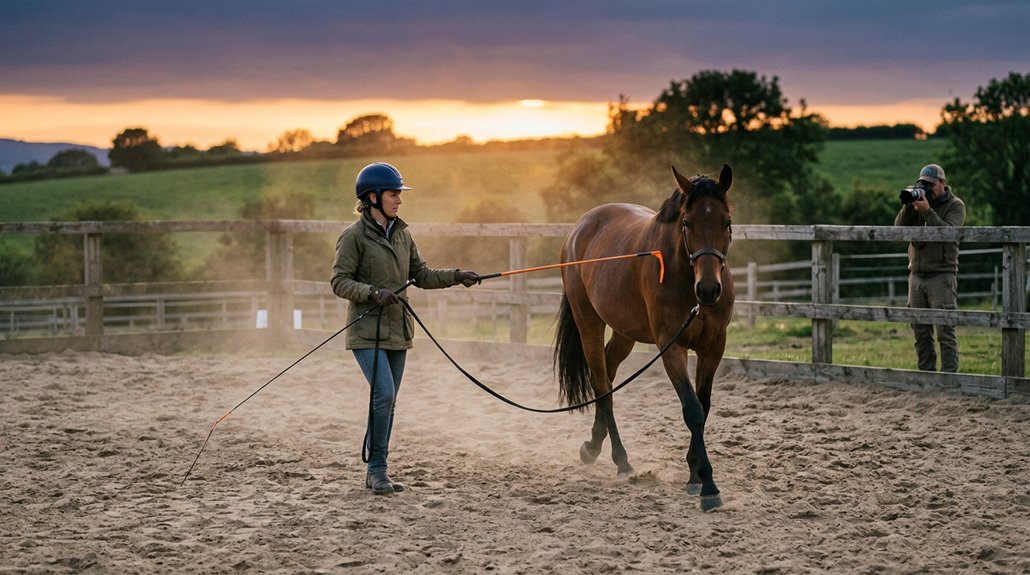
Though rearing and kicking in horses can be challenging behaviors to manage, effective counter conditioning offers a humane and insightful approach to modification. Begin by introducing trigger exposure at a low intensity, ensuring your horse remains relaxed. Pair these exposures with positive experiences, like treats, to encourage behavior modification. Gradually increase the intensity while maintaining calm, clear body language to project confidence—essential for preventing fear-induced reactions. Desensitization is another critical component; start with gentle handling, particularly around sensitive areas like the legs, to help your horse acclimate without stress. Consistency is paramount; repetition of these positive experiences alongside triggers helps reduce rearing and kicking over time, fostering a calmer, more responsive companion.
Engaging Exercises for Safe Lunging and Groundwork
While traditional lunging might risk routine and boredom, engaging exercises for safe lunging and groundwork can transform your horse’s training. By utilizing varied groundwork techniques, you guarantee your horse remains mentally active and physically engaged. Practicing multiple movements not only manages their energy but also sharpens their focus, strengthening your bond.
Engaging groundwork techniques keep your horse mentally active and physically engaged, enhancing your bond and improving training.
Consider these exercises:
- Moving the Hindquarters: Redirect energy effectively by encouraging your horse to pivot and engage its muscles properly.
- Backing Up: As a correctional tool, this enhances discipline and muscular development in the hindquarters, promoting better athleticism.
- Shoulder-In Practice: Improve communication and focus through controlled lateral movements, which encourage trust and responsive interaction.
Routine integration of these activities develops a harmonious relationship, guaranteeing both effective training and behavioral improvement.
Environmental Changes to Prevent Behavior Issues
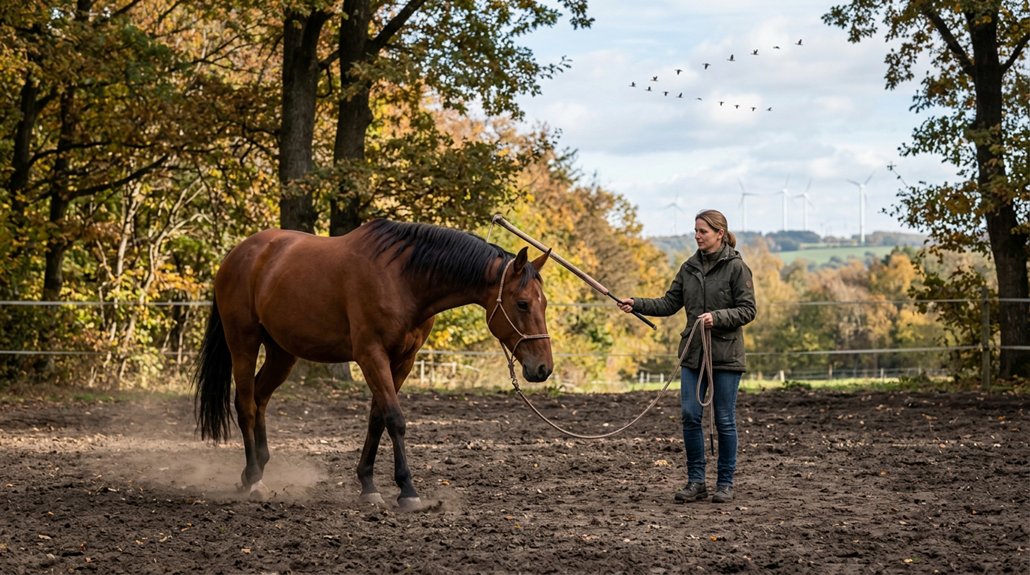
Creating a stable and routine environment is essential for preventing behavior issues in horses. You’ll find that consistent access to outdoor spaces not only reduces stress but also minimizes undesirable behaviors. Additionally, keeping horses in social groups allows them to satisfy their innate need for companionship, promoting overall mental well-being and reducing anxiety-driven habits.
Stable and Routine Environment
Establishing a stable and routine environment for horses is essential for preventing behavior issues. A well-planned stable design can mimic their natural habitat, reducing stress and promoting positive behaviors. Implement routine maintenance to keep the environment consistent and free from sudden changes. To guarantee a reliable routine, consider the following strategies:
- Turnout Management: Regularly turn horses out in small groups of 4-10 to encourage social interaction and decrease anxiety.
- Feeding Practices: Provide high-forage diets with several small meals daily to replicate natural grazing and reduce boredom.
- Environmental Enrichment: Incorporate features like visibility to neighboring horses and stall mirrors to bolster mental stimulation and lower stress levels.
These practices help in sustaining an environment where horses can thrive, minimizing the risk of undesirable behaviors.
Social Group Dynamics
Considering the social nature of horses, integrating them into appropriately sized groups is essential for their mental well-being. Keeping herds between 4-10 members promotes healthy herd dynamics, minimizing stress and curbing undesirable behaviors like separation anxiety and cribbing. It’s important to limit alterations in group composition as new additions can disrupt established social interactions, potentially prompting stress-induced behaviors. Regular outdoor turnout offers horses invaluable opportunities to engage with their environment, satisfying natural instincts and reducing behaviors such as weaving. Visibility of neighboring horses through stall windows further mitigates stress, highlighting the significance of a connected environment. Additionally, installing mirrors in stalls can effectively alleviate weaving by providing visual stimulation. These changes foster a harmonious environment for your equine companions.
Implement Clicker Training to Reinforce Good Behavior
Transform your horse’s behavior by leveraging the power of clicker training, a technique that precisely marks desired actions with immediate positive reinforcement. Understanding clicker benefits involves recognizing its ability to create a positive learning environment, intuitively guiding your horse through training milestones. Start by associating the clicker’s sound with rewards to build a strong connection. Consistency is essential for effective learning.
To implement clicker training:
- Preparation: Introduce the clicker sound with treats, ensuring your horse understands the link between the click and the reward.
- Gradual Shaping: Reward incremental steps towards desired behaviors, helping your horse achieve complex tasks gradually.
- Timing: Click immediately when the desired behavior occurs; this develops clear behavioral associations with positive reinforcement.
Through patience and precision, you’ll forge a deeper handler-horse relationship.
Get Expert Help for Tailored Behavior Solutions
When you’ve hit a roadblock with your horse’s behavior, consulting an equine behavior specialist can provide the insight needed for change. These professionals work with you to develop a customized training plan that addresses your horse’s unique needs, considering any potential underlying health issues. By accessing their expert guidance, you’re not only enhancing your expertise but also ensuring a compassionate approach to your horse’s welfare.
Consult Equine Behavior Specialist
Here’s how consulting a specialist can help:
- Assess Environment: They’ll evaluate environmental factors and suggest adjustments for a more conducive living space.
- Use Science-Based Methods: Specialists rely on positive reinforcement and constructive corrections, ensuring sustainable solutions.
- Identify Health Issues: Through expert evaluations, they can uncover underlying health problems, such as pain, affecting behavior.
Develop Customized Training Plan
Although horses can present challenging behaviors, developing a customized training plan with the guidance of an equine behaviorist can be essential in addressing these issues. With their expert knowledge, you’ll receive a personalized assessment that targets specific unwanted behaviors. The plan may utilize methods like positive reinforcement and systematic desensitization, facilitating meaningful progression. Track your horse’s behaviors and establish training milestones to monitor improvements effectively. Adjustments are significant as you respond to the horse’s behavior and emotional state. Additionally, incorporating tools like clicker training can enhance communication and foster a stronger connection. Collaborate with veterinarians to rule out health problems influencing behavior. This thorough approach guarantees lasting positive change by addressing root causes, setting you and your horse on a successful path.
Access Professional Guidance
Tackling behavioral challenges in horses can be an intricate task, but enlisting professional guidance guarantees a tailor-made approach for both handler and horse. Consulting a certified behaviorist offers personalized strategies to manage specific issues effectively. Before diving into training, professional assessments like those from veterinarians or saddle fitters help pinpoint underlying causes. Here are steps to contemplate:
- Engage a Certified Behaviorist: They’ll devise behavior solutions tailored to your horse’s needs, ensuring both safety and progress.
- Attend Training Workshops: Institutions like the Willing Equine Academy provide courses that impart valuable skills for safely addressing challenges.
- Collaborate in Community Groups: Regular involvement with trainers and peers in support networks enhances your problem-solving abilities through shared experiences and solutions.
Frequently Asked Questions
How Do You Punish a Horse for Bad Behavior?
Don’t rely on punishment for bad behavior; it can harm your horse’s trust in you. Effective discipline involves using positive reinforcement to teach desired behaviors. Practice patience and consistency to guide your horse safely and compassionately.
What Is the 1/2/3 Rule in Horses?
Imagine training as a gentle dance. The 1/2/3 Rule in horses, rooted in equine psychology, involves one clear correction at a time, enhancing behavior modification by nurturing understanding, fostering trust, and creating a cooperative partnership.
What Should You Not Say to a Farrier?
Don’t undermine the farrier’s expertise; instead, nurture respect and effective communication. Avoid derogatory comments about past experiences, questioning their techniques, or requesting rushed work. A collaborative relationship guarantees your horse’s hoof health and comfort.
How to Correct Unwanted Horse Behavior?
To correct unwanted horse behavior, focus on preventing bolting and handling spooking by gradually desensitizing fears. Redirect aggression with calm leadership and positive reinforcement. Address biting by reinforcing boundaries with compassion and consistency in your approach.
Conclusion
As you stand next to your horse, the future glimmers with possibilities. The gentle clink of a clicker or the soft swoosh of a lungeline echoes your commitment to change. With careful guidance, unwanted behaviors can fade like shadows at dawn. Each positive technique builds trust, each environmental tweak eases tension, and expert advice serves as your compass. What if today’s challenges become tomorrow’s victories? You’re on the brink of transformation, a journey toward harmony awaiting you both.