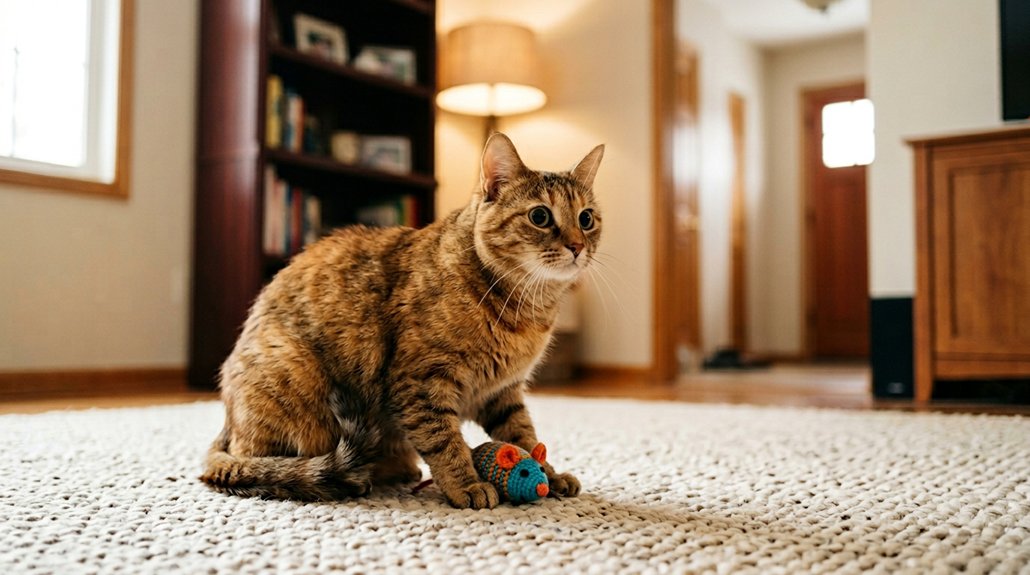
If your cat gets anxious when you leave, start by recognizing signs like excessive vocalization or refusal to eat. Gradual acclimation with short departures can help, alongside using calming pheromone diffusers and interactive toys to occupy their mind. Establishing a consistent daily routine and enriching their environment with perches and puzzle feeders can mitigate stress. If signs persist, consult a veterinarian to explore behavioral therapies or medication. Discover more strategies for maintaining your cat’s well-being.
Key Takeaways
- Gradually increase alone time to help your cat adjust to your absences.
- Establish a consistent pre-departure routine to signal and ease your leaving.
- Provide interactive toys and puzzle feeders to mentally engage your cat when you’re away.
- Play calming background noise like a radio or TV for a soothing environment during departures.
- Consider using calming pheromone diffusers to alleviate your cat’s anxiety at home.
Quick Ways to Calm Your Cat’s Anxiety
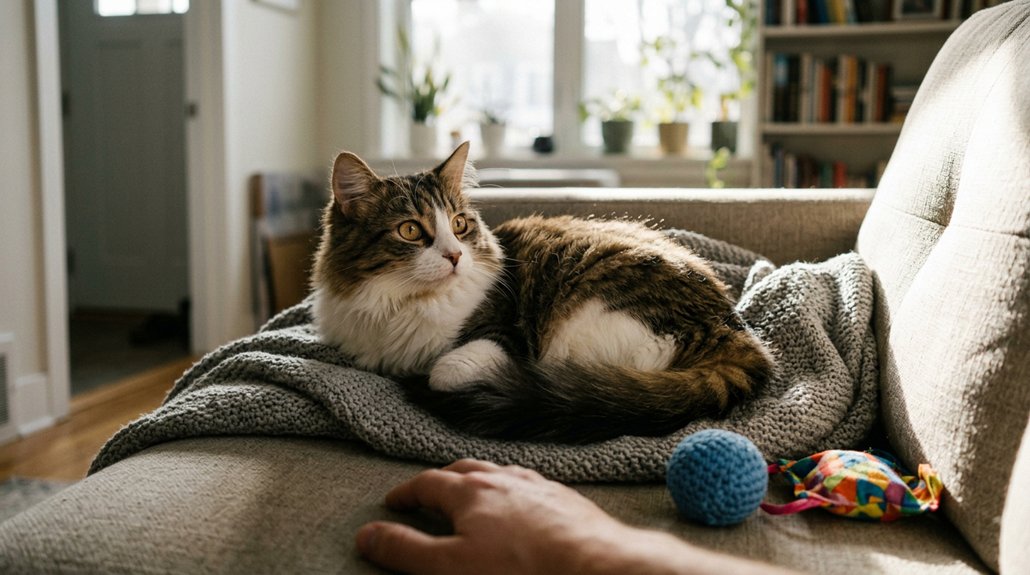
When your cat exhibits signs of anxiety, it’s important to offer immediate strategies to help ease their distress. One effective strategy involves interactive toys, which engage your cat’s mind and encourage physical activity. Toys like puzzle feeders can serve as a distraction, helping lessen anxiety by keeping your cat entertained. In addition, playing calming music or leaving the radio or TV on provides consistent background noise, creating a soothing environment that minimizes feelings of solitude.
Moreover, establishing a designated safe space, equipped with comforting items like a favorite blanket, offers a retreat for your cat. Utilize calming pheromone diffusers to foster a serene atmosphere. By integrating these solutions, you can greatly enhance your cat’s emotional well-being and reduce overall anxiety levels.
Spot the Signs Your Cat Is Anxious
Identifying anxiety in your cat starts with observing specific behavioral changes, including excessive vocalization and restlessness. Pay close attention to eating patterns, as alterations such as a sudden refusal to eat or rapid consumption may indicate distress. Additionally, inappropriate elimination behaviors like urinating outside the litter box can signal anxiety, especially when your cat is left alone.
Detect Changes In Behavior
Though cats are often seen as independent, they’re not immune to anxiety, and it’s crucial to detect changes in their behavior early. Identifying behavioral triggers and anxiety symptoms helps you understand your cat’s emotional state. Keep an eye on excessive vocalization, such as sudden increases in meowing or crying, which often indicate anxiety when left alone. Watch for excessive grooming, as this may lead to missing patches of fur, signaling your cat’s attempt to manage stress. Inappropriate elimination, such as urinating outside the litter box, is a prominent sign of distress during your absence. Additionally, observe for increased restlessness or trouble settling down, especially when your cat is isolated. Recognizing these signs allows you to address your cat’s anxiety promptly.
Monitor Eating Patterns
Understanding your cat’s behavioral changes offers vital insights, yet monitoring their eating patterns can reveal additional clues about their anxiety levels. A refusal to eat or drink in your absence may signify distress, highlighting changes in eating habits. If your cat suddenly eats too swiftly upon your return, this could signal stress-induced eating behavior. Significantly, a sudden decrease in food intake suggests increased anxiety. Additionally, watch for excessive grooming or vomiting, with undigested food indicating an inability to maintain routine eating behaviors due to anxiety. Tracking your cat’s eating habits and food preferences is essential for spotting irregular meal times and erratic consumption patterns.
- Refusal to eat or drink
- Speedy eating upon your return
- Decreased food intake
- Vomiting undigested food
Observe Litter Box Habits
Frequently, variations in your cat’s litter box habits can be a strong indicator of anxiety. If your cat starts urinating or defecating outside the litter box, such behavior might reveal distress rather than a mere behavioral issue. Litter box observations are essential for understanding these emotional indicators. Cats under stress could develop a habit of inappropriate elimination on items like bedding or shoes, highlighting their emotional state. Additionally, separation anxiety may cause avoidance of the litter box or frequent accidents. This necessitates prompt observation and intervention. Prolonged anxiety may also lead to gastrointestinal issues, including vomiting or diarrhea. Monitoring litter box usage offers valuable insights into your cat’s emotional well-being, where altered behavior often signals underlying anxiety or discomfort.
Easing Comfort With a Safe Environment
To ease your cat’s anxiety, start by establishing a secure environment with designated hideaways which provide safety and comfort. Utilize calming enhancements like pheromone diffusers to promote a soothing atmosphere, and guarantee vertical spaces are available for observation and exploration. Integrating consistent routines and mental stimulation, such as puzzle feeders, will help keep your cat engaged and reassure them during your absence.
Calming Environmental Enhancements
When addressing your cat’s anxiety, creating an environment that encourages calmness is essential. Implement sound masking by leaving the television or radio on. Familiar sounds act as a comforting backdrop, diluting loneliness and easing anxiety during your absence. For visual stimulation, place cat towers or perches near windows to spark curiosity and offer a reassuring view of the outdoors. This not only entertains but also provides a sense of security. Use calming pheromone diffusers or sprays to establish a soothing atmosphere, reducing stress effectively. Keep your cat’s mind busy with puzzle feeders or interactive toys that foster mental engagement, offering distraction and encouraging tranquility.
- Provide vantage points by the window with cat towers
- Utilize familiar background sounds
- Employ calming pheromones
- Engage with problem-solving toys
Establish Secure Hideaways
Creating a soothing environment is only part of the solution to reduce your cat’s anxiety; providing secure hideaways complements this effort by offering refuge. Implement cat cave designs that are cozy and enclosed, allowing your feline to retreat comfortably during stressful moments. Position these hiding spots in quiet areas, away from household traffic, minimizing exposure to potential anxiety triggers. Integrating soft bedding or familiar blankets within these spaces enhances comfort, creating a secure haven. Additionally, access to vertical spaces, such as shelves or cat trees, offers vantage points for your cat to observe safely from a distance. It’s essential to regularly check and maintain cleanliness in these hideouts, ensuring they remain inviting and reinforce positive associations with their safe spaces.
The Power of Routines for Cats
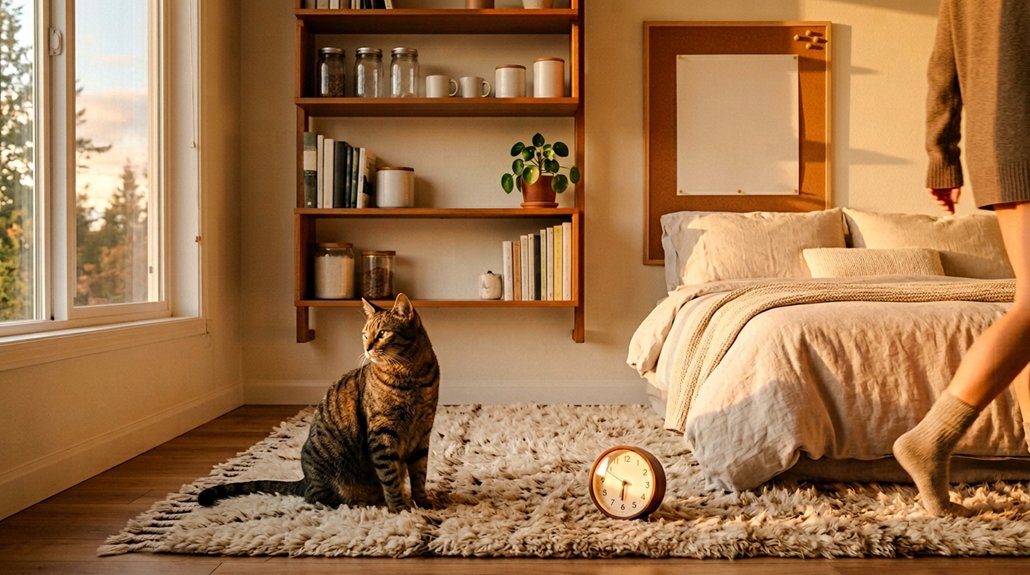
While cats are known for their independence, establishing a consistent routine fulfills their need for predictability, which can greatly reduce anxiety. Implementing structured feeding routines and play schedules, you create a stable environment that your cat can rely on. This sense of security is essential when you’re preparing to leave the house. Here’s a snapshot of how routines can benefit your cat:
- Regular Feeding Times: Simultaneous daily meals offer reassuring familiarity.
- Consistent Play Sessions: Scheduled play keeps your cat occupied and less focused on your absence.
- Gradual Absence Training: Prolonging alone time slowly helps reinforce feline independence.
- Predictable Departure Cues: Specific sounds or actions before leaving signal your eventual return.
Encourage Independent Play for Occupied Minds
To foster a mentally stimulating environment for your cat, incorporate engaging activities that promote independent play. By introducing interactive toys and puzzle feeders, you can encourage your cat to explore and engage with their environment, which is essential for reducing anxiety during your absence. Hiding food within these toys or around the house can stimulate their natural hunting instincts, transforming mealtime into a enthralling adventure. Regularly rotating the selection of toys maintains novelty and prevents boredom, further motivating your cat to play independently. Establishing high vantage points like cat towers or shelves allows your cat to observe their surroundings, ensuring they feel secure and entertained. These strategies contribute to a balanced environment, helping manage your cat’s anxiety effectively.
Preparing Your Cat for Short Departures
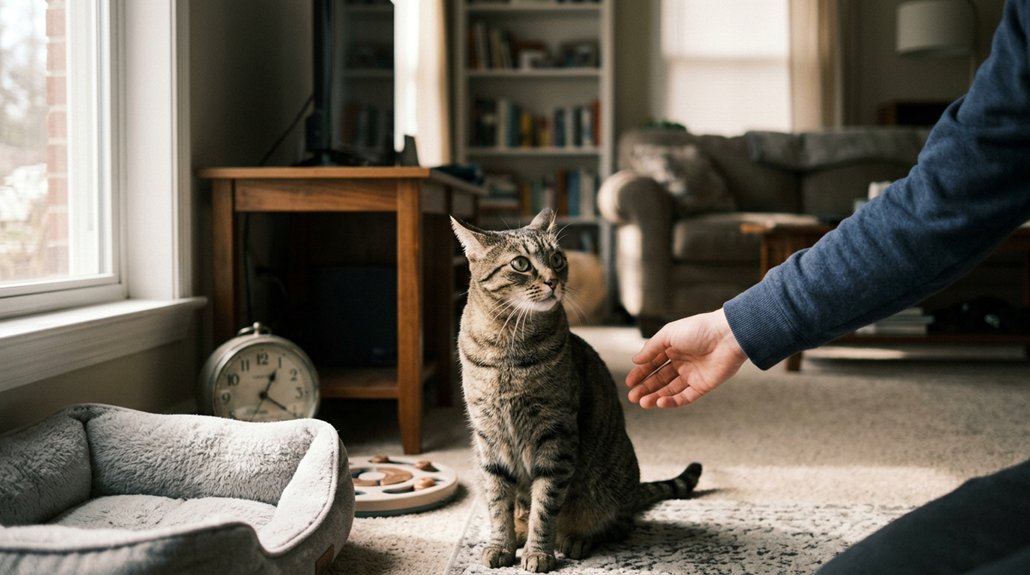
When your cat experiences anxiety related to short departures, implementing a gradual acclimation process is essential. Begin with brief absences, progressively increasing the duration to facilitate adaptation. Departure training involves creating a consistent pre-departure routine, which signals to your cat that you’re leaving. This predictability can alleviate anxiety.
Employ acclimation techniques by:
- Providing engaging toys like puzzle feeders to mentally occupy your cat.
- Leaving calming background noise, such as a radio or TV on a familiar channel, to create a soothing ambiance.
- Establishing a cozy, secure space with perches or hideaways where your cat can retreat.
- Gradually extending departure time to build your cat’s confidence and reduce stress over time.
These strategies aim to guarantee a calmer feline during your short departures.
Utilize Environmental Enrichment Techniques
Cats, though independent by nature, greatly benefit from environmental enrichment techniques to alleviate anxiety when alone. Implement cat friendly furniture, such as perches or shelves by windows, which allows visual stimulation and the comforting observation of the outside world. Use puzzle feeders or food-dispensing toys; these provide sensory stimulation and encourage mental engagement, fostering problem-solving skills that keep your cat mentally occupied. Simulate hunting with scavenger activities, hiding small treats throughout your home to trigger their natural instincts. Additionally, maintain familiar auditory environments by keeping a radio or TV on, as human voices offer comfort. Regularly rotate toys to maximize sensory stimulation and maintain interest, preventing monotony even in your absence. These strategies effectively mitigate feline stress when you’re away.
Ease Into Longer Alone Time
While it’s essential to respect your cat’s independent nature, helping them adapt to extended periods alone requires a gradual approach. Start with short separations, allowing your cat to acclimate, thereby promoting feline comfort. Implement gradual departures by initially leaving for minutes and slowly stretching it out. Enhance the environment with pheromone diffusers or soothing music to ease anxieties during your absence. A consistent routine can greatly mitigate stress.
Help your cat acclimate to alone time with gradual departures and environmental enhancements for comfort.
Consider these strategies to provide assurance:
- Routine Establishment: Consistent patterns when leaving and returning.
- Enrichment Toys: Food puzzles or new toys to engage their minds.
- Practice Separations: Brief home separations with closed doors or a crate.
- Calming Tools: Pheromone diffusers to maintain a tranquil atmosphere.
These measures foster a stress-free adaptation to longer alone times.
When Professional Intervention Is Needed
Anxiety in cats can manifest in various troubling behaviors, indicating when professional intervention is vital. If signs like excessive vocalization, inappropriate elimination, or destructive behavior persist despite attempts to alleviate anxiety triggers, it’s important to weigh a veterinary referral. A thorough examination by a veterinarian can rule out underlying medical issues, such as urinary tract infections. For severe anxiety, consulting a veterinary behaviorist may be necessary for specific behavioral therapies or medication.
| Signs of Anxiety | Professional Steps |
|---|---|
| Excessive Vocalization | Veterinary Referral |
| Inappropriate Elimination | Medical Examination |
| Destructive Behavior | Consult Veterinary Behaviorist |
| Severe Anxiety Symptoms | Behavioral Therapies, Medication |
Ongoing communication with your veterinarian guarantees the effectiveness of interventions and necessary adjustments.
Active Monitoring and Flexible Strategies for Ongoing Cat Well-Being
To effectively support your cat’s emotional wellness, regularly observe its behavior for potential signs of anxiety, such as excessive grooming or inappropriate elimination. Identifying anxiety triggers is important for addressing the root causes. Implement gradual desensitization by initially leaving your cat alone for short periods, slowly increasing the duration. This helps your cat acclimate to solitude without distress.
Consistently follow a routine for feeding, play, and rest. This predictability provides security, minimizing anxiety. Engage its mind during your absence with stimulating activities.
- Interactive toys strategically placed around the home
- Puzzle feeders filled with your cat’s favorite treats
- Frequent, scheduled playtimes for mental engagement
- Consultations with veterinarians for persistent anxiety signs
Maintain flexibility in your strategies to cater to your cat’s changing needs.
Frequently Asked Questions
How Do I Make My Cat Less Anxious When I Leave?
Start with behavioral training to familiarize your cat with alone time. Implement environmental enrichment by establishing a routine, using puzzle feeders, and introducing background noise. Calming aids can also reduce anxiety, providing a comforting atmosphere during your absence.
What Is the 3-3-3 Rule for Cats?
The 3-3-3 rule is your cat’s holy grail for adaptation. Three intense days of stress, three weeks of exploratory curiosity, and three months to reveal their full personality, mastering behavioral nuances and quelling anxiety triggers.
Will My Cat Miss Me if I Leave for 5 Days?
Yes, your cat will likely miss you due to the bond you share. Cats form strong attachments, and separation can disrupt their comfort. Providing environmental enrichment and calming aids can help ease their anxiety during your absence.
What Are the Main Signs of Separation Anxiety in Cats?
Look for behavioral triggers like excessive vocalization, refusal to eat, or destructive acts. Coping strategies can include providing environmental enrichment and creating a predictable routine to ease your cat’s separation anxiety symptoms when you’re away.
Conclusion
In mastering your cat’s anxiety, you’ve unlocked the secrets of the feline universe! You’ve tackled it all—from interpreting subtle whisker twitches to crafting a fortress of solitude. Your enlightened wisdom transforms chaos into serene tranquility. Remember, your journey doesn’t end here. Keep refining strategies with the perspicacity of a cat whisperer. If anxiety persists and the universe seems insurmountable, know when to consult the sacred oracle: the professional. Your feline’s nirvana is within reach!