Owning a dog involves unexpected costs beyond the initial adoption and routine care. You might face surprise expenses like emergency vet visits or specialized diets due to health issues. Behavioral training can also add to your budget, especially for high-energy breeds. Even setting up a safe home environment and maintaining pet-proofing can catch you off guard financially. Planning and budgeting for these hidden costs is essential, and there’s plenty more to uncover that can help you prepare.
Key Takeaways
- Unexpected emergency vet visits can cost hundreds to thousands, causing financial strain without proper savings.
- Training high-energy or anxious breeds requires significant investment beyond basic obedience classes.
- Specialized diets for health issues can elevate monthly food costs significantly.
- Initial setup costs for pet-proofing and essential supplies add up quickly.
- Routine veterinary care and preventative medications accumulate to about 25% of lifetime health expenses.
Uncovering Unexpected Upfront Costs
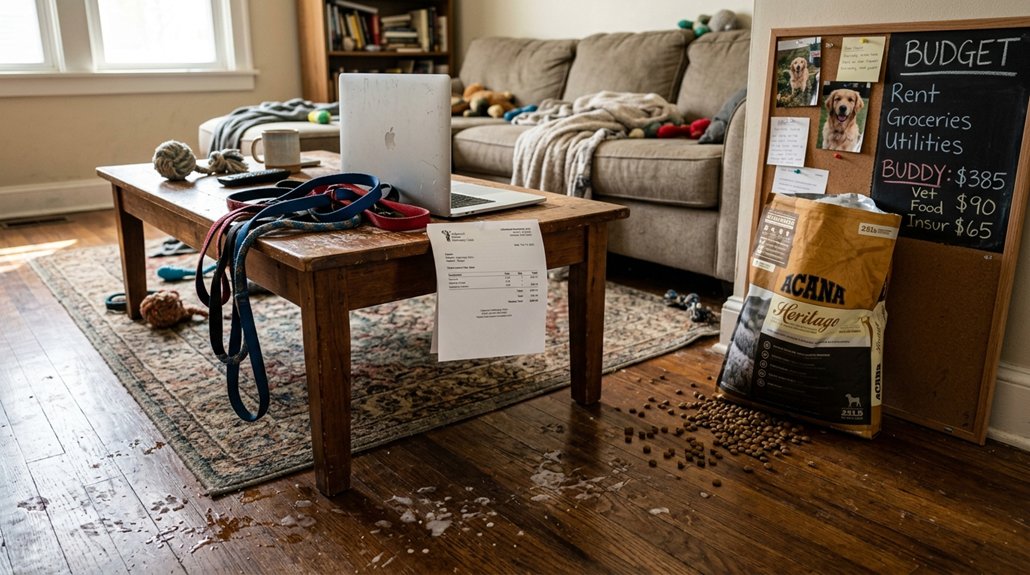
When stepping into the world of dog ownership, it’s vital to recognize the various unexpected upfront costs that could impact your budget. The initial investment often begins with adoption fees, ranging from $50 to $500, or possibly higher with responsible breeders. Remember, the lower price tags can sometimes signal potential issues. Beyond that, initial veterinary care—vaccinations, spaying/neutering, microchipping—can quickly hit between $200 and $500. Some shelters offer packages including these services, which might help you save. Don’t forget about unexpected supplies. Essential items like food bowls, collars, crates, and grooming supplies also add up, demanding between $150 to $400. These unexpected costs stress the importance of thorough planning when welcoming your canine companion into your life.
Estimating Nutrition Expenses
Once you’ve navigated the unexpected upfront costs of dog ownership, another significant budget consideration is nutrition expenses. Feeding your furry friend can cost between $20 and $50 monthly for standard medium-sized dog food. Opting for premium diets, however, could see your expenses exceed $100 monthly. Specialized diets or wet food for health issues and growth spurts in medium to large breeds could elevate your costs to $150 monthly. Don’t forget the initial supply expenses, like food bowls and nutritional supplements, which might set you back between $150 and $400. As your dog grows, monitoring their diet becomes essential, potentially requiring more costly specialized diets or supplements. These evolving needs highlight the ongoing financial commitment dog ownership demands.
Routine Veterinary Costs Explained
You should plan for at least one annual veterinary visit to guarantee your dog’s health is closely monitored, as this routine care is essential in catching potential issues early. Preventative treatments for fleas, ticks, and heartworm are non-negotiable aspects of pet care, safeguarding your dog against many common ailments. While these regular expenses might seem minor, neglecting them can lead to major health problems and unexpected costs down the road.
Annual Vet Visit Frequency
Although often underestimated, the frequency of annual vet visits plays a vital role in a dog’s well-being and the owner’s peace of mind. Regular vet check-ups, typically costing between $50 and $250, are necessary for effective health monitoring. They can include vaccinations and preventative medications, usually amounting to an additional $50 to $200 yearly. Keeping up with these visits is not just about routine; it’s about safeguarding against potential health issues that could lead to significant unforeseen expenses. Many pet owners don’t account for the ongoing costs of these vital appointments. However, by considering them an investment in both your dog’s health and your long-term financial stability, you can guarantee a healthier, happier life for your furry companion.
Preventative Treatments Importance
Why should you prioritize preventative treatments for your dog? Routine veterinary care, although often ranging between $50 to $250 annually, is essential for maintaining your dog’s preventative health and ensuring long term savings. Investing in regular check-ups, vaccinations, and vital medications like flea, tick, and heartworm preventatives can spare you from costly emergencies. Without these preventative measures, sudden health issues could arise, potentially leading to emergency vet visits where expenses quickly add up. In fact, around 25% of dog owners have incurred significant debt averaging $1,566.96 from unexpected medical needs. Remember, proper budgeting for routine care is significant—it represents nearly 25% of your dog’s lifetime health expenses. Prioritizing prevention now could save you financial stress later.
Preparing Financially for Emergencies
When owning a dog, it’s vital to prepare financially for emergencies, as unforeseen medical costs can quickly escalate. An emergency fund dedicated to your pet can be a lifesaver. Around 25% of pet owners have faced debt from unexpected expenses, averaging over $1,566 due to sudden medical needs. Emergency vet visits can range dramatically, from hundreds to thousands of dollars—making a financial cushion critical. Consider setting aside a portion of your monthly income for potential pet-related emergencies like surgery or urgent care. Routine vet visits may cost between $50 and $250 annually, but unforeseen health issues can spike these numbers. Pet insurance is a wise investment, averaging $76.76 monthly, to help ease the financial burden during emergencies.
Investing in Behavioral Training

After preparing for emergencies, another critical aspect of dog ownership you’ll want to contemplate is investing in behavioral training. Effective training techniques and behavior modification are essential for preventing future issues and nurturing a rewarding relationship with your dog. Basic obedience classes can cost between $100 to $300, laying a foundation for both you and your canine. For high-energy breeds like Border Collies, consider more intensive training, which may increase your investment but is invaluable for their well-being. Early training, especially before six months of age, can curb behavioral problems, saving costs down the line. Keep in mind that specialized sessions for hyperactive or anxious dogs might add hundreds to your budget annually, but the benefits are manifold.
- Enhances communication abilities
- Prevents destructive behaviors
- Secures long-term savings
- Promotes a safer environment
How to Pet-Proof Your Home Without Breaking the Bank
Pet-proofing your home doesn’t have to drain your wallet, as affordable solutions like cord wraps and baby gates can effectively safeguard your space against potential hazards. By incorporating non-toxic plants and securing vulnerable items, you can easily create a safe environment for your pet while avoiding costly replacements. Embrace simple DIY methods such as using furniture cushions or cardboard barriers to block off restricted areas, proving that pet-proofing can be both practical and budget-friendly.
Affordable Pet-Proofing Solutions
Though welcoming a furry friend into your home is a joy, it can also bring unexpected challenges, especially when trying to protect your belongings without overspending. Proper budget planning is essential when considering affordable pet-proofing solutions. Utilizing cost-saving tips can greatly lighten the financial load. Start by keeping chewable items out of reach through practical solutions like:
- Invest in corner guards and slipcovers: These can save costly furniture replacements and average about $10.
- Designate play areas with budget-friendly barriers or gates: Priced between $20 and $50, these limit access to restricted zones.
- Secure electrical cords: Use cord organizers or cable ties, which prevent hazards and cost under $10.
- Opt for non-toxic cleaners: At $5 to $15, they’re safer and often more economical than specialty brands.
DIY Safety Measures
Taking a proactive approach to pet-proofing your home can save you both money and stress while ensuring a safe environment for your furry friend. Implementing simple safety hacks doesn’t have to cost a fortune. Apply childproof locks on cabinets to secure harmful chemicals, a cost effective solution preventing potential ingestion incidents. Protect your furniture with durable covers or throw pillows to avoid expensive replacements from pet damage. Use cardboard or wood barriers for blocking unsafe areas, preventing injuries without the hefty price of custom gates. Designate a cozy pet area with old blankets or crates. Regularly check for and secure electrical cords, as well as small objects, to avert high vet bills from emergencies due to your dog’s curious exploration.
Budget-Friendly Protective Products
Ensuring your home is safe for your dog doesn’t have to come at a high cost. With a few pet proofing essentials, you can efficiently safeguard your living space using budget-friendly strategies. Baby gates and playpens are an excellent investment, offering effective ways to block off areas from curious pets, priced between $30 to $100. Protect your furniture by using slipcovers or old blankets to guard against fur and scratches—a simple solution that saves you from replacing expensive items. Consider these strategies to keep your home dog-proof:
- Use durable, chew-proof storage bins (costing $20-$50) for toys to maintain tidiness.
- Repurpose cardboard boxes or old furniture to create barriers.
- Regularly check for hazards like loose cords and address them with low-cost storage.
- Opt for clips to manage and secure loose items.
Balancing Time and Lifestyle: Integrating Dog Care Every Day
While dog ownership promises companionship and joy, it demands careful integration of pet-related tasks into your daily life. Establishing dog care routines is essential, impacting work schedules and personal activities. Effective time management guarantees your dog enjoys consistent walks, feeding, and playtime, enhancing their health and strengthening your bond. Multitasking by combining errands with walks can streamline chores and guarantee daily exercise for your dog.
Proper training and behavioral management require a significant time commitment. This varies by breed, so planning is key to meeting your dog’s specific needs. Balancing these commitments with your lifestyle involves flexibility and prioritization. Plan and adapt your day-to-day activities to maintain your pet’s welfare without compromising your own schedule and satisfaction.
Frequently Asked Questions
What Are the Hidden Costs of Owning a Dog?
Owning a dog brings unexpected expenses and lifestyle changes. You might face costly house repairs from damage, frequent grooming fees, pricey specialized diets, pet-sitting bills, and unforeseen vet expenses. Plan carefully to manage these hidden costs.
What Is the 7 7 7 Rule for Dogs?
The 7-7-7 rule’s irony? Dogs race through life’s stages, requiring more than dog training and pet insurance. You’re tasked with protecting their evolving health—trouble starts when age sneaks up faster than expected, especially for larger breeds.
What Does No One Tell You About Owning a Dog?
No one tells you owning a dog involves significant training challenges and a massive time commitment. You’ll face issues like housebreaking and behavioral training, all requiring patience and dedication, beyond the financial and emotional investments already expected.
What Is the #1 Pet in the World?
Surprise, surprise! Dogs are the reigning champs, claiming the title of the #1 global pet. Despite their unconditional love and loyalty, their popularity doesn’t hint at the myriad of costs you’ll inevitably encounter. Choose wisely!
Conclusion
Owning a dog can be a rewarding journey, but it’s important to acknowledge the financial commitment behind those wagging tails. You might think you’ve got everything covered, only to find costs sneaking up on you. From unexpected nutrition and vet bills to training and home modifications, each element plays a part in the bigger picture. It’s essential to plan ahead, ensuring you’re not caught with your tail between your legs. Be prepared, and you and your furry friend will thrive.