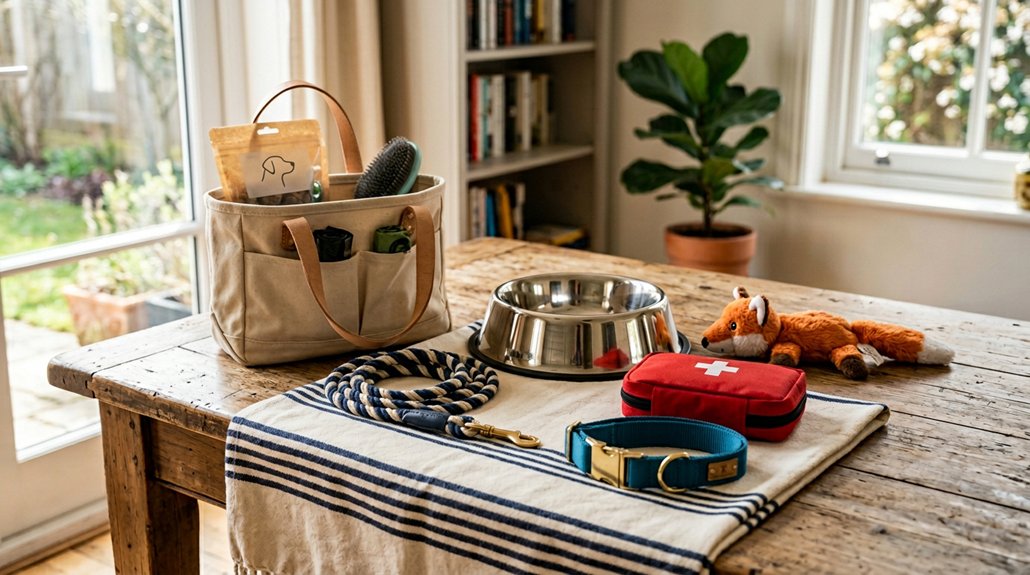
For your new dog, begin by selecting nutritious food tailored to their unique needs, and establish a comfy resting area with cozy bedding. Streamline potty training using pee pads and pick a secure collar and ID tag, considering microchipping for added safety. Equip for outdoor adventures with a sturdy leash. Engaging toys are essential for fun and mental stimulation. A consistent health and hygiene routine guarantees a happy pup. Discover more tips on creating the best environment for your furry friend.
Key Takeaways
- Choose high-quality dog food tailored to your dog’s age, size, and breed after consulting with a veterinarian.
- Provide a cozy and appropriately sized bed with washable, durable materials for your dog’s comfort and hygiene.
- Use pee pads for bathroom needs, especially during bad weather or if outdoor access is limited.
- Maintain regular grooming with proper brushes, nail trimming, and dog-specific shampoo to ensure coat and hygiene health.
- Ensure safety with a snug-fitting collar containing ID tags and consider microchipping for added security.
Select the Best Food for Your Dog
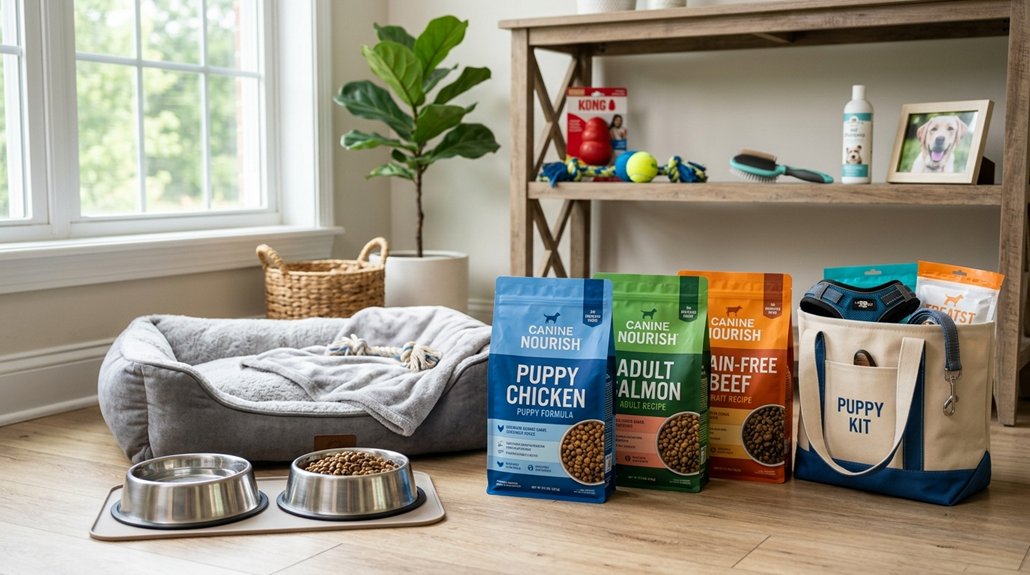
When it comes to selecting the best food for your dog, recognizing that each dog is unique can make all the difference in their health and well-being. Consulting your veterinarian is a great starting point, aiding you in choosing high-quality dog food tailored to your dog’s age, size, and breed. Be mindful of potential dietary sensitivities or allergies, as specialized formulas like grain-free or hypoallergenic options can prevent health issues. Adjusting to a new food should be gradual—mix it with the current food over a week to guarantee a smooth adjustment and avoid gastrointestinal upset. Always monitor your dog’s weight and condition, adjusting portion sizes as needed to maintain their ideal weight and energy levels.
Create a Comfortable Resting Area
Once you’ve sorted your dog’s dietary needs, turning your attention to their rest area is a natural next step in guaranteeing their overall well-being. Creating a designated space with a cozy bed or crate helps your dog feel safe and secure, which is essential for relaxation. Choose bedding materials that are washable and durable—especially important if you’re dealing with puppies who might have accidents. To enhance comfort, add soft blankets or towels, making the space even more inviting. Verify that the dog bed is appropriately sized, allowing your pet to stretch comfortably in their resting area. Regularly monitor this environment, cleaning away dirt, hair, and odors to maintain a clean, healthy space that fosters tranquility and comfort for your furry friend.
Streamline Potty Training With Pee Pads
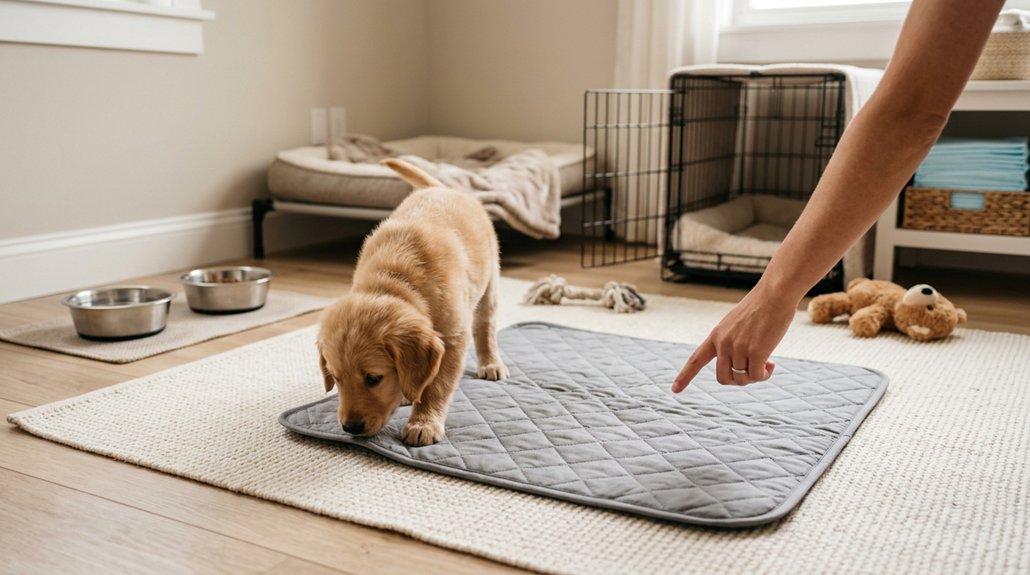
Potty training your dog can be challenging, but pee pads offer a practical solution to streamline the process. Strategically placing pee pads in accessible areas of your home provides a clear, designated spot for your puppy or senior dog to use. This setup helps minimize accidents and eases the shift to outdoor potty routines. Consider options such as Advance® Potty Training Pads with Turbo Dry® Technology, which quickly absorb liquid and reduce odors, making it comfortable for your dog.
Consistently monitor your dog’s usage to gauge their training progress. This regular observation can help you identify patterns or areas needing adjustment. Pee pads are also invaluable during inclement weather or when outdoor access is limited, ensuring house training continues smoothly regardless of conditions.
Pick the Perfect Collar and ID Tag
Finding the right collar and ID tag for your dog is vital for both their safety and your peace of mind. Start by choosing a collar that fits snugly, leaving room for one to two fingers between the collar and your dog’s neck. Consider durable collar materials like nylon or leather, or opt for waterproof options if your dog loves the water. Your dog’s ID tag information should include their name, your contact number, and any important medical info to guarantee their swift return if lost. Remember to regularly inspect the collar for wear and tear, adjusting it as needed, particularly for growing puppies. Finally, consider microchipping as an added measure alongside a collar and ID tag.
Equip for Outdoor Adventures With the Right Leash
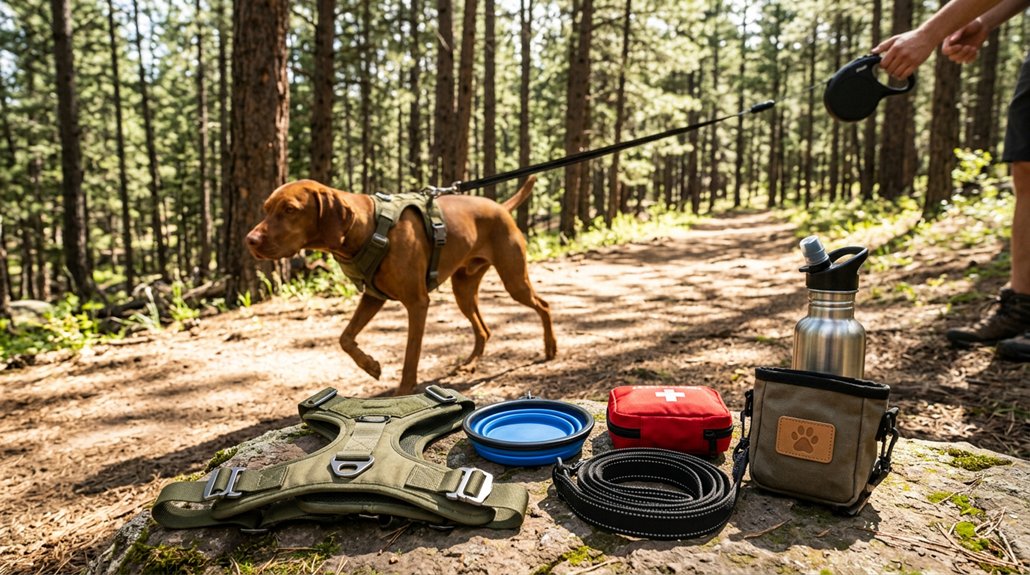
Starting outdoor adventures with your dog often requires equipping yourself with the right leash to guarantee safety and control. Choosing from various leash types, a fixed-length leash of 4 to 6 feet is ideal for regular walks, ensuring you can manage your dog effectively. For particularly adventurous outings, a long training leash up to 30 feet offers your dog some freedom while keeping control within reach.
When it comes to leash materials, opt for durable options like nylon or leather, which provide both strength and comfort. If your dog tends to pull, consider pairing the leash with a harness to avoid neck strain. Look for comfort grips or dual grips to make handling smoother in crowded or challenging environments. Don’t forget dog waste bags for responsible clean-up!
Choose Engaging Toys for Fun and Training
When selecting toys for your dog, focus on choosing the right sizes to guarantee safe and enjoyable play, protecting them from choking hazards. Regularly rotating your dog’s toys keeps them intrigued, helping prevent boredom while enhancing your pet’s playtime experience. Interactive toys, such as treat-dispensing puzzles, engage your dog’s mind and body, fostering mental stimulation and deeper connection during play sessions.
Select Suitable Toy Sizes
Selecting the right toy size is essential to guaranteeing your dog’s safety and enjoyment during playtime. When considering dog sizes, it’s important to match the toy to your pup’s dimensions. For small dogs, select toys under 6 inches, while larger breeds need toys over 12 inches to prevent choking hazards. Guaranteeing proper toy safety means choosing options tailored to your dog’s play preferences—such as fetch toys for retrievers or shreddable toys for terriers.
Always keep the following in mind:
- Avoid small toys for large dogs: They pose a choking risk.
- Opt for size-appropriate toys: Guarantees safe play.
- Consider your dog’s play style: Match toys to their instincts.
- Check toys regularly for wear and tear: Replace when necessary.
- Supervise play: Prevent accidents before they happen.
Rotate Toys for Interest
Incorporating a variety of toys into your dog’s routine through regular rotation can greatly enhance their engagement and happiness. Toy rotation every few days prevents boredom, ensuring your fur baby stays intrigued and mentally stimulated. Choose toys that cater to natural instincts—chew toys satisfy gnawing needs, while puzzle toys provide problem-solving fun. This play variety not only captivates your pup’s attention but also encourages learning and skill development.
Interactive options, like treat-dispensing puzzles and tug toys, offer physical challenges and nurture bonding. Mix in different sizes and textures to suit various chewing habits and preferences. By observing your dog’s play patterns, you can tailor the toy selection to their interests, ensuring engaging, fulfilling, and joyful playtime adventures.
Incorporate Interactive Playtime
Ever wonder how to turn playtime into a rewarding experience for both you and your dog? Interactive play is the key, offering not only physical exercise but enriching mental stimulation that curbs boredom-related behaviors. Engaging toys like puzzle toys and treat-dispensing balls enhance learning by rewarding success, while rotating toys guarantees your pup stays interested. Focus on toys that promote their natural instincts, making sure they provide both mental and physical satisfaction. Bond through tug toys and fetch, teaching commands and impulse control.
- Puzzle toys for mental stimulation
- Treat-dispensing balls to reward behavior
- Rotated toys for sustained interest
- Tug toys for command training
- Squeaky toys for hunting instincts
Utilizing these strategies enriches playtime, making it an essential part of your dog’s daily routine.
Optimize Your Dog’s Health and Hygiene Routine
Optimizing your dog’s health and hygiene routine is a commitment that yields lasting benefits for both you and your furry companion. A solid plan involves a detailed grooming schedule and regular dental care. Start by using flavored dog toothpaste to make brushing enjoyable and prevent periodontal disease. Weekly coat brushing reduces shedding and guarantees a shiny, healthy coat. Nail trimming every 3-4 weeks is critical to avoid discomfort and posture issues. Bathing should occur every 1-3 months with dog-specific shampoos to protect their skin.
| Task | Frequency | Products Needed |
|---|---|---|
| Dental Care | Daily | Flavored Dog Toothpaste |
| Coat Brushing | Weekly | Brush |
| Nail Trimming | Every 3-4 weeks | Nail Clippers |
| Bathing | 1-3 Months | Dog-Specific Shampoo |
Don’t forget regular vet check-ups and a well-stocked first aid kit.
Frequently Asked Questions
How Do I Introduce a New Dog to My Home?
When introducing your new dog to a home environment, create calm, comforting spaces. Gradually expose them to different areas and routines. Use gentle encouragement, patience, and consistency to guarantee positive dog introductions, fostering a sense of security.
What Should Be Included in a Dog’s First Aid Kit?
Think of a dog’s first aid kit as a lifeline in a storm. Essential emergency items include gauze, antiseptic wipes, tweezers, a thermometer, and dog-safe pain relief. It’s your symbol of care during unexpected situations.
How Often Should I Schedule Veterinary Check-Ups?
Schedule veterinary check-ups at least twice a year to track their vaccination schedule and conduct regular health screenings. Frequent visits guarantee your dog’s ongoing health and can prevent potential issues before they become serious.
What Are the Signs of Allergies in Dogs?
Imagine your dog’s coat as a vibrant tapestry. When it’s disrupted by skin irritation or constant scratching, it’s likely a response to invisible environmental triggers or allergies, showing signs like redness, paw chewing, or frequent sneezing.
How Can I Safely Transport My Dog in a Car?
To safely transport your dog in a car, use a dog crate or seatbelt harness. Make certain they’re kennel trained for travel comfort. Always secure them properly, preventing distractions and guaranteeing their safety throughout the journey.
Conclusion
With your newfound knowledge of dog supplies, you’re well on your way to creating a happy and healthy environment for your furry friend. Think of these essentials as the building blocks of a joyful life together, each piece fitting seamlessly into the jigsaw of your pet’s well-being. Remember, your pup’s needs, like any friendship, evolve over time, so stay attentive and adaptable. You’ve got this, and your companion is lucky to have someone like you in their corner.