Caring for a dog effectively requires four to six hours daily. Structured routines are crucial for fostering well-being, including regular exercise, social interaction, and mental stimulation. Begin with a structured morning routine, guarantee two hours of social interaction to balance solitude, and incorporate consistent evening activities for security and bonding. Monitoring your dog’s behavior helps you understand their needs. By engaging in these practices, you’ll enhance your dog’s overall health and happiness. Discover how to optimize these interactions further.
Key Takeaways
- Dogs need two hours of social interaction daily for mental well-being.
- Schedule bathroom breaks every 6-8 hours to support training and routine.
- Adult dogs require approximately 50 to 75 minutes of exercise each day.
- Consistent feeding times help prevent digestive issues and behavioral problems.
- Manage solitude time to not exceed six to eight hours to prevent anxiety.
Understanding a Dog’s Daily Routine
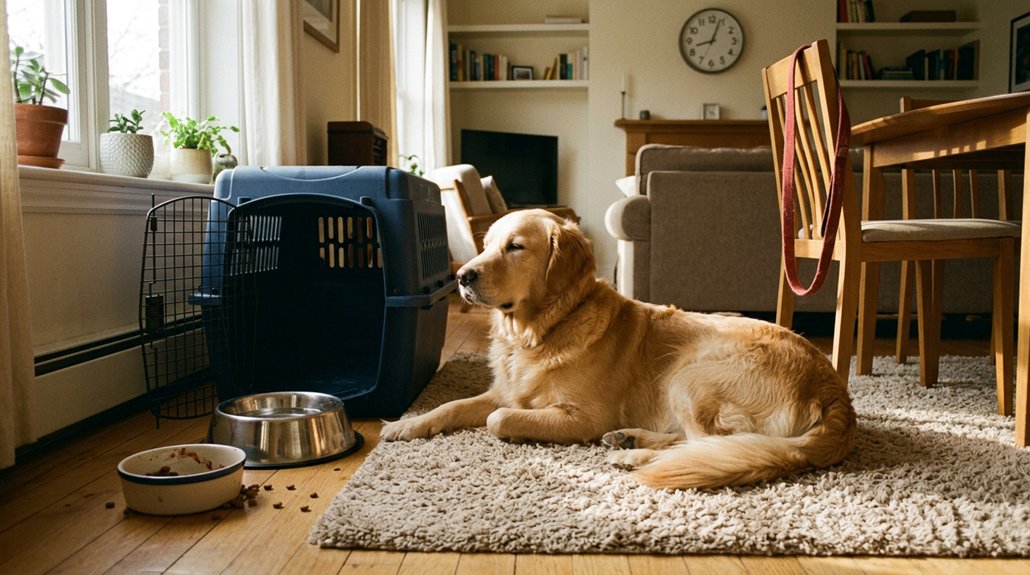
When planning your dog’s daily routine, it’s essential to take into account their need for structured activities, including regular sleep, feeding, exercise, and playtime, as these elements markedly contribute to their well-being. Establishing a consistent feeding schedule helps in regulating digestion and preventing potential behavioral issues related to hunger. Adult dogs benefit from two meals a day, spaced 8-12 hours apart, while puppies require more frequent meals. Your dog’s exercise needs are important for physical and cognitive health, ranging from 30 minutes to 2 hours daily, tailored to their age and breed. Daily sleep, critical for recovery, should be prioritized, with adult dogs needing 12-14 hours. Bathroom breaks every 6-8 hours are essential in preventing accidents and promoting proper training.
Crafting a Morning Routine for Dogs
Crafting a structured morning routine for your dog establishes a foundation for their daily well-being and behavioral health. Start with a 15-minute bathroom break, allowing them to relieve themselves comfortably. This reduces stress and aids in their digestive health. Following this, engage them in a 20-30 minute morning walk. Physical exercise combined with mental stimulation diminishes anxiety and promotes cardiovascular health. Around 7:00 a.m., provide breakfast alongside fresh water. Allocate about 15 minutes for this essential nutritional intake, ensuring energy levels are maintained throughout the day. Adhering to a consistent schedule fosters predictability, which helps reduce stress and strengthens your dog’s behavioral health. By establishing a morning routine, you contribute greatly to your dog’s overall well-being and longevity.
Midday Activities for Mental Stimulation
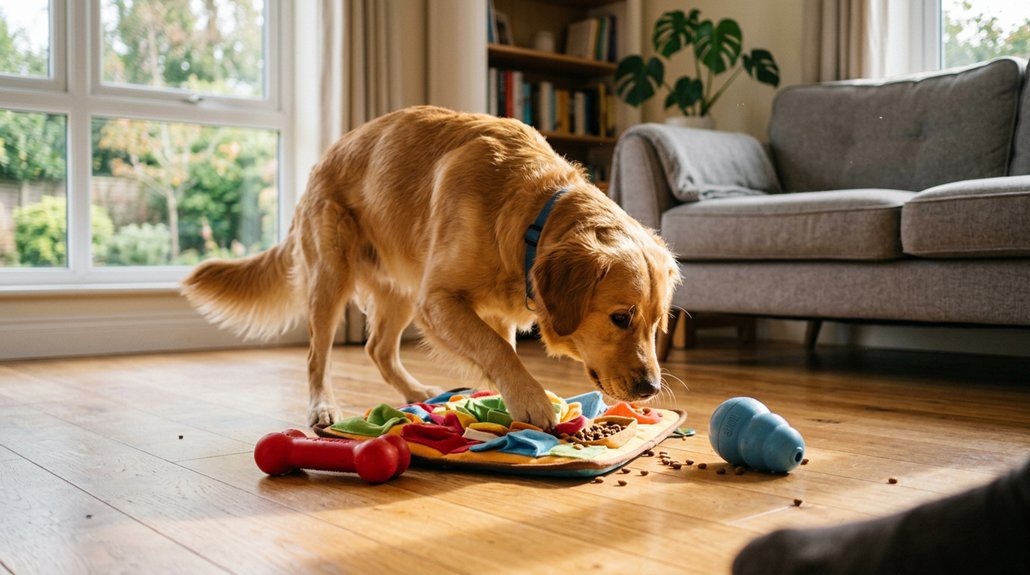
Midday activities are essential for providing your dog with the mental stimulation needed to prevent boredom and promote cognitive development. Incorporate interactive play sessions to engage their problem-solving abilities. Puzzle toys or treat-dispensing devices serve as perfect tools, keeping your dog’s brain active for longer durations by challenging their mental capacities.
Integrate short training sessions to reinforce commands; this not only offers mental workouts but also fortifies the bond between you two. Additionally, organize socialization time, such as playdates with other dogs or humans, ensuring both mental and social engagement. Don’t forget scent games—encourage your dog to search for hidden treats, enhancing their natural instincts and offering an exciting midday break. These strategies effectively nurture your dog’s cognitive abilities.
Day-End Care: Evening Exercise and Relaxation
To guarantee your dog’s physical and mental well-being, evening exercise is essential; a 30-45 minute walk or play session effectively expends energy and aids relaxation before bedtime. Establishing a consistent evening routine with bonding and grooming not only enhances your dog’s sense of security but also prevents destructive behaviors. Incorporate calming activities like gentle petting or light play to shift your dog smoothly into a restful state, fostering both behavioral health and happiness.
Evening Exercise Benefits
As evening approaches, dedicating 30-45 minutes to exercise can greatly benefit your dog’s health. Engaging in evening play is essential for energy release, helping your dog expend excess energy accumulated throughout the day. This activity can also enhance their mood and reduce anxiety, promoting better overall behavioral health. By aligning with a dog’s natural circadian rhythms, regular evening exercise contributes to more consistent sleep patterns and overall well-being. Moreover, this shared activity strengthens the bond between you and your dog, fostering trust and companionship. Incorporating such exercise into your routine is not only beneficial for your dog’s physical health but also cultivates a calm demeanor, effectively preparing them for a restful night’s sleep.
Promoting Relaxation Rituals
When evening approaches, incorporating relaxation rituals into your dog’s routine can greatly enhance their well-being. Engage in a calming evening playtime, like a 30-45 minute walk, to help your dog expend any excess daytime energy—essential for effective relaxation techniques.
- Evening Playtime: A structured activity helps alleviate pent-up energy.
- Winding Down: Gentle petting or brushing signals it’s time to relax.
- Predictable Schedule: Defined times for dinner, walks, and bedtime foster security.
- Cozy Resting Area: Provide a quiet, comfortable bed to guarantee restful sleep.
- Low-Stimulation Activities: Use puzzle toys or interactive games to ease into relaxation.
Emphasize these steps consistently to create an evening environment that promotes calmness, guaranteeing your dog has a peaceful end to their day.
Establishing a Calm Nighttime Routine
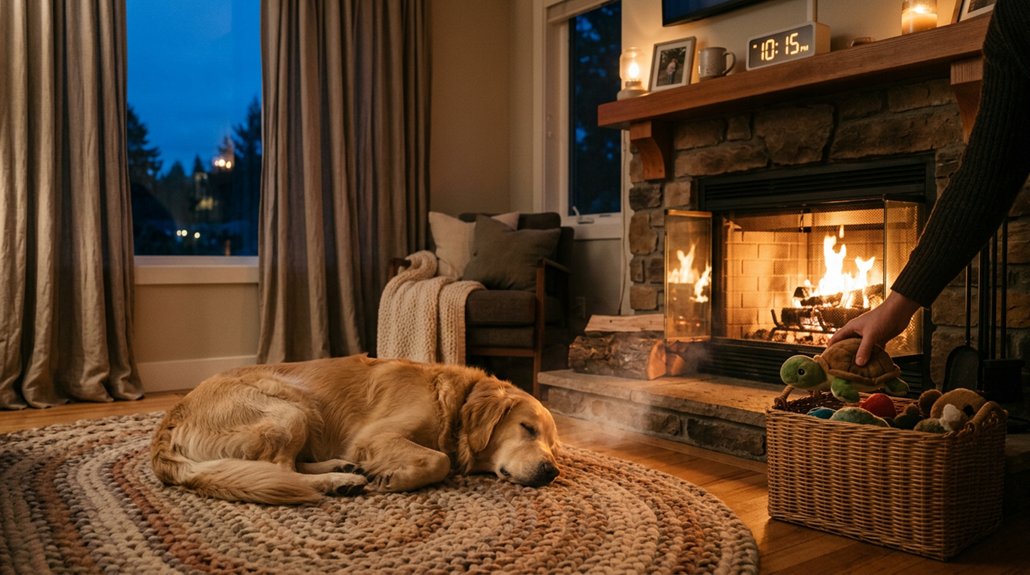
Establishing a calm nighttime routine is essential for ensuring your dog receives quality rest. Implement consistent bedtime cues like quiet activities—gentle play or cuddling—so your dog knows when to start winding down. It’s scientifically proven that structuring a predictable shift into sleep aids canine relaxation. Create an ideal sleep environment with a comfortable, distraction-free designated sleeping area, such as a crate or dog bed, to promote uninterrupted sleep. You should limit food and water intake a few hours before bed, minimizing sleep disruptions caused by bathroom needs. Gradually incorporate a pre-bedtime ritual, such as a short evening walk or calming massage, to signal it’s time to settle. This routine fosters relaxation, enhancing overall sleep quality.
Maintaining a Balance Between Solitude and Socialization
Finding the right balance between alone time and social interaction is essential for a dog’s well-being. Gradual introduction to solitude can help prevent anxiety, but dogs also require at least two hours of varied social engagement to maintain behavioral health. Tailoring socialization to your dog’s unique needs will mitigate potential issues like destructive behavior, ensuring they lead a happier life.
Gradual Alone Time Introduction
Introducing alone time to your dog in a gradual and structured manner is vital for maintaining a healthy balance between solitude and socialization. Start by leaving your puppy alone for a few minutes, gradually increasing the duration over time. Utilizing a safe area like a crate, paired with treat-dispensing toys, encourages positive reinforcement, helping alleviate potential separation anxiety. Monitoring your dog’s behavior is important to detect signs of stress. Remember, the maximum recommended alone time shouldn’t exceed six to eight hours without bathroom breaks.
- Begin with short periods of solitude, then increase duration gradually.
- Use treat-dispensing toys to promote positive associations.
- Establish a secure zone like an exercise pen or crate for safety.
- Monitor for signs of separation anxiety.
- Limit alone time to avoid excessive isolation.
Essential Social Interaction Needs
To maintain a healthy balance between solitude and socialization, dogs require structured social interaction daily. A minimum of two hours split into shorter sessions guarantees that your pet engages in crucial canine communication and social play. While some dogs thrive on human and canine interactions, others demand tailored socialization plans, especially considering breed and age. It’s essential to assess each dog’s unique needs to prevent behavioral health issues such as boredom or anxiety. You’ll notice that insufficient socialization could lead to negative behaviors, making it crucial to balance their alone time with regular interaction. Implementing gradual exposure to both human and canine interactions helps, especially for dogs needing more solitude. This approach enhances overall well-being and maintains behavioral health.
Recognizing When Your Dog Needs More Attention
How do you know when your dog needs more attention? Recognizing attention signals is vital. If your dog excessively barks, chews furniture, or engages in other destructive behaviors when alone, it’s likely they need more social interaction. Consider integrating structured interaction strategies for better mental engagement. Here are behavioral signs to watch for:
- Excessive Barking: Indicates the need for more stimulus.
- Destructive Chewing: Points to boredom or anxiety during isolation.
- Extreme Enthusiasm Upon Return: Signifies a lack of interaction.
- Anxiety Symptoms: Stress and restlessness could mean a need for company.
- Boredom: Manifests through disengaged and lethargic behavior.
Aim for at least two hours of social time, split throughout the day, to boost your dog’s well-being and happiness.
Frequently Asked Questions
What Is the 7 7 7 Rule for Dogs?
The 7 7 7 Rule involves dedicating seven minutes each to playtime, training, and social interaction daily, focusing on training consistency and exercise variety. It’s a scientifically-backed method ensuring balanced mental and physical stimulation for your dog.
What Is the 3-3-3 Rule for Dogs?
The 3-3-3 rule symbolizes a journey through a dog’s adjustment period, aiding you in guiding through the canine socialization stages: three days for initial fear, three weeks for routine establishment, and three months for emotional bonding.
What Annoys Dogs the Most?
Dogs’ primary annoyances include loud noises disrupting their sound sensitivities, inconsistent training, and space invasion. Neglect signs manifest as behavioral issues, while routine disruptions and common triggers can heighten puppy frustrations and impact overall dog behavior negatively.
How Much Time Does a Dog Need per Day?
You’ll need to devote around two to four hours daily, combining exercise, training sessions, mental stimulation, and social interaction. Each component is essential for your dog’s well-being, ensuring a balanced lifestyle and minimizing behavioral issues.
Conclusion
Imagine your dog as a finely-tuned orchestra, each part of its daily routine playing an essential role in a harmonious performance. Missing a beat, like skipping evening exercise, can disrupt this balance, leading to restlessness or anxiety. Studies show that dogs thrive with 1-2 hours of dedicated interaction daily, akin to a maestro guiding each section with precision. By orchestrating these daily rhythms, you guarantee your dog’s well-being is as harmonious as a well-conducted symphony.