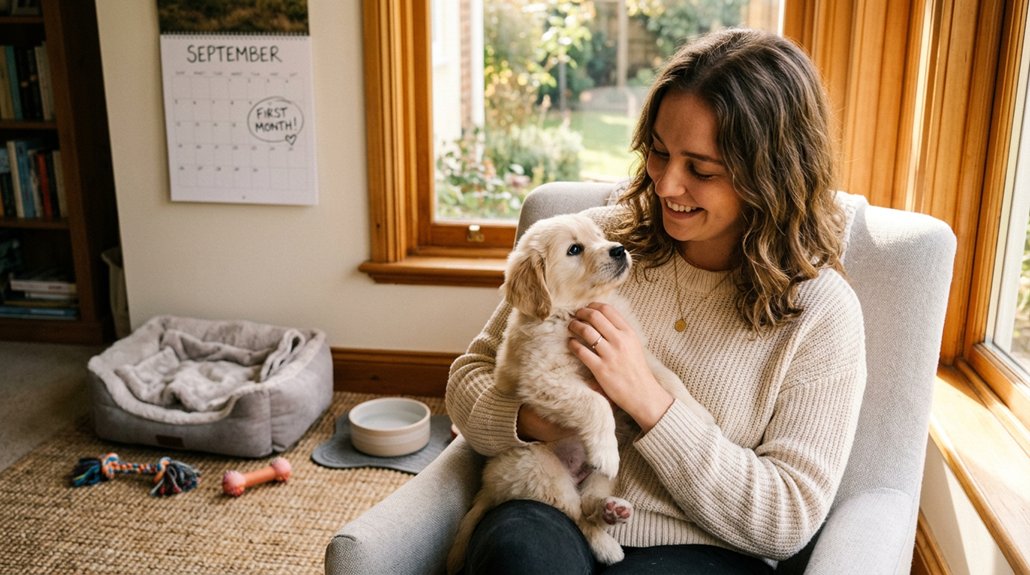
In your first month as a new dog owner, you’ll transform your home into a pet-friendly haven by eliminating hazards and setting safe zones. Stock up on essential supplies like puppy-formulated food and grooming tools. Establish consistent routines for feeding and training to foster security. Begin potty training with positive reinforcement, while addressing teething and behavioral issues collaboratively. Focus on socialization through varied environments and play. You’ll soon discover crucial insights into nurturing a well-adjusted, happy dog.
Key Takeaways
- Ensure safety by removing hazards and securing storage for food and cleaning supplies.
- Acquire essential supplies, such as age-appropriate food, a crate, and grooming tools.
- Establish a consistent feeding and training schedule, with three meals for puppies under six months.
- Begin potty training by choosing a specific outdoor spot and applying positive reinforcement.
- Prioritize socialization through playdates, training classes, and introducing various environments.
Crafting a Pet-Friendly Home
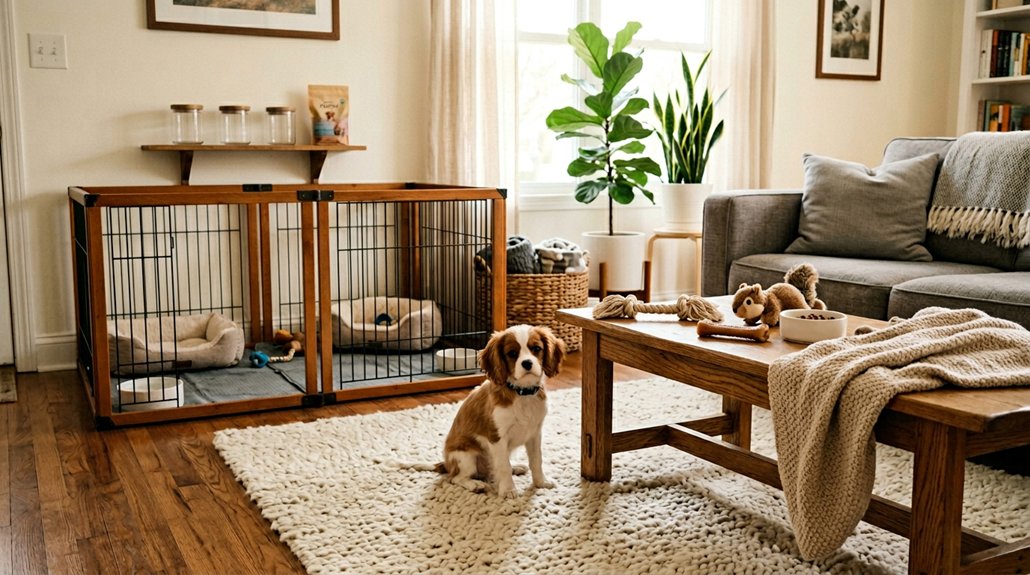
Crafting a pet-friendly home begins with understanding the potential hazards lurking in your living space that could endanger your new furry friend. Start by focusing on hazard removal. Toxic plants and small objects that might be swallowed should be out of reach. Establish designated areas for safe spaces where your dog can relax and play. Puppy proofing involves installing protective barriers like baby gates to section off areas, ensuring your pup stays where you want them. Secure storage is essential for items like pet food and cleaning supplies to prevent accidental ingestion. Investing in pet-specific furnishings and cleaning products, which often include enzymatic cleaners, helps maintain a clean environment. Solidifying these protocols will help your dog feel secure and adjust comfortably.
Must-Have Supplies for Your New Dog
Creating a pet-friendly home lays the groundwork for your dog’s safety and comfort, but equipping yourself with the right supplies is equally important. Prioritize puppy nutrition by selecting a puppy-formulated food suitable for your dog’s age and breed size. Consult your vet for tailored advice. For crate training, guarantee you have a comfortable crate—big enough for your puppy to stand, turn, and lie down. Durable, bacteria-resistant stainless-steel bowls are essential for feeding, and a standard collar with a 4-6 foot leash aids in safe walks.
| Essential Item | Purpose | Key Feature |
|---|---|---|
| Puppy Food | Proper Growth | Vet-Approved |
| Stainless Bowls | Feeding | Durable |
| Crate | Training & Security | Spacious |
| Nylon Collar & Leash | Walks & Training | Reflective Option |
| Grooming Tools | Health & Hygiene | Pup-Safe |
Creating a Consistent Routine
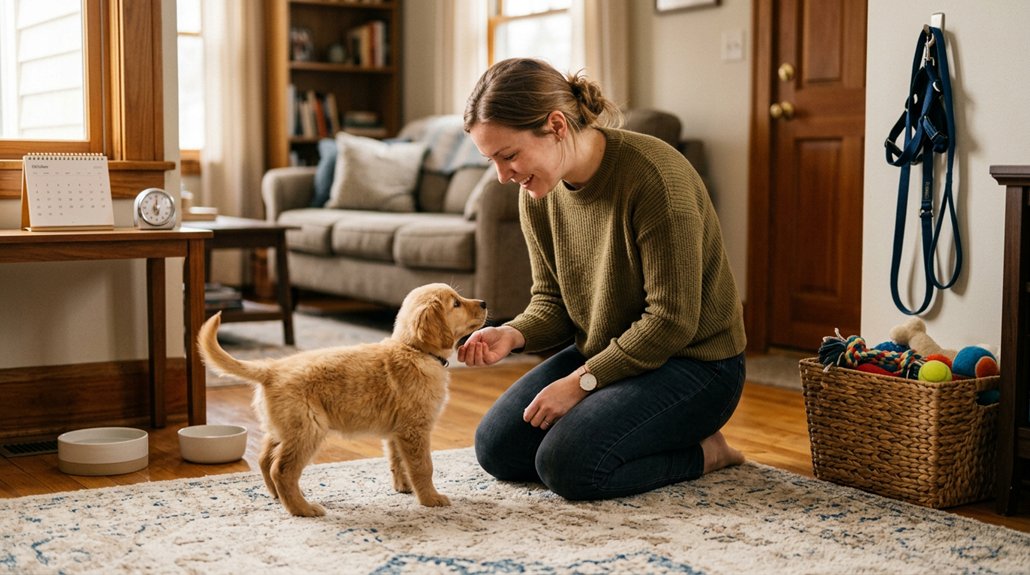
To effectively support your puppy’s adaptation and minimize stress, you’ll need to establish a consistent schedule for feeding and training. Begin by offering meals three times daily until six months, progressing to twice a day thereafter, and set concise training intervals of 5 to 10 minutes to enhance learning and retention. Consistency is scientifically linked to reduced anxiety and improved behavior, so make certain all family members adhere to the established routine and rules.
Establish Feeding Schedule
A consistent feeding schedule is vital for your puppy’s health and well-being, helping them develop a routine and anticipate their meals. Puppies typically require three structured meal types per day until they reach six months old. Afterward, shifting to two meals daily is advisable. Use feeding bowls that are appropriate for their size, guaranteeing easy access to food. Portion sizes should be tailored to the puppy’s age, size, and activity level. It’s important to consult your veterinarian for specific guidance. Regularly monitor your puppy’s weight and adjust food portions to prevent overfeeding, as obesity can lead to health issues. Additionally, provide fresh water at all times, and make sure feeding bowls are cleaned routinely to prevent bacteria buildup and promote proper hydration.
Implement Training Regimen
While training a new puppy, establishing a consistent regimen is essential to effective learning and behavioral development. Implementing daily training sessions of 5 to 10 minutes will reinforce learning efficiently and retain your puppy’s attention. Introduce clicker training as a scientific-based method to mark desired behaviors. Complement this with reward systems using treats or praise, encouraging repetition of positive actions. Integrate simple commands like sit, stay, and come throughout the day, making sure your puppy learns to associate these commands with specific behaviors. For potty training, take your puppy to the designated spot immediately after meals, play, and naps. Consistency is vital; guarantee all family members use the same commands to prevent confusion.
- Short daily sessions (5-10 minutes)
- Clicker training for precise marking
- Reward systems: Treats and praise
- Basic commands at regular intervals
- Consistent potty schedule after meals
Mastering Potty Training: Effective Tips
Establishing a reliable potty training routine is essential in helping your puppy grasp house-training efficiently. Begin by creating a consistent schedule—take your puppy out after meals, playtime, and naps. This reinforces routine and expectations. Select a designated outdoor potty spot; this helps your puppy associate a specific area with relieving themselves, aiding quicker comprehension. Utilize positive reinforcement immediately after successful outdoor potty breaks. Potty incentives like treats and praise can notably reinforce desired behaviors.
Watch for outdoor signals from your puppy, which may indicate their need to go outside. Anticipate and manage accidents with patience, using enzymatic cleaners to eliminate odors and reduce repeat indoor incidents. Remember, patience is key—house-training can span several weeks, particularly during shifting phases.
Teaching Essential Commands
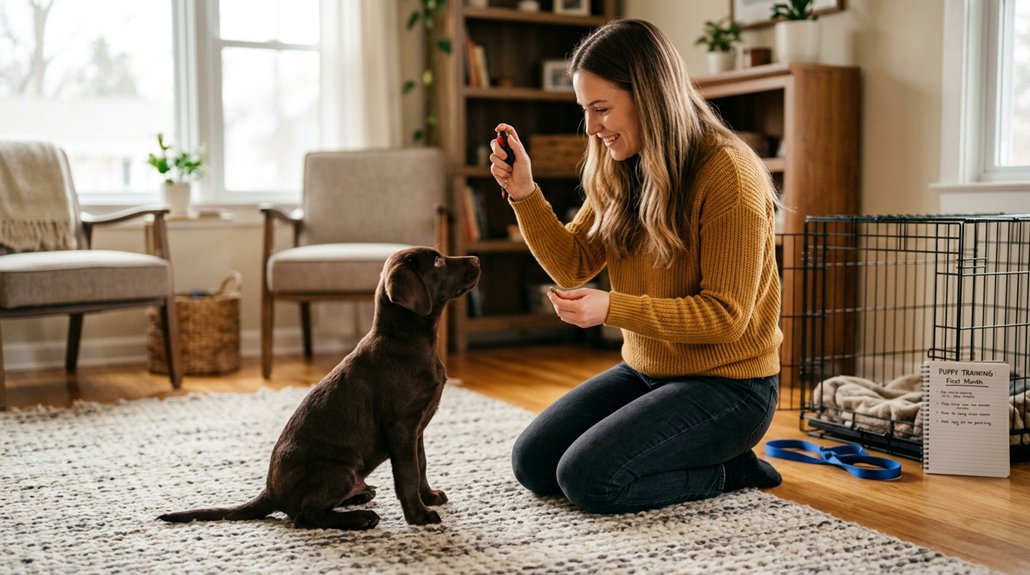
Teaching essential commands lays the groundwork for effective communication and control with your furry companion. Focus on building basic commands like “sit,” “stay,” “come,” and “leave it.” These foundational skills will empower you to manage your dog’s behavior effectively. Incorporate clicker training for precision and quick reinforcement. Consistent language and gestures guarantee clarity, while command variability can keep training dynamic and engaging. Employ positive reinforcement by rewarding good responses with treats or praise. Start training in a low-distraction setting, gradually introducing more complex environments as your dog’s confidence grows. Maintain their attention with short, engaging sessions.
- Use consistent commands and gestures.
- Begin in low-distraction areas.
- Integrate clicker training.
- Gradually add command variability.
- Reward with treats and praise.
What to Expect at Your First Vet Visit
After laying the groundwork for effective communication with your new furry friend, it’s time to confirm they’re also physically healthy and protected. Schedule your puppy’s first vet visit within 3 to 5 days of bringing them home. At this visit, expect a thorough physical exam, evaluating essential signs, weight, and general health. Your veterinarian will screen for common intestinal parasites prevalent in young pups, facilitating early treatment.
Discuss the core vaccination schedule, typically starting at 6 to 8 weeks, including important vaccines such as distemper, parvovirus, and rabies. This visit is also an opportunity to establish a wellness plan. Your vet will advise on deworming, preventive care for fleas and ticks, and a schedule for regular check-ups. This guarantees a healthy start to your puppy’s life.
Socializing Your Pup With New Experiences
As you shift to socializing your pup with new experiences, recognizing the essential period for ideal socialization—between 8 to 16 weeks—is imperative. During this time, gradually expose your puppy to various environments, people, and animals to cultivate a well-adjusted adult dog. Use positive reinforcement by rewarding your pup with treats and praise to foster positive associations. Monitoring your puppy’s reactions is vital, allowing them to acclimate at their own pace and preventing overwhelm.
Between 8 to 16 weeks, expose your puppy to new experiences and environments for ideal socialization.
Consider these strategies:
- Gradual exposure to sounds like traffic, sirens, or household noises.
- Introduce them to diverse surfaces such as grass, sand, and tiles.
- Arrange playdates with vaccinated, friendly dogs.
- Visit busy areas, maintaining a calm environment.
- Enroll in a training class focusing on socialization skills.
Strengthening Bonds Through Play
Interactive play is a significant component in strengthening the bond between you and your dog, laying the foundation for trust and a lifelong healthy relationship. Engaging in interactive games like fetch and tug-of-war offers playtime benefits that are twofold: providing essential physical exercise and mental stimulation. These activities are important for your puppy’s development, promoting both energy and cognitive growth. Training games, such as hide-and-seek or find-the-treat, not only sharpen problem-solving skills but also reinforce positive behavior through rewards. These interactions should last at least 30 minutes daily to prevent boredom, which could lead to destructive conduct. Establishing a routine that incorporates structured playtime helps your puppy feel secure and grounded, making adaptation to their new environment smoother and more predictable.
Managing Common Behavioral Issues
As a first-time dog owner, managing common behavioral issues like house-training difficulties and inappropriate chewing is vital for your puppy’s development. Establish a consistent routine and promptly clean up accidents to reinforce proper bathroom habits scientifically shown to aid in reducing potty mishaps. Additionally, providing suitable chew toys during teething periods is essential to redirect natural chewing behavior away from household items, helping to protect both your possessions and your puppy’s growth.
Addressing House-Training Difficulties
Tackling house-training difficulties requires understanding that inconsistencies in schedules are often at the root of behavioral issues. Establishing regular feeding and potty routines is essential for reinforcing potty patterns. Implement reinforcement strategies by praising or offering treats when your puppy eliminates outside. Stay patient and avoid punishment during accidents, as it can hinder progress by frightening your pup.
- Maintain a regular feeding schedule to predict potty times.
- Use positive reinforcement to encourage desired behavior.
- Clean accidents with enzymatic cleaners to prevent repeated spots.
- Designate a consistent outside potty area to strengthen location associations.
- Be patient; puppies need time to understand routines.
Managing Chewing Behavior
Chewing is a natural and instinctive behavior in puppies, driven by the need to alleviate teething discomfort and explore their world. Providing appropriate chew toy options is essential to redirect this behavior. To manage chewing effectively, establish clear boundaries by removing access to off-limits items. Use positive reinforcement to reward your puppy for using designated chew toys, and immediately redirect them if they chew on inappropriate objects. Consistency is key.
Here’s a simple guide:
| Chewing Stage | Action Needed | Reinforcement |
|---|---|---|
| Teething | Offer varied chew toys | Give treats |
| Unwanted Chewing | Redirect and distract | Praise |
| Good Behavior | Allow chosen chew toys | Extra playtime |
Patience and consistency in these steps will help you manage chewing behavior effectively.
Creating Your Dog Owner Support Network
Building a solid support network as a first-time dog owner can greatly enhance your journey into pet care. Connecting with local meetups, pet clubs, and community events provides networking opportunities and valuable shared experiences. Consider enrolling in training classes to improve your dog’s behavior while connecting with other owners facing similar challenges. These sessions fuel camaraderie and offer helpful insights. Additionally, online resources and forums can serve as robust platforms to seek advice, share knowledge, and remain informed about best practices in pet care. Establishing a diverse network is essential for effective emergency support, such as emergency advice or pet sitting. Your network enriches your experience, ensuring thorough support in any situation.
A solid support network enriches your dog ownership journey, offering camaraderie, shared experiences, and essential emergency support.
- Join local meetups
- Enroll in training classes
- Explore online resources
- Engage in community events
- Build emergency support options
Frequently Asked Questions
How Can I Manage My Dog’s Separation Anxiety When I Leave the House?
Implement separation training by gradually increasing alone time. Use dog behavior tips, like leaving familiar scents or favorite toys, to comfort your pet. Consistency and positive reinforcement are essential; monitor signs of anxiety and adjust strategies as needed.
What Should I Do if My New Dog Refuses to Eat?
Why won’t your dog eat? Start by checking their health. Then, tempt them with an array of feeding techniques like warm food or hand-feeding. You can also try appetite stimulation options like specific flavors or textures.
How Do I Introduce My New Dog to Resident Pets?
Begin with a controlled meet and greet in neutral territory. Guarantee safe spaces are available for all pets, reducing tension through gradual exposure. Use positive reinforcement methods scientifically proven to facilitate harmonious introductions effectively.
What Are Some Signs of Illness in My New Dog?
Did you know 80% of dogs show common symptoms like vomiting before an illness becomes apparent? Watch for lethargy, decreased appetite, or obvious emergency signs like difficulty breathing, and always consult a vet if you’re concerned.
How Often Should I Bathe My New Puppy?
You should bathe your new puppy no more than once a month. Overbathing can strip natural oils, impacting skin health. Focus on puppy grooming through weekly brushing to maintain coat condition and cleanliness without harming the delicate skin.
Conclusion
As your journey unfolds with your new canine companion, remember building this relationship is akin to nurturing a fine wine—it requires patience and consistency. Armed with your toolkit of supplies, routines, and training methods, you’re poised to navigate challenges and celebrate milestones. Socialization and play fortify your bond, while a support network offers guidance. Each step strengthens your connection, ensuring you and your pup thrive in a harmonious life together. Embrace the joys and challenges of pet ownership.