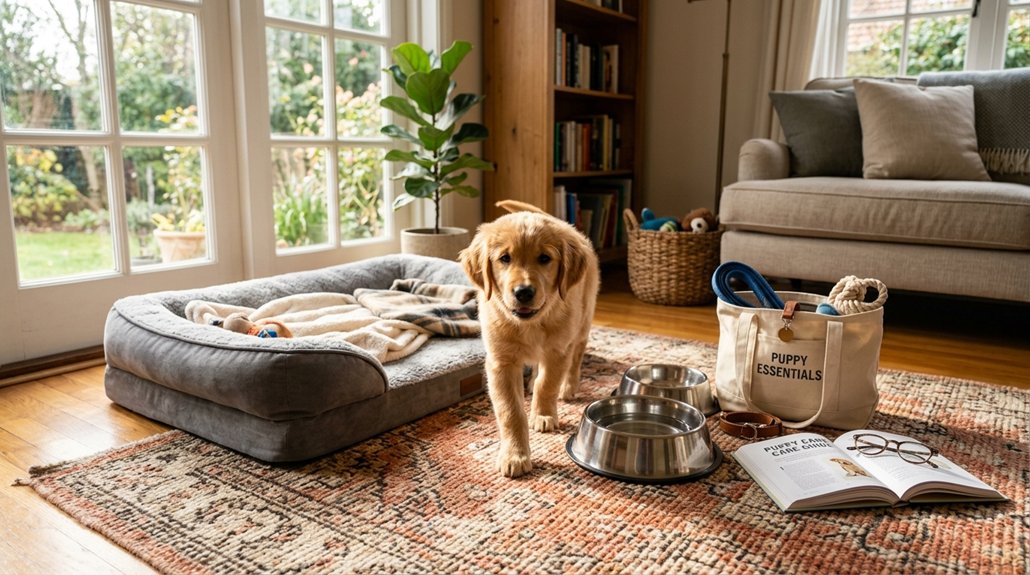
To prepare for your first dog, create a safe and welcoming home by securing hazards and providing a cozy area equipped with quality supplies like a bed, bowls, and toys. Choose a breed that fits your lifestyle, considering factors like energy level and temperament. Establish a consistent routine for feeding, exercise, and training. Schedule a vet visit soon after bringing your dog home to guarantee health needs are met. There’s much more to explore on this rewarding journey.
Key Takeaways
- Designate a cozy, secure space with a bed, toys, and food/water bowls for your new dog.
- Select essential supplies including easy-to-clean bowls, a quality bed, fitted leash, and ID-tagged collar.
- Research and choose a dog breed compatible with your lifestyle and living situation for a good match.
- Establish a consistent feeding and exercise routine to promote your dog’s health and emotional well-being.
- Schedule an initial vet visit to discuss health, vaccinations, and preventive care within the first few days.
Quick Steps for Preparing Your Home
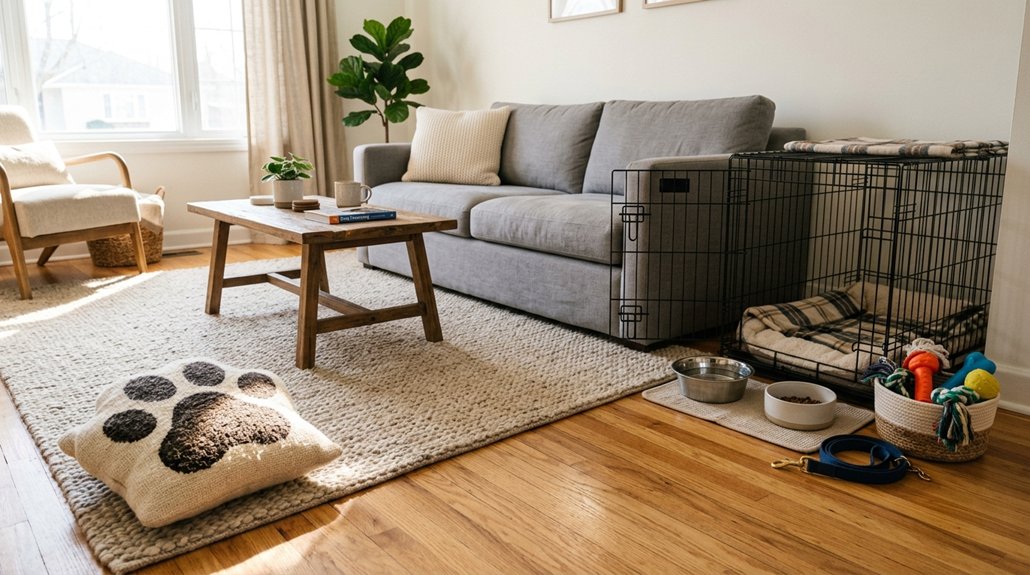
Before bringing your new dog home, it’s essential to guarantee your living space is prepared to welcome them safely and comfortably. Start by designating a safe space tailored to your dog’s needs with a cozy bed, engaging toys, and accessible food and water bowls. Use dog-proofing essentials like securing electrical cords, removing toxic plants, and clearing small objects that your curious pet might ingest. Establish a secure feeding area to minimize distractions, promoting calm meal times. Additionally, verify all doors and gates are securely latched, as dogs are often quick to escape if given the chance. By adhering to these guidelines, you’ll set the stage for a welcoming and secure environment that helps your new furry friend feel right at home.
Must-Have Supplies for Your New Dog
As you gear up to welcome your new canine companion, it’s crucial to arm yourself with the essential supplies that’ll guarantee their well-being and comfort. Start with sturdy, easy-to-clean food and water bowls to maintain hygiene. Invest in a quality, washable dog bed that suits your dog’s size for ultimate rest. Proper dog grooming and safety equipment like fitted leashes, ID-tagged collars, and crates are essential. The crate offers a secure space for rest and travel.
| Item | Purpose | Key Features |
|---|---|---|
| Food/Water Bowls | Hygiene & Comfort | Sturdy, Easy to Clean |
| Dog Bed | Comfortable Resting Space | Washable, Size-appropriate |
| Leashes/Collars | Safety & Identification | Size-fitted, ID Tag |
| Chew/Interactive Toys | Emotional Well-being & Engagement | Durable |
Chew toys prevent boredom and satisfy natural instincts.
Choosing the Best Dog Breed for Your Lifestyle
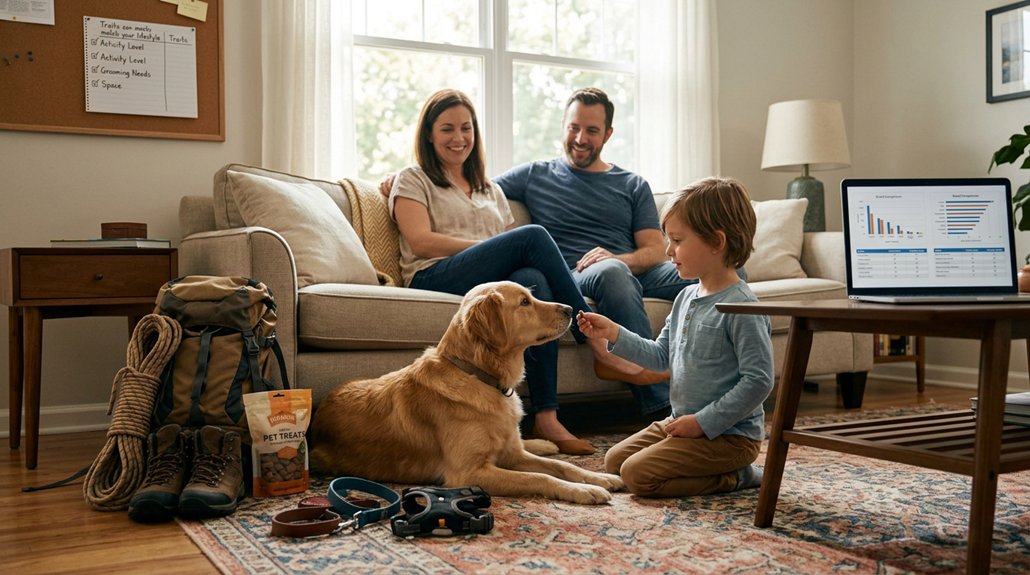
Choosing the right dog breed is essential if you want to create a harmonious and fulfilling relationship with your new furry friend. Begin with a dog breed compatibility check by considering your living situation. Small breeds, like Dachshunds, might suit apartment dwellers, whereas a large breed such as Labrador Retrievers thrives with ample space. Next, conduct an activity level assessment; active individuals might opt for high-energy breeds like Border Collies, while those with relaxed lifestyles should consider Bulldogs. Don’t overlook the importance of temperament; gentle breeds like Golden Retrievers are fantastic for families with young kids. Whether you’re ready for frequent grooming of your Shih Tzu or prefer the low-maintenance Beagle, matching the dog’s needs to your lifestyle guarantees a rewarding companionship.
How to Set a Dog-Friendly Routine
Establishing a dog-friendly routine isn’t just about ensuring your pet’s basic needs are met; it’s about creating a structured environment that promotes their overall well-being. Start by setting a consistent feeding schedule to support digestive health and a sense of security. Incorporate daily exercise, such as one or two walks, ensuring your dog receives physical and mental stimulation. Structured playtime is essential; it engages your dog in fun activities and strengthens your bond. Puppies, in particular, need frequent potty breaks to reinforce house-training and avoid accidents. Include regular behavior reinforcement sessions, using consistent commands and rewards to encourage learning and good behavior. By maintaining this balanced routine, you’ll nurture a happy, healthy companion.
Feeding Tips for New Dog Owners
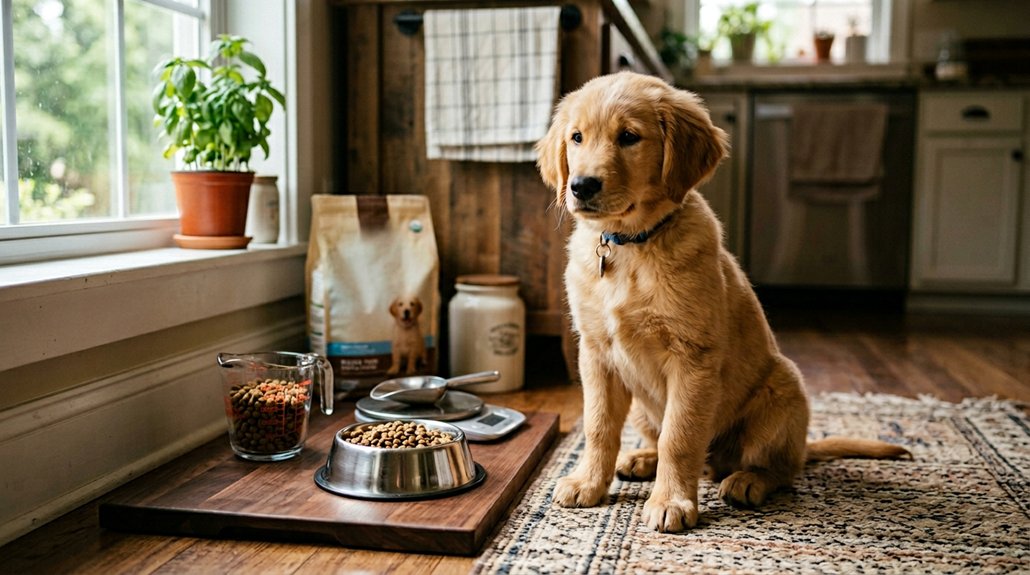
When bringing a new dog into your home, understanding proper feeding practices is essential for their health and happiness. Meal timing and portion sizes play a vital role in ensuring your dog thrives. Puppies require three to four meals daily until six months old, shifting to two meals a day for grown dogs. It’s important to feed your dog a balanced diet, consisting of high-quality commercial food with 25-30% protein from meat, supplemented with grains, fruits, and vegetables. Regularly reassess portion sizes and adjust based on your dog’s age, size, and activity. Limit treats to less than 10% of daily caloric intake, and opt for low-calorie options. Watch for food allergies, such as itching or digestion issues, and consult your vet if needed.
Key Training Tips for New Dog Owners
Training your new dog is an essential step in establishing a harmonious and rewarding relationship. Begin with basic commands like “sit,” “stay,” and “come.” Early training sets good habits and strengthens your bond. Implementing training techniques like positive behavior reinforcement—using treats and praise—encourages the desired behaviors. Remember, dogs respond better to rewards than punishment. Maintain a consistent routine, with short daily sessions (5-15 minutes) to boost learning and retention. Tailor your approach to your dog’s temperament and learning style for a positive experience. Here’s a quick emotional guide:
| Emotion | Key Action | Outcome |
|---|---|---|
| Confidence Boost | Praise & Treats | Strong Bond Development |
| Overwhelm Reduction | Short Sessions | Enhanced Learning Retention |
| Connection Building | Command Practice | Harmonious Relationship |
Each step creates a joyful journey for both of you!
Socializing Your Dog With People and Pets
A well-socialized dog is a delight to have around, showing confidence and adaptability in various situations. Start socializing your puppy early, ideally between 3 to 12 weeks, to expose them to diverse people, pets, and environments. Gradually introduce them to new experiences with proper dog park etiquette, ensuring positive interactions; this fosters confidence and prevents fear-based behaviors. Monitor encounters closely, rewarding good behavior with treats and praise—this is the cornerstone of positive reinforcement, helping your dog associate new experiences with positivity. Consider enrolling in training classes or socialization groups to enhance social skills in structured settings. Regular exposure to diverse situations encourages adaptability and positive behavior. Consistency is key, ensuring your dog grows into a well-adjusted companion over time.
Schedule Your First Vet Visit Appropriately
Bringing your new dog home is an exciting time, but scheduling your first vet visit within 3 to 5 days is essential for setting the foundation of their health care. During this visit, discuss vaccination needs and begin planning a schedule to protect your dog’s health against diseases like rabies and parvovirus. When choosing a vet, consider their experience with puppies and their ability to guide you through this new journey as a pet owner.
Timing of First Visit
One of the first steps you should take after bringing your new dog home is scheduling an initial vet visit within 3–5 days. This timely appointment is essential for your pup’s health assessment and to establish a foundation for lifelong wellness. During this visit, the vet will conduct an all-encompassing physical exam, check weight, and discuss the core puppy vaccinations necessary to protect against common diseases. Preparing in advance for this visit can ease your shift into pet ownership. The vet will also test for any intestinal parasites, which are common in young puppies. Using this opportunity to set up a wellness plan guarantees continued health maintenance, including deworming and future check-ups. Prioritize this visit to support your new companion’s well-being.
Vaccination Schedule Needs
You’ve already taken an important step by scheduling an initial vet visit soon after bringing your new dog home. Understanding the vaccination significance for your puppy is essential. Schedule your vet visit within 3 to 5 days to begin crucial vaccinations like distemper, parvovirus, and adenovirus, which typically start between 6 to 8 weeks of age. Your vet will guide you on a booster schedule, with shots generally given every 3 to 4 weeks until your puppy turns 16 weeks.
Consider these points:
- Talk to your vet about necessary vaccinations.
- Follow the recommended booster schedule.
- Discuss preventive care like deworming.
- Stay on top of flea/tick prevention.
- Plan future annual vet visits to maintain your dog’s health.
Taking these steps guarantees your puppy grows up healthy and strong.
Vet Selection Criteria
Although choosing the right veterinarian for your new dog can seem overwhelming, it’s an essential step that can greatly influence their health and wellbeing. Consider veterinary expertise, particularly experience with your dog’s breed, as specialists can offer tailored health care. Evaluate the clinic’s reputation by reading reviews and seeking recommendations from fellow pet owners. Ensuring the clinic offers extensive services like wellness exams and emergency care is vital for meeting all your dog’s needs. Schedule the first vet visit within 3–5 days of bringing your dog home to get timely vaccinations and a thorough health check. Prepare a list of questions about diet, exercise, and preventative care for your first visit, facilitating informed discussions with the vet.
Frequently Asked Questions
What Is the 3-3-3 Rule for Dogs?
The 3-3-3 rule explains a dog’s adjustment phases: three days timidly adapting, three weeks settling into their new environment, and three months fully acclimating. Patience and consistency support their adjustment for a harmonious bonding.
What Is the 7 7 7 Rule for Dogs?
The 7-7-7 rule helps new owners guarantee dog adjustment through stages: initial calm, structured training, positive reinforcement over time. You’ll reduce anxiety and behavioral issues, enhancing first-time ownership experience by fostering security and trust.
Where Should a New Dog Sleep the First Night?
Your new dog should sleep in a designated area like a dog bed or crate. Use familiar items to create a comfort zone. Establish a sleep routine, ensuring their safe space is quiet, fostering acclimation and reducing anxiety.
What Smell Do Dogs Hate?
Dogs hate citrus, vinegar, and strong spices due to dog scent aversion. Unpleasant odors like fermented scents or certain essential oils, including eucalyptus and peppermint, can deter them, but use oils cautiously as they might be toxic.
Conclusion
Preparing for your first dog is a rewarding journey, and by following these steps, you’re building a strong foundation for a lasting bond. Remember, the theory that “you can’t teach an old dog new tricks” is largely a myth. With patience and consistency, both you and your dog can learn and adapt. Investing time in these preparations guarantees a smoother changeover, reinforcing trust and companionship. Ultimately, the love and loyalty you’ll share are truly worth the effort.