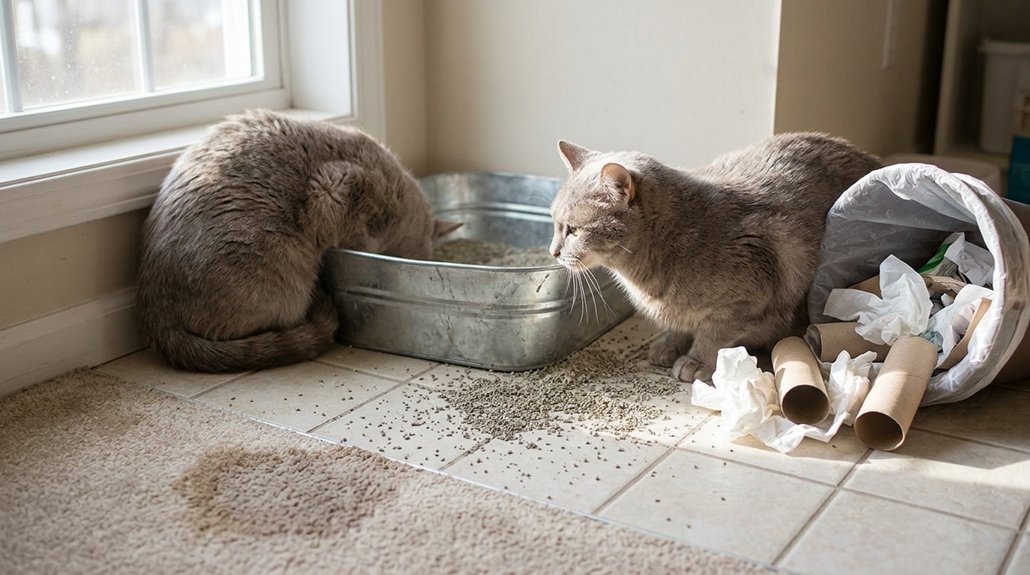
Cats might avoid the litter box due to territorial disputes, anxiety, or medical issues like UTIs or diabetes. Stress from changes or loud noises in the environment can also cause avoidance. Make certain you have enough litter boxes in quiet areas, use unscented clumping litter, and maintain hygiene with daily scooping. It’s crucial to rule out medical problems through a vet visit. Discover effective strategies for encouraging proper litter box habits and solutions tailored to your cat’s needs.
Key Takeaways
- Territorial disputes or stress from new pets can lead to cats avoiding the litter box.
- Medical conditions like UTIs or diabetes cause painful elimination and litter box avoidance.
- Loud noises and disruptions can deter cats from using litter boxes in high-traffic areas.
- Unscented, clumping litter and daily scooping foster comfort and regular use.
- Consult a veterinarian to rule out medical issues and consider a cat behaviorist for personalized solutions.
Common Behavioral and Environmental Causes of Litter Box Avoidance
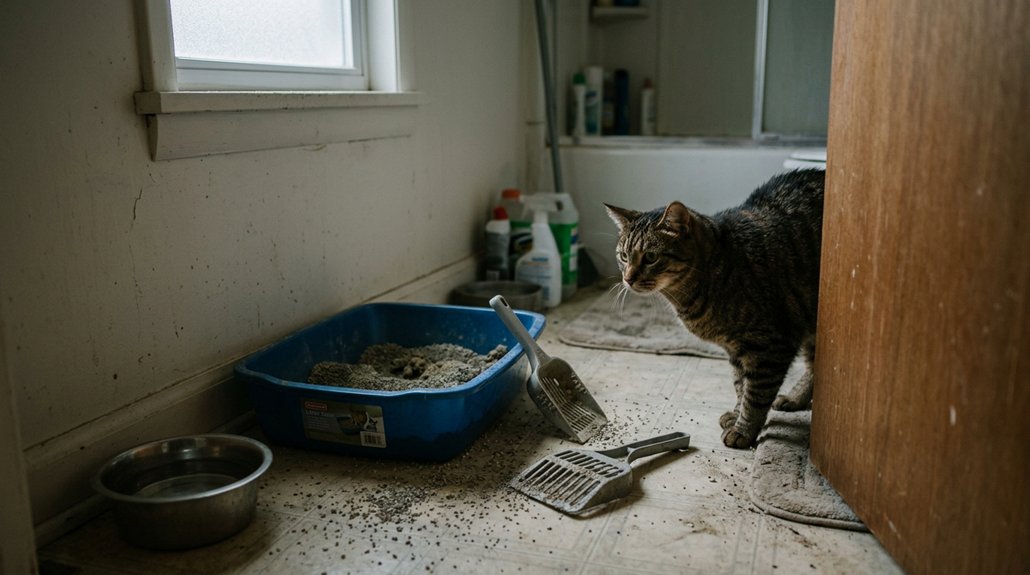
When your cat starts avoiding the litter box, it’s vital to evaluate both behavioral and environmental factors that might contribute to this change. Territorial disputes and litter box anxiety are often at the heart of these issues. Make sure the number of litter boxes exceeds cats in your household, as overcrowding can elevate tensions, leading to avoidance. Location is key—place boxes in quiet, low-traffic areas to reduce stress and anxiety. A regular cleaning routine is essential; scoop the litter box daily to maintain an environment that cats find welcoming. Also, gradually introduce any changes to litter type, as sudden alterations can cause aversion. Minimizing noise and stressors will further help your cat feel secure in their litter box habits.
Medical Conditions Affecting Litter Box Habits
Although litter box avoidance may initially appear as a behavioral issue, it’s crucial to examine underlying medical conditions that could be affecting your cat’s habits. Urinary issues are common culprits, with conditions like urinary tract infections (UTIs) and feline interstitial cystitis causing painful elimination. These can lead your cat to associate the litter box with discomfort, creating behavioral triggers for avoidance. Similarly, kidney stones or blockages cause significant distress during urination, necessitating prompt veterinary intervention. Diabetes should not be overlooked, as increased thirst and urination can disrupt litter box use. Cats in pain often form negative associations with their litter boxes, reinforcing avoidance behavior. Identifying and addressing these health concerns can restore your cat’s normal litter box habits and improve their quality of life.
How Stress and Home Changes Impact Litter Box Use
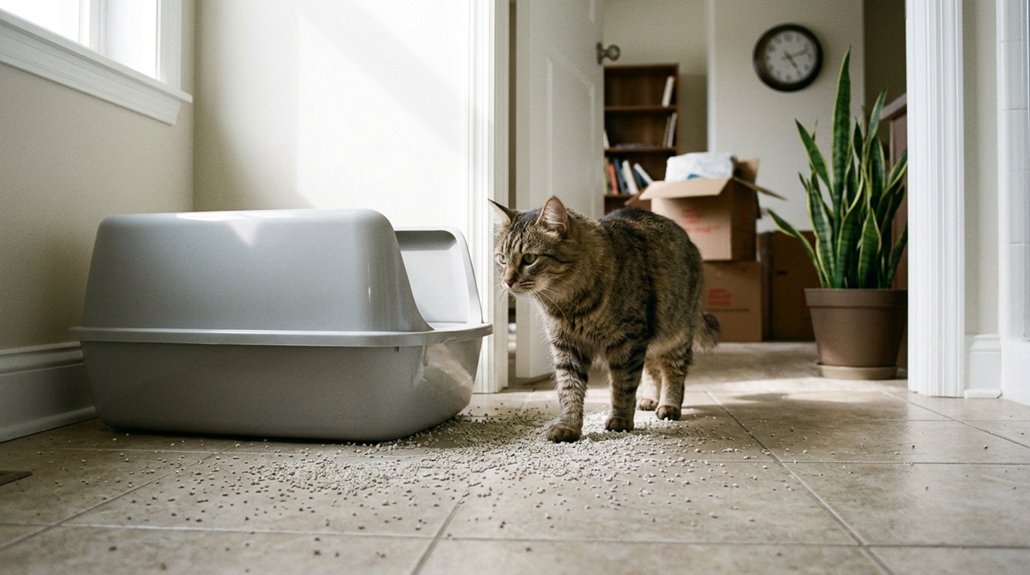
Beyond medical concerns, stress and environmental changes hold considerable sway over a cat’s litter box habits. Cats are habitual creatures; disruptions like moving houses or rearranging furniture can confuse and stress them, leading to litter box avoidance. Stressful occurrences—such as loud noises or new pets—prompt cats to seek quiet spaces, impacting litter box use. Consider the impact of these stressors:
| Stressor | Impact on Litter Box Use |
|---|---|
| Loud Noises | Deters litter box usage |
| New Pets/Family Members | Provokes avoidance |
| Multiple Cats Sharing | Causes territorial disputes |
| Noisy Litter Box Area | Leads to decreased usage |
Addressing these issues with stress relief strategies and ensuring suitable environmental changes can greatly increase proper litter box usage. Providing multiple, clean boxes in serene areas is essential for reducing anxiety and encouraging regular use.
Optimizing Litter Box Placement for Your Cat
Strategically chosen, the placement of a litter box can profoundly impact a cat’s willingness to use it. Prioritize a quiet, private litter box location, away from high-traffic areas and noisy appliances, guaranteeing your cat feels secure and doesn’t hesitate to eliminate comfortably. Cat privacy is essential for their willingness to use the litter box without stress or distraction. Consistency is key; avoid frequently relocating the box to foster a reliable elimination habit. Aim for one litter box per cat plus one extra to prevent territorial disputes. Also, assure accessibility, especially for older or disabled cats, as their mobility might be limited. Well-placed litter boxes not only support a healthy routine but also reduce the risk of undesirable elimination behaviors.
Selecting the Best Litter and Box for Your Cat
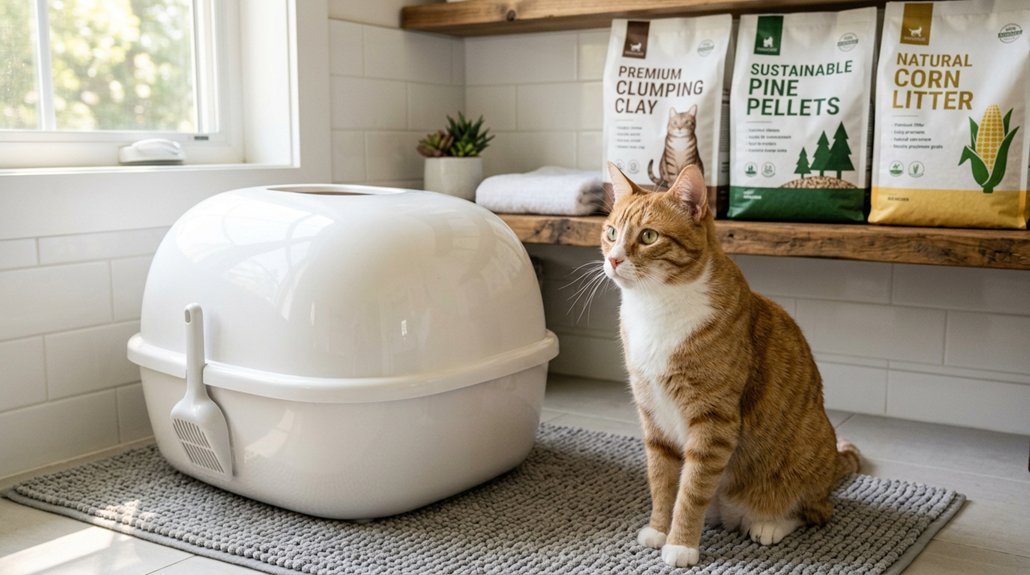
To guarantee your cat consistently uses the litter box, it’s imperative to select a box that provides ample space for comfortable movement and burying waste. Choosing the right litter is just as essential; most cats favor unscented, clumping litter with a fine texture, but experimenting with different materials can be beneficial if your cat has unique sensitivities. Additionally, strategically placing multiple litter boxes—one per cat plus an extra—will help prevent territorial disputes and guarantee easy access.
Choosing the Right Box
When selecting the best litter box for your feline companion, many cats show a strong preference for large, uncovered boxes that allow ample room to move freely and minimize any feelings of confinement. Opt for a box size that accommodates your cat’s movements, accounting for their natural behaviors. A rectangular box shape often suits better, providing more space compared to round or corner-shaped alternatives.
| Feature | Recommendation | Reason |
|---|---|---|
| Box Size | Large and spacious | Provides movement freedom |
| Box Shape | Rectangular | Maximizes usable space |
| Box Location | Quiet, private area | Guarantees comfort and escape |
Additionally, place the box in a quiet area and maintain it meticulously by regular cleaning, making sure no strong odors linger; this will bolster their usage as cats’ olfactory senses are very keen.
Understanding Litter Preferences
After confirming the size and location of the litter box meet your cat’s needs, focus on the actual litter inside. Understanding litter characteristics is essential, as most cats prefer unscented clumping litter with a fine, sand-like texture. This preference allows them to dig and cover their waste comfortably, promoting healthy hygienic behaviors. Cats can be very particular about texture and scent preferences, so offering a choice of litter types side by side helps identify their favorite. Maintain the litter at a depth of 3-4 inches, as it supports their natural instinct to dig. If introducing a new litter, mix it gradually with the old to minimize resistance. Identifying the right combination of characteristics facilitates ideal litter box usage.
Proper Box Placement
While creating an ideal environment for litter box usage, focusing on proper box placement is essential. Place the box in a quiet, private area, away from food and water. Avoid high-traffic zones and noisy appliances to offer a stress-free elimination spot, reducing the risk of litter box accessibility issues that can lead to feline withdrawal.
Select a box sized for your cat’s comfort, allowing them to turn and dig easily. For households with multiple cats, provide one litter box per cat, plus an extra, to prevent territorial disputes.
Tailored Solutions for Declawed Cats
When caring for declawed cats, it’s essential to address their unique needs, starting with selecting softer litter options like aspen or pine wood shavings to alleviate paw sensitivity. You’ll also want to reflect on modifying their litter box to have lower sides and guarantee meticulous cleanliness to accommodate their heightened sensitivities. Collaborating with your veterinarian for effective pain management strategies can further ease discomfort and support positive litter box habits.
Sensitive Paws Solutions
Declawed cats often face challenges that can lead to litter box avoidance, primarily due to the sensitivity or pain in their paws. To address this, guarantee their comfort by incorporating soft surfaces into their litter box. Consider using aspen or pine wood shavings, soft paper litter like Yesterday’s News, or shredded paper. These materials offer relief by minimizing pressure and discomfort when digging or walking. Additionally, providing options allows your cat to select the texture they find most comfortable, further promoting consistent use.
Maintaining impeccable cleanliness is essential, as these cats are sensitive to odors. Scoop daily and clean using non-irritating, unscented soap. If avoidance persists, consult with a veterinarian or animal behaviorist to explore targeted pain relief and behavioral strategies.
Alternative Litter Options
Despite the challenges faced by declawed cats, you can alleviate their discomfort in the litter box by choosing alternative litter options tailored to their unique needs. Declawed cats often suffer from paw sensitivity, making traditional litter painful. Opt for natural litter alternatives such as aspen or pine wood shavings, soft paper litter like Yesterday’s News, or shredded paper, all designed for declawed paw comfort. These materials provide a softer, more forgiving surface that encourages consistent litter box use. Introduce new litter types gradually by mixing them with existing litter, allowing your cat to adjust comfortably. Monitoring their preferences guarantees the chosen material aligns with their comfort needs. Additionally, provide a low-sided, easily accessible litter box to further enhance their security and usage.
Pain Management Strategies
Alternative litter options can certainly ease the discomfort experienced by declawed cats, but addressing their pain through strategic management is equally important. Declawed cats often suffer from paw sensitivity, resulting in litter box aversion. To mitigate discomfort, start with frequent veterinary assessments focused on pain relief. Untreated pain can lead to negative associations with the litter box. Ensuring soft bedding materials like aspen, pine wood shavings, and gentle paper litters can ease painful interactions. Implement gradual shifts by incorporating new litter types slowly alongside existing ones, aiding adaptation and minimizing stress. Regular check-ups are paramount for managing any lingering pain, assuring prompt intervention. Together, these strategies alleviate paw sensitivity and restore a positive litter box routine, fostering your pet’s overall well-being.
Keeping the Litter Box Tidy: Steps to Take
To guarantee your cat consistently uses their litter box, maintaining proper hygiene is vital. Effective litter box maintenance involves daily scooping to remove waste. This practice is critical for odor control, minimizing offensive smells that may discourage use. Replace the litter every 1-4 weeks, using mild, fragrance-free soap to prevent odor buildup. Additionally, make sure each litter box is at least one and a half times your cat’s length to allow comfortable movement. Position the box in a quiet, private location, avoiding high-traffic areas and proximity to food/water sources. Consistently use 3 to 4 inches of unscented clumping litter to support your cat’s preference for digging. Employ enzymatic cleaners on urine-marked zones outside the box to eradicate lingering odors effectively.
Successfully Reintroducing the Litter Box: Effective Strategies
While reintroducing the litter box can seem challenging, utilizing effective strategies can make the process smoother for both you and your cat. Start by establishing consistent litter box routines in a quiet, accessible location, which guarantees your cat feels secure. Opt for unscented clumping litter, similar to fine sand, to accommodate your cat’s preferences. Maintain pristine hygiene by scooping daily and cleaning the box with mild soap and hot water weekly, mitigating odors. Gradually guide your cat to the litter box post-meals or playtime, offering positive reinforcement to reinforce proper use. Additionally, using calming aids like Feliway diffusers can reduce environmental anxiety. These strategies collectively foster successful litter box habits, encouraging your cat’s return to a healthy routine.
Finding Expert Help for Persistent Litter Box Issues
- Consult your vet to eliminate medical causes.
- Engage a cat behaviorist for personalized strategies.
- Educate yourself with key reading material like “Starting from Scratch.”
- Implement targeted interventions for lasting results.
Frequently Asked Questions
How to Fix a Cat That Won’t Use the Litter Box?
Start by examining possible behavioral triggers causing avoidance. Test litter box alternatives like softer litter or varied box placements. Rule out medical issues with veterinary insights. Guarantee cleanliness and privacy, fostering a stress-free bathroom environment for your cat.
What Is the 3-3-3 Rule for Cats?
Think of the 3-3-3 rule like your feline’s flight checklist: ensuring they’re litter box-bound requires patience over three days of settling, three weeks of exploring, and three months to embrace their behavior. It helps understand feline acclimation expertly.
What Is the Best Cat Litter for Diabetic Cats?
For diabetic cats, choose low-dust, unscented clumping litter. It’s essential for their respiratory health. Crystal or silica gel litter offers excellent absorption and odor control. Avoid clay-based options with synthetic fragrances to prevent exacerbating health issues.
How to Correct a Cat Not Using a Litter Box?
Imagine behavioral issues as tangled knots requiring patience to unravel. Litter box training involves ensuring clean boxes, consulting vets, locating boxes strategically, experimenting with litter types, and possibly seeking a behaviorist’s advice for tailored strategies.
Conclusion
Understanding why cats avoid the litter box is vital, as an estimated 10% of cats will experience this issue at some point. Addressing it involves examining both behavioral and medical factors, optimizing the litter box environment, and selecting the right litter and box tailored to your cat’s needs. With these strategies, along with keeping the box clean and stressors at bay, you’ll foster healthy habits. For persistent problems, don’t hesitate to seek professional guidance to guarantee your cat’s well-being.