To reduce anxiety in cats at home, recognize symptoms like excessive grooming or restlessness. Create a calming environment with safe zones and minimize noise. Employ pheromone diffusers and consider calming treats. Introduce changes gradually, maintain a routine, and use positive reinforcement for desired behavior. Consult a vet for medication options if anxiety persists. For an extensive understanding of managing cat anxiety, explore further strategies and expert advice.
Key Takeaways
- Create safe zones with comfort items like bedding, toys, and litter boxes for your cat.
- Use pheromone diffusers and calming treats to help reduce stress-related behaviors.
- Maintain a consistent routine for feeding, play, and rest to provide stability.
- Gradually introduce new experiences and changes to minimize anxiety triggers.
- Consult a veterinarian for professional advice and medication if anxiety persists.
Identifying Anxiety Signs and Triggers in Cats
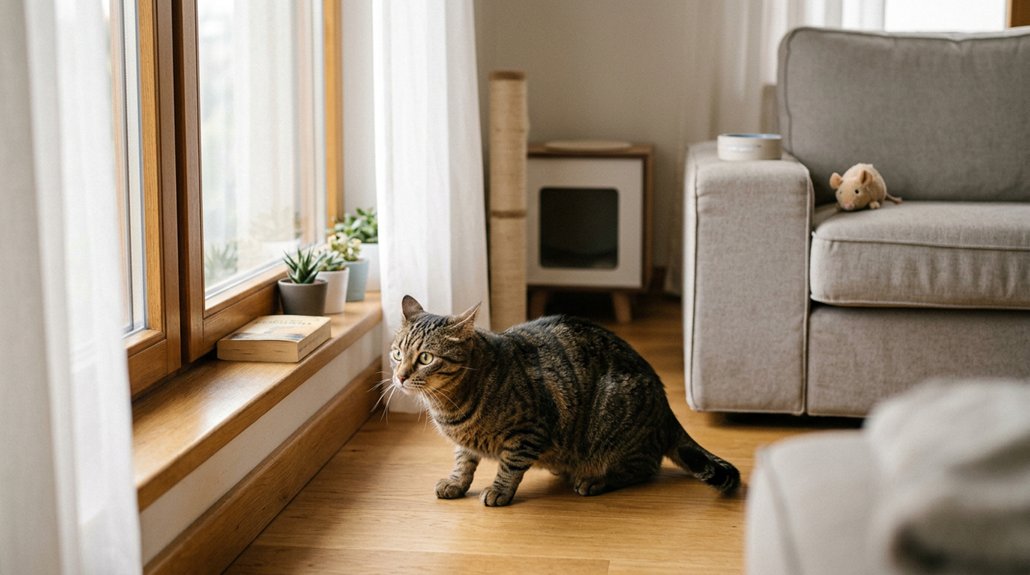
Recognizing the signs and triggers of anxiety in cats is essential for ensuring their well-being. Pay attention to behavioral changes like excessive grooming, inappropriate elimination, or vocalizations, which may signal underlying stress. Physical symptoms such as trembling or rapid breathing might accompany these changes, necessitating prompt observation and intervention. It’s important to identify environmental adjustments that could be causing your cat anxiety. Loud noises, routine alterations, new pets, or unfamiliar people frequently act as triggers. Carefully documenting specific situations that cause anxiety will assist you in developing tailored strategies for stress alleviation. Early detection of behaviors like hiding or restlessness allows you to intervene before anxiety escalates, minimizing its negative impact on your cat’s overall health and quality of life.
Crafting a Calm Environment for Your Cat
Creating a calm environment for your cat is vital for reducing anxiety and promoting their well-being. Begin by designing safe zones enriched with comfort items like their bed, toys, and litter box. This sanctuary offers a retreat during stressful times. Ascertain your home’s environmental design reduces loud noises and visual stimuli. Use cat furniture to enable vertical integration, providing your cat control and safe exploration. Quiet zones utilizing curtains or soft music can diminish external distractions. Routine building is significant; establish predictable schedules for feeding, play strategies, and rest. Gradual introduction of new items allows safe exploration at your cat’s pace, minimizing stress. This all-encompassing strategy secures a calming atmosphere conducive to your cat’s mental health.
Using Pheromones and Calming Aids to Reduce Stress
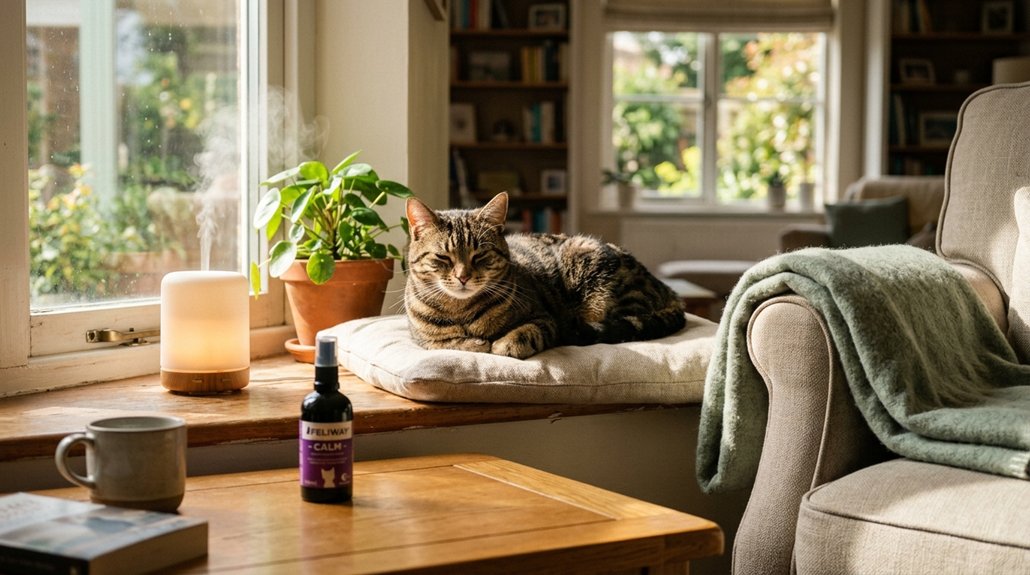
When selecting effective calming products for your cat, consider options such as pheromone diffusers, calming treats, or anti-stress collars that are designed to alleviate anxiety. Pheromone solutions like Feliway can be implemented effectively to create a peaceful atmosphere, aiding in stress reduction during events like vet visits or travel. It’s essential to follow the manufacturer’s instructions to guarantee the products are used correctly and achieve the desired calming effect.
Selecting Effective Calming Products
Choosing the right calming products for your cat can greatly alleviate anxiety and stress. Pheromone diffusers, such as Feliway, are essential for environmental enrichment, as they mimic natural scents, effectively soothing your feline companion. Calming treats, featuring L-theanine and thiamine, should be administered 30 minutes before stressful situations to promote relaxation without causing drowsiness.
- Calming toys: Incorporate toys that promote play, offering distraction and stress relief.
- ThunderShirt: Provides gentle pressure, ideal for anxiety-inducing events like thunderstorms.
- Anti-stress collars: Products like Comfort Zone’s collars release pheromones, offering a portable calming solution.
These products work in tandem to create a comforting environment, ensuring your cat remains calm. Specialty cat foods further enhance stress-related behavior management.
Implementing Pheromone Solutions Effectively
While managing the stress levels of your feline, deploying pheromone solutions can be a pivotal strategy. Pheromone diffusers, like Feliway, should be strategically placed in areas where your cat spends most of its time to maximize effectiveness. For multi-cat households, opt for multi-cat diffusers to address complex multi-cat dynamics and mitigate conflict. Guarantee proper diffuser placement, away from areas with poor airflow or hidden behind furniture, for ideal release of calming synthetic pheromones.
Complement diffusers with calming aids such as anti-stress collars and calming treats. Administer treats containing L-theanine approximately 30 minutes before stressful events, such as vet visits, to ease anxiety. Anti-stress collars provide a portable solution during travel or when introducing new pets. Integrating these methods guarantees reduced feline stress and promotes harmony.
Implementing Simple Behavior Changes
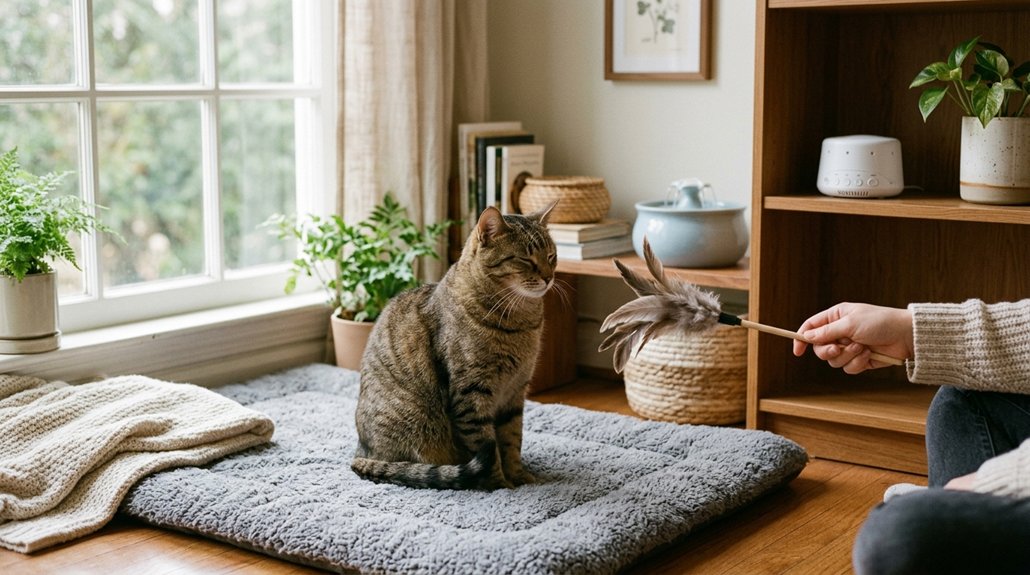
Establishing a few simple behavior changes can greatly reduce anxiety and promote a calmer environment for your cat. Begin by implementing a consistent daily playtime routine using interactive toys, like feather wands, which can mentally and physically stimulate your cat. Make sure you reward your cat with positive reinforcement, such as treats or affection, to encourage this beneficial behavior. This will reinforce stability and reduce anxiety. Gradual exposure to new experiences and changes in the environment, rather than sudden introductions, will also help your cat acclimate calmly. Provide essential hiding spots for retreat, enhancing their sense of security.
- Establish consistent feeding, play, and rest routines.
- Employ positive reinforcement for desired behaviors.
- Create safe, quiet spaces to retreat during stress.
When Medication Is the Right Choice for Anxiety
When your cat’s anxiety persists despite efforts with environmental and behavior modifications, medication may become an important component of their treatment plan. Cats suffering from significant anxiety can benefit from medications like fluoxetine, gabapentin, and amitriptyline. These medication types can help by altering brain chemistry to enhance coping abilities. However, proper dosage guidelines and veterinary guidance are vital, considering cats metabolize drugs differently than humans.
| Medication Type | Usage Frequency | Common Dosage Guidelines |
|---|---|---|
| Fluoxetine | Daily | 0.5-1 mg/kg |
| Gabapentin | 1-2 times daily | 5-10 mg/kg |
| Amitriptyline | Daily | 0.5-1 mg/kg |
Ongoing monitoring is important. Regular veterinary follow-ups allow assessment of medication efficacy and adjustments tailored to your cat’s response, ensuring a safe and effective anxiety management strategy.
Preparing for Environmental Changes
To effectively prepare your cat for environmental changes, introduce new items or modifications gradually, allowing ample time for acclimation. Establishing a secure space for retreat during changes and maintaining consistent routines will minimize stress and provide stability. Additionally, incorporating familiar scents and respecting your cat’s social preferences can greatly reduce anxiety and facilitate a smoother adjustment process.
Gradual Transition Strategies
Although introducing environmental changes for cats can be stressful, employing gradual adjustment strategies can greatly alleviate anxiety. Behavioral acclimation is critical in helping your cat adapt without overwhelm, focusing on stress management through methodical approaches. Implement adjustments gradually:
- Introduce new items or alterations one at a time to minimize stress. Exposure in controlled environments with familiar scents aids comfort.
- Create a safe space for your cat to retreat during changes. Include their favorite toys and bedding to guarantee a comforting environment.
- Maintain consistency in routines like feeding and playtime to foster a sense of security.
Positive reinforcement, using treats or praise, builds confidence, encouraging exploration and adaption to new surroundings. By strategically managing changes, you’ll promote a smoother, stress-free adaptation.
Reducing Stressful Stimuli
Because reducing stressful stimuli is essential for managing your cat’s anxiety, start by identifying potential stressors in their environment. Consider loud noises, unfamiliar visitors, or routine changes. These can all contribute to stress. Implement stress reduction by offering environmental enrichment and control over the setting.
| Strategy | Benefit |
|---|---|
| Safe Space | Provides comfort and security |
| Gradual Introduction | Prevents overwhelming your cat |
| Calming Aids | Eases anxiety in trigger areas |
| Consistent Routine | Offers stability and predictability |
Gradually introduce any new items or changes in your home to allow your cat to acclimate. Use pheromone diffusers as calming aids in trigger-prone areas. Establish a consistent routine for feeding, play, and interaction for stability. These steps guarantee your cat’s environment minimizes anxiety, enhancing overall well-being.
Spotting and Preventing Anxiety Triggers
Maintain consistent routines to promote stability. The following measures can help:
- Monitor body language: Look for signs like hiding or excessive grooming that indicate stress.
- Introduce changes gradually: Allow your cat time to adjust to new furniture or pets.
- Ensure a stable routine: Regular feeding, play, and litter box maintenance are essential.
Promptly address identified triggers to prevent anxiety escalation.
Consulting Experts for Persistent Anxiety Issues
Addressing persistent anxiety in your cat often necessitates consulting experts who can provide professional insights and solutions. Engaging veterinarians or veterinary behaviorists is essential for anxiety management, ensuring you explore all viable treatment options. These experts can identify any underlying medical conditions contributing to anxiety through early intervention. Professional consultation offers tailored behavior modification plans, addressing specific triggers and enhancing your cat’s coping skills. Regular follow-ups with these professionals facilitate ongoing assessment and necessary adjustments to treatment regimens based on your cat’s progress. Additionally, utilizing their expert knowledge helps you better understand feline body language, thereby recognizing anxiety signs promptly. This informed approach allows timely intervention, promoting a calmer environment for your feline companion.
Frequently Asked Questions
How Do I Soothe My Cat’s Anxiety?
To soothe your cat’s anxiety, utilize calming techniques like pheromone diffusers and guarantee environmental enrichment through interactive toys and safe spaces. Establishing routines and gradual changes also helps create a stable environment, minimizing stressors effectively.
Can Cats Have Anxiety Attacks?
Yes, cats can have anxiety attacks. Approximately 30% of felines display signs linked to anxiety triggers. Recognizing such feline behavior—like trembling or hiding—enables you to intervene strategically, providing calm and minimizing stress for your pet.
How to Know if a Cat Is Stressed?
To determine if your cat is stressed, observe for stress indicators like behavioral changes. Look for excessive grooming, inappropriate elimination, and altered appetite. Watch their body language, including dilated pupils, flattened ears, and tremors. Consistently monitor these signs.
How to Stop Pet Anxiety?
To stop pet anxiety, guarantee environmental enrichment with calming techniques. Use toy telegraphs like interactive puzzles, maintain routine diligence, and employ calming aids like pheromone diffusers. Consistent engagement and environmental adjustments will assist in managing anxiety levels effectively.
Conclusion
Imagine your home as a serene sanctuary, where your cat moves gracefully through sun-dappled rooms, free from shadows of stress. By identifying triggers and tailoring their environment, you’re crafting a refuge that whispers calm. Pheromones waft through the air like a gentle embrace, while thoughtful behavior changes act like stepping stones to tranquility. When necessary, consider medication as a guiding beacon in a storm. Always consult experts to fine-tune this peaceful harmony, ensuring your cat’s anxiety is but a distant memory.