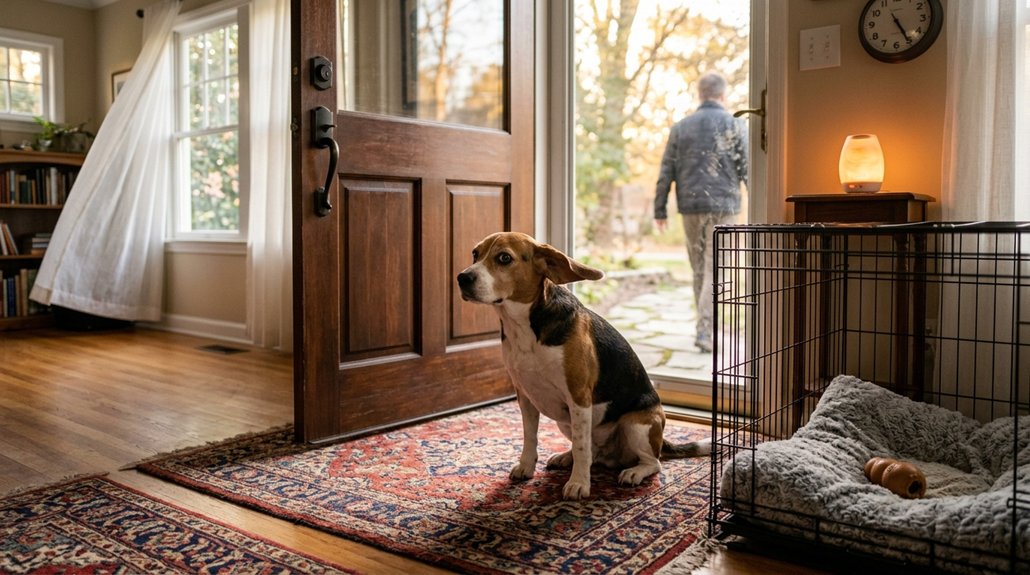
To calm a dog with anxiety when you leave, create a secure and comforting environment with familiar items and soft music. Establish a consistent routine with predictable schedules for meals and walks to provide stability. Gradually teach your dog to feel secure during short departures, starting with brief absences. If anxiety persists, consult a professional for tailored strategies. Exploring further will provide deeper insights into effective anxiety management techniques for your canine companion.
Key Takeaways
- Create a designated cozy area with comfortable bedding and familiar toys to provide a sense of security.
- Use interactive toys and noise machines to offer mental stimulation and create a calming atmosphere.
- Establish a consistent daily routine for meals, walks, and playtime to reduce anxiety through predictability.
- Practice positive departures by minimizing farewells and offering treats or toys to associate alone time with positive experiences.
- Consult a professional if anxiety persists, as expert guidance can help manage severe cases effectively.
Dog Anxiety: Key Causes and Symptoms
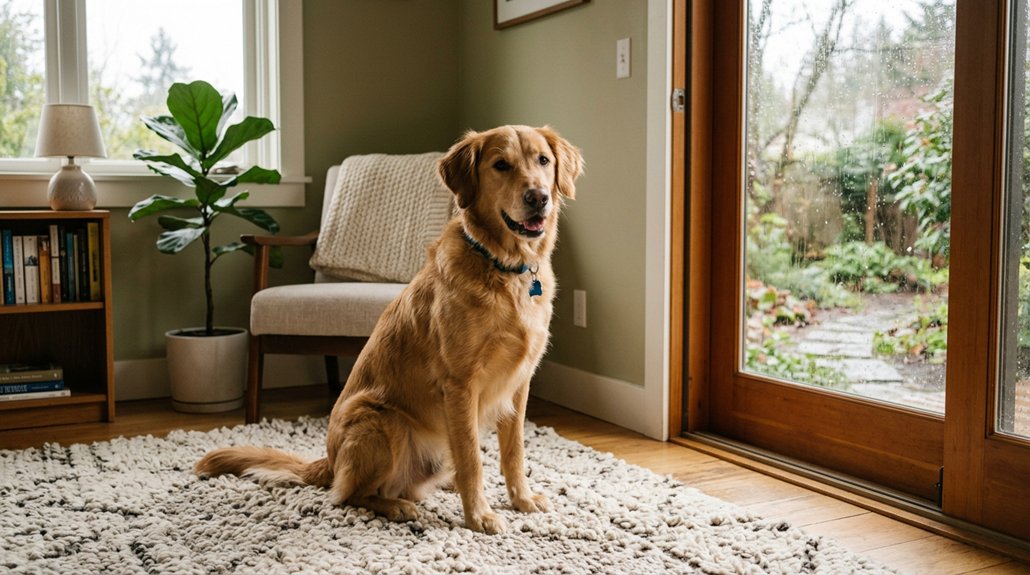
Though often overlooked, understanding dog anxiety requires careful observation of both overt and subtle behavioral indicators. Recognize that causes of anxiety in your canine companion can range from sudden environmental changes and inadequate socialization to prolonged absences and neglect. These stressors provoke signs of distress, including excessive barking, destructive actions, and overt physical reactions like trembling or heavy panting, particularly during pre-departure routines. Significantly, separation-related anxiety typically emerges within 30 minutes of your departure, highlighting acute distress. However, symptoms might not always be prominent; some dogs exhibit withdrawn behavior, decreased appetite, or aggression. Identifying these unrecognized signs is essential for prompt intervention. Monitor behaviors meticulously, as chronic anxiety left unchecked can exacerbate further behavioral complications needing professional attention.
Make Your Dog’s Space Safe and Fun
Creating an ideal environment for your anxious dog involves multiple critical elements designed to guarantee both safety and comfort. Begin by establishing a designated area that includes comfortable bedding, making sure your canine has a cozy retreat. Surround this zone with blankets and a selection of their favorite toys, fostering a sense of familiarity and security. Interactive toys, such as puzzle toys or treat-dispensing devices, are paramount for mental stimulation; they can greatly alleviate anxiety by engaging your dog in rewarding activities. Additionally, utilizing soft music or noise machines can effectively mask disruptive sounds, creating a calming atmosphere. Ensure access to natural light and an external view to promote sensory engagement. Crate training can provide additional security, transforming this space into a protective haven.
Set a Consistent Routine for Your Dog
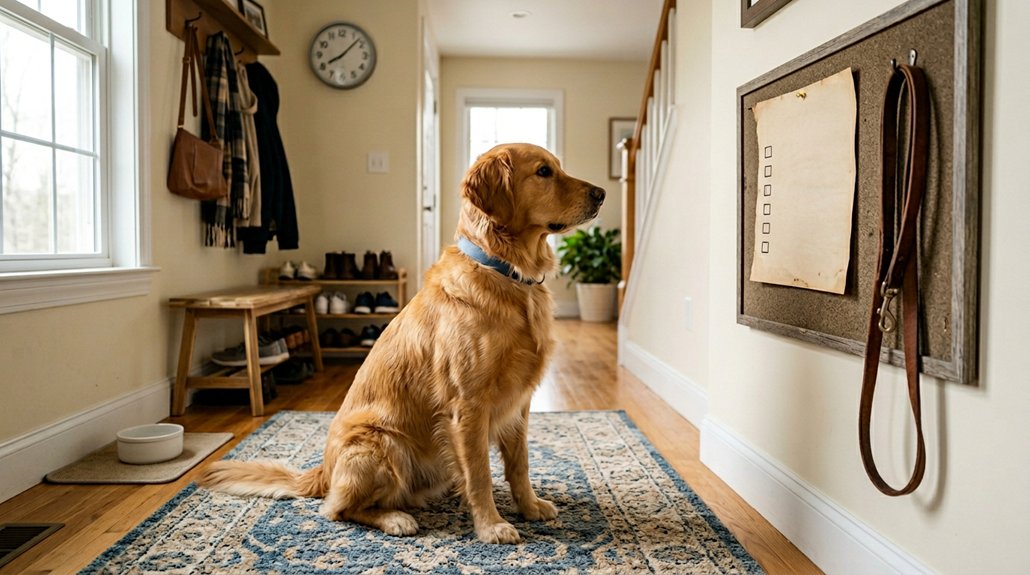
Establishing a consistent routine can be transformative in mitigating your dog’s anxiety. Implementing a daily schedule for walks, meals, and playtime provides your dog with security and predictability. This reduces anxiety, as your dog can anticipate your departures and returns. Regular exercise, such as two-mile walks, offers physical and mental exercise benefits, channeling excess energy and reducing stress.
Daily Schedule Example:
| Time | Activity | Purpose |
|---|---|---|
| 7:30 AM | Morning Walk | Energy release, mental stimulation |
| 8:00 AM | Breakfast | Fulfill nutritional needs |
| 12:00 PM | Playtime | Bonding, anxiety reduction |
| 6:00 PM | Evening Walk | Prepares for a restful night |
Reinforcing routines with positive experiences, like treat-dispensing toys, encourages associating alone time with enjoyment.
Get Your Dog Used to Short Departures
To acclimate your dog to short periods of separation, initiate a process of gradual desensitization. Start with brief absences lasting just a few minutes. Employ fake departures by mimicking your leave-taking cues without actually exiting, helping your dog disassociate these actions from subsequent distress. This technique minimizes their anticipatory anxiety. Your demeanor should remain composed during departures and arrivals to prevent heightening their stress. Gradually extend your time away only when your dog demonstrates tranquility during shorter separations. Implement positive reinforcement, using treats or verbal praise, whenever your dog remains calm as you leave and while alone. This approach reinforces their coping mechanisms, solidifying their confidence in handling isolation from you without distress. Consistency is paramount for successful behavioral adjustment.
When to Seek Professional Help
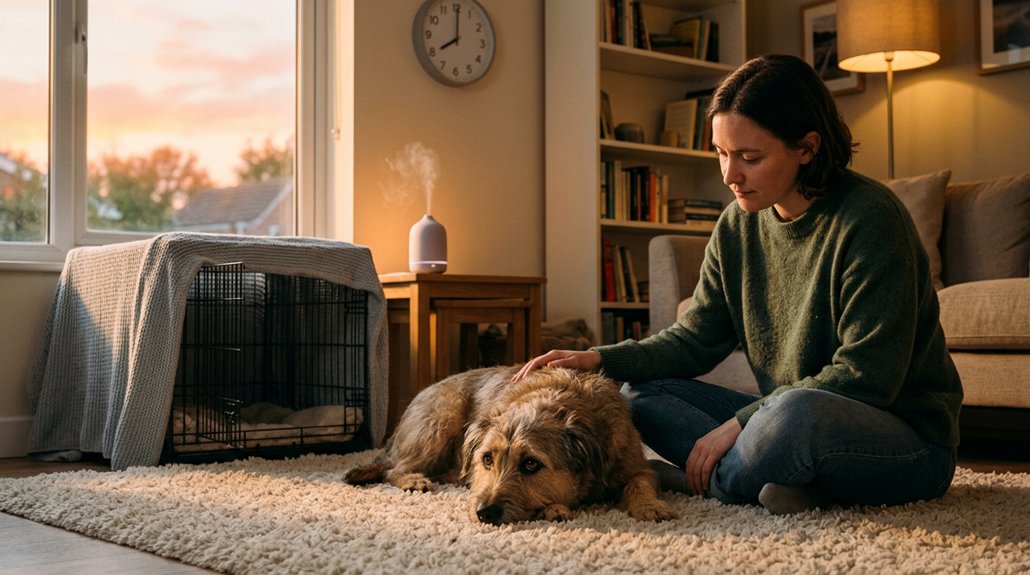
While gradual desensitization strategies can effectively address mild anxiety in dogs, there are scenarios where professional intervention becomes necessary. If signs of distress persist, such as destructive behavior or excessive vocalization, engaging a professional behaviorist is imperative. These experts can identify underlying issues and customize a behavior modification plan. Consulting a veterinarian is essential if anxiety symptoms overlap with health changes to rule out medical problems. If your dog’s anxiety affects your daily routine or their well-being, expert assistance is warranted for thorough management.
Here’s a quick guide:
| Scenario | Recommended Action |
|---|---|
| Persistent signs of distress | Consult a professional behaviorist |
| Severe destructive behavior | Professional intervention |
| Excessive vocalization | Behavior modification plan |
| Health changes with anxiety | Veterinary consultation |
| Impact on daily life | Seek expert help |
Frequently Asked Questions
How Do I Stop My Dog From Being Anxious When I Leave?
To stop dog anxiety when you leave, utilize desensitization techniques by gradually increasing alone time. Identify dog anxiety triggers, maintain a consistent routine, and use mental stimulation toys or calming aids to mitigate stress factors effectively.
What Is the 3-3-3 Rule for Dog Anxiety?
The 3-3-3 rule guides you in understanding canine anxiety progression: 3 days for settlement, identifying triggers; 3 weeks for comfort, establishing safe spaces; 3 months for full adjustment, promoting stability. It’s essential for anxiety management.
How to Calm an Anxious Dog?
It’s challenging, but calming an anxious dog involves using behavior modification techniques, environmental enrichment, and gradual departures. Implement calming techniques using interactive toys, crate training, soothing music, or essential oils to manage their anxiety and improve well-being.
How to Prepare Your Dog for You Leaving for Vacation?
Begin leave training early by practicing short departures, gradually increasing them to simulate your vacation’s duration. Incorporate vacation prep by establishing a routine, introducing mental stimulation, and utilizing calming aids to mitigate separation anxiety during your absence.
Conclusion
Ironically, while separation anxiety may feel like a complex conundrum, your dog’s comfort hinges on simple strategies. Establishing a secure, engaging environment, coupled with a consistent routine, isn’t groundbreaking, yet it’s essential. Surprisingly, short departures can transform into adventurous escapades for your furry companion, fostering resilience rather than dread. Should these practical tactics fall short, a professional can navigate the labyrinth of canine psyche. Remember, in mastering irony, your devotion becomes their unexpected peace.