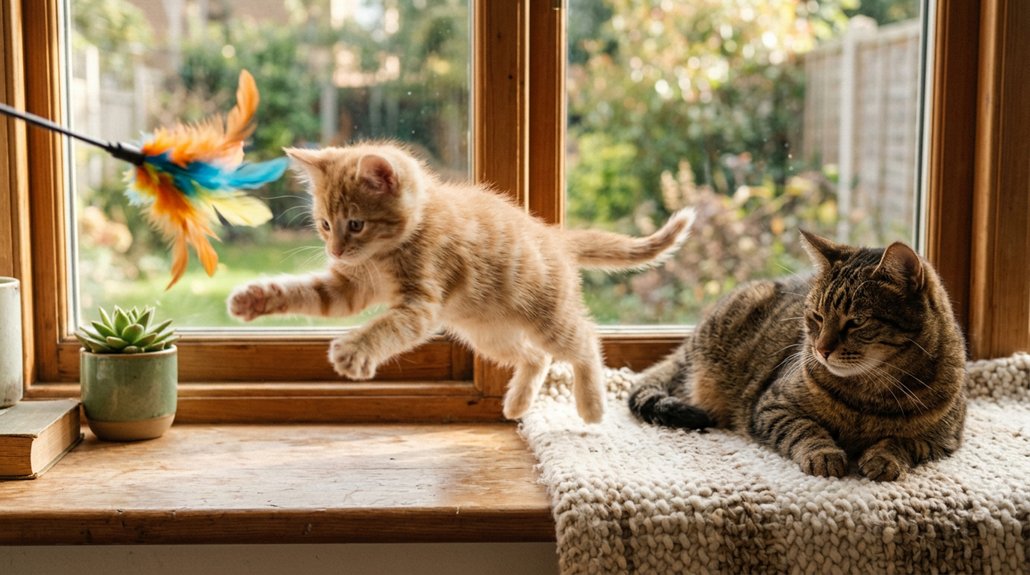
Choosing between a kitten and an adult cat largely depends on your lifestyle. Kittens are energetic and need constant supervision and social interaction. They’re great if you’ve got the time and energy for their playful antics. Adult cats, however, are calmer and more independent, adapting easily to varying schedules, requiring less hands-on care. Assess your daily availability and household dynamics to guarantee you’re ready for their unique demands. Discover more nuanced insights into these decisions ahead.
Key Takeaways
- Kittens require high energy and social interaction, needing constant supervision and companionship.
- Adult cats are calm, independent, and easier to care for, adapting well to varying schedules.
- Assess your daily availability; kittens need consistent supervision, while adult cats manage autonomously.
- Kittens may disrupt busy households, while adult cats integrate more seamlessly.
- Personal energy levels should align with the cat’s energy needs; choose between playful kittens and relaxed adults.
Understanding the Basics: Kittens vs Adult Cats

When deciding between raising a kitten and adopting an adult cat, it’s crucial to understand their distinct needs and characteristics. Kitten behavior is characterized by high energy levels and a playful demeanor, requiring extensive training and constant supervision. Kittens thrive on social interaction and need playmates to hone their social skills. They’re also more susceptible to illnesses due to their developing immune systems, increasing initial healthcare costs. Conversely, adult temperament leans towards calmness and independence, making adult cats easier to care for. They’re suited for quieter environments, benefiting households with older family members or young children, less prone to accidents. Adopting an adult cat often involves lower costs, and they usually come with full vaccinations and a stronger health record.
Assessing Your Lifestyle for Cat Ownership
How do you determine if you’re ready for the responsibilities that come with cat ownership? Start by considering your daily availability for maintaining a pet environment. Kittens need more social interactions, frequent play, and supervision, while adult cats generally adapt to your schedule with less disruption. Assess your household dynamics, especially if young children are present. Kittens are prone to scrapes, whereas adult cats might offer calmer companionship. Reflect on your energy level and whether a high-energy kitten fits your lifestyle, as adult cats often provide relaxed companionship. Financially, calculate adoption costs—kittens can demand up to £1,500 annually, while adult cats might begin at £100. Ultimately, evaluate your readiness for a long-term commitment, considering kittens’ training needs versus adult cats’ established personalities.
Daily Care Demands: Are You Ready for the Commitment?
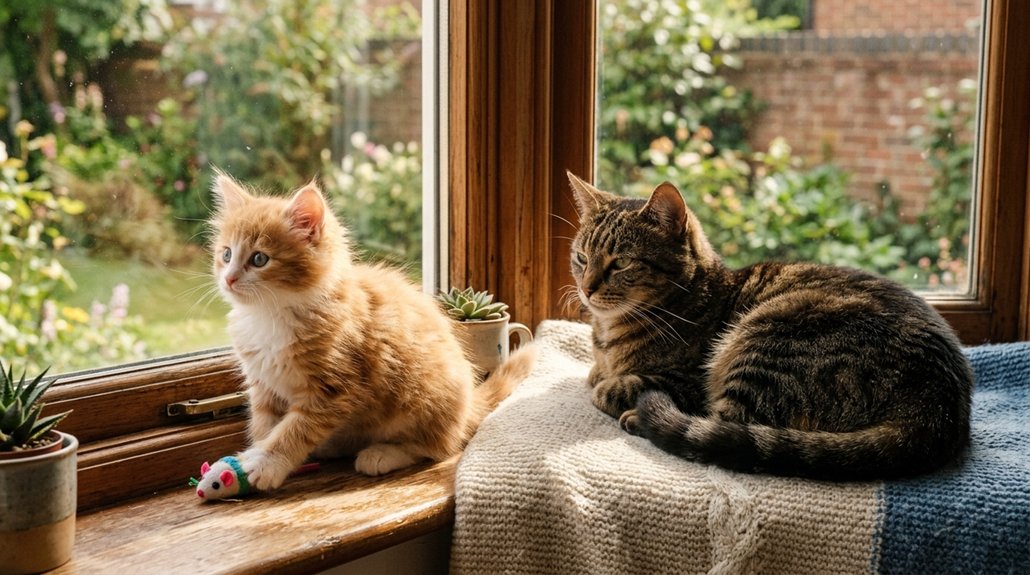
Have you truly assessed the daily care demands of owning a cat? Understanding the distinct requirements of kittens versus adult cats is essential for effective time management and maintaining your daily routines. Kittens need constant supervision and intensive care, particularly for training and socialization. Their high-energy playfulness can turn your daily schedule upside down, requiring significant time and attention. On the other hand, adult cats are generally more independent, aligning better with busier lifestyles. They need less supervision, allowing for a smoother integration into existing routines. Regardless of age, both require financial readiness, with annual costs averaging £1,500, covering insurance and ongoing expenses. Evaluating your availability and willingness to adapt guarantees you make the right choice for your household.
Personality and Behavior: What to Expect
Understanding cat personality and behavior is essential when deciding between a kitten and an adult cat. Kittens are bursting with energy and require consistent socialization strategies to guide their playful nature away from potential destructiveness. Their personalities are still evolving, meaning behavioral expectations can change as they mature. You’ll need to invest time in training and nurturing, which fosters appropriate social behaviors.
In contrast, adult cats have established personalities, simplifying the assessment of compatibility with your lifestyle. They generally exhibit lower energy levels and less chaos, aligning well with quieter households. Their existing socialization and training contribute to smoother integration into your home. Adult cats can form bonds more readily, acclimating more swiftly, consequently making them ideal for those seeking immediate companionship.
Costs Breakdown: Kitten vs Adult Cat

When considering the costs of adopting a cat, you’ll find that kittens often involve higher initial expenses due to higher adoption fees and the need for thorough veterinary care. While ongoing costs such as food and insurance average around £1,500 annually for both kittens and adult cats, adopting an adult cat can reduce upfront costs as they’re usually already vaccinated and neutered. In contrast, pedigree kittens can command prices over £1,300, making the financial commitment even more significant if you’re buying rather than adopting.
Adoption Fees Comparison
Adopting a kitten or an adult cat entails different financial considerations, and it’s crucial to understand these differences before making a decision. The adoption procedure can vary, but fee transparency is key. Typically, kitten adoption fees are about £150, while adult cats aged 1-5 years are often £125, and cats over 5 are approximately £100.
From rehoming centers, fees usually include services like vaccinations, microchipping, and neutering, giving you more value. In contrast, pedigree kittens from breeders can exceed £1,300, showing a stark price contrast. Understanding these costs helps you foresee your budget effectively.
| Age | Adoption Fee | Perks Included |
|---|---|---|
| Kitten | £150 | Vaccinations, Neutering, Chipping |
| 1-5 Years | £125 | Vaccinations, Neutering, Chipping |
| Over 5 Years | £100 | Vaccinations, Neutering, Chipping |
Ongoing Care Expenses
Though the joy of adding a feline companion to your home is profound, it’s vital to contemplate the ongoing care expenses that accompany either a kitten or an adult cat. With kittens, expect to allocate funds for extensive vaccination schedules and frequent veterinary checks. Adult cats may require fewer vet visits, focusing primarily on established health concerns. Health insurance is pivotal in managing these costs, ensuring both preventative care and emergency management. You should budget around £1,500 annually to cover food, health insurance, and treatments for either age group. Here’s a quick overview to help you plan:
- Kittens: Multiple vaccinations, frequent health checks
- Adult Cats: Less frequent vet visits
- Health Insurance: Essential for both
- Adoption costs: Varies by age
- Annual cost: Estimated at £1,500
Health and Vet Care: Preparing for the Future
When considering the future health needs of your cat, it’s essential to recognize that kittens and adult cats face different health concerns. Kittens require vigilant care to address their vulnerability to infections and parasites due to their developing immune systems, while adult cats might experience conditions like arthritis and dental disease. Both age groups benefit from regular vet check-ups and preventative care, and investing in health insurance can help manage costs associated with unexpected medical issues.
Common Health Concerns
How do the health concerns of kittens compare to those of adult cats? Kittens, with their immature immune systems, are more prone to kitten illnesses such as upper respiratory infections and intestinal worms. Regular vet visits and vaccinations are essential to keep these young ones healthy. Conversely, adult cats face adult ailments like arthritis, oral disease, and hyperthyroidism, requiring ongoing management.
When considering the financial aspects, kittens can be costlier initially due to multiple vaccinations and potential health issues as they grow. However, adult cats often arrive with vaccinations and known health histories, making their medical needs and expenses more predictable. Regardless of age, regular veterinary check-ups and balanced diets play a significant role in maintaining their well-being.
- Immature immune system in kittens
- Initial financial investment for kittens
- Known health history of adult cats
- Adult ailments: arthritis and hyperthyroidism
- Importance of regular vet check-ups
Preventative Care Strategies
Preventative care is essential in ensuring your cat’s longevity and quality of life. Regular veterinary check-ups are vital regardless of age. Kittens need vaccinations to build immunity, alongside training essentials to foster adaptability. Socialization techniques applied early can prevent behavior issues, setting a foundation for a well-adjusted adult cat. Adult cats, already vaccinated, require monitoring for dental and joint health. Health insurance is advisable to manage unexpected costs.
| Age Group | Needs | Emotional Impact |
|---|---|---|
| Kittens | Vaccinations, Training | Secure Future, Peace of Mind |
| Adults | Health Monitoring | Comfort, Stability |
| Both | Regular Vet Visits | Confidence in Care |
Investing in preventative care now saves you both distress and expense later, ensuring your pet is happy and healthy.
Bonding With Your Kitten or Adult Cat
Although bonding with your feline companion can be a deeply rewarding experience, the approach varies depending on whether you’re interacting with a kitten or an adult cat. With kittens, early bonding activities are essential. Their playful nature fosters strong emotional connections through interactive play and companionship with other kittens. Adult cats, on the other hand, often bond more quickly once comfortable in their environment, providing immediate companionship. Their predictable personalities allow you to assess compatibility, making it easier to establish an emotional connection. To best nurture your bond:
Bond with kittens through play and socializing; with adults, respect boundaries and build routine-driven trust.
- Engage in interactive play with kittens
- Provide social companions for younger cats
- Respect the boundaries of adult cats
- Create a consistent routine for familiarity
- Observe and adapt to your cat’s unique personality
Frequently Asked Questions
Is It Better to Get a Kitten or a Full Grown Cat?
It depends on your lifestyle. If you can invest time in kitten care, it’s rewarding. However, for a predictable companion, adult behavior might suit better. Each option has unique benefits; choose based on your capacity and preferences.
What Is the 3-3-3 Rule for Cats?
Imagine a key revealing new dimensions. The 3-3-3 rule illustrates a cat’s behavior during their adjustment period. You’ll notice changes at three days, weeks, and months as they transform from timid explorers to confident companions. Be patient.
What Is “I Love You” in Cat Language?
“I love you” in cat language includes slow blinks, purring communication, and an upright tail position. Cats may also rub against you and knead with their paws, demonstrating affection, trust, and a strong emotional bond with you.
What Annoys Cats the Most?
Cats get annoyed by loud noises, unfamiliar scents, and sudden movements. Messy environments and lack of space can distress them. They also dislike aggressive handling. Maintaining a calm, familiar environment helps keep your feline friend content and stress-free.
Conclusion
Choosing between a kitten and an adult cat involves juxtaposing playful curiosity against seasoned tranquility. While kittens offer energetic exploration and adorable mischief, adult cats bring the stability and predictability often valued by busy owners. Your lifestyle, commitment level, and budget will guide your decision. Regardless of age, both kittens and adult cats can form deep, loving bonds with you. Ultimately, whether you choose the whirlwind of a kitten or the calm companionship of an adult, you’re welcoming a treasured family member.