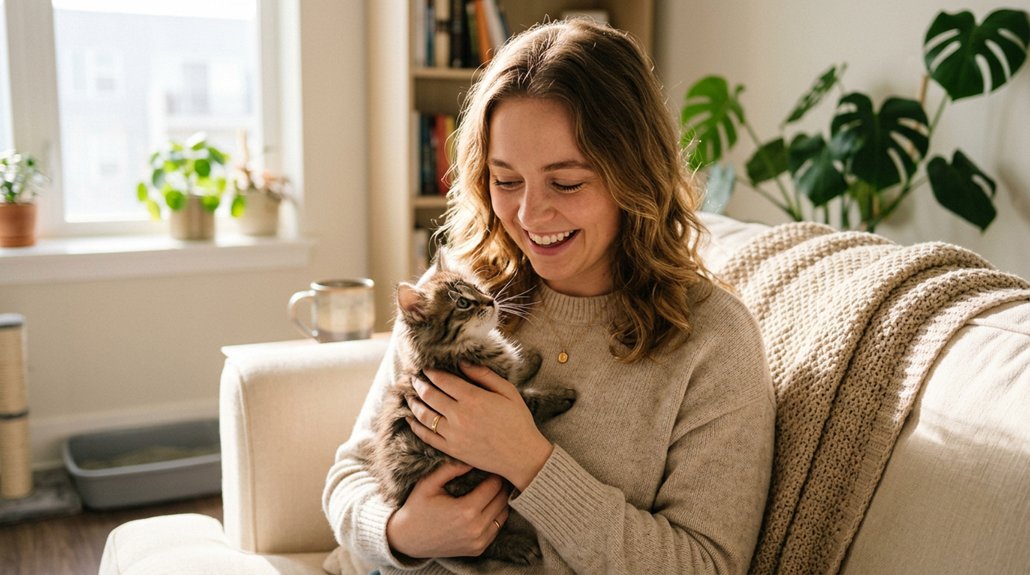
As a first-time cat adopter, you’re committing to a pet that may live 15 to 20 years, requiring careful planning. Verify your home is cat-proofed and stocked with essentials like food and litter. Implement gradual diet changes, maintain regular veterinary visits, and observe litter box habits. Keep them engaged with interactive toys and scratching posts. Financial planning is vital, accounting for routine and unexpected costs. Learn more to guarantee a smooth changeover and a happy life together.
Key Takeaways
- Understand that cats require a 15-20 year commitment, including financial planning for food, litter, and veterinary care.
- Prepare your home by gathering necessary supplies and cat-proofing to ensure a safe environment.
- Establish a consistent feeding routine and ensure access to fresh water to support your cat’s health.
- Schedule regular veterinary visits for vaccinations and preventative care, including spaying or neutering.
- Engage your cat in interactive play and provide stimulation through toys and climbing structures for mental and physical health.
The Long-Term Responsibility of Cat Ownership
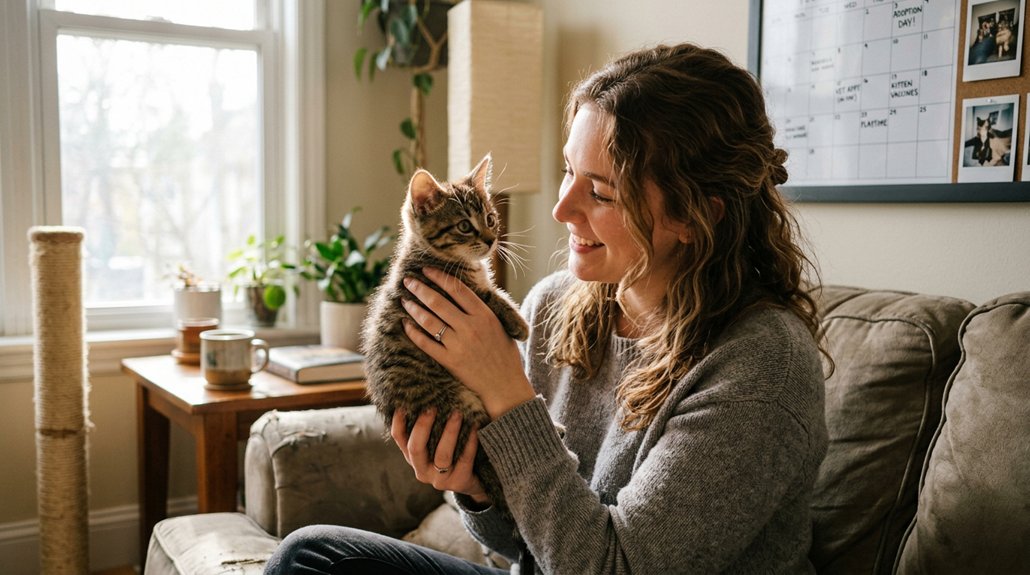
When considering adopting a cat, it’s essential to understand the long-term commitment involved, as cats typically have a lifespan of 15 to 20 years. This requires an owner commitment to their care evolution throughout these years. You’ll need a financial plan covering food, litter, routine veterinary care, and potential emergency expenses. Additionally, conduct a lifestyle evaluation to guarantee compatibility with pet longevity, especially if frequent travel or relocations are likely. Adhering to health requirements, such as vaccinations and regular health check-ups, supports their wellbeing. Be prepared for behavioral issues or health concerns that may arise, necessitating investment in both time and resources. Responsible ownership secures your cat’s quality of life and benefits you both in the long run.
Preparing Your Home for a New Feline Friend
Before bringing a new feline friend home, it’s important to meticulously prepare your living space to guarantee their comfort and safety. Gather crucial supplies, such as a litter box, food and water dishes, nutritious cat food, and a comfortable pet carrier. Implement home adjustments by cat-proofing your environment, removing hazards like loose items, electric cords, and small objects to enhance cat safety.
Initially, confine your cat to one secure room, stocked with necessities, allowing them to acclimate gradually. Daily litter box maintenance, including scooping and cleaning with mild soap, guarantees a hygienic environment. Utilize cardboard boxes or blankets to create multiple hiding spots.
| Important Supplies | Cat-Proofing Tips |
|---|---|
| Litter box | Remove loose items |
| Food & water dishes | Secure electric cords |
| Cozy bed | Eliminate small objects |
| Durable pet carrier | Maintain a safe environment |
How to Set Up a Safe Space for Your New Cat
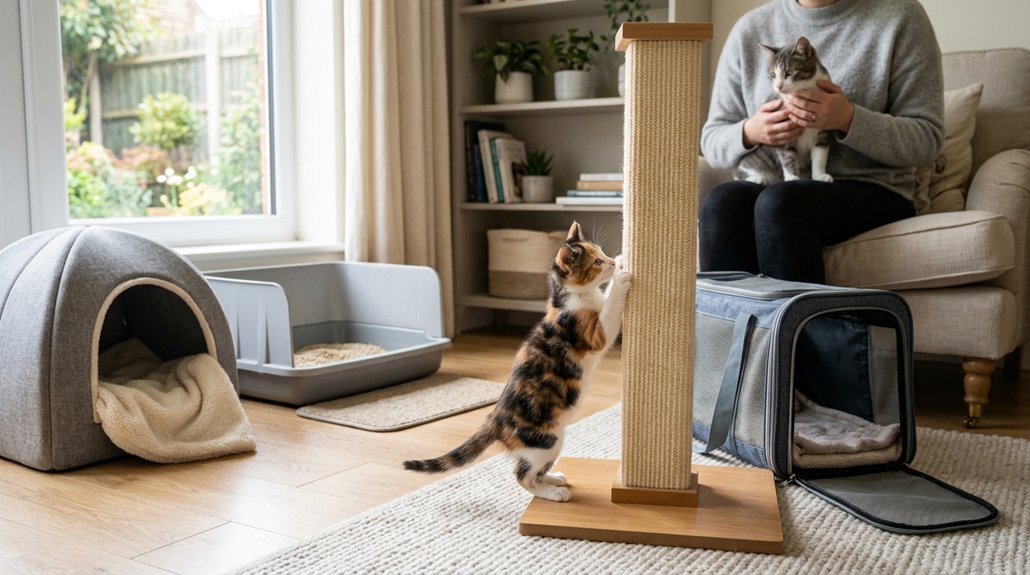
Once you’ve prepared your home and gathered necessary supplies, setting up a safe space for your new cat is the next vital step. Start by confining your feline to a single room, ensuring it’s equipped with food, water, and a litter box. This creates a safe environment, essential for cat adaptation.
Make the space inviting by incorporating:
- Hiding Spots: Use cardboard boxes or blankets to provide secure retreats reducing stress.
- Scratching Posts: Offer both mental stimulation and a place for natural scratching; a familiar-scent towel helps with comfort.
- Safety Checks: Remove loose items, secure cords, and clear small objects to prevent hazards.
Monitor their behavior. Once comfortable, gradually allow exploration, watching for stress signs like hiding or reduced appetite.
Ensuring a Smooth Transition Into Home Life
To guarantee your new cat adapts smoothly into their new home, it’s important to introduce them to the environment gradually and attentively. Initially, confine your cat to a single room stocked with essentials like food, water, and a litter box. This creates a sanctuary, reducing feelings of being overwhelmed. As they adjust, gradually introduce other areas, enabling exploration at their pace. Observe for adaptation signs such as reduced appetite or hiding, indicating stress. In these cases, provide a safe retreat. Maintain positive interactions through play and treats, fostering trust and confidence. Monitor litter box usage closely, as discomfort with it can signal adjustment issues. Cleanliness and appropriate scent are vital factors affecting their willingness to use the box.
Feeding Your Cat: What to Know

As you guarantee your new cat’s comfort in their new environment, also focus on nutrition, which plays a significant role in their overall health and well-being. Ensure a smooth changeover food process by starting with what your cat was eating at the shelter, gradually mixing it with their new diet over a week. Establish feeding schedules to maintain consistency while avoiding free feeding, which can lead to obesity. It’s vital to observe their eating habits, as stress might trigger a decreased appetite. To foster hydration, fresh water should always be available.
- Changeover gradually: Mix shelter food with new to ease adaptation.
- Monitor closely: Watch for changes in appetite due to stress.
- Plan feeding schedules: Once or twice daily can prevent overeating.
Stress Management for Your New Cat
Although changing to a new environment can be intimidating for your feline, understanding the signs of stress is essential to ensuring a smooth adjustment. Common stress signs in cat behavior include decreased appetite, hiding, and lack of interest in interaction. To mitigate feline anxiety, create safe spaces by confining your new cat to a single room filled with comfort items like familiar scents, such as a towel from their previous home. Environmental enrichment can aid in gradually introducing them to their surroundings. Observe your cat’s behavior closely; patience and positive interactions are vital. Trust building occurs when you respect their pace, allowing them to emerge and explore when they’re ready. This gradual introduction fosters security and reduces stress.
Basics of Litter Box Training
To guarantee your new cat uses the litter box consistently, place it in a quiet, low-traffic area where your pet feels safe. Maintaining a regular cleaning routine by scooping daily and thoroughly cleaning every two weeks is essential to keep the environment inviting. Opt for mild soap and unscented litter to avoid deterring your cat with harsh odors or dust.
Litter Box Placement
When setting up your cat’s litter box, placing it in a quiet, low-traffic area is essential to provide privacy and minimize stress. Prioritize litter box accessibility to guarantee your feline can reach it easily, preventing behavioral issues. Maintain litter box cleanliness meticulously, as cats have an instinctual preference for a tidy elimination spot. Scoop the litter box daily and perform a thorough clean bi-weekly with mild soap instead of harsh chemicals. If your cat shows reluctance, observe for stress indicators and reassess accessibility or cleanliness.
Visualize an ideal setup:
- A serene corner away from household commotion.
- An uncovered box allowing free access and air circulation.
- A consistent cleaning routine, unobtrusive yet regimented, upholding a hygienic environment.
This guarantees a harmonious experience for both you and your pet.
Cleaning Routine Tips
Effective litter box cleaning routines are vital to a cat’s healthy toilet habits. Begin by providing a clean, uncovered litter box in a quiet location, encouraging your cat to embrace natural instincts. Daily litter box maintenance involves swiftly scooping waste to guarantee cleanliness and robust odor control. Steer clear of strong-smelling cleaners, using mild soap bi-weekly for a thorough clean; harsh scents may deter your feline from using the box. An important detail: monitor your cat’s use, as stress from new environments can trigger accidents. Additionally, verify the box’s size suits your cat’s comfort, ideally being spacious, such as the Frisco High Sided model. Appropriate attention to these factors guarantees excellent maintenance and fosters positive hygiene habits in your cat.
Keeping Your Cat Healthy With Regular Vet Care
Establishing a proactive approach to your cat’s health begins with scheduling routine check-ups soon after adoption to address vaccinations and preventative care. Regular veterinary visits are essential, as they help monitor your cat’s overall health and guarantee timely interventions. Consult your veterinarian to create a vaccination schedule tailored to your cat’s needs, safeguarding them against common feline diseases.
Schedule Routine Check-Ups
A fundamental step in ensuring your cat’s long-term health is scheduling regular veterinary check-ups. An initial visit within the first week of adoption is vital for a complete health assessment and vaccinations. Regular check-ups, typically every 6 to 12 months, help monitor your cat’s health, identify early warning signs, and keep vaccinations up to date. Keeping detailed health records of vaccinations, treatments, and any medical issues is essential for continuity in care. During these visits, you’ll also discuss dietary needs with your vet to tailor food choices and manage any sensitivities.
- Initial Visit: Thorough health check and vaccinations.
- Routine Frequency: Every 6 to 12 months.
- Health Records: Track vaccinations, treatments, and concerns for ongoing care continuity.
Preventive Health Measures
While cat ownership brings joy, it’s also a commitment to ensuring your feline companion’s health through preventive measures. Regular wellness checks are essential for maintaining your cat’s well-being. For healthy cats, an annual vet visit suffices, but senior cats or those with health conditions benefit from biannual appointments. These check-ups help catch potential health issues early, ensuring a longer, happier life for your cat.
Spaying or neutering by six months is a crucial preventive measure that reduces cancer risks and curbs unwanted behaviors. Additionally, consistent parasite control combats fleas, ticks, and worms, safeguarding your cat and your household. Don’t overlook dental care; routine veterinary cleanings and at-home tooth brushing help prevent periodontal disease, a common concern as cats age.
Monitor Cat Vaccinations
Every responsible cat owner knows that vaccinations are essential for keeping your feline friend healthy. Scheduling a veterinarian appointment soon after adoption guarantees your cat begins receiving core vaccinations—rabies, feline viral rhinotracheitis, calicivirus, and panleukopenia. A tailored vaccination schedule is fundamental, as kittens require multiple doses during their first year, while adult cats may need updates annually or every three years.
Keep thorough health records as they’re crucial for:
- Boarding and travel requirements
- Confirming health status with adopters or shelters
- Tracking vaccinations and vet visits
Discuss with your vet about additional vaccines like the feline leukemia vaccine, especially if your cat’s lifestyle increases risk. Regular health check-ups complement vaccinations by allowing your vet to monitor overall health and spot potential issues early.
Fun and Games: Enriching Your Cat’s Life
Even though cats are independent creatures, enriching their lives with fun and games is vital for their well-being. Engaging in interactive play with feather wands or laser pointers mimics natural hunting behaviors, providing both physical and mental stimulation. To maintain excitement, practice toy rotation; change toys like crinkle tunnels and colorful springs every few weeks. Puzzle feeders and food-dispensing toys challenge them to earn meals, boosting mental acuity. Additionally, cat trees and scratching posts are essential—they fulfill scratching instincts and offer vertical climbing space.
| Activity Type | Growth Benefit |
|---|---|
| Interactive Play | Enhances physical/mental health |
| Toy Rotation | Prevents boredom |
| Puzzle Feeders | Promotes mental acuity |
| Cat Trees | Satisfies scratching/climbing |
| Scratching Posts | Supports natural behavior |
These strategies guarantee your cat remains active and engaged.
Financial Planning for Cat Care
When planning for your new feline friend, it’s crucial to assess ongoing costs, which typically range from $50 to $100 monthly for essentials like food and litter. Setting aside an emergency fund is critical, given that unexpected health issues can arise, with annual veterinary costs ranging from $100 to $300. To ease the financial burden, explore budget-friendly options such as opting for generic brands or purchasing supplies in bulk.
Assessing Ongoing Costs
While planning to bring a feline friend into your home, understanding the ongoing costs associated with cat care is essential. Expect monthly expenses between $70 and $150, primarily for food, litter, and toys. Engage in cost comparison to guarantee you’re getting value, as nutritional needs will vary, influencing food expenses. Effective budgeting tips include:
- Annual veterinary care: Allocate around $100 to $300 for regular check-ups and vaccinations, making sure your cat stays healthy.
- Routine supplies: Budget for essentials like litter, which require replenishing, a significant monthly expense.
- Unexpected medical needs: Save periodically for unforeseen veterinary visits, a critical aspect often overlooked.
Consider adoption agencies that provide initial medical care, potentially easing initial financial burdens. Enjoy pet ownership with structured financial planning.
Emergency Fund Importance
Understanding ongoing costs is just part of the financial strategy for cat care; it’s equally important to prepare for unforeseen expenses. Establishing a dedicated emergency fund is prudent, as routine veterinary visits range from $100 to $300 annually, while emergency visits may exceed $1,000. Emergency expenses, such as accidents or sudden illnesses, can easily impose financial strain, especially if surgeries or treatments top $2,000. By setting aside three to six months’ worth of essential expenses—including cat food, litter, and medical care—you guarantee preparedness for unexpected scenarios. Consider pet insurance, too, which can complement your veterinary savings; typical plans cost $20 to $50 monthly. This dual approach reduces the risk of delaying necessary treatments due to insufficient funds.
Budget-Friendly Options
As responsible cat care requires financial planning, it’s crucial to explore budget-friendly options that don’t sacrifice quality or wellbeing. To manage monthly costs effectively, prioritize budget-friendly food and affordable litter. This strategy keeps your feline healthy without straining your finances.
Key budget-friendly options:
- Food and Litter Costs: Allocate $20-$40 monthly for budget-friendly food and $10-$30 for affordable litter, choosing suitable brands and types.
- Initial and Ongoing Supplies: Plan for necessary items, initially costing $100-$200. Set a consistent budget for replacements and minimal emergency needs.
- Veterinary and Insurance Plans: Initial veterinary expenses range $100-$300, with annual check-ups at $50-$100. Explore insurance, costing $10-$50, to reduce unforeseen veterinary costs.
An effective budget guarantees the best care without financial overwhelm.
Frequently Asked Questions
What Is the 3 3 3 Rule for Adopting a Cat?
The 3 3 3 rule for adopting a cat highlights the adjustment period over three days, three weeks, and three months. It helps you understand feline behavior, ensuring patience and proper support as your cat adjusts.
What to Know Before Adopting Your First Cat?
Consider long-term commitment and assess financial readiness before adopting. Verify your living space permits pets and check for allergies. Research breeds for compatibility. Prepare for safe introductions between pets by understanding each cat’s personality and specific needs.
What Is “I Love You” in Cat Language?
“I love you” in cat language is a symphony of feline body language and cat affection signals. Think slow blinks, purring reveries, kneading rhythms, gentle head-butts, and shadow-like following—all tender whispers borne from kitty hearts.
What Is the 3-3-3 Rule for Adoption?
The 3-3-3 rule explains cat adjustment phases: first three days involve stress and exploration, three weeks show improved comfort and social feline behavior, and three months indicate full settlement and personality display. Patience is essential.
Conclusion
Starting on the journey of cat ownership is akin to planting a garden; with care, patience, and the right tools, it flourishes. As you’ve learned, integrating a feline friend into your life requires preparation, commitment, and love. Regular vet visits, proper nutrition, and a stimulating environment guarantee your cat’s well-being. Financial planning is vital for unforeseen expenses. Remember, your effort today cultivates a lifelong bond filled with purrs and playful antics, enriching both your lives immeasurably.