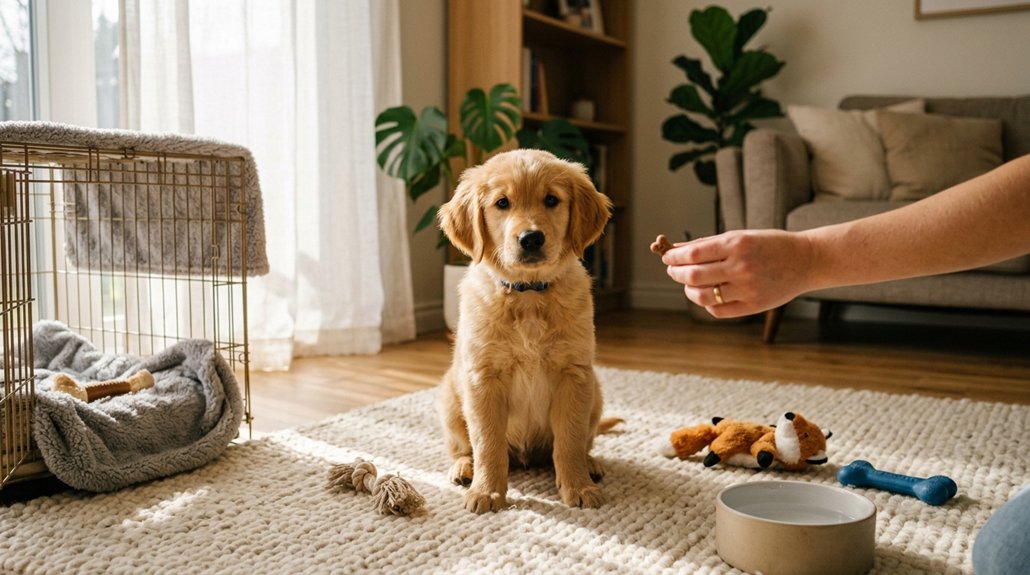
To help your puppy adjust to a new home, create a secure, calming environment with essentials like food, water, and toys. Introduce family members gradually and maintain consistent feeding and potty break routines. Encourage independence and confidence with positive reinforcement and exploration. Address any behavioral concerns by providing quiet retreats and engaging toys. A stable routine and nurturing environment are key to a smooth changeover. Explore further strategies to enhance your puppy’s comfort and confidence.
Key Takeaways
- Establish a secure, puppy-proof space with essentials to create a safe and comfortable environment.
- Introduce the puppy gradually to family members to avoid overwhelm and build positive social interactions.
- Maintain consistent daily routines for feeding, playtime, and potty breaks to provide structure.
- Use positive reinforcement with treats and praise to encourage desirable behaviors and build confidence.
- Provide engaging toys and activities to stimulate curiosity and satisfy natural instincts.
Establishing a Safe and Comfortable Space for Your Puppy
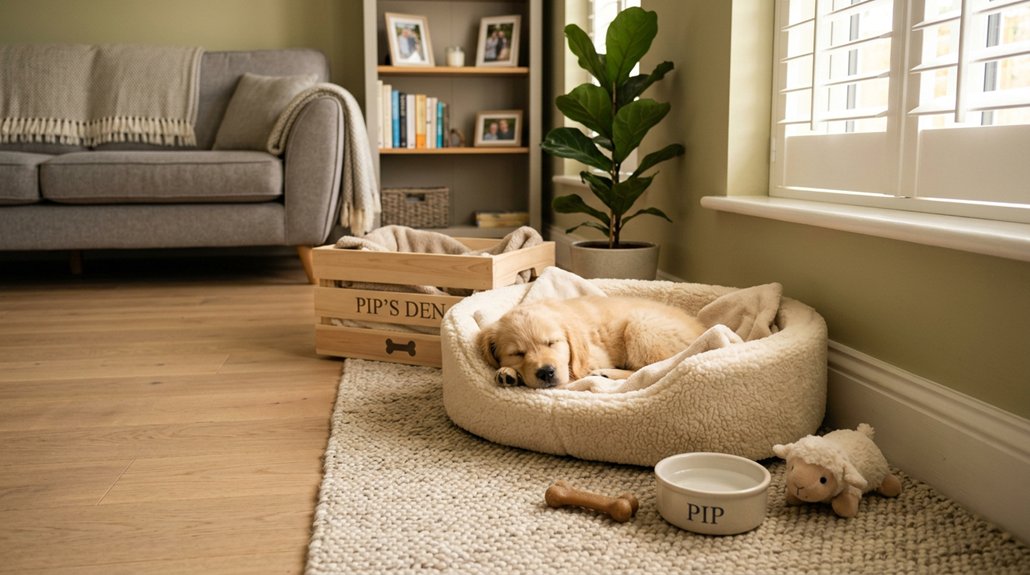
When bringing a new puppy home, it’s crucial to establish a secure and inviting space to facilitate a smooth adjustment. Start by creating a designated, puppy-proof area equipped with puppy proofing essentials like food, water, toys, and a cozy crate. This setup will allow for safe exploration while reducing the risk of accidents or injuries. Gradually introduce your puppy to this space, restricting access to other areas of the house to prevent overwhelm and foster trust. Confirm the sleeping area is comfortable, using familiar items such as a blanket or toy for security. Employ calming tools like soothing music or sprays, keeping an eye on their behavior. Provide supervision and gentle redirection to address anxiety or unwanted behavior effectively.
Creating a Consistent Feeding and Potty Training Routine
Developing a consistent feeding and potty training routine is essential for your puppy’s growth and behavior management. Establish meal timing by feeding puppies under 18 weeks three times a day, moving to two meals for older pups. Make sure mealtime is distraction-free, preferably in the crate, to build positive associations. Immediately after meals and naps, take your puppy outside for a potty break to reinforce the connection between eating and eliminating in the appropriate area. Consistently use a potty cue like “go potty” to help your puppy learn what’s expected. Monitor water intake to maintain hydration; limit access before bedtime to reduce nighttime accidents. This structured approach will support your puppy’s adjustment and promote effective behavior management.
Introducing Your Puppy to Family Members Gradually
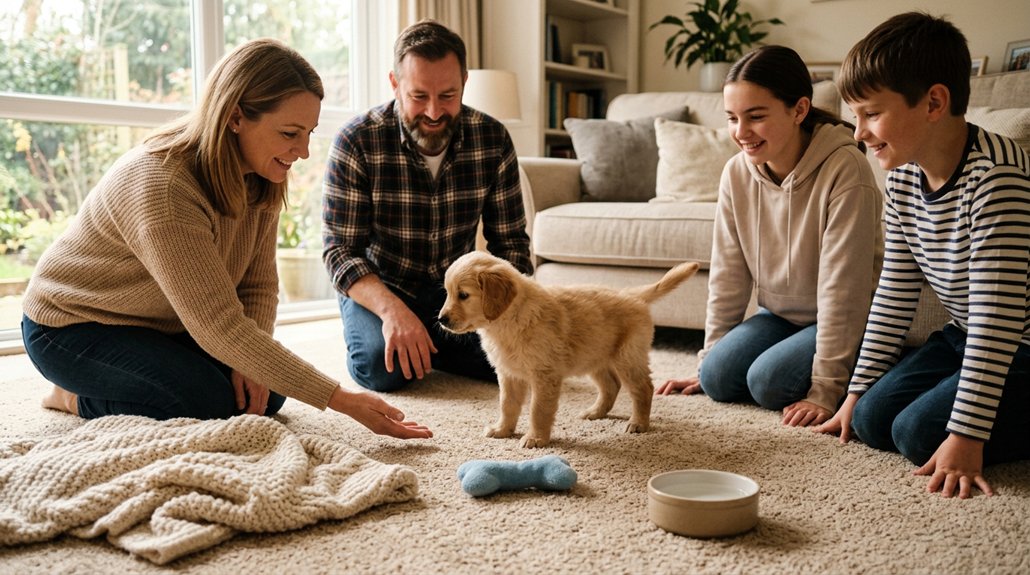
Now that you’ve established a consistent feeding and potty training routine for your puppy, it’s important to focus on introducing them to family members gradually. Start with puppy introductions one member at a time to prevent overwhelming them and build trust. Allow the puppy to approach on their own terms to maintain a positive experience. Observe their comfort level, adjusting interactions as needed.
Utilize positive reinforcement through treats and praise during these bonding activities to encourage friendly behavior. Gradually increase the number of family members involved as the puppy becomes comfortable.
| Step | Description |
|---|---|
| One-on-One | Introduce the puppy to one person only. |
| Calm Environment | Maintain a serene setting during introductions. |
| Observe Behavior | Monitor the puppy’s comfort and adjust accordingly. |
| Positive Reinforcement | Use treats and praise for encouraging interactions. |
| Incremental Increase | Gradually add more family members to the introductions process. |
Helping Your Puppy Settle in With Familiar Comforts
As you help your puppy adjust to their new home, incorporating familiar comforts can ease the adjustment considerably. Use comforting items like a favorite toy or a blanket that carries familiar scents, such as those of littermates, to provide emotional support. Establish the crate as a designated safe space. Enhance it with calming music and sprays to create a soothing environment, reducing anxiety and improving the puppy’s comfort level. Engage in quiet interactions and gentle affection, helping to build your puppy’s trust and confidence. Consistent daily routines involving feeding, potty breaks, and playtime also foster stability, allowing your puppy to feel more secure. These steps collectively create a more reassuring adjustment, facilitating smoother acclimation to their new surroundings.
Adapting to Shy, Nervous, and Clingy Puppy Behaviors
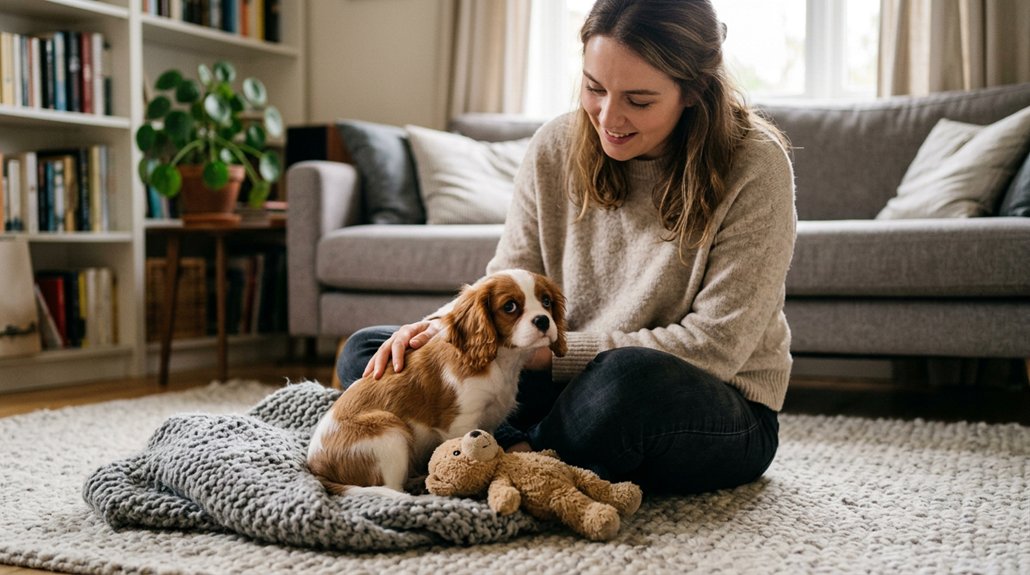
While familiar comforts can aid in settling a puppy, addressing behavioral traits like shyness, nervousness, or clinginess requires tailored strategies. For shy and nervous puppies, creating quiet retreats is essential. These safe spaces help them feel secure, allowing stress reduction and gradual acclimation to their new environment. Allow shy puppies to stay home initially, fostering confidence at their own pace.
For those exhibiting clinginess, gradually introduce short separation periods. This encourages them to learn independence while remaining assured of your return. In addition, keep a leash attached during early days to manage fearful behaviors gently. Promote a calm, patient environment, and continually use positive reinforcement to reward signs of confidence. These strategies effectively enhance the adjustment process for shy, nervous, and clingy puppies.
Why Supervised Play and Chew Toys Matter
Supervised play and chew toys play a critical role in a puppy’s development and well-being. Engaging in supervised playtime benefits your puppy by providing a safe environment to explore and learn. This helps in monitoring interactions and redirecting undesirable behaviors effectively. Different chew toy types are paramount as they satisfy the puppy’s instinctual need to chew, which can alleviate anxiety and deter destructive chewing. By offering a variety of chew toys, you not only protect your furniture but also contribute to your puppy’s dental health by cleaning teeth and massaging gums, especially during teething. Furthermore, engaging with your puppy through play helps build a strong bond, enhancing trust and promoting desirable behavior via positive reinforcement.
Developing Confidence Through Basic Obedience Training
Basic obedience training is essential in nurturing a puppy’s confidence and understanding of their place in the household. Confidence building occurs when puppies learn fundamental commands like “sit,” “stay,” and “come,” fostering security and command reinforcement through positive interactions. Implement short, engaging training sessions of 5 to 10 minutes to maintain interest and avoid frustration. Using consistent positive reinforcement, such as treats and praise, guarantees repeat behaviors and establishes a trusting owner-puppy relationship. Incorporating training variety by introducing new experiences and gradually increasing command complexity enhances adaptability and boosts confidence. As your puppy masters these basic skills, their confident participation in different environments becomes evident, making obedience training a pivotal component of their growth.
Socializing Shy Puppies: Strategies for Interaction
Introducing shy puppies to new social situations requires a strategic approach to guarantee their well-being and gradual acclimation. Start by ensuring all interactions remain calm and non-threatening. Let them approach others at their own pace; don’t push them into uncomfortable interactions, as this can heighten anxiety. Use positive reinforcement—treats or praise—when they engage with new stimuli or people, promoting trust. Incorporate bonding activities like puppy playdates with calm dogs to foster interactions. Provide a safe space in your home where they can retreat if overwhelmed, ensuring they always have a security option. When introducing them to new environments or sights, start with low-stress situations and steadily increase complexity to build their confidence effectively.
Promoting Independence While Managing Clinginess
To help your puppy build independence while managing their clinginess, start with gradual separation techniques by increasing the time apart incrementally. Utilize engaging toys and chew items in their safe space to distract and occupy your puppy, making these periods positive and anxiety-free. This approach encourages a comfortable shift to being alone and supports your puppy’s overall well-being.
Gradual Separation Techniques
While it’s natural for puppies to feel clingy in a new environment, employing gradual separation techniques can promote independence without overwhelming them. Begin by introducing brief separations, lasting only a few minutes, which can help ease separation anxiety and foster puppy independence. Utilize a crate or baby gate to create a secure space during these times. Ascertain your puppy is provided with engaging toys, though discussing such items falls under different guidance.
Wait until your puppy is calm before approaching them, reinforcing that solitude is acceptable. Calming aids like soft music or a ticking clock can enhance comfort. Extend separation durations gradually, coupling reunions with positive experiences such as playtime or treats, thereby building positive associations with being alone.
Engaging Toys for Distraction
After establishing gradual separation techniques, it’s beneficial to incorporate engaging toys that encourage independence and manage clinginess. Interactive puzzles and treat dispensing balls are excellent for promoting independent play, keeping your puppy occupied and less reliant on constant attention. Chew toy benefits include redirecting teething behavior while satisfying natural chewing instincts, ensuring a safe outlet for excess energy. To maintain interest, rotating toys every few days encourages exploration and interaction with various textures and activities. Tug toy exercises during playtime not only provide physical stimulation but also foster a stronger bond between you and your puppy. Finally, stuffed toy surprises with hidden treats, such as peanut butter, keep puppies focused and content, promoting self-reliance in their new environment.
Ensuring Smooth Transitions With Patience and Consistency
Although bringing a new puppy home is an exciting time, it requires careful planning and patience to guarantee smooth adjustments. Facilitate puppy exploration by gradually introducing your pet to its environment, beginning with one room. This step minimizes overwhelm and serves as essential environmental enrichment. Consistency in daily routines, like feeding and potty breaks, stabilizes your puppy’s adjustment, fostering security. Positive reinforcement through praise and treats nurtures confidence and encourages desired behaviors.
Remain vigilant for any signs of anxiety, and make certain the puppy has access to a quiet retreat where it can relax. Be patient; it’s natural for acclimation to take weeks. Establishing a steady, supportive environment empowers your puppy, ultimately leading to a confident adaptation to its new home.
Frequently Asked Questions
How Long Does It Take for a Puppy to Get Adjusted to a New Home?
It usually takes a puppy a few days to several weeks to adapt to a new home. Adaptation factors, like routine and environment, along with the puppy’s personality, greatly influence how quickly they feel comfortable and secure.
What Is a Red Flag Behavior in Puppies?
Spotting red flag behavior in puppies is like noticing cracks in a fragile vase. Puppy anxiety manifests through excessive whining, reluctance to eat, or clinginess. Implement adjustment tactics, like gradual socialization, to ease their adjustment.
What Is the Hardest Month of a Puppy?
The hardest month for a puppy is typically the first after adoption. During this time, they’re likely to experience puppy anxiety. Employ consistent adjustment tips, such as establishing routines and environment familiarization, to ease their adjustment.
What Is the 7 7 7 Rule for Puppies?
The 7 7 7 rule whispers of a graceful change for puppy comfort. Begin with seven days to settle into their new environment, seven weeks for social forays, and a seven-month journey to forging unbreakable bonds.
Conclusion
Bringing a puppy home is akin to nurturing a budding plant. It requires patience and consistency to guarantee it thrives. As your puppy adjusts, remember the story of a young tree that needed gentle, regular care to grow strong roots. Like the tree, your puppy will flourish with love, structure, and gradual exposure to new experiences. Prioritize safety and routine, and you’ll cultivate a confident and independent companion, ready to branch out into the world with you.