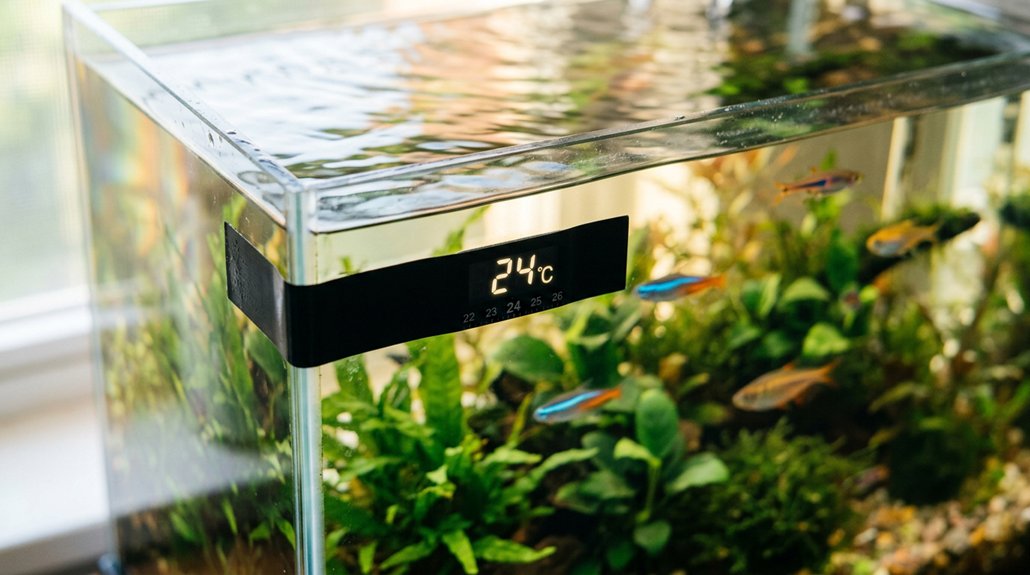
Your aquarium should be kept at the temperature your fish need, not a generic setting. Most tropical freshwater fish do best at 75–80°F (24–27°C), while cold-water species such as goldfish are usually healthiest at 60–75°F (15–24°C). Match the narrowest range required by all tankmates, and avoid sudden swings, which can stress fish and destabilize filtration. If you keep going, you’ll see how to choose the right target more precisely.
Key Takeaways
- Most tropical freshwater aquariums should stay around 75–80°F (24–27°C).
- Cold-water fish like goldfish usually do best around 60–75°F (15–24°C), often below 70°F.
- Match the tank to the narrowest temperature range needed by all fish species.
- Avoid sudden temperature swings; change water and settings gradually to prevent stress.
- Use a reliable thermometer, and keep tanks away from windows, vents, and direct sunlight.
What Temperature Should Your Aquarium Be?
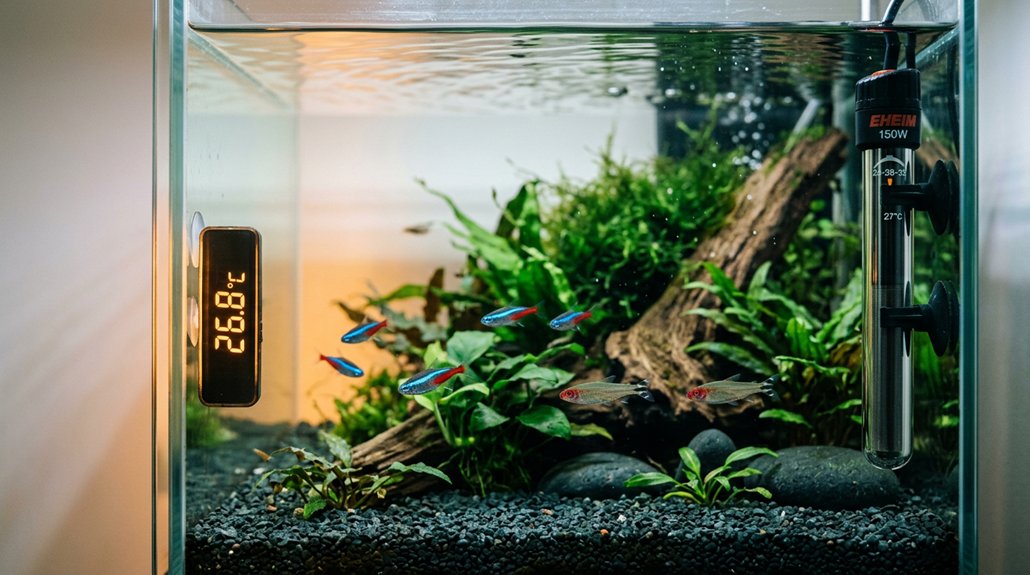
Setting your aquarium to the correct temperature starts with the species you keep: most tropical freshwater fish do best at 75–80°F (24–27°C), while cool-water species such as many goldfish prefer about 60–75°F (15–24°C). You should match the heater setting to the narrowest acceptable range for every inhabitant in a mixed tank. Use a reliable thermometer that’s separate from the heater, and verify readings regularly, especially after lighting changes, water changes, or equipment adjustments. Avoid rapid shifts; small daily variation is normal, but abrupt swings increase stress and disease risk. Good placement supports stability, so keep the tank away from windows, vents, and radiators. Proper temperature supports behavioral thermoregulation and reduces the need for stressful temperature acclimation.
Tropical vs. Cold-Water Fish Temperature Ranges
You’ll usually keep tropical freshwater fish at 75–80°F (24–27°C), with many species doing best near the lower end of that range. Cold-water fish, such as goldfish, do better below 70°F (21°C), typically around 60–75°F (15–24°C). If you’re mixing species, match temperatures to the narrowest preferred range and maintain stability with a reliable heater and thermometer.
Tropical Fish Range
Most tropical freshwater fish thrive at about 75–80°F (24–27°C), so heater settings for standard tropical community tanks should generally fall within that range. You should treat this as the baseline for stable metabolism, immunity, and feeding response.
- Keep fluctuations minimal; even small shifts can alter stress levels and reduce appetite.
- Match the narrowest shared range if you keep multiple species together.
- Observe species-specific cues, including color preferences and schooling behavior, because poor temperature control can suppress both.
Avoid prolonged temperatures above 84–86°F (29–30°C), since many tropical fish won’t tolerate that stress well. If you’re selecting livestock, confirm each species’ ideal window before setup. A precise heater setting is more reliable than broad guesses, and it helps you maintain consistent, healthy conditions.
Cold-Water Fish Range
Cold-water fish generally prefer 60–75°F (15–24°C), and many species do well below 70°F, so their heater needs are usually lower than those of tropical fish. You’ll usually see better stability at these cooler settings, with less metabolic strain and steadier oxygen levels. Their schooling behavior can remain normal when the water stays in range.
| Temperature | Note |
|---|---|
| 60°F | Lower end for many species |
| 65°F | Common comfortable point |
| 70°F | Upper end for many cold-water fish |
| 75°F | Maximum for tolerant species |
| 80°F | Too warm for most cold-water fish |
Don’t pair them with tropical fish, which usually need 75–80°F (24–27°C), because the overlap is limited. Use a reliable thermometer and keep the heater set to the narrowest shared range.
Matching Species Temperatures
Tropical freshwater fish generally thrive at 75–80°F (24–27°C), with many community species doing best near 77°F (25°C), while cold-water species such as goldfish prefer 60–75°F (15–24°C) and often stay healthiest below 70°F (21°C). You should verify species compatibility before combining fish, because temperate species may overlap both ranges and shift your target temperature.
- Identify each species’ preferred range.
- Set the tank to the narrowest shared range.
- Adjust only for breeding or seasonal acclimation needs.
When you mix inhabitants, aim for the midpoint of compatible limits, not the average of all ideal values. If one species can’t tolerate the selected temperature, don’t house it there. You’ll reduce stress, preserve metabolism, and improve long-term health by matching the aquarium to the strictest requirement.
Match Aquarium Temperature to Your Fish
Your aquarium temperature should be set by the specific needs of the fish you keep, because each species has a preferred range and some will tolerate only a narrow band. You should base the heater on native requirements: most tropical fish do best at 24–27°C, while cool-water species such as goldfish need 15–24°C. If you mix species, choose the narrowest overlapping range that fits all occupants, and verify it with a separate thermometer. Livebearers and platies often do best near 24–25.5°C, while some tetras and guppies may prefer 18–23°C. Follow acclimation protocols when introducing fish, make seasonal adjustments only gradually, and avoid abrupt shifts. Breeding or life-stage changes can require different temperatures, so research those needs before you alter the setpoint.
Aquarium Temperature Ranges for Common Species
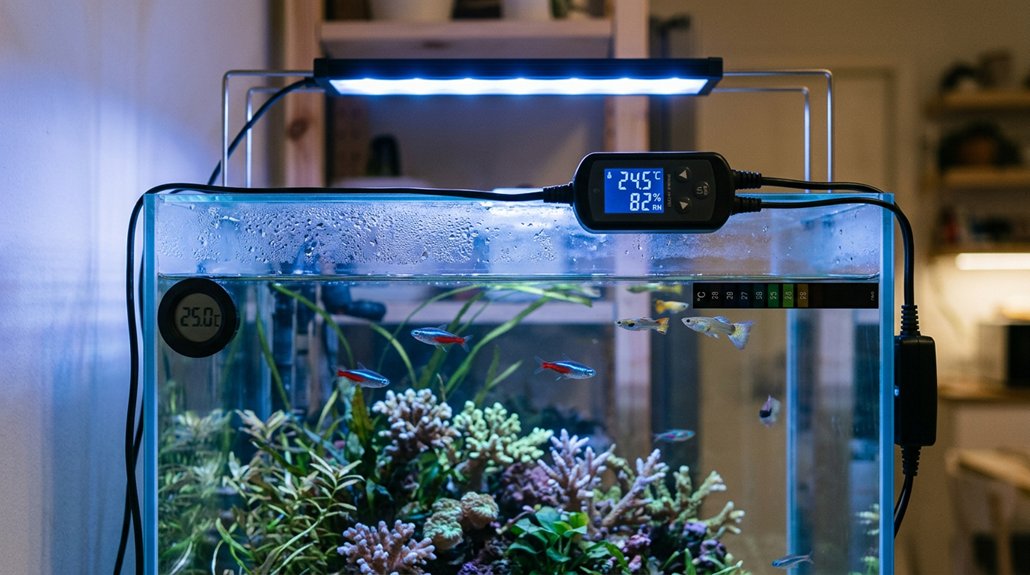
Most tropical community fish do best between 24–27°C (75–80°F), so set your heater within that range for species such as many tetras, guppies, and platies. You’ll usually keep goldfish cooler, near 15–24°C (60–75°F), often without a heater. Temperate species sit in the middle, about 18–23°C (64–73°F), so choose tankmates with overlapping preferences.
- Use the narrowest shared range when mixing species, such as 22–24°C (72–75°F).
- Make seasonal adjustments if your room temperature shifts.
- Reserve substrate heating for species that need bottom warmth, and verify settings with a thermometer.
Breeding or sensitive fish may need tighter control, often within ±1°C, so you’ll want species-specific research before setting heater or chiller targets.
Why Sudden Temperature Changes Stress Fish
Even when you keep fish within an appropriate target range, abrupt shifts can still cause significant stress because they’re ectotherms, so body function tracks water temperature closely. Even a few degrees changed within hours can trigger thermal shock, forcing rapid metabolic adjustment before your fish can acclimate. A sudden drop often leads to immune suppression, which can let Ich and other opportunistic infections take hold. A spike raises oxygen demand while warm water holds less dissolved oxygen, so you create immediate oxygen stress. Extreme swings can also cause bacterial die off in the filter, especially above 90°F/32°C, which may destabilize ammonia and nitrite levels. Frequent daily fluctuations are worse than slow seasonal change because your fish can’t physiologically adapt.
How Tank Location Changes Water Temperature
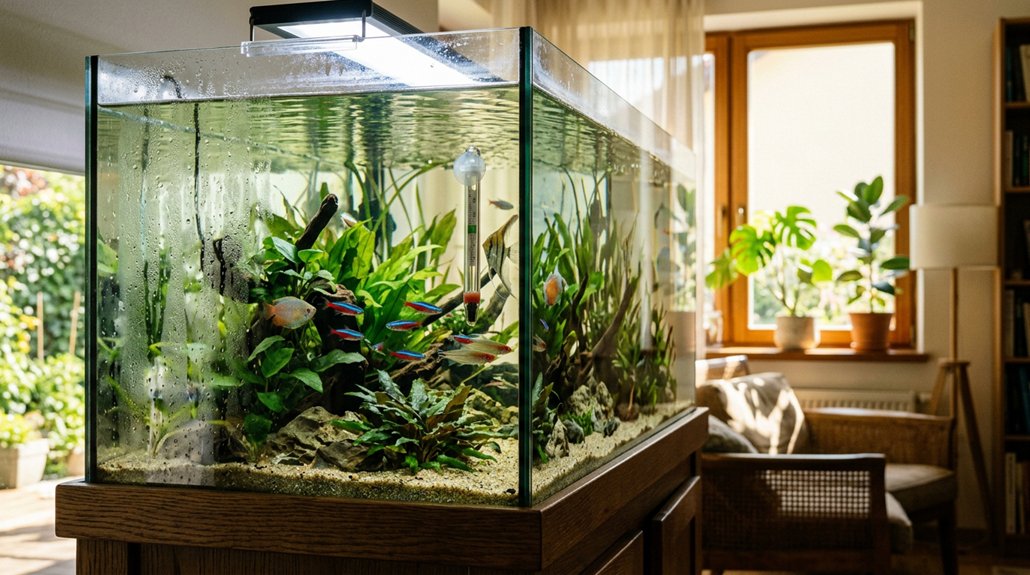
You should place your aquarium away from sunny windows, because direct light can raise water temperature during the day and increase daily swings. Keep it clear of doors, drafty openings, HVAC vents, radiators, fireplaces, and other heat sources, since these can cause abrupt spikes or drops as conditions cycle. For the most stable temperature, choose an interior wall or central area with consistent ambient conditions and check readings across the day.
Window And Draft Risks
Near a sunny window, aquarium water can warm several degrees during the day and then cool again at night, creating swings that stress fish and should be avoided. You should also limit sunlight exposure, because it intensifies daily warming and destabilizes temperature. Door drafts matter too: placing your tank beside exterior doors or drafty windows can expose it to sudden cold air when opened, causing rapid drops that may trigger disease.
- Keep small tanks, especially under 20-30 gallons, in a stable, draft-free location.
- Measure temperature over a full day after lights turn on to detect swings.
- If you see changes of more than a few degrees, relocate the aquarium immediately.
Avoid HVAC vents, radiators, and fireplaces as well; repeated cycling can create persistent fluctuations and undermine fish health.
Heat Sources Nearby
Heat sources nearby can change aquarium temperature as much as window exposure, and the effect is often more direct. If you place the tank beside HVAC vents, radiators, or fireplaces, you’ll get repeated heating and cooling cycles that can push water outside the stable 24–27°C range tropical fish need. Drafts from exterior doors or windows can trigger sudden shifts too, especially in small or shallow aquaria with low thermal mass. For best results, choose a stable, draft-free location away from direct sunlight and heat sources, balancing placement aesthetics with furniture protection. Larger tanks resist rapid change better than small ones, but they still need monitoring. If you can’t relocate the aquarium, check temperatures throughout the day and use a reliable thermometer, stronger heater or chiller, or cooler LED lighting to keep conditions steady.
How Aquarium Lighting Raises Heat
Aquarium lighting can raise water temperature noticeably over the course of a day, especially with incandescent or metal halide/T5 fixtures, which convert more energy into heat than modern LEDs. You’ll see the largest rise in small tanks, where limited water volume warms faster.
Aquarium lights can warm water throughout the day, especially in small tanks with less water to absorb the heat.
- Measure temperature before and several hours after lights turn on.
- Prefer LEDs when heat gain is a concern; they usually add little or no measurable warmth.
- If the increase exceeds a few degrees, adjust light placement, shorten photoperiod, or improve ventilation methods.
Closed-top aquaria trap heat, so an open lid or edge-mounted fan can help by increasing evaporative cooling. Keep sustained warming minimal; higher temperatures raise metabolism and reduce dissolved oxygen, which can stress fish, plants, and beneficial bacteria.
How Water Changes and New Fish Cause Swings
Water changes can throw tank temperature off balance quickly, especially in small aquaria, so you should match replacement water to within about 1°F (0.5°C) of the tank and favor smaller, more frequent changes. Avoid replacing more than about 25% of a small tank at once, because larger shifts can stress fish and help trigger disease outbreaks such as Ich. When you add new fish, limit transit time and use bag insulation or an insulated cooler to prevent rapid cooling or warming. Acclimate them with slow acclimation, using drip mixing or gradual mixing until temperature and chemistry align. Measure tank temperature before, during, and after changes, and again after introduction, so you can detect destabilizing swings early and correct them quickly.
Heaters, Thermometers, and Cooling Solutions
Once temperature changes from water changes or new additions are under control, the next step is keeping the tank steady with proper equipment. You should verify temperature with a separate stick-on or digital thermometer and check it several times daily after setup. Size heaters to volume, roughly 1 W per liter, and use redundant heaters instead of one oversized unit. Set tropical tanks at 24–27°C, or match the narrowest range your stock needs; cool-water species often need 15–24°C.
- Confirm probe placement away from direct flow.
- Use LED lighting to limit heat.
- For cooling, add a fan, increase evaporation, or use a chiller.
During brief spikes, float sealed frozen bottles; for sustained control, use a properly sized aquarium chiller.
Frequently Asked Questions
Is 80 Degrees Too Hot for an Aquarium?
No, 80°F isn’t too hot for many tropical aquariums, but you’ll need tropical acclimation, strong aeration, and careful heater maintenance. If you keep cooler-water or sensitive species, it can be stressful and too warm.
What Kills Fish in a Fish Tank?
Fish usually die from poor water quality, low oxygen levels, ammonia or nitrite spikes, sudden temperature swings, disease, and incompatible tankmates. You’ll prevent most losses by monitoring conditions, acclimating fish carefully, and avoiding overfeeding.
How Cold Is Too Cold for a Fish Tank?
Too cold is usually below 15°C (59°F) for tropical fish; below 10°C (50°F) can be lethal. You’ll see cold stress, and heater failure can trigger sudden drops that worsen disease and filtration.
What Fish Can Live in 78 Degree Water?
You can keep guppies, platies, mollies, swordtails, tetras, barbs, angelfish, and gouramis at 78°F; it’s not “just warm” if you match tropical species, stable oxygen levels, and species-specific needs.
Conclusion
To keep your aquarium stable, you should target the temperature your fish species require, not a generic setting. Tropical fish usually do best around 75–80°F, while many cold-water species prefer cooler water. Even a 2–3°F swing can stress fish, reduce feeding, and weaken immunity. Think of temperature control like blood pressure monitoring: small deviations matter. Use a reliable heater, thermometer, and consistent maintenance so you’re not forcing your fish to adapt.