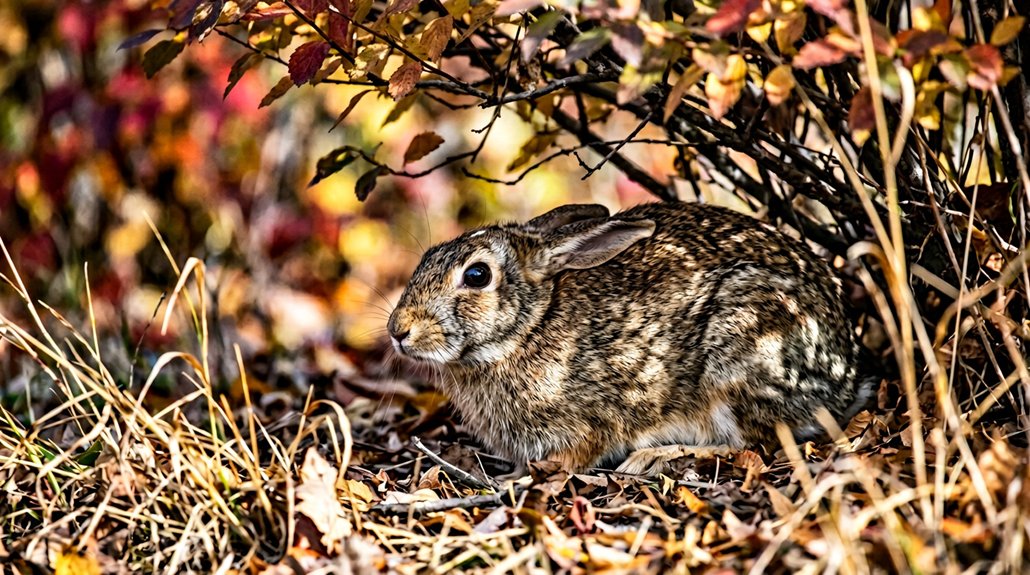
Your rabbit may hide due to instinctual prey behaviors, environmental changes, or potential health issues. Rabbits often retreat to guarantee safety, but prolonged hiding can indicate dental problems or gastrointestinal discomfort. Stress from new pets or loud noises can also lead to more hiding. Make sure your rabbit has social interaction to reduce insecurity. Be concerned if hiding persists, alongside symptoms like lethargy or appetite loss. Understanding these behaviors can help you better support your rabbit.
Key Takeaways
- Rabbits often hide due to instinctual prey behaviors, seeking protection in tight spaces during vulnerable times.
- Prolonged hiding can signal underlying health issues, including dental problems or gastrointestinal stasis.
- Environmental stressors like new pets, loud noises, or temperature changes can increase hiding behavior.
- Rabbits may hide more frequently due to loneliness or lack of adequate social interaction.
- Consult a veterinarian if hiding persists over a day with lack of appetite or other concerning symptoms.
Identifying Typical Hiding Behaviors in Rabbits
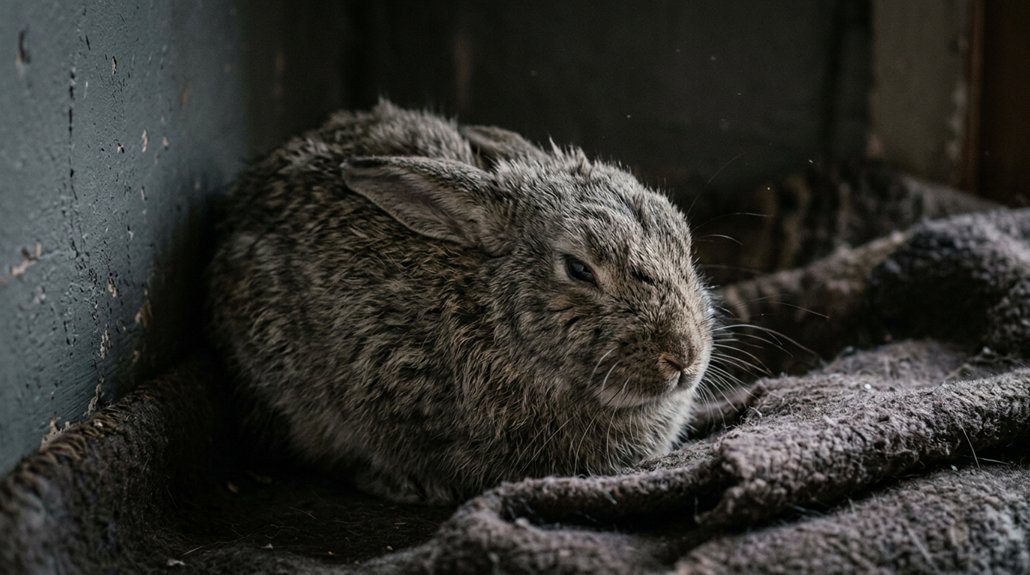
Rabbits’ instinctual nature as prey animals profoundly influences their behavior, particularly their need to hide. About 80% of their actions revolve around safety, signifying strong hiding instincts. You’ll often notice your rabbit seeking refuge in tight spaces or corners, especially during early morning and late afternoon—times that align with their natural activity peaks. These moments of retreat are typical and reflect their innate drive for protection.
Acknowledging rabbit personality is essential in understanding hiding behaviors. While some rabbits may exhibit social tendencies, others naturally prefer solitude, retreating more frequently. New environments can amplify a rabbit’s need to hide, requiring your patience as they acclimate. Providing ample hiding spots reduces stress, ensuring your rabbit feels secure and comfortable in their habitat.
Health Issues That Cause Rabbits to Hide
While observing typical hiding behaviors can be part of a rabbit’s innate instincts, these actions might sometimes signal underlying health issues that require your attention. Rabbits often retreat due to pain from dental issues, such as overgrown teeth, which can greatly impact their eating habits and lead to serious complications. Gastrointestinal stasis is another condition causing discomfort and hiding, marked by halting digestion and painful bloating. Watch for signs like prolonged hiding over a day, lack of appetite, and decreased activity—these indicate a potential health problem. Additionally, rabbits may exhibit teeth grinding or changes in droppings, hinting at serious conditions. Consulting a veterinarian promptly is essential for diagnosis and treatment, preventing further escalation of these health issues.
Environmental Factors Influencing Rabbit Hiding
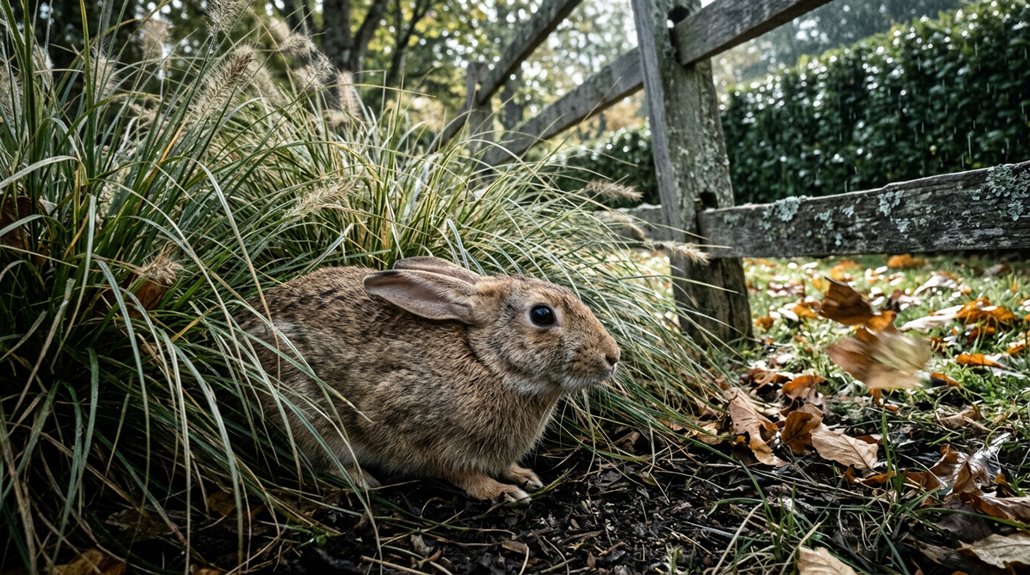
Although often overlooked, environmental factors play an essential role in influencing your rabbit’s propensity to hide. Rabbits are incredibly sensitive to environmental stressors like new pets, loud noises, and rearranged furniture, frequently resulting in stress-induced hiding. Equally significant is the impact of temperature regulation. Rabbits seek refuge when faced with temperatures exceeding 70°F (21°C) or in particularly cold settings. Providing diverse hiding spaces is vital to mitigate stress and support their well-being.
| Environmental Stressors | Temperature Regulation |
|---|---|
| New pets | Excessive heat (>70°F) |
| Loud noises | Cold conditions |
| Rearranged furniture | Insufficient hiding spaces |
| Unfamiliar people | Routine disruptions |
These factors underscore the necessity of a consistent and familiar habitat to guarantee your rabbit’s emotional comfort and security.
How Social Interaction Affects Rabbit Behavior
As social creatures, rabbits thrive on interaction and companionship, making socialization a pivotal factor in influencing their behavior. When they lack adequate social bonding, you might notice them hiding more frequently as they experience loneliness or insecurity. Enhancing socialization involves patience and understanding. Employing effective interaction techniques, like consistent positive reinforcement, helps build trust. Sitting quietly near their hiding spots encourages gradual exposure to human presence, boosting their confidence over time.
Facilitating social bonds can also be achieved through engaging activities that appeal to your rabbit. Encouraging them with play or treats can coax them out, reinforcing a sense of security and trust. Additionally, providing multiple hiding spots gives them control over social engagement, further supporting their emotional well-being.
When It’s Time to Call the Vet

If your rabbit has been hiding persistently for over a day and isn’t showing interest in eating or their favorite treats, it’s time to consult a veterinarian. This behavior can be a significant hiding trigger indicating serious health issues. Rabbits are naturally prey animals, and prolonged avoidance might mask distress signals such as pain. Look for other concerning symptoms like excessive lethargy or teeth grinding, which could signify gastrointestinal stasis—a life-threatening condition. When food refusal exceeds 6-8 hours, immediate veterinary care is vital. Also, watch for respiratory distress or abnormal daytime hiding patterns if your rabbit typically is active. Especially for rabbits over 10 years old, these signs may reveal underlying health problems requiring urgent professional assessment. Regular check-ups remain essential.
Frequently Asked Questions
Why Is My Rabbit Suddenly Hiding?
Your rabbit’s sudden hiding could indicate fearful behavior or an instinct to protect its territory. Consider if there’s been any changes in its environment or potential health issues; it’s essential to observe any accompanying symptoms for a full assessment.
What Is the 3-3-3 Rule for Bunnies?
The 3-3-3 rule is your rabbit’s custom compass: first, three days of cautious shadows; next, three weeks of tentative exploration; finally, three months of blossoming trust. Employ socialization strategies and environmental enrichment for their journey.
What Are End of Life Signs for Rabbits?
You’ll notice end of life symptoms in rabbits, such as significant weight loss, persistent lethargy, and decreased activity. Changes in rabbit behavior, like unusual grooming, eating, breathing, and social interactions, further indicate declining health in terminally ill rabbits.
Do Bunnies Hide When They’re Sick?
Yes, bunnies often hide when they’re sick. It’s a sick behavior that serves as a stress signal. If you’re noticing increased hiding along with other signs like loss of appetite, it’s essential to consult a veterinarian promptly.
Conclusion
Just as Sherlock Holmes would investigate the smallest details to solve a mystery, you must observe your rabbit’s behavior with a keen eye. Typical hiding might simply be your rabbit’s way of seeking comfort, but don’t overlook health issues or environmental stressors as possible culprits. Social interactions play a significant role too, influencing your rabbit’s demeanor. Should you notice uncharacteristic behavior persisting, it’s time to consult your vet, much like Watson providing Holmes with vital insights.