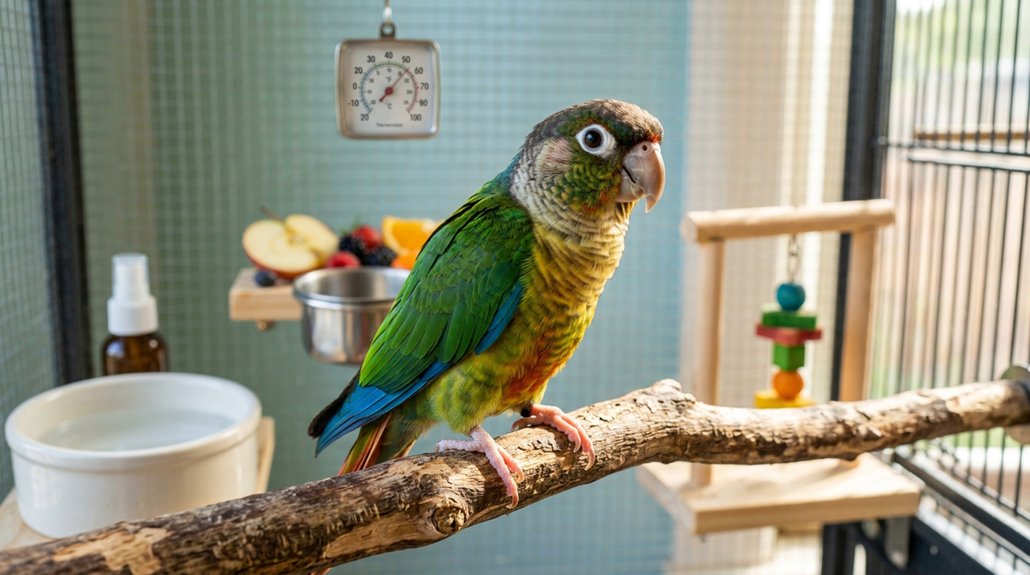
You keep your bird healthy year-round by maintaining a stable home, fresh water, and a balanced diet, while watching for early warning signs. Keep indoor temperatures near 68–75°F, avoid drafts and direct sun, and use fans or misters only safely. Feed mostly pellets with daily vegetables, limit seeds, and remove spoiled food. Clean the cage, rotate toys, schedule vet checks, and monitor droppings, appetite, and behavior so you can catch problems before they escalate.
Key Takeaways
- Keep your bird’s environment steady: 68–75°F, away from drafts, direct sun, and overheating or chilling.
- Feed a balanced diet of pellets, fresh vegetables, and limited seeds, while avoiding toxic foods like avocado and chocolate.
- Provide fresh water daily, regular bathing or misting, and clean dishes, cages, and accessories routinely.
- Use perches, toys, foraging, and social interaction to prevent boredom and support foot and mental health.
- Monitor weight, droppings, appetite, and breathing, and schedule regular avian veterinary checkups.
Keep Your Bird Cool in Summer
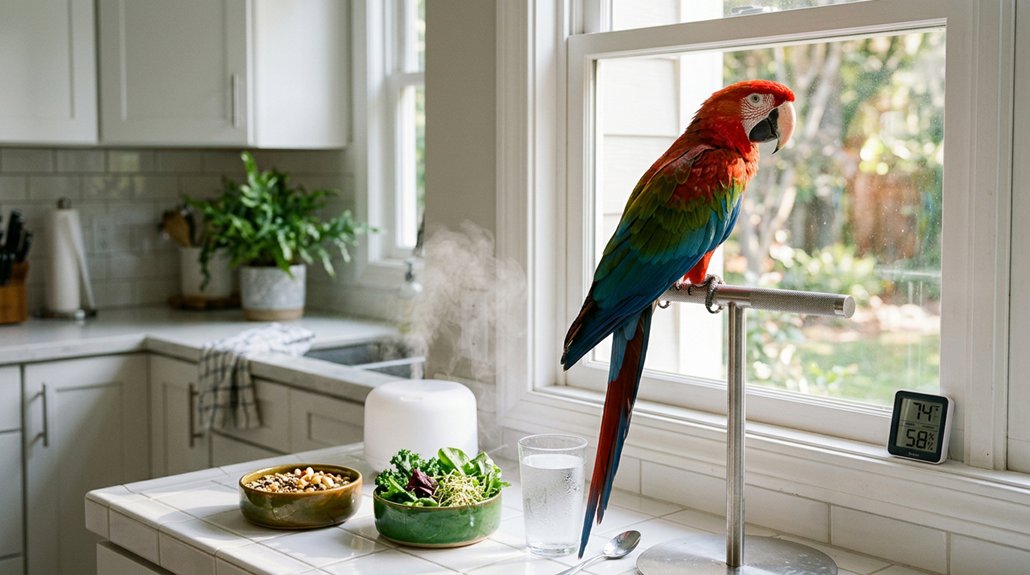
Summer heat can creep up on birds fast, so you should keep indoor temperatures below about 80°F (27°C), with 68–75°F (20–24°C ideal for most companion birds. You’ll reduce heat stress by using shade installations outdoors and moving birds to shaded, insect-free areas during heatwaves. Never leave your bird in a vehicle or direct sun, where temperatures can spike rapidly. Provide indirect air circulation with standing fans or evaporative cooling; don’t aim fans directly at cages, and keep ceiling fans off when birds may fly nearby. Cooling perches can help lower contact temperature. Watch closely for open-mouth panting, wings held away, disorientation, or inability to perch. These are medical red flags. If severe, you should seek veterinary care immediately.
Keep Your Bird Hydrated Every Day
Keep fresh, filtered, chlorine-free water available every day, and replace it several times daily in hot weather because cups can warm quickly and become contaminated by bathing or debris. Use a freshwater rotation so you’re not relying on a single bowl, and confirm each source is familiar if your bird prefers dishes over bottles. In warm weather, drinking usually increases, so monitor intake closely. Refresh shallow birdbaths daily, and use misting or water toys as adjuncts during heat waves; never leave your bird in direct sun or an overheated vehicle. If dehydration risk is high, your veterinarian may recommend electrolyte supplements. Watch for reduced droppings, lethargy, fluffed feathers, or panting, and seek immediate veterinary care if any appear.
Feed Fresh Foods That Help Birds Thrive
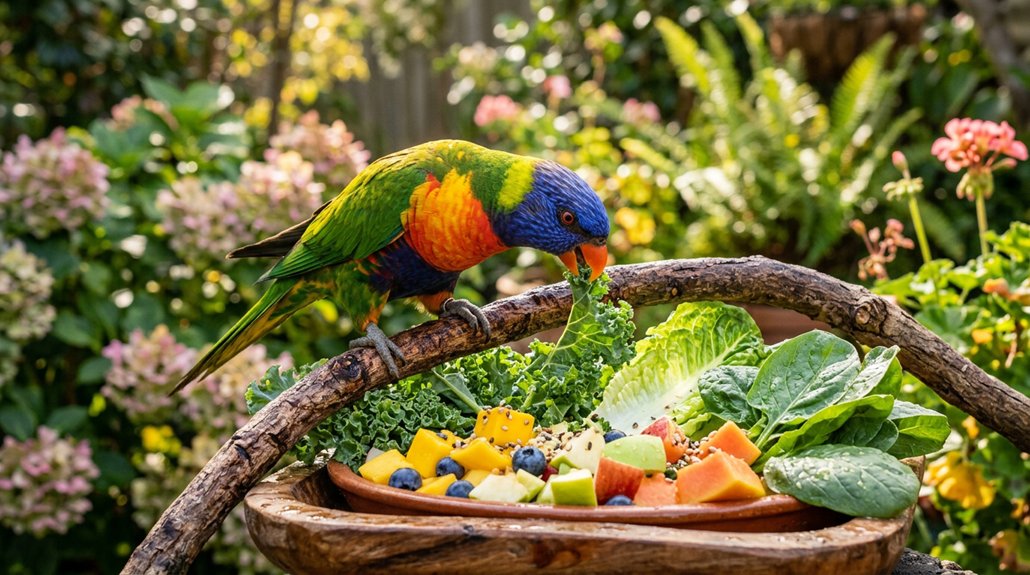
Build your bird’s diet around commercially formulated pellets, which should make up about 60–70% of intake for many species, then add fresh vegetables and fruits daily for added vitamins, hydration, and enrichment. You should offer washed, appropriately sized pieces of leafy greens, bell peppers, carrots, blueberries, and seasonal fruits. Introduce new items slowly, in small amounts, and monitor acceptance and weight changes. Remove uneaten produce after a few hours to limit bacterial growth. Avoid avocado, chocolate, caffeine, alcohol, and fruit pits or seeds.
- Dark leafy greens supply folate and calcium.
- Bright vegetables add carotenoids and moisture.
- Fortified seeds or nuts should stay under 10% of intake.
Keep clean, filtered water available daily; wet foods also contribute hydration, especially in warm weather.
Make Your Bird’s Home Escape-Proof
Escape-proofing your bird’s home starts with controlling every possible exit: make sure doors and windows have intact, properly installed screens or use closed screen doors, and keep your bird in rooms without direct outdoor access. You should inspect window screens regularly and add door alarms where needed. Supervise your bird whenever doors open, and tell everyone in the home and visitors to do the same; one unsecured door can lead to escape. If your bird tends to bolt, consider professional wing trimming, but don’t rely on it alone. When moving through exit-prone areas, keep your bird in its cage or a secure travel carrier. Avoid free flight near open windows or ceiling fans, and never leave your bird unattended in a vehicle.
Use Fans and Misters Safely
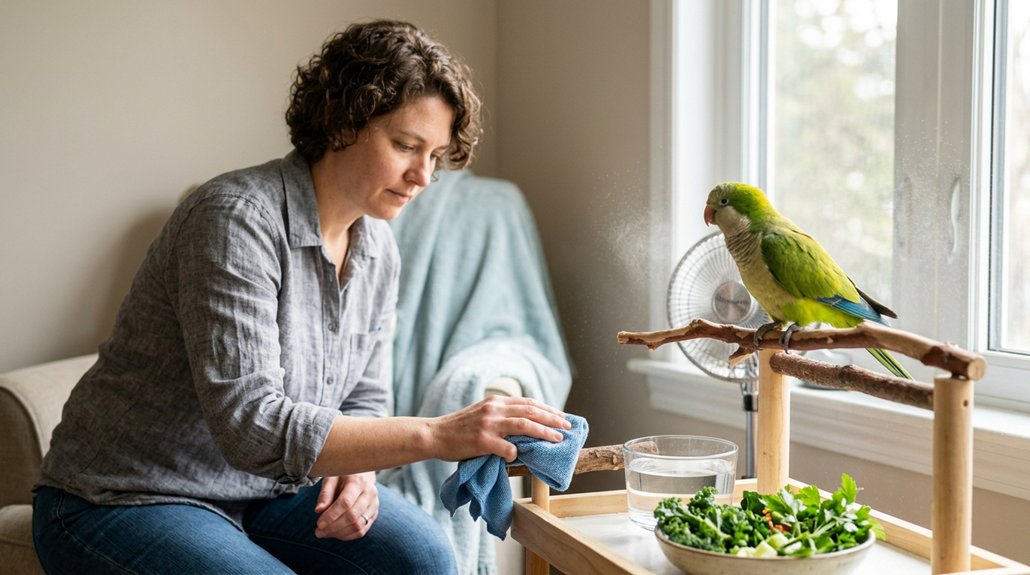
You should place fans so they circulate room air, not blow directly on your bird, and you shouldn’t run ceiling fans when your bird is out of its cage. Keep cages out of direct airflow from vents or fans, and watch for puffing, shivering, or reluctance to perch, which can signal chilling. Use a water-based mister or spray bottle only for gentle cooling or bathing when the room is warm enough for your bird to dry completely, and never use aerosol cooling products or insecticides nearby.
Safe Fan Placement
Safe fan placement helps keep birds cool without exposing them to direct drafts, chilled air, or respiratory irritants. You should manage fan placement so airflow direction moves across the room, not straight into the cage. Never aim an electric fan at your bird, and keep cages out of windows, vents, and other direct air currents.
- Set portable fans to circulate room air away from the cage opening.
- Disable ceiling fans whenever your bird is out; even clipped wings can reach blades.
- Keep cookware fumes, aerosol sprays, and harsh cleaners away, because fans can spread them quickly.
This approach reduces stress, prevents chilling, and limits respiratory irritation.
Gentle Misting Tips
Lightly mist your bird with lukewarm water from about 12 to 18 inches away, or use a fine mist setting so droplets settle gently on the feathers without chilling the skin. This supports feather maintenance and helps preserve humidity balance during grooming. Only mist when the room is at least 68°F, and make certain your bird can dry completely within an hour. Don’t mist if the room exceeds 80°F or if a draft is present. Never aim a fan directly at your bird after misting; use indirect air circulation only. Clean and refill misting devices daily, and never add essential oils, insecticides, or scented products. Watch for fluffed posture, wide-eyed alertness, panting, or other respiratory distress, and stop misting and consult an avian vet if signs appear.
Avoid Travel and Vehicle Heat Risks
When travel can’t be avoided in warm weather, keep in mind that a closed vehicle can become dangerous within minutes: interior temperatures may climb from 80°F to 109°F in about 20 minutes, creating a rapid risk of heatstroke. You shouldn’t leave your bird unattended, even briefly. Use continuous air conditioning, monitor behavior, and maintain vehicle ventilation with a secure carrier kept out of direct sunlight. Aim to keep ambient temperature below 80°F. Prefer staying home or moving your bird indoors to a cooler, insect-reduced area instead of summer trips.
- Secure carrier
- Continuous cooling
- Emergency planning: water, thermometer, avian veterinarian contact
If your bird pants, spreads its wings, or seems disoriented, treat it as urgent heat exhaustion.
Avoid Drafts, Outages, and Toxins
Even with travel avoided and temperatures controlled, your bird still needs protection from drafts, outages, and airborne toxins at home. Place the cage with careful window placement, away from exterior doors, vents, and heating or cooling intakes; keep indoor temperatures steady near 68–75°F. During cold spells, use a thermostat-controlled heat source, ceramic emitter, or heated perch, and don’t depend only on cage covers, since your bird must escape excess heat. For outages, keep battery thermometers, extra water, safe heat packs, and a plan for a protected, temperature-stable room. Eliminate airborne toxins: don’t use insecticides, non-stick cookware, aerosols, scented oils, or indoor smoking. If you see lethargy, panting, disorientation, inability to perch, or persistent ruffling, seek avian veterinary care immediately.
Build Healthy Bird Care Habits Year-Round
Year-round bird health depends on consistent daily care: keep indoor temperatures stable around 65–75°F for most species, avoid sudden increases above about 80°F, and use a thermostat-controlled heat source if needed so your bird isn’t exposed to drafts, direct sun, or rapid changes. Build a fixed schedule for routine checks, feeding, hydration, and cleaning.
- Feed pellets at 60–70% of intake, add fresh vegetables daily, and keep fruit treats under 10%.
- Refresh chlorine-free water at least once daily; in warm weather, check it several times and bathe or mist as needed.
- Provide enrichment rituals: rotate toys, vary perches, and allow supervised out-of-cage exercise.
Watch for breathing changes, puffed feathers, abnormal droppings, reduced appetite, or lethargy, and schedule regular veterinary exams.
Frequently Asked Questions
What Is the 3 3 3 Rule for Birds?
The 3-3-3 rule means your bird gets 3 days to decompress, 3 weeks to habituate, and 3 months to trust you. You’ll track behavioral milestones and make environmental adjustments as needed, clinically and patiently.
How Can I Help Birds Survive Winter?
You can help birds survive winter by providing shelter from drafts, keeping temperatures stable, and offering nutrient rich food. Use safe supplemental heat, maintain humidity, and let them move away from warmth if they’re uncomfortable.
Is It Okay to Feed Birds All Year Round?
Yes, you can feed birds all year round, if you keep seasonal diets balanced, vary fresh foods carefully, and maintain feeder hygiene. You shouldn’t rely on seeds alone; you’ll need species-appropriate, veterinarian-guided nutrition.
What Is the 60 40 Rule for Birds?
You use the 60/40 rule by feeding your bird 60–70% nutritionally complete pellets and 30–40% fresh vegetables, fruit, and limited treats, adjusting for molting patterns, hydration needs, species, age, and health under veterinary guidance.
Conclusion
If you think your bird can “tough out” seasonal changes, the evidence says otherwise. Birds regulate heat poorly, dehydrate quickly, and can decline fast when exposed to drafts, toxins, or stress. That’s why year-round vigilance matters. Keep temperatures stable, water fresh, food varied, and the home secure. When you make these habits routine, you’re not being cautious—you’re preventing predictable, avoidable illness and protecting your bird’s health every day.