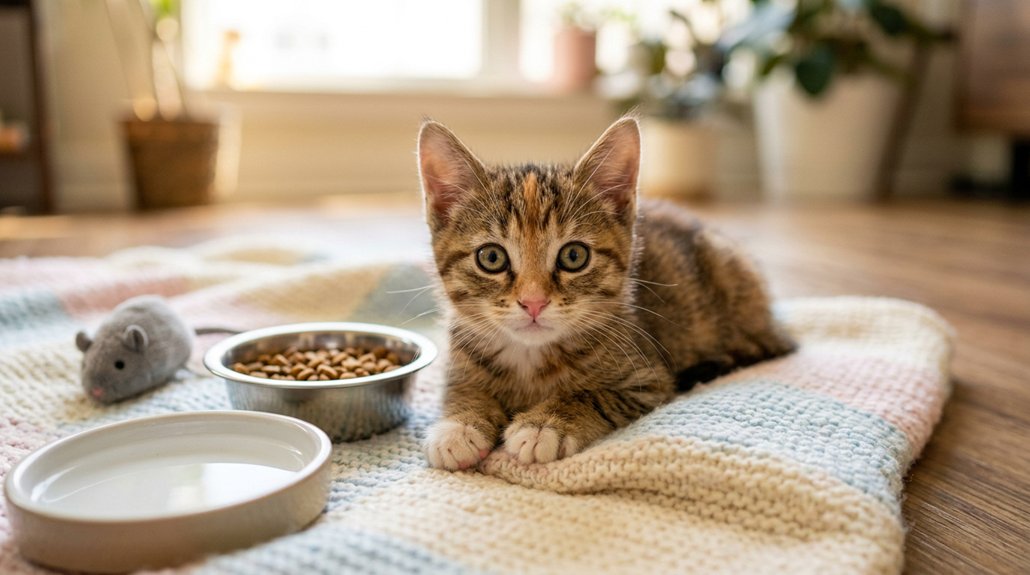
To keep your kitten healthy in the initial months, guarantee a hazard-free home environment with essential supplies like feeding bowls and cozy bedding. Implement a balanced diet, shifting from milk-replacer to protein-rich solid food, and maintain scheduled feedings. Prioritize veterinary visits for vaccinations and parasite prevention, monitor their weight, and conduct regular grooming. Encourage social interaction and recognize behavioral changes. Immediate attention to signs of stress or illness is vital for well-being. Continue to uncover further insights.
Key Takeaways
- Establish a safe, hazard-free home environment to protect the kitten from potential dangers and accidents.
- Ensure a balanced diet with timely introduction of solid food, and maintain constant access to fresh water for hydration.
- Schedule early veterinary visits for vaccinations and preventive parasite treatments to safeguard against common diseases.
- Monitor growth and behavior, recognizing signs of stress or health issues like weight fluctuations and unusual vocalizations.
- Conduct regular grooming checks for eyes, ears, and teeth, seeking veterinary help for concerning symptoms or unexpected changes.
Prepare Your Home for a New Kitten
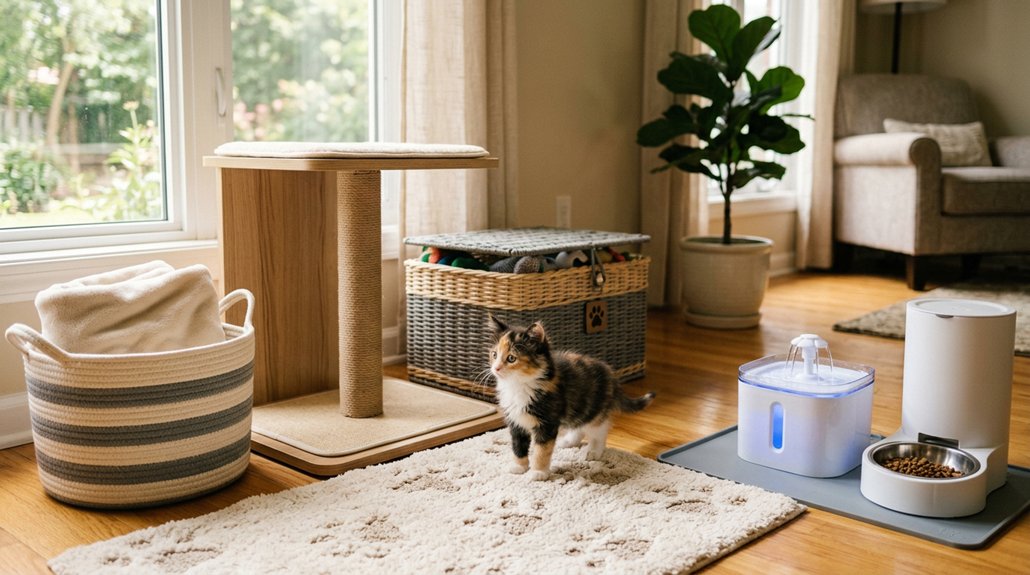
When preparing your home for a new kitten, it’s important to establish a secure and hazard-free environment. Begin by removing potential hazards: small objects, exposed wires, toxic plants, and unsecured trash cans. This enhances home safety and prevents access to harmful items. Stock up on kitten essentials such as feeding bowls, fine sandy non-fragrance litter, a low-sided litter box, and cozy bedding. Set up a designated area for play, rest, and hiding, offering blankets and small boxes to fulfill instinctual needs. Introduce varied toys and scratching posts to enrich their environment. Use a secure carrier for transport, ensuring the initial meeting occurs in a quiet room. Gradually expand their access, fostering a comfortable acclimation and promoting wellbeing.
Feed Your Kitten Properly
Feeding your kitten properly is essential for supporting their rapid growth and development. Begin with mother’s milk or a commercial milk-replacer formula, feeding every 2-4 hours until around 4 weeks old. This approach guarantees they receive adequate kitten nutrition early on. Between 3-5 weeks, you should introduce a shallow dish of milk-replacer and gradually shift to a moist diet as they begin weaning. By 5-8 weeks, establish a feeding schedule of protein-rich solid food offered 3-4 times daily. Target a daily weight gain of ½ ounce (14 grams) to validate dietary adequacy. Monitor eating habits carefully, adjusting portions based on growth and energy demands. Always provide constant access to fresh, clean water to maintain ideal hydration alongside dietary changes.
Prioritize Kitten Health Care
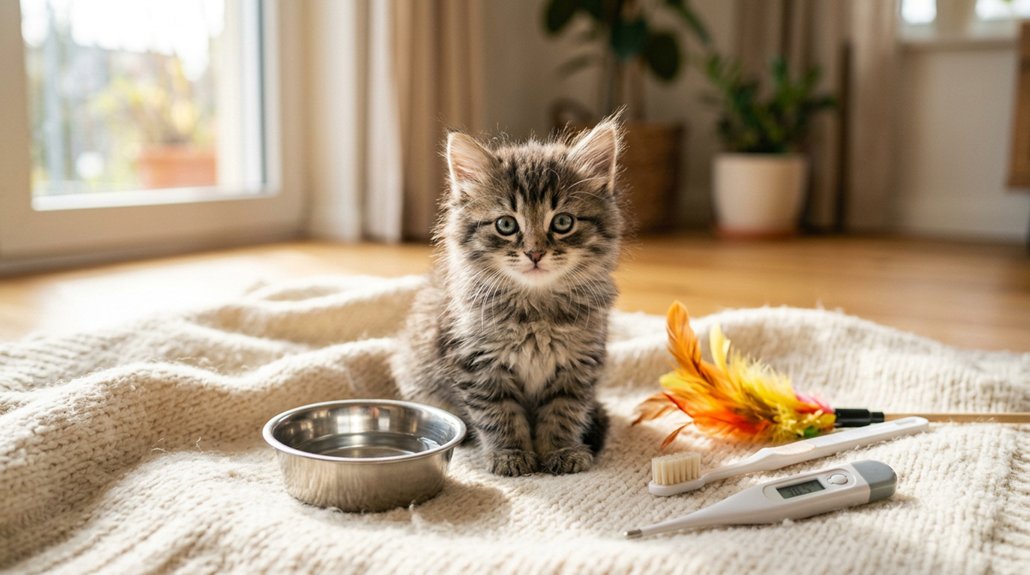
To guarantee your kitten’s health care is prioritized, it’s imperative to schedule veterinary visits early, starting between 6 and 8 weeks of age. These visits are essential for vet vaccinations, focusing on core vaccines such as FVRCP and Rabies, which shield against common feline diseases. Monitoring your kitten’s weight gain is equally important, with an ideal target of ½ ounce a day. This safeguards proper growth and alerts you to potential health issues. Parasite prevention is critical too; initiate treatments for fleas, ticks, and heartworm as per veterinary guidance to prevent infestations. Additionally, implement thorough grooming routines, including ear, eye, and dental checks, to maintain your kitten’s health, and shift to a nutritionally balanced diet suitable for growing kittens.
Socialize and Monitor Development
To support ideal development in kittens, it’s critical to integrate daily playtime to enhance both social competencies and physical condition. Monitor weight consistently, ensuring a healthy growth trajectory of approximately ½ ounce (14 grams) per day to detect any deviations early. Facilitate environmental exploration by introducing diverse surroundings and stimuli, encouraging adaptive behaviors essential for robust socialization.
Encourage Daily Playtime
While ensuring your kitten’s physical health is essential, fostering their social development through daily playtime is equally important. Establish playtime routines using interactive toys to enhance their muscular strength and support healthy weight gain. During the crucial 2 to 10-week socialization period, you’ll notice increased exploration and curiosity. It’s pivotal to offer supervised play sessions to nurture these instincts and bolster confidence. Employ various safe toys to engage their budding hunting instincts and facilitate learning. Frequent play intervals, ideally lasting 15-30 minutes multiple times daily, can effectively mitigate boredom-induced behavioral issues. Interacting with people and other pets fosters positive relationships, ensuring a well-rounded development. Here’s a brief guide:
| Aspect | Benefit | Recommended Action |
|---|---|---|
| Interactive Toys | Stimulates curiosity and hunting skills | Provide variety and supervise |
| Playtime Routine | Supports muscular and social development | Schedule multiple daily sessions |
| Social Interaction | Enhances confidence and social skills | Include people and other pets |
Track Weight Progress
Beyond playtime, another foundational aspect of kitten care involves meticulously tracking their weight progress to affirm healthy growth and development. Aiming for a daily gain of ½ ounce (14 grams) or 4 ounces (113 grams) weekly guarantees they meet essential weight milestones. Growth tracking, especially during the vital 2- to 10-week socialization period, assists in monitoring health and identifying any concerning deviations early.
Monitoring strategies include:
- Weekly weighing sessions: Conduct these consistently to gather reliable data.
- Detailed documentation: Keep precise records; invaluable for discerning trends or health issues.
- Pairing techniques: Pair kittens for warmth and social interaction benefits.
- Veterinary consultations: Early interventions with professionals mitigate potential developmental delays.
Ultimately, proactive monitoring promotes robust health and expedites addressing any health anomalies effectively.
Stimulate Environmental Exploration
When it comes to fostering robust development in kittens, stimulating their environmental exploration is paramount. Providing a variety of climbing structures and toys is essential for enhancing physical fitness, curious play, and sensory stimulation. These elements encourage safe exploration and bolster cognitive and motor skill development. Pair young kittens with same-age companions to enrich social skills during their critical socialization period, typically between 2-10 weeks of age. This strategy promotes healthy interactions and confidence building. Employ supervised playtime in diverse environments for thorough environmental enrichment. Monitor your kitten’s weight gain meticulously, targeting an increase of ½ ounce (14 grams) daily. Utilize positive reinforcement, such as treats and praise, to fortify behavioral learning, creating a nurturing, growth-conducive atmosphere.
Maintain Grooming and Hygiene
Routine checks should include:
Routine checks: vigilance for eye discharge, ear debris, and dental health is vital.
- Eyes for discharge or redness
- Ears for wax and debris accumulation
- Teeth to ward off periodontal disease
- Veterinary consultancy focusing on oral hygiene routinely
Identify Health Issues Early
To guarantee your kitten remains healthy, it’s essential to monitor its weight consistently, as fluctuations may indicate nutritional deficiencies or underlying medical conditions. Equally important is recognizing behavioral changes such as increased aggression, unexplained fearfulness, or withdrawal, which can often be indicative of stress or emerging health problems. Early identification and consultation with a veterinarian can prevent complications and promote your kitten’s ideal development.
Monitor Weight Consistently
Consistently monitoring a kitten’s weight is fundamental for early detection of health issues, as this metric is a reliable indicator of their overall well-being. Conduct regular weight assessments to guarantee your kitten reaches critical growth milestones. Aim for a daily weight gain of at least ½ ounce (14 grams) to promote healthy development. Weekly evaluations are essential, targeting a gain of 4 ounces (113 grams) as a red flag system for potential health concerns. Implement precise techniques:
- Weigh at the same time weekly, ideally pre-feeding, for accuracy.
- Record each weight change diligently to track trends.
- Recognize sudden weight drops; consult a vet if necessary.
- Respond promptly to inadequate weight gain, indicating possible hypoglycemia or other conditions.
These practices are integral to timely intervention and ideal care.
Recognize Behavioral Changes
How can you tell when a kitten might be unwell? Observing deviations in playful interactions is critical. A healthy kitten engages actively, while lethargy could signify potential health issues. Monitor for stress signals such as excessive vocalization, aggression, or hiding, which may indicate pain or anxiety. Changes in appetite or weight are also red flags; a decline in feeding or failure to gain the typical ½ ounce daily suggests possible illness. Evaluate litter box behaviors carefully; reduced urination, defecation, or symptoms like diarrhea suggest gastrointestinal concerns. Additionally, inspect for physical anomalies, including swelling or unusual discharge from eyes or nose, as well as grooming difficulties. These symptoms warrant immediate veterinary evaluation to guarantee early detection and treatment of potential health complications.
Frequently Asked Questions
What Is the 3-3-3 Rule for Kittens?
The 3-3-3 rule means kittens need three days to feel secure, three weeks to adapt to humans, three months to show true personality. Prioritize kitten vaccinations and offer socialization tips to guarantee their emotional and physical health.
What Is “I Love You” in Cat Language?
In feline body language, “I love you” might translate to a quivering tail or slow-blinking—if this cat stuff doesn’t amuse you, haven’t they got you trained! Cat vocalizations like purring accompany affectionate behaviors, too.
What Is the One Meat to Never Feed a Cat?
Never feed a cat pork due to kitten nutrition concerns and potential harmful foods. Pork can harbor parasites, excess fat, and preservatives, leading to serious health issues. Consult your vet before introducing any new food to your kitten.
What Is the Hardest Age for a Kitten?
You’re looking at the hardest age for a kitten being between 4-6 months. During this development stage, rapid growth and behavioral changes can trigger common illnesses. Consistent monitoring and guided socialization are crucial for ideal health.
Conclusion
In summary, ensuring your kitten thrives involves a holistic approach. By prepping your home, feeding nutritious meals, prioritizing healthcare, and engaging in regular socialization, you’re setting the stage for a healthy life. Vigilant grooming and hygiene, coupled with early identification of health issues, are essential. Remember, an ounce of prevention is worth a pound of cure; proactive care makes a world of difference. With dedication, you’ll nurture a robust, happy kitten ready to explore its world.