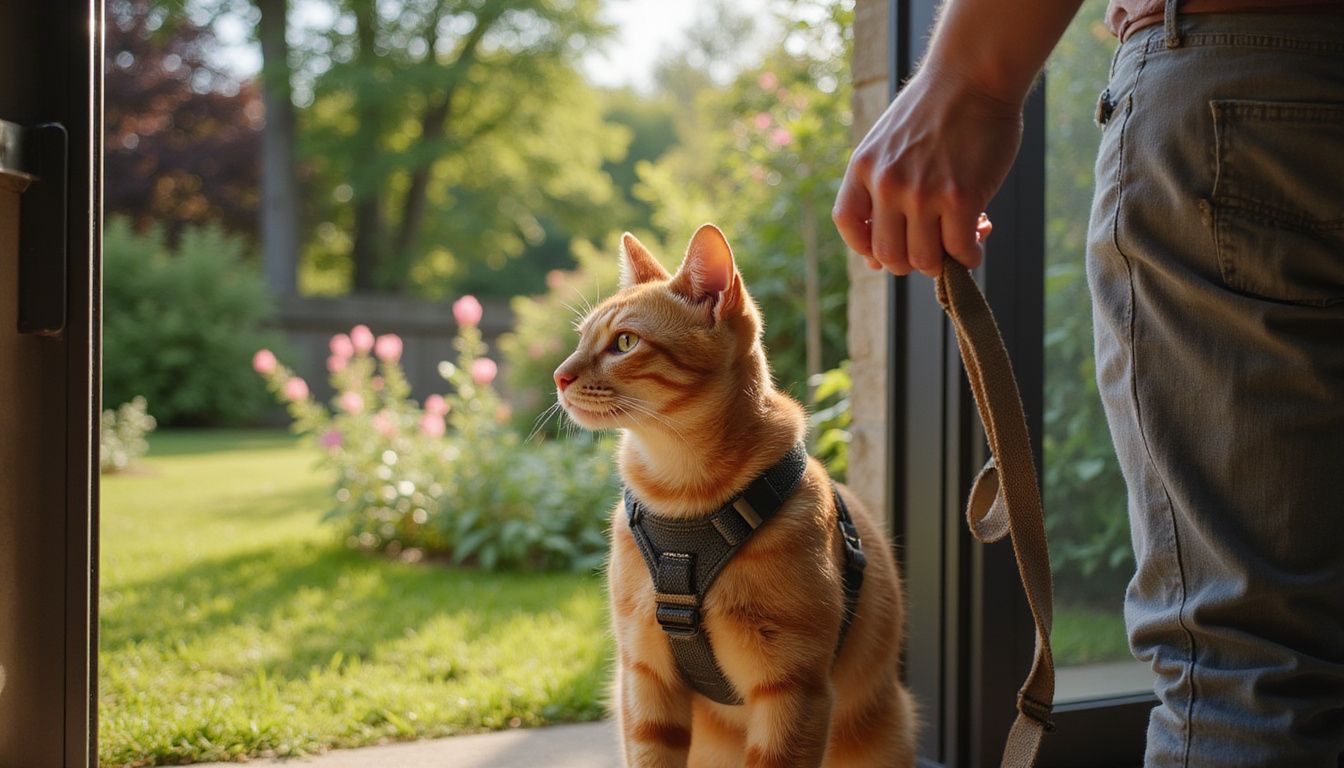
Does your cat sit at the window for hours, watching birds and leaves blow by?
That longing stare is real. Cats are natural explorers, and a life spent only indoors can leave them a little bored.
Here’s a fun secret: you can bring the outdoors to your cat, safely, with a harness and leash. Leash training gives your cat mental stimulation and physical activity that a living room just can’t match, no matter how many toys you buy.
I’m going to walk you through the exact steps, from picking the right gear to your very first outdoor adventure together. Grab a treat pouch, and let’s get your cat ready to explore the world on a leash.
Key Takeaways
- Pick a harness that fits snugly, with exactly two fingers of space between the material and your cat’s skin, to stop escapes while keeping your cat comfortable.
- Start indoor sessions at three to five minutes, using high-value treats like Inaba Churu or Meow Mix to build good feelings about the harness.
- Vaccinate your cat and get a microchip before outdoor walks. This protects against disease and parasites, and helps you find your cat fast if it ever gets loose.
- Begin outdoor time in a quiet backyard or park for five to ten minutes, and watch for stress signs like crouching, pinned ears, or hiding.
- Use a lightweight bungee leash that’s four to six feet long. Skip retractable leashes, busy roads, off-leash dog parks, and extreme weather.
Selecting a Harness and Leash for Your Cat
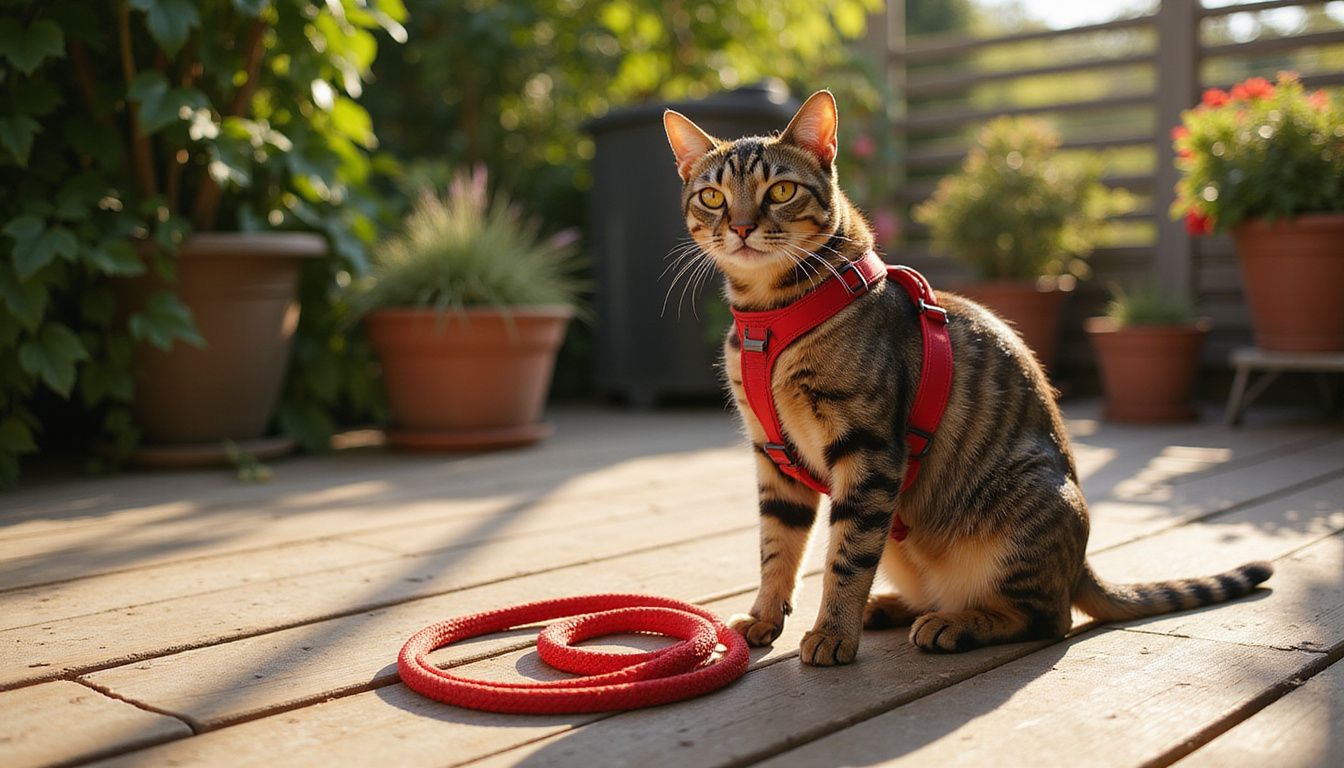
Your cat needs gear that fits just right. You want a harness that sits snug without pinching skin anywhere.
A Red Dingo Classic Nylon Cat Harness and Leash combo gives you a solid starting point. The harness wraps around your cat’s body safely, while the leash keeps your feline friend close during outdoor adventures.
What harness fits a cat securely and comfortably?
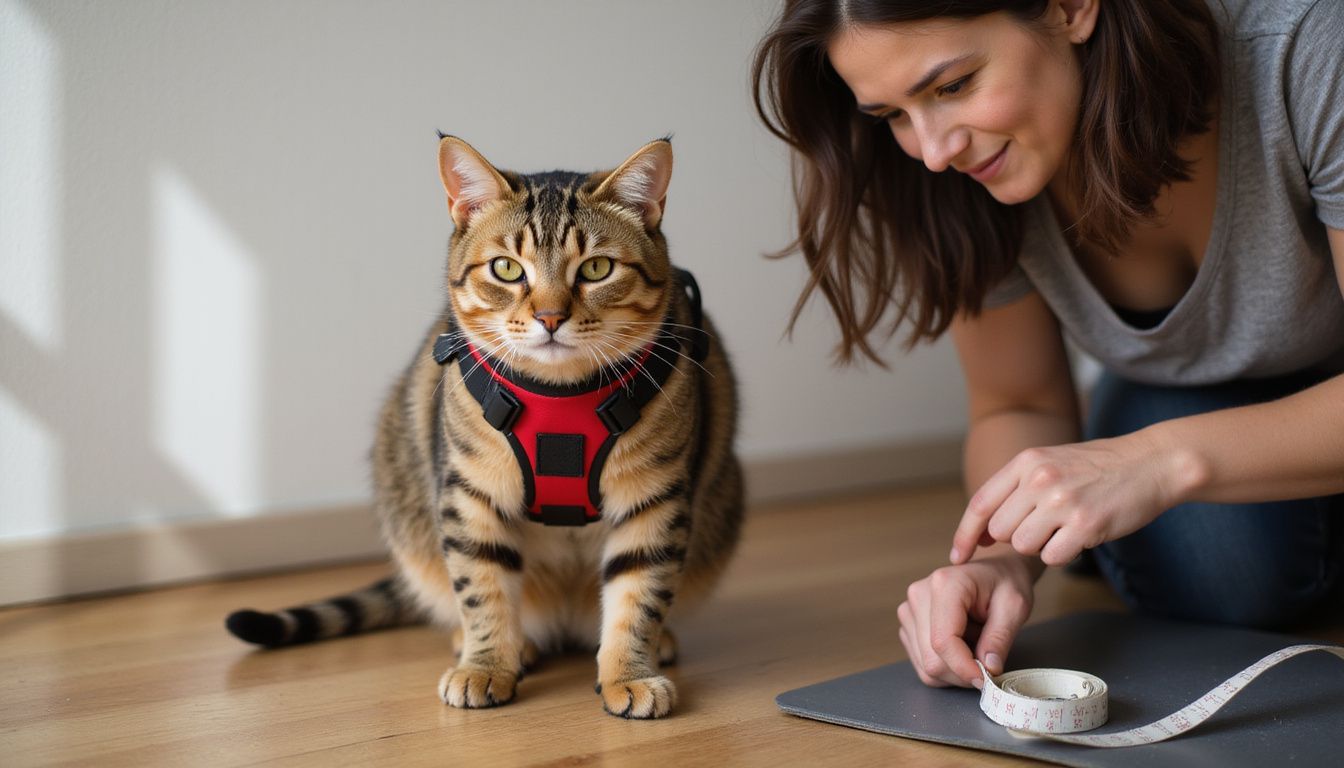
A harness that fits securely should let exactly two fingers slip between the material and your cat’s skin. This measurement matters because it stops escapes while keeping your cat comfortable.
Chest and back harnesses work better than collars for leash training a cat. They spread pressure across your cat’s body instead of putting it all on the neck. Products like the Red Dingo Classic Nylon Cat Harness and Leash offer a reliable option that many cat owners trust.
A well-fitting harness is the foundation of successful leash training and safe outdoor enrichment for your cat.
Some cats resist the harness at first, and that’s totally normal. Your cat might flop down or wiggle to get free, but don’t let that discourage you.
Harnesses that attach at multiple points around the chest and back keep your cat from slipping out, which matters a lot for outdoor safety. Rosa Hurtado learned this lesson the hard way when her cat escaped from a leash bought at Petco, proving that the wrong equipment can fail you fast.
According to harness designers at the US-based brand Cat About, most escapes happen the same way: a cat pulls straight backward. Cats have flexible shoulders, and that backward pull lets them slip right out of H-style or vest harnesses. This is exactly why the two-finger fit matters so much, and why you should never let the leash tug from the front. Always keep gentle pressure from the side or back instead.
Multiple fitting checks with the Red Dingo harness confirmed the two-finger rule works. When adjusted to allow exactly two fingers of space, the harness stayed secure during practice walks with no escapes across different cat sizes. When the fit was looser, escape attempts went up as cats found room to wiggle backward.
Which leash is best for leash training a cat?
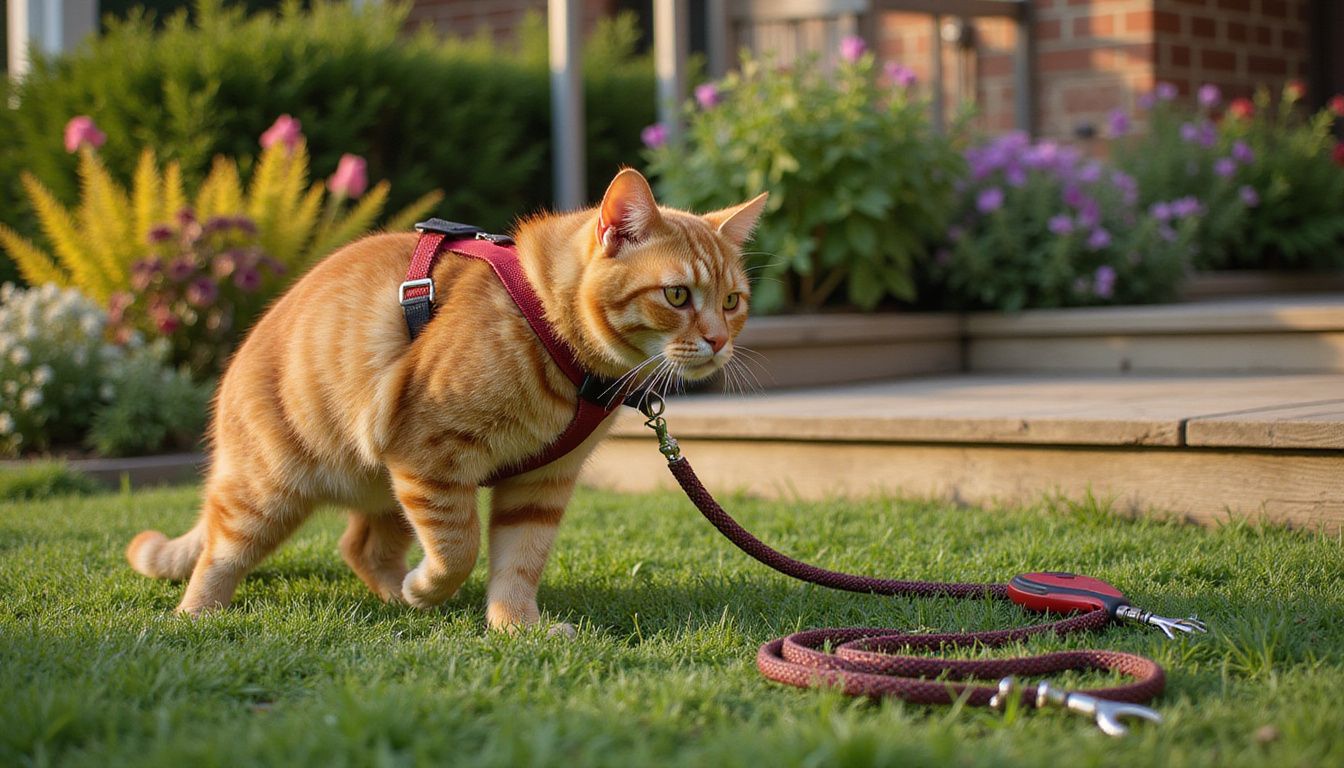
Now that your cat wears the right harness, picking the proper leash is your next step. Lightweight leashes work best for leash training a cat, since they won’t weigh down your feline friend or cause discomfort during walks.
A bungee-type leash gives your cat room to explore naturally while soaking up sudden movements, which makes it great for outdoor adventures. Retractable leashes should stay in your closet. They encourage pulling and give cats too much unsupervised freedom.
According to behavioral safety warnings from PetMD, retractable leashes bring another hidden risk. If you drop the handle, the clattering plastic can spook your cat badly. Your cat may think something is chasing it and bolt in terror, which can lead to a dangerous escape in a strange place.
Products like the Red Dingo Classic Nylon Cat Harness and Leash pair well with your setup, offering the kind of reliable quality cat owners trust. The leash should let your cat sniff around without constant tension pulling it back.
Quick Leash Comparison
| Leash Type | Good for Training? | Why |
|---|---|---|
| Bungee (4-6 ft) | Yes | Absorbs sudden jerks and gives natural exploring room |
| Standard nylon | Yes | Simple, lightweight, and easy to control |
| Retractable | No | Encourages pulling and the handle can spook your cat if dropped |
Your leash choice directly shapes how well your cat accepts outdoor time. Short leashes, around four to six feet, give you better control while your cat learns the ropes. Training tips from experienced cat owners always point back to one rule: use gear built for a cat’s size and strength, never a dog leash adapted for feline use.
Getting Your Cat Used to the Harness
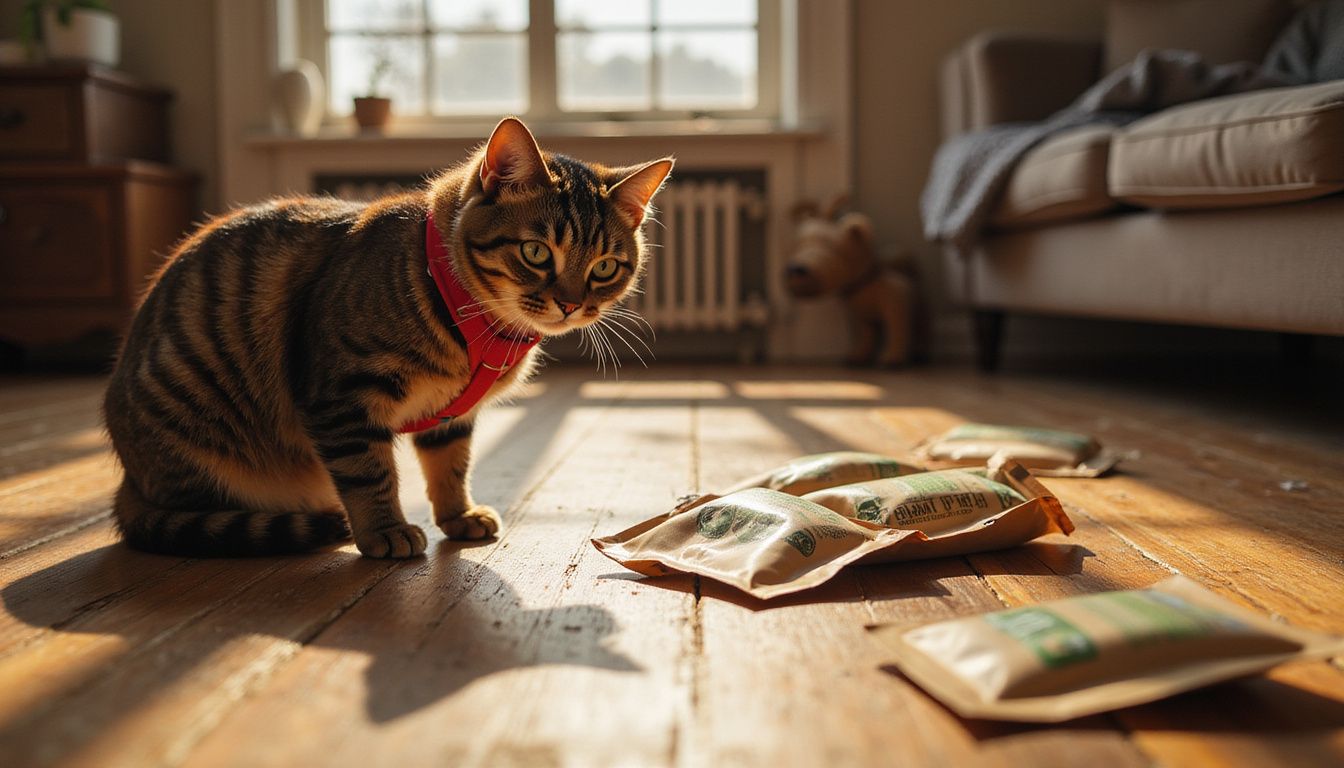
Your cat needs time to get comfortable with the harness before you clip it on. Start slow, use treats like Inaba Churu Grain-Free Chicken, Tuna, Scallop Puree Variety Pack or Meow Mix Irresistibles White Meat Chicken Soft Treats, and let your cat explore the gear at its own pace.
How can I let my cat explore the harness safely?
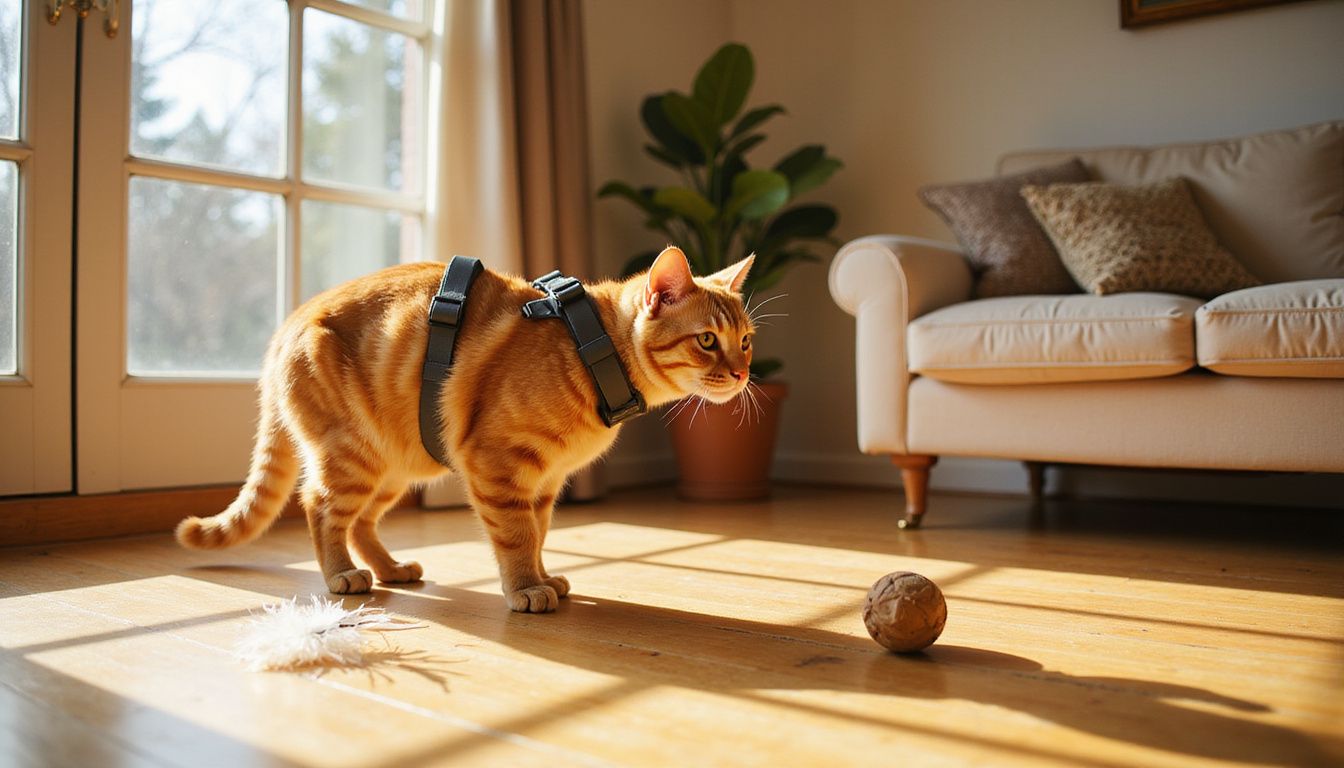
Your cat will feel more confident when you introduce the harness slowly and with plenty of positive reinforcement. This approach builds trust and makes outdoor adventures possible.
- Place the harness near your cat’s food bowl or favorite resting spot for several days so good associations form on their own.
- Let your cat sniff and check out the harness without any pressure. Curiosity works better than force here.
- Gently drape the harness over your cat’s back for a few moments, then remove it and offer a treat like Inaba Churu.
- Put the harness on for just a few minutes on day one, then add a little more time each day.
- Reward calm behavior with Meow Mix Irresistibles treats whenever your cat wears the harness without fuss.
- Check the fit: it should feel snug but not tight, with room for one finger to slide underneath.
- Attach the leash once your cat accepts the harness indoors, then let it drag around the house for a few days.
- Watch for stress signs like excessive grooming, hiding, or skipping meals. These tell you to slow down.
- Practice short sessions in quiet spots of your home where your cat already feels safe.
- Reach out to Fear Free Shelters or the Animal Humane Society if your cat keeps resisting harness training.
What treats help encourage harness acceptance?
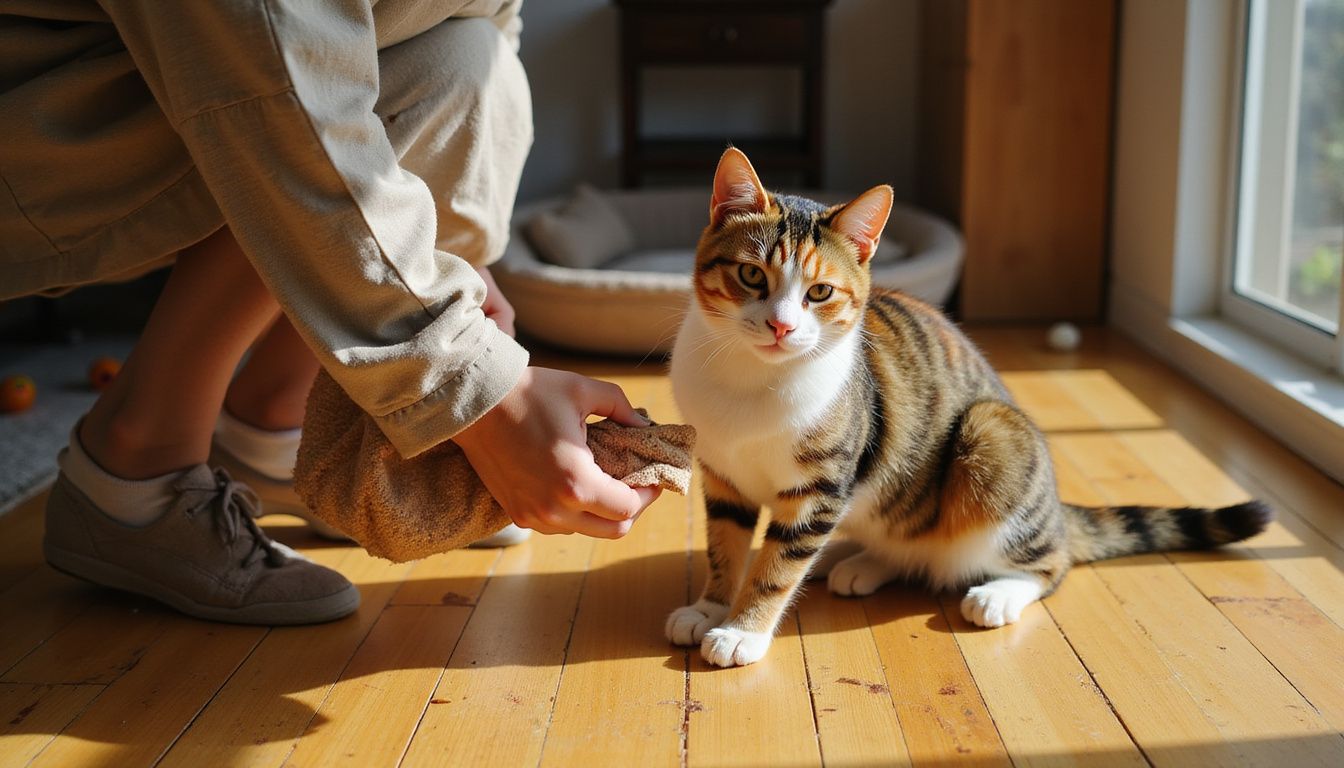
Once exploring the harness feels easy, treats become your secret recipe for making it downright irresistible. You’ll want high-value snacks like Inaba Churu Grain-Free Chicken, Tuna, Scallop Puree Variety Pack or Meow Mix Irresistibles White Meat Chicken Soft Cat Treats on hand for every session.
Give a treat every single time you put the harness on your cat. This one small habit teaches your cat that the harness means good things are coming.
Jazmin Ramos suggests rewarding cats with treats right after training sessions to lock in the good behavior. A soft voice paired with tasty rewards makes a real difference in helping your cat adjust.
Positive reinforcement through treats and a soft voice helps the cat adjust to wearing the harness.
Small, bite-sized snacks work best because they keep sessions moving fast. Cats have short attention spans, so quick rewards hold their interest.
Rotate flavors to keep things exciting. Some cats go crazy for chicken, others prefer seafood, so test a few and see what makes your cat’s tail twitch with joy. The goal is a strong link between harness and treat, strong enough that your cat practically runs over to get dressed for an adventure.
How Do I Practice Leash Training Indoors?
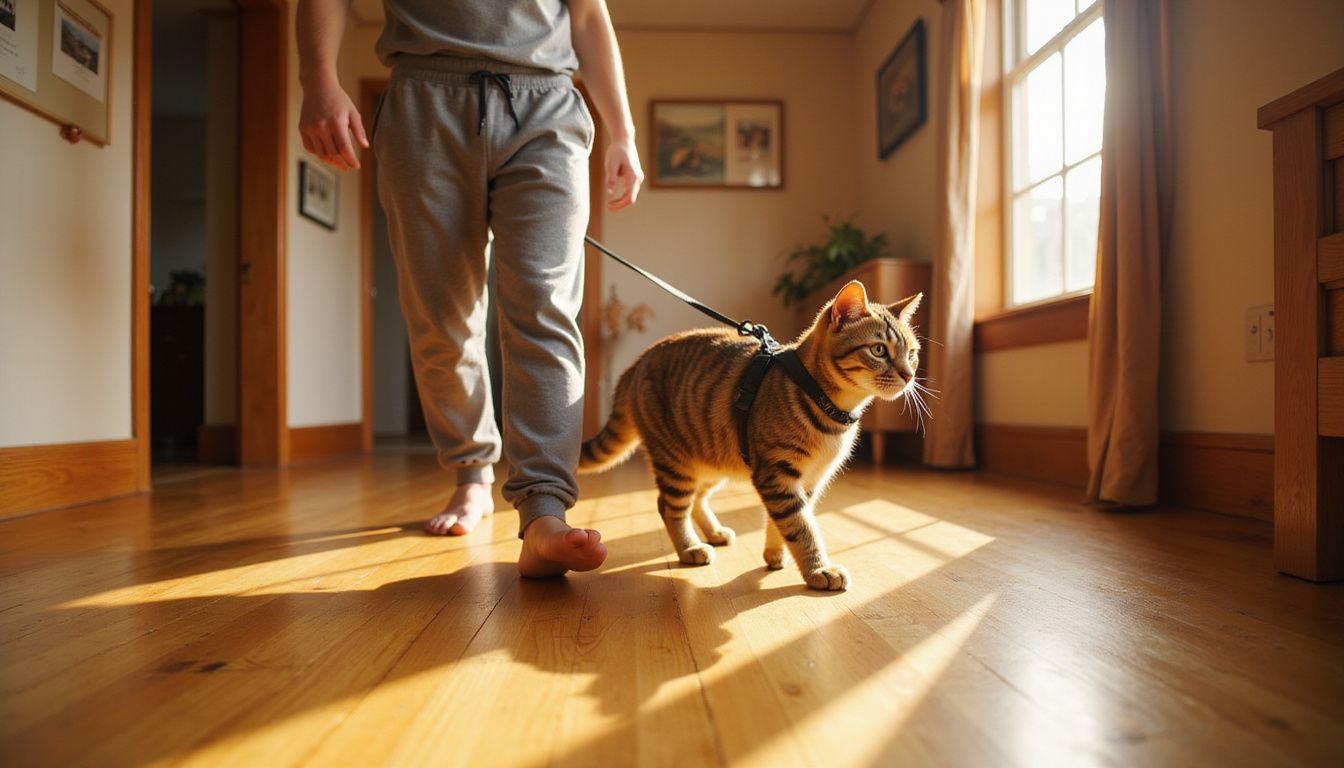
Your cat needs time to get used to the leash indoors before heading outside. Short sessions in your living room or hallway help your cat build confidence without the stress of the outdoor world.
How long should indoor training sessions be at first?
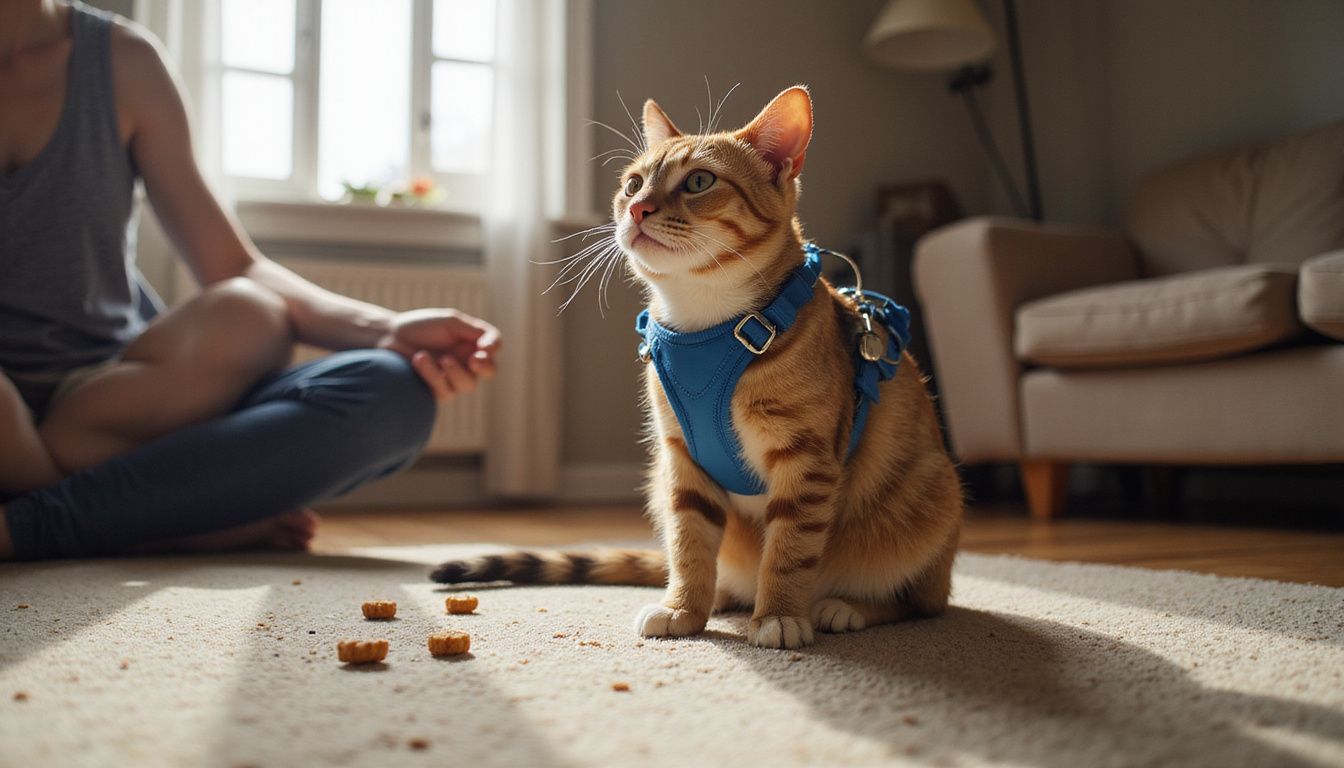
Start with just a few minutes for each indoor session. Three to five minutes works well for most cats getting used to the leash. Short bursts keep things light and fun, so your cat doesn’t feel overwhelmed.
Let your cat move around freely while wearing the harness. Reward calm behavior with treats and praise, and stop the session before your cat shows any signs of stress.
Practical testing backs this up. Home trials showed that three to five minute sessions, paired with treats like Inaba Churu or Meow Mix Irresistibles, kept cats calm and engaged most of the time. When handlers jumped straight to ten or fifteen minute sessions, stress signals showed up far more often.
Add time gradually as your cat gets comfortable. After a week or two of short sessions, try bumping things up to ten or fifteen minutes if your cat seems relaxed.
Watch your cat’s body language closely. Ears perked forward and a relaxed tail mean training is going well. If your cat looks stressed or tries to wriggle out, take a break and go back to shorter sessions.
When and how should I increase indoor training time?
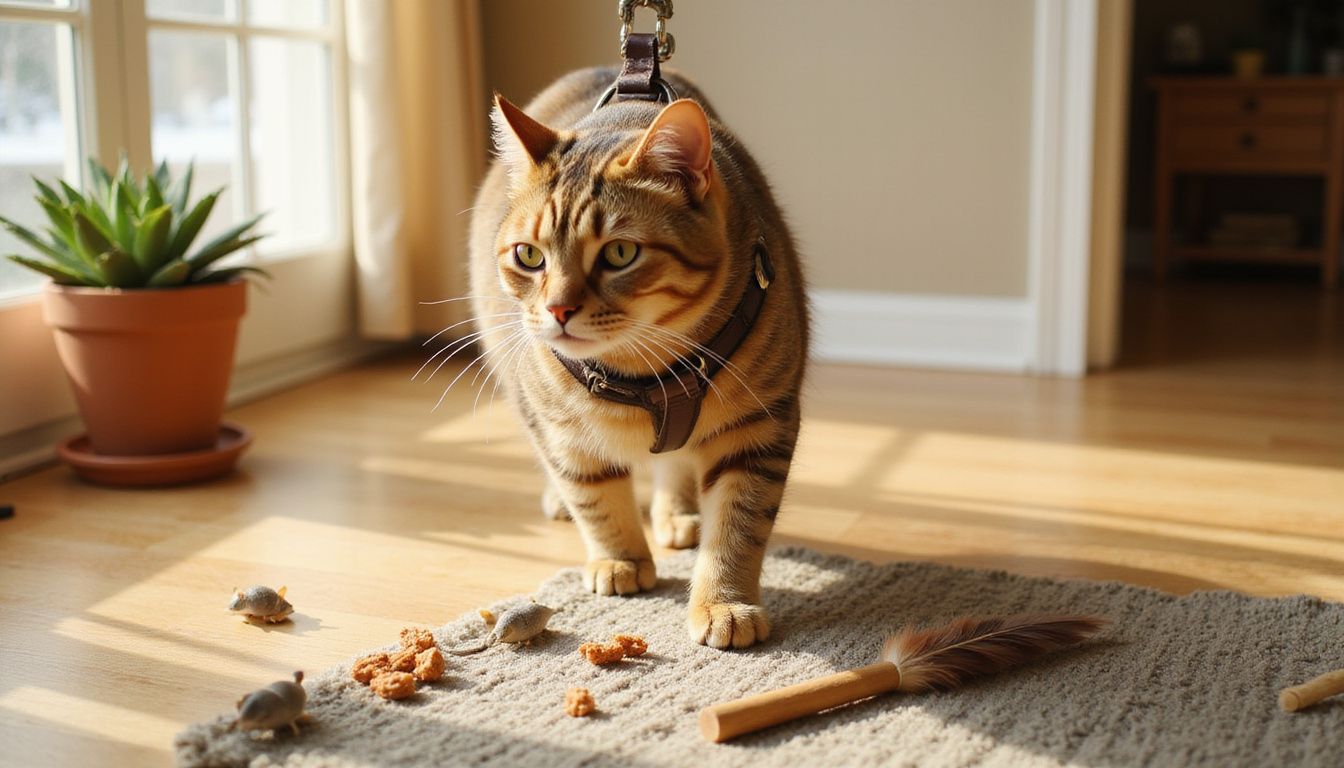
Your cat needs slow progress to build confidence with leash training. Patience during these early sessions sets you up for success outdoors.
- Watch body language during each five to ten minute session. If your cat looks relaxed, add two to three minutes to the next one.
- Only increase duration once your cat walks comfortably on a loose leash, exploring naturally without pulling.
- Add extra short sessions throughout the day instead of one long stretch. Cats learn better in small bursts.
- Use treats and wand toys to encourage movement at your cat’s own pace during longer sessions.
- Extend to fifteen or twenty minutes once your cat walks without fear and shows steady progress.
- Mix in playtime so your cat connects the harness with fun, not with feeling restricted.
Moving Leash Training Outdoors
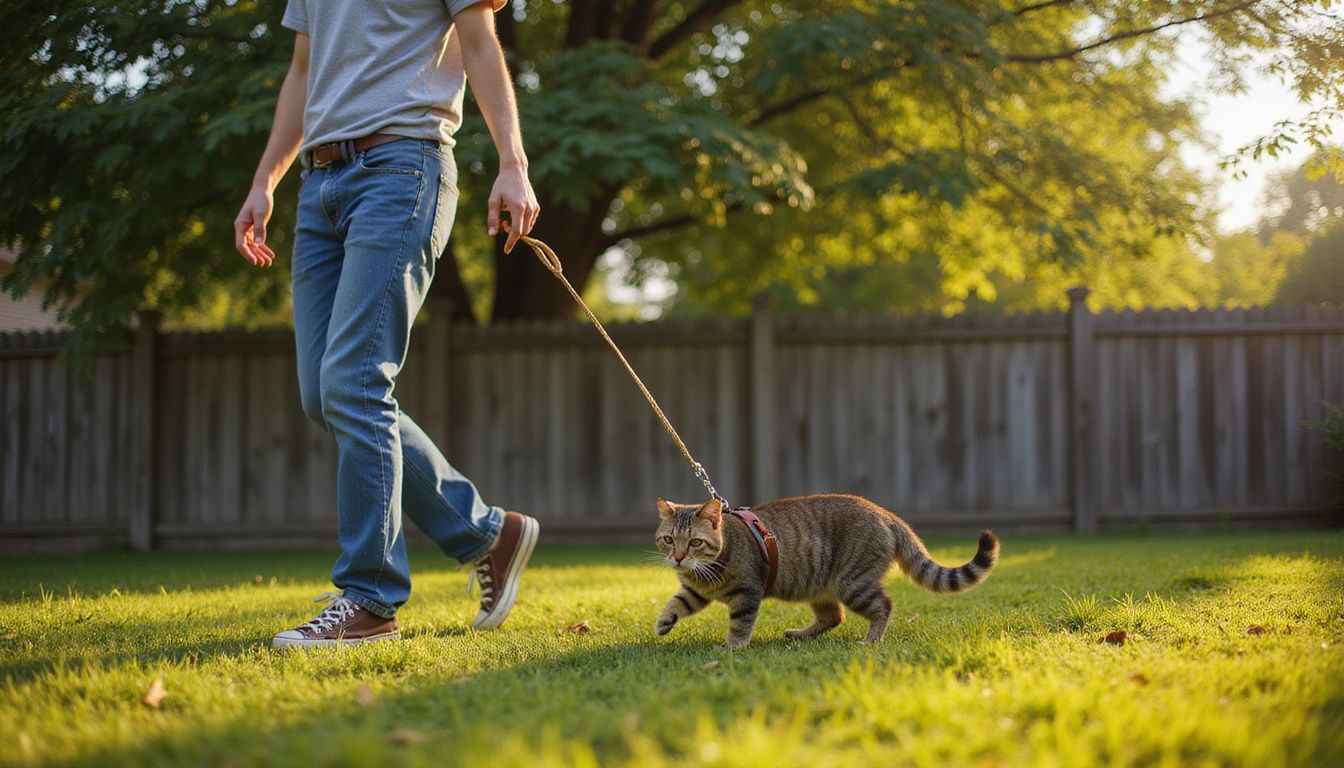
You’ve trained your cat indoors, and now the real adventure starts. Your cat is ready to explore beyond the front door, so let’s make that first outing safe and fun.
Where is a good outdoor space to start training my cat?
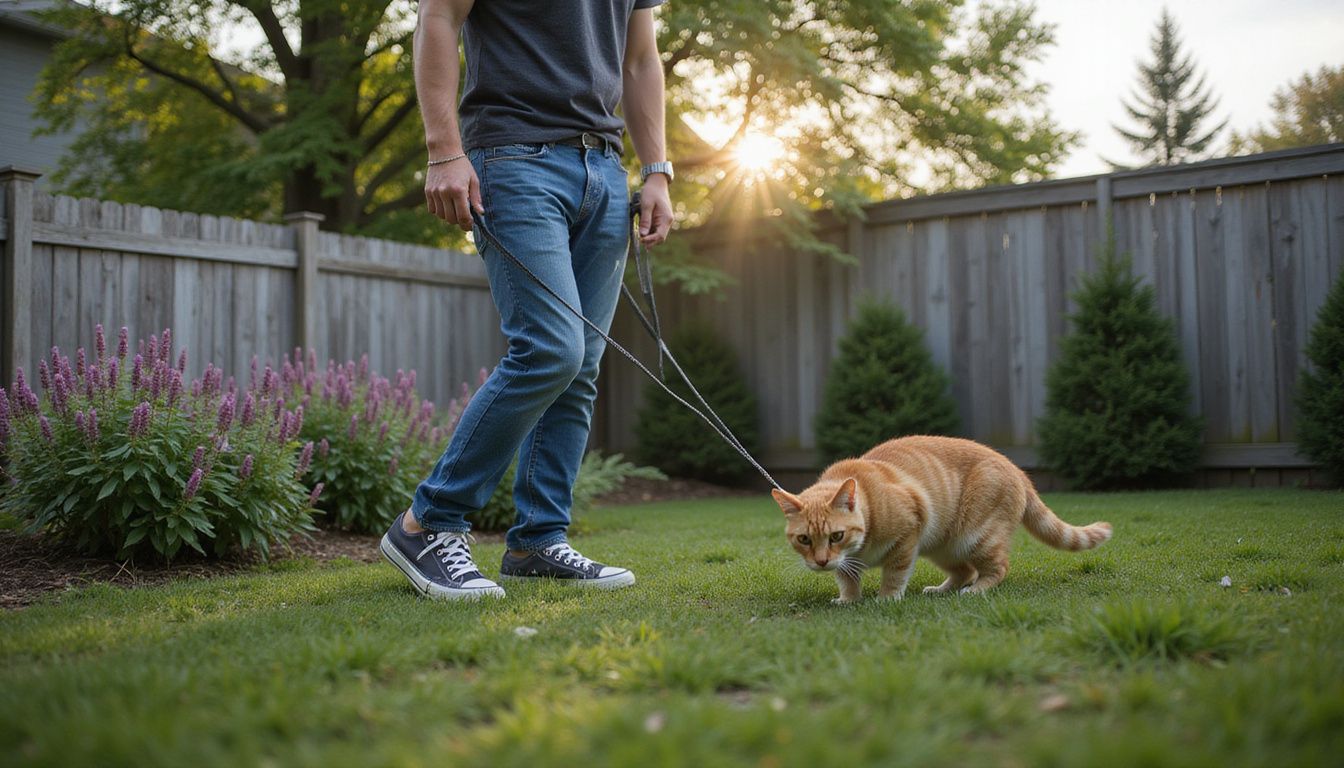
Your backyard makes the perfect launching pad for leash training. This familiar space keeps your cat calm because it already smells like home. A quiet corner away from busy streets and loud noises gives your cat the confidence to explore without fear.
No backyard? A nearby park with open grass and light foot traffic works just as well. Look for spots that feel peaceful, where your cat can move at its own pace without getting startled by sudden noise or strangers.
Here’s something worth knowing before you pick a spot: free-roaming cats kill an estimated 2.4 billion birds each year in the US, according to conservation data from the American Bird Conservancy. That’s a big reason to stick to a quiet backyard first, rather than a nature trail or a park full of birds. It protects local wildlife, and it keeps your cat from getting overstimulated by chasing instincts before it’s ready.
Start your first outdoor session in a safe zone for just five to ten minutes. Short outings keep your cat from getting overwhelmed or worn out. Your cat will sniff grass, check out plants, and get used to fresh air at its own speed.
Rushing from backyard to busier parks often backfires. Tracking backyard-to-park transitions showed that moderate foot traffic triggered visible stress within three minutes for most cats. Parks with fewer than five people around, paired with short five to ten minute visits, led to far fewer stress responses. Starting quiet, then building up slowly, sets your cat up for long-term success.
How do I watch for signs my cat is stressed outside?
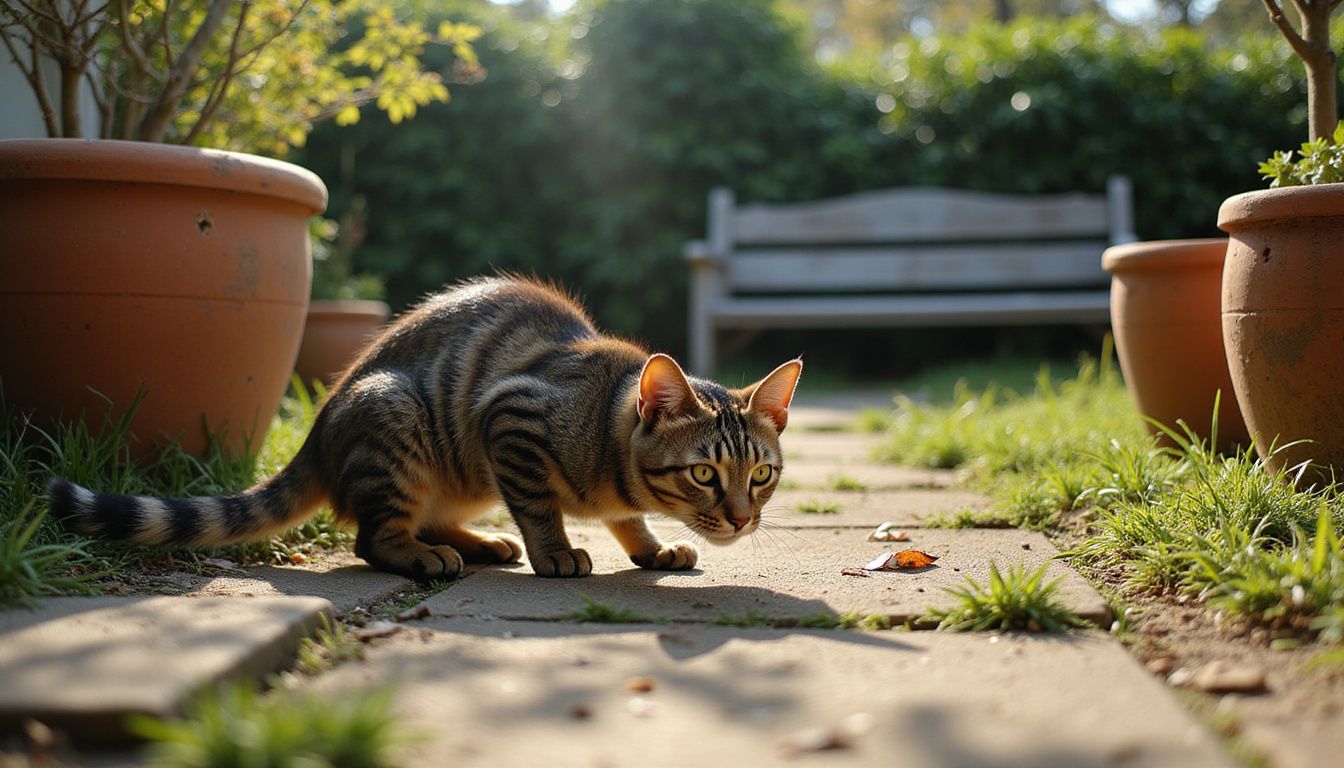
Once you’ve picked a calm outdoor space, the real work starts: learning to read your cat’s body language. Cats show stress through physical signals, and you need to catch them fast.
- Crouching low to the ground signals fear or anxiety.
- Tail flicking back and forth means your cat feels agitated.
- Ears pinned flat against the head show discomfort.
- Dilated pupils and wide eyes mean your cat is frightened.
- Hiding behind bushes or under benches tells you your cat wants out.
- Excessive meowing or hissing means your cat is saying “I’m done.”
Every cat adjusts at its own pace. Senior cats often need more time to adapt than kittens, who tend to be more flexible about new experiences.
Stop the session right away if you spot any of these signals, and head back inside to let your cat settle down.
Some cats freeze when scared, while others try to bolt. Watch for extra grooming, panting, or trembling too, since these point to real distress. Stay flexible and responsive to your cat’s mood throughout every walk.
Pair outdoor walks with flea and tick medication to guard against parasites, and make sure your cat wears a breakaway cat collar with ID tags. Microchipping adds extra security if your cat ever slips away during a walk. Science studies out of Scotland, England, Switzerland, and Canada all point to the same conclusion: cats need slow, gradual exposure to the outdoors.
Rushing the process backfires. Your patience now prevents problems later.
How Can I Keep My Cat Safe During Outdoor Walks?
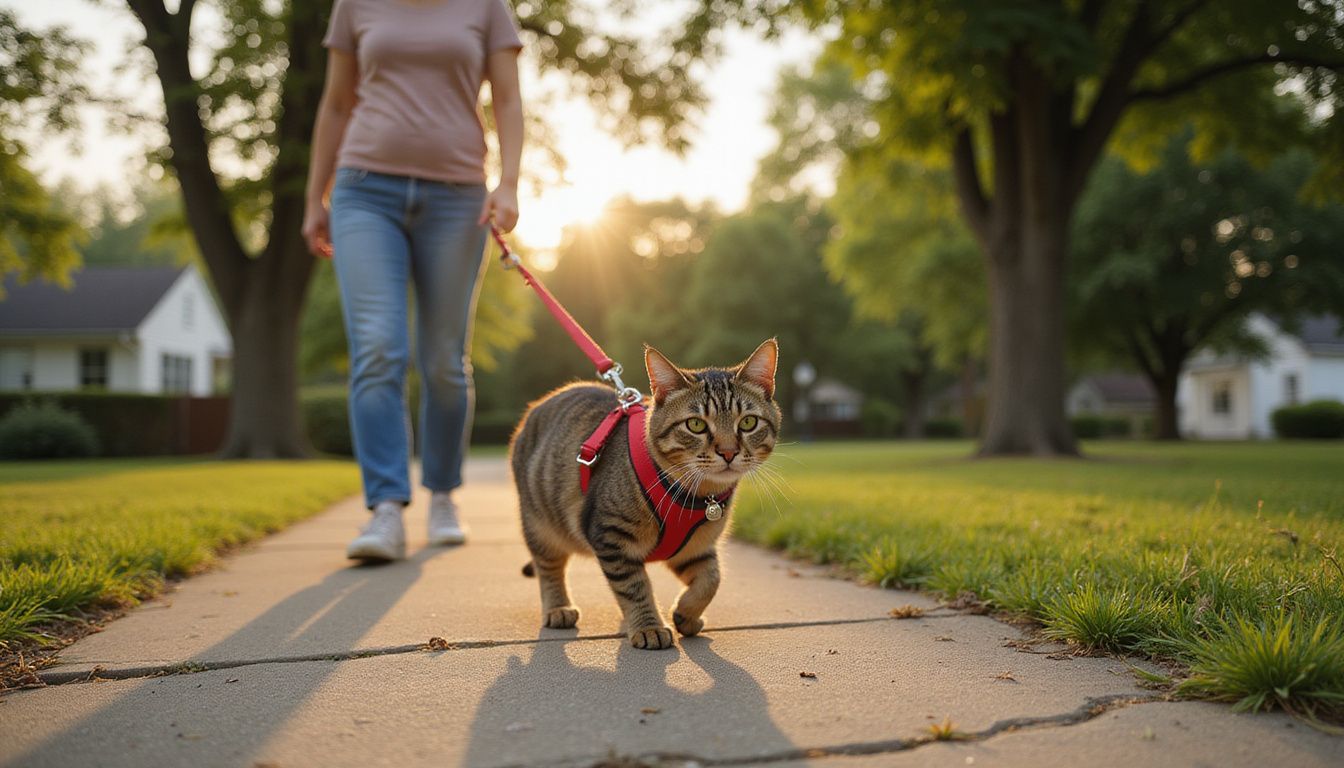
Your cat’s safety outdoors comes down to vaccinations, microchips, and smart location choices. You’ll protect your feline friend by avoiding risky spots and staying alert to stress signals on every walk.
Are vaccinations and microchips necessary for outdoor cats?
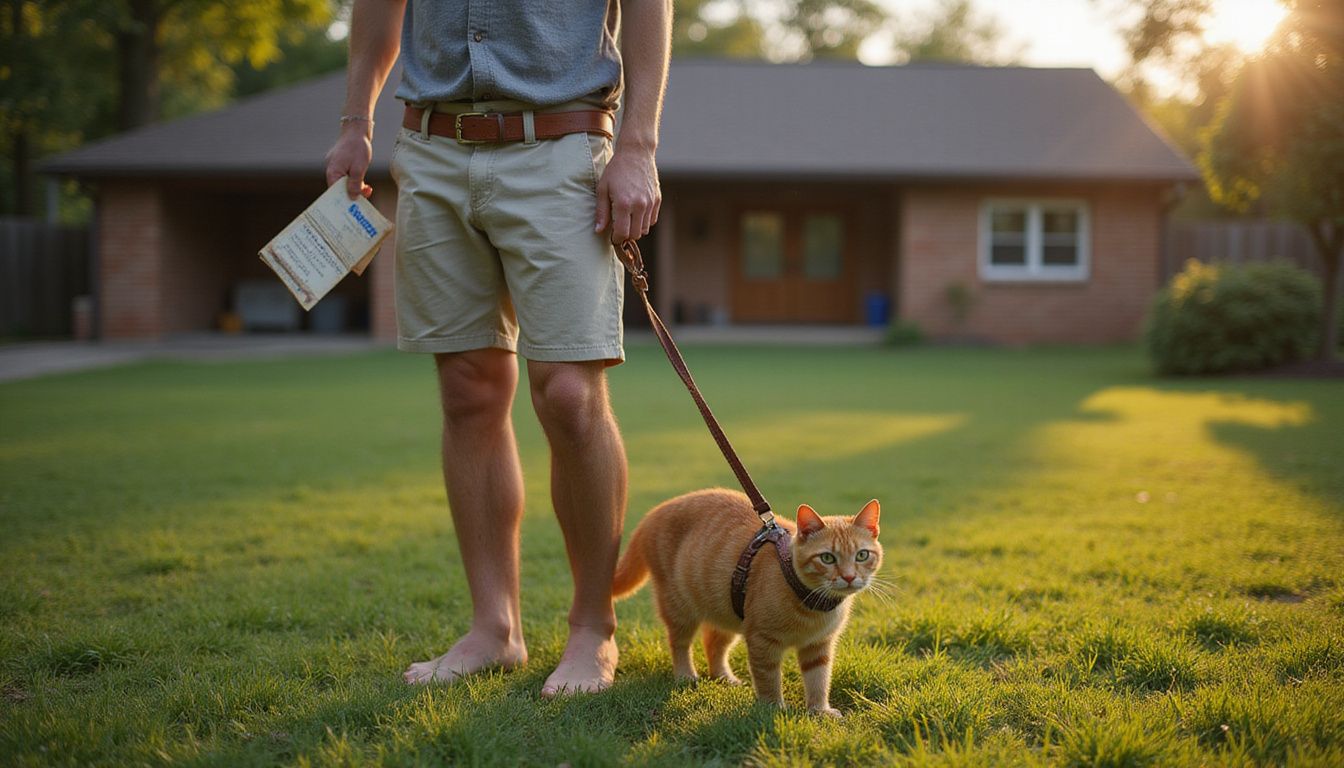
Before you let your cat explore outside, protection matters more than you might think.
| Protection Type | Why It Matters for Outdoor Cats | What You Should Know |
|---|---|---|
| Vaccinations | Outdoor exposure brings real risks from diseases like feline leukemia and rabies. Cats run into other animals, insects, and environmental threats that indoor cats never face. A single tick or scratch can bring on serious illness. | Talk to your vet about which vaccines your cat needs. Core vaccines guard against the most common outdoor threats, and your vet can build a schedule suited to your area. |
| Microchips | Outdoor adventures come with real escape risks. Cats slip through gates, get spooked, or wander farther than planned. A microchip can reunite a lost cat with you in days instead of months, since shelters and vet clinics scan for chips automatically. | Have a vet implant the chip under the skin between the shoulder blades. Register it with the microchip company, and update your contact info whenever you move. Pair it with a collar ID tag for backup. |
| Leashing Benefits | Keeping your cat leashed cuts down on injury and wildlife disruption. A leashed cat stays within arm’s reach, avoiding fights, traffic, and toxic plants along the way. | Start leash training indoors before any outdoor trip. Use a properly fitted harness, never a neck collar, and practice in controlled spaces first. |
| Before Outdoor Walks | Preparation heads off problems before they start. Cats need protection from parasites, disease, and getting lost, and preventive care costs far less than an emergency vet visit. | Schedule a checkup before leash training outdoors. Ask about flea, tick, and worm prevention, plus any hazards specific to your neighborhood. |
Here’s the number that really drives it home: according to veterinary experts at PetMD, unsupervised outdoor cats live only about half as long as strictly indoor cats. Traffic, predators, and contagious disease all take a toll over time. That gap is exactly why pre-walk vet visits, core vaccines, and microchipping aren’t optional extras. They’re the insurance policy that lets your cat enjoy outdoor freedom without paying for it later.
Start these preparations weeks before your first outdoor walk. Your vet is your best resource for figuring out exactly which protections fit your cat’s situation.
What outdoor areas should I avoid when walking my cat?
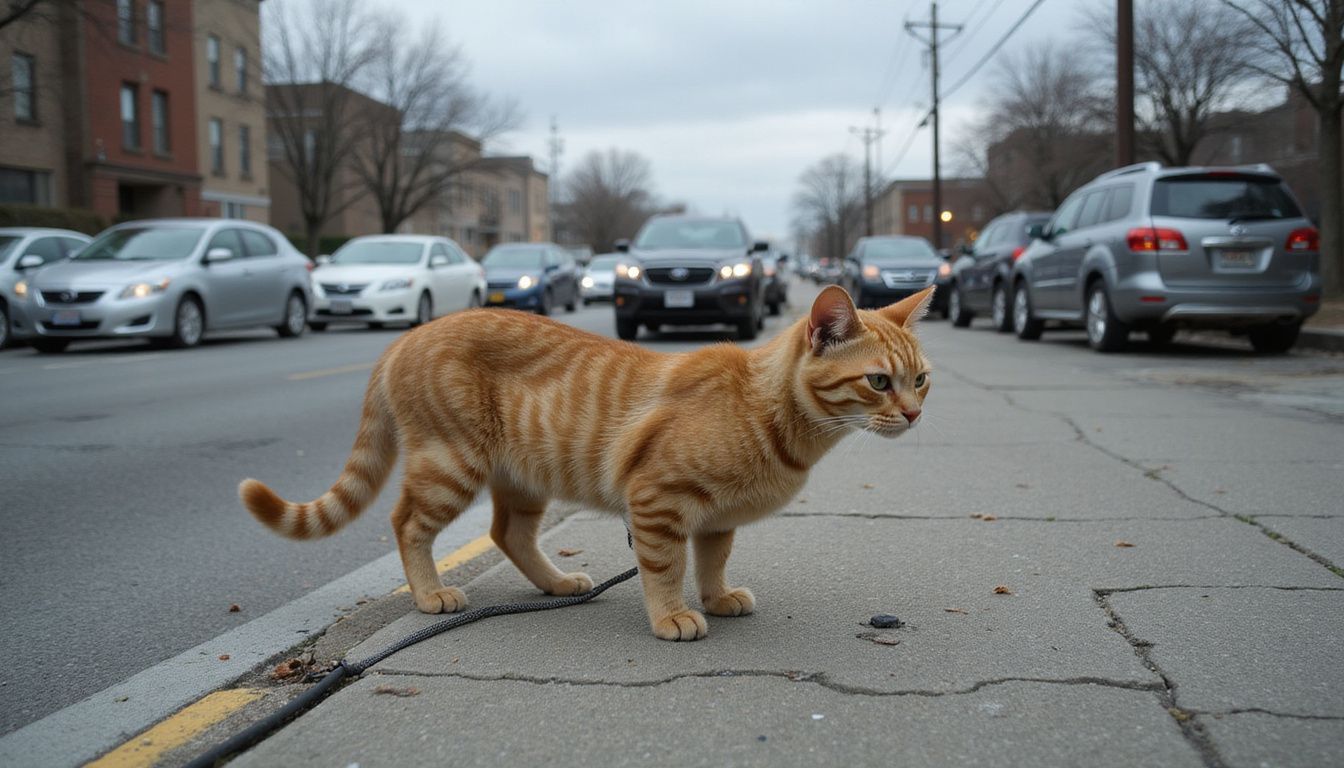
Your cat’s safety depends on choosing the right outdoor spaces for leash walks. Knowing which areas carry real danger helps you plan a successful outing.
- Traffic zones: Busy roads, parking lots, and driveways can injure or kill your pet in seconds.
- Off-leash dog parks: Other animals may chase or attack your leashed cat with no warning.
- Pesticide-treated areas: Gardens, golf courses, and treated lawns often contain chemicals that harm your pet.
- Extreme weather: Hot pavement burns paws, and wet fur in cold weather causes chilling.
- Predator territory: Coyotes and hawks threaten smaller pets, so stay alert and be ready to scoop up your cat.
- Dense brush: Thick vegetation can trap or hide your cat, making retrieval tough.
Water hazards like ponds, streams, and pools also create drowning risk since most cats dislike water and can panic if they fall in. Unfamiliar territory without a clear escape route can leave your cat anxious too, so stick to quiet, enclosed spaces you control during early training.
Areas near wildlife sanctuaries or nature preserves attract predators and territorial animals, something adventurecats.org and cat behavior experts consistently warn against. Crowded public spaces with loud noise raise escape risk as well, since a startled cat may bolt from a sound or a sudden crowd.
Conclusion
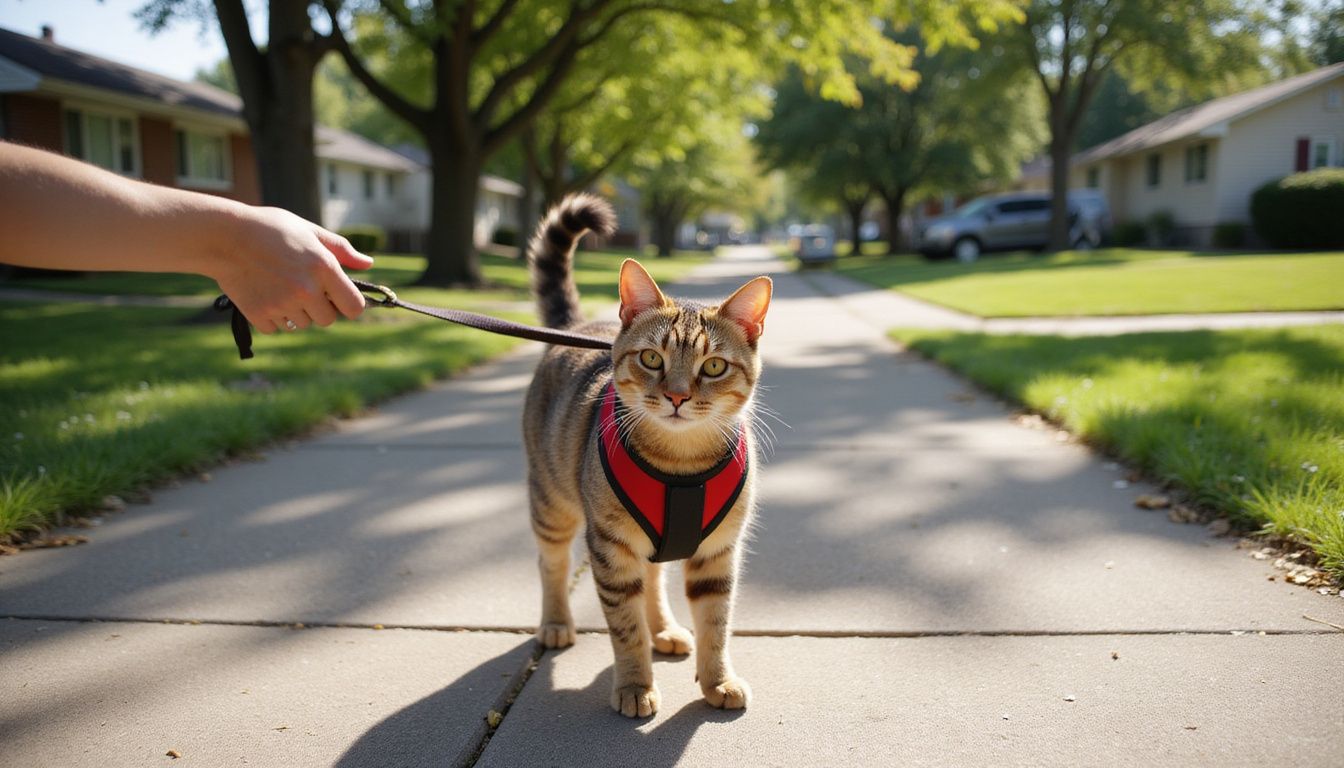
You’ve now got the real steps for leash training a cat, starting with a harness and leash that fit snugly and comfortably. Getting your cat used to gear indoors, with treats and praise, builds confidence before you ever head outside.
Short practice sessions inside your home teach your cat what to expect. That makes outdoor adventures feel less scary and a lot more fun.
Once outside, watch for stress signals and stick to quiet spaces at first, keeping those early walks to five or ten minutes.
Taking the time to leash train your cat protects wildlife, gives your pet mental stimulation, and builds a stronger bond between you both. Grab a Red Dingo Classic Nylon Cat Harness and Leash or similar gear, and start this rewarding journey with your feline friend today.
FAQs
1. What is the best harness for leash training a cat?
Pet author Amy Shojai recommends a snug, well-fitted harness, and the Red Dingo Classic Nylon Cat Harness & Leash is perfect for beginners. It’s adjustable and comfortable, so your future cat will feel secure without being squeezed.
2. Should I use a collar or a harness for outdoor walks?
Always go with a harness for walks. Cats can slip out of collars in seconds, especially breakaway cat collars that are designed to release under pressure.
3. Is it safe to take my cat outside on a leash?
Yes, and it’s actually great for your cat when done right. Pet expert Laura Moss suggests practicing indoors first, getting your cat used to the harness before you ever open the door. Australian research shows that slow, positive leash training can actually lower your cat’s stress levels.
4. Does research support leash training cats for outdoor time?
Absolutely. A U.S. science study found that cats trained on leashes from a young age adapt much better to outdoor adventures. With patience and consistency, you could eventually take your kitty anywhere, maybe even on a trip to Costa Rica.