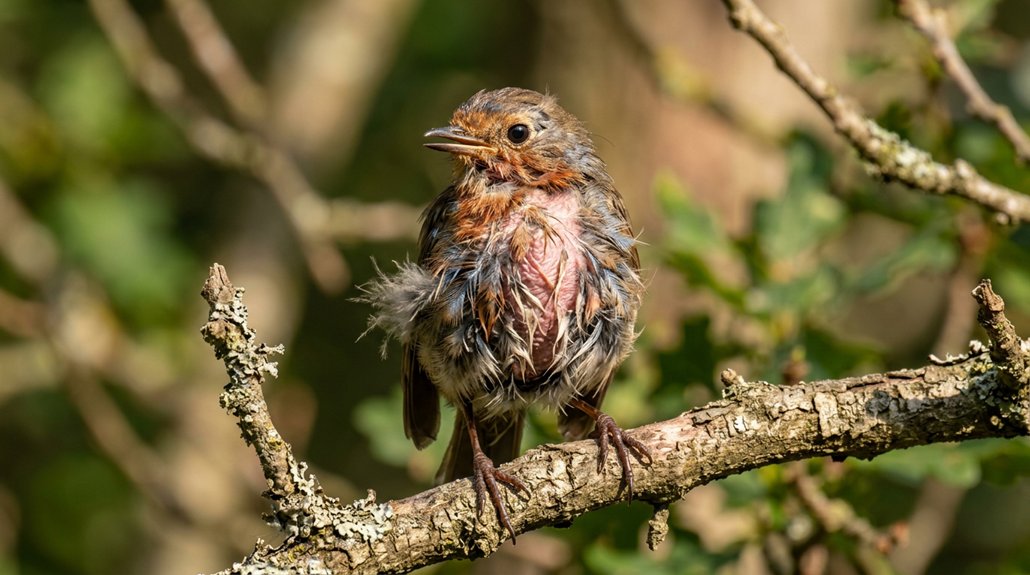
Your bird may be losing feathers because of a normal molt, feather plucking, parasites, infection, stress, or a medical problem. Healthy molt is gradual, symmetric, and followed by pinfeathers within days to weeks, with normal eating and droppings. Sudden, patchy, or asymmetric loss, broken shafts, itching, redness, or lethargy aren’t typical and should worry you. If the pattern doesn’t fit molt, your avian vet can help you sort out what’s going on and what comes next.
Key Takeaways
- Normal molt is gradual, symmetric, and seasonal, with pinfeathers appearing in bare areas within days to weeks.
- Feather plucking is irregular and asymmetric, often leaving broken shafts, irritated skin, or sudden feather loss.
- Feathers can be lost from parasites, infections, PBFD, polyomavirus, nutritional deficiency, or other illness.
- Worry if bald patches are large, skin is bleeding or scaly, or your bird seems lethargic, loses appetite, or has diarrhea.
- See an avian veterinarian if feather loss is sudden, extensive, or lacks regrowth after several weeks.
What Does Healthy Bird Molting Look Like?
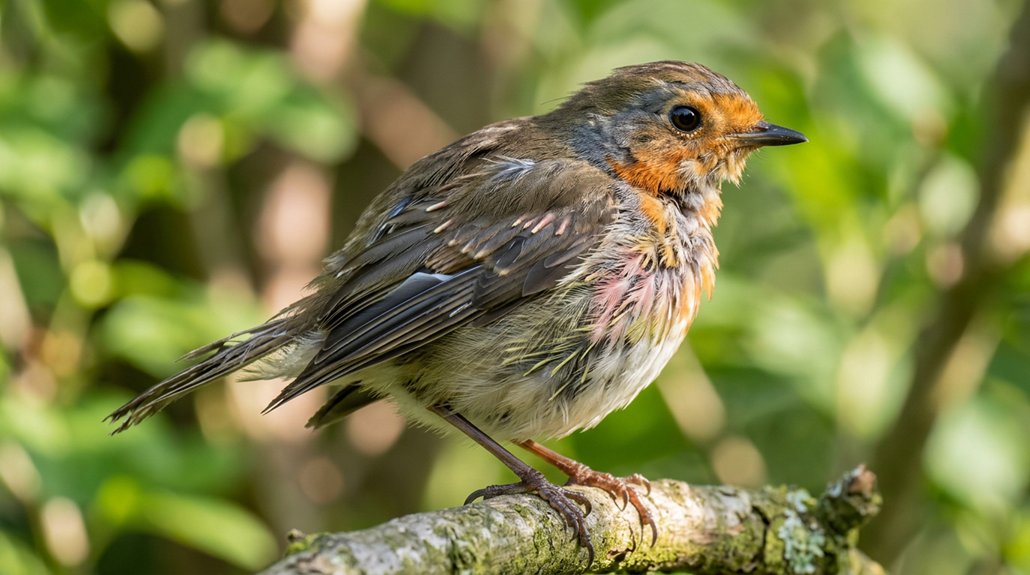
Healthy bird molting is usually gradual and symmetrical, with matching feathers shed on both sides of the body rather than sudden, patchy loss. You’ll often see seasonal indicators, because molts commonly occur once or twice yearly and may last weeks to months, depending on species and feather type. In bare areas, new pinfeathers should appear within days to weeks, showing active regrowth. Your bird may seem mildly quieter or less energetic, yet it should keep eating normally, producing normal droppings, and show no raw or bleeding skin. Support the process with increased dietary protein and calcium, stable light and dark cycles, and consistent bathing routines or misting. These measures help you preserve a natural molt timetable and reduce unnecessary stress.
Why Is Your Bird Losing Feathers?
If your bird’s feather loss doesn’t match the gradual, symmetrical pattern of a normal molt, it’s worth looking for another cause. You may be seeing feather-destructive behavior, such as plucking or over-preening, often linked to stress, boredom, overcrowding, or sexual frustration. Seasonal patterns can help you judge whether loss is expected, but patchy bald areas, damaged feathers, or easy breakage can also point to infection, parasites, or circovirus-related disease. Nutritional problems, especially low protein or vitamin A, and internal illness affecting the liver, kidneys, or gut can weaken feather growth. Review diet, offer behavioral enrichment, and monitor for inflamed skin, poor regrowth, or changes in droppings. If those signs appear, schedule an avian veterinary exam promptly for bloodwork and targeted diagnostics.
How Do You Tell Molt From Feather Plucking?
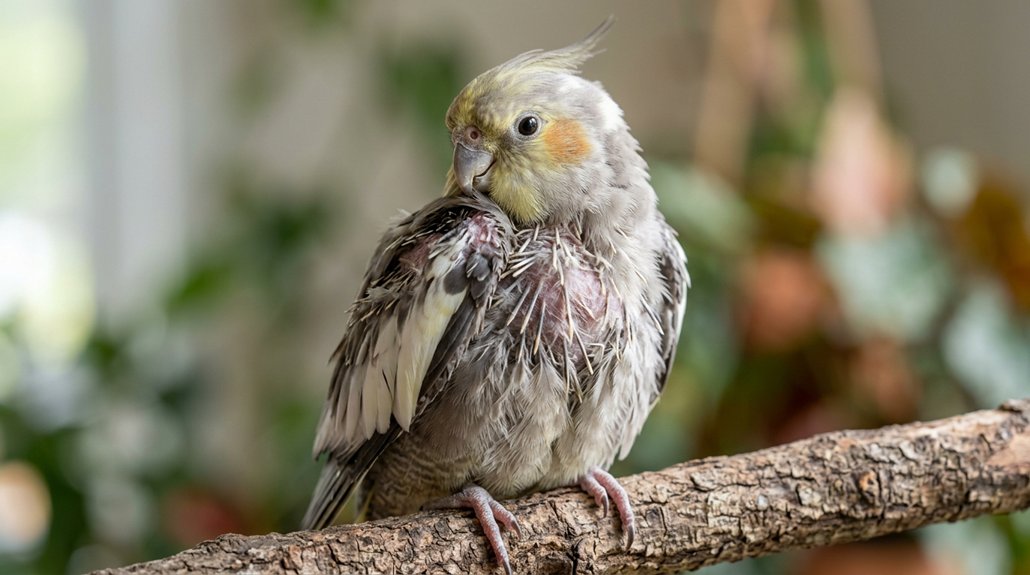
Molt is usually a predictable, symmetrical process: feathers are shed gradually, pinfeathers appear as new shafts, and the pattern follows a seasonal rhythm. You’ll see even loss, healthy pink skin, and steady regrowth without intervention. Feather plucking looks different: it’s irregular, often asymmetric, and may leave broken shafts or irritated skin. Use behavioral observation to guide you. | Sign | Molt | Plucking | |—|—|—| | Pattern | Symmetrical | Patchy | | Skin | Pink | Red or crusty | | Behavior | Mild preening | Repeated picking | During molt, flight feathers usually stay until replacements are ready; plucking can remove them abruptly. If the problem persists, despite good nutrition, consider environmental enrichment and veterinary evaluation.
Can Stress Cause Feather Loss?
Yes—stress can absolutely cause feather loss in birds, often through feather destructive behavior such as plucking, chewing, or over-preening until bare patches appear. You may see this after routine changes, a dominant cage mate, too little stimulation, or environmental disruptions like pets, wild birds, or temperature swings. In some parrots, strong attachment to you can lead to chest plucking from sexual frustration or nesting cues; stroking the back can intensify hormonal imprinting and trigger more loss. Stress can also show up as behavioral displacement, with feather care becoming the outlet. The best response is enrichment, predictable routines, and nutritional support. If the shedding is sudden, severe, or paired with lesions, appetite changes, or lethargy, you should see an avian veterinarian promptly to rule out other causes.
Can Infections or Parasites Cause Feather Loss?
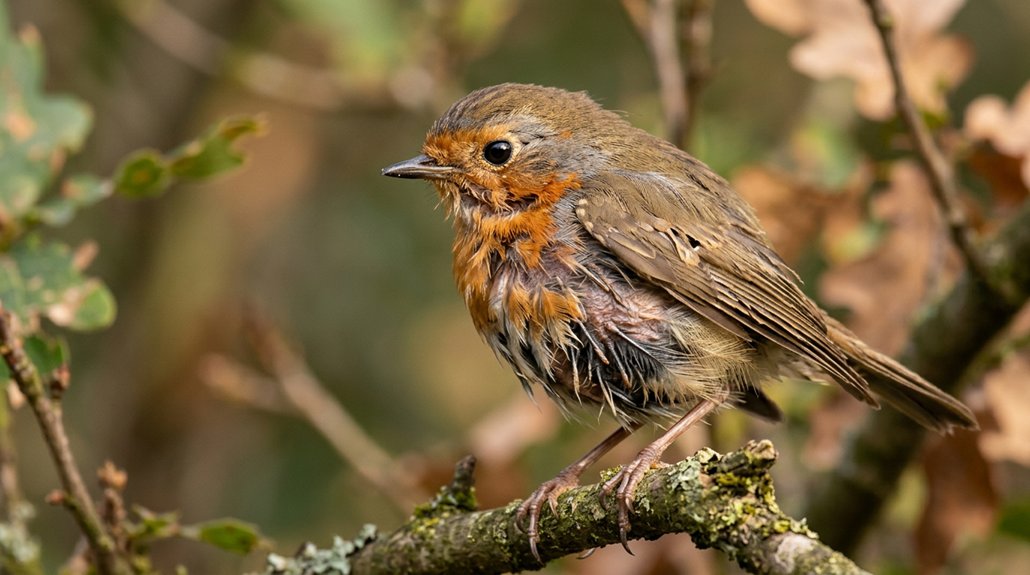
Yes—viral diseases like PBFD or avian polyomavirus, along with bacterial or fungal skin infections, can cause feather loss, abnormal feather growth, and damaged follicles. You may also notice parasites such as mites or lice, which often lead to itching, scaly skin, and feather breakage or patchy loss. Early veterinary testing matters because some infections can permanently affect feather regrowth, but prompt diagnosis improves your bird’s outlook.
Viral Feather Diseases
Infectious diseases and parasites can absolutely contribute to feather loss, and some of the more important causes are viral. If your bird has psittacine beak and feather disease (PBFD), a circovirus, you may see misshapen feathers that snap or fall out, along with progressive, sometimes permanent loss and weakened immunity. Accurate circovirus diagnostics help confirm the cause early. Avian polyomavirus can also trigger abnormal feather growth, shedding, especially in young birds or during stress; polyomavirus prevention relies on screening, hygiene, and limiting exposure to infected birds. Viral cases can look like other causes, so your veterinarian may recommend bloodwork and feather testing. Prompt evaluation matters because early diagnosis improves the chance of understanding whether feathers can regrow.
Bacterial Skin Infections
Bacterial skin infections can also cause feather loss, especially when the skin and feather follicles become inflamed or damaged. You may notice localized bald patches, redness, crusting, or a foul odor, often after trauma, chronic feather picking, or poor hygiene.
- A physical exam, cytology, and culture help identify the bacteria.
- Targeted antibiotics support antibiotic stewardship and improve treatment accuracy.
- Wound care and fixing the underlying trigger help prevent recurrence.
If you treat mild cases early, feathers often regrow. Deep or repeated infection can lead to follicle scarring and incomplete regrowth. Your bird’s prognosis depends on prompt diagnosis and consistent care, so don’t wait if the skin looks painful, swollen, or infected.
Parasites And Scaly Skin
Absolutely—parasites and infections can cause feather loss by damaging the skin and feather follicles, which leads to itching, feather breakage, bare patches, and sometimes scaly or flaky skin. You may notice feather mites, lice, or scaly leg mites, and in severe cases avian mange; these parasites can make your bird scratch, chew, and shed feathers unevenly. Yeast or bacterial skin infections can inflame follicles, while viral diseases may cause abnormal feathers that fall out or fail to regrow. If the problem persists, follicles can scar and stop producing feathers. Your avian vet can sort out the cause with skin scrapings, microscopy, cultures, and sometimes bloodwork or biopsy. Early diagnosis matters, because targeted treatment usually improves comfort and regrowth.
Why Do Neck, Head, and Tail Feathers Fall Out?
Neck, head, and tail feathers can fall out for different reasons, and the pattern of loss often points to the cause. If you’re seeing neck loss, think local irritation, infection, or over-preening by a cage mate. Head loss can reflect abnormal molts, parasites, vitamin A deficiency, or viral disease. Tail feathers often shed from seasonal patterns or mild damage, and they usually return at the next molt.
Neck, head, and tail feather loss can point to irritation, parasites, abnormal molts, or disease.
- Sudden bald patches without pinfeathers suggest plucking or chewing.
- Symmetrical loss with pinfeathers fits a normal molt.
- Scaly, flaky skin raises concern for mites, ringworm, or skin infection.
Watch behavioral signals closely and arrange a vet exam for skin swabs or testing, especially if the loss is localized or worsening.
How Can You Help Feather Regrowth?
Support feather regrowth by correcting the basics first: offer a high-protein, vitamin-rich diet with commercial pellets, fresh leafy greens, cooked egg, and appropriate calcium sources, since new feathers need extra protein plus vitamins A, D, and E. You can add supplemental feeding if your bird isn’t eating enough, but keep portions balanced. Watch for pinfeathers within 1–4 weeks; they show follicles are working. If you see no regrowth after several weeks, your bird needs assessment. Reduce stress by keeping a steady routine, covering at night, and limiting access to aggressive birds or predators. Give daily enrichment, and don’t overhandle bare skin. If self-plucking continues, avian-veterinary guidance may recommend protective garments or soft devices to prevent further damage while feathers return.
When Should Feather Loss Go to the Vet?
If your bird’s feather loss doesn’t fit a normal molt, it’s time to involve an avian veterinarian. You should be concerned when shedding is sudden, extensive, or leaves large bald patches instead of a symmetric, gradual pattern. Owner concerns are especially valid if you see skin lesions, bleeding, scaly or flaky skin, foul odor, or visible parasites.
- Lethargy, reduced appetite, weight loss, diarrhea, sneezing, or changed vocalization need prompt evaluation.
- If bare skin still has no pinfeathers after several weeks, don’t wait.
- Get checked before adding a companion bird or moving your bird to an aviary.
Seasonal timing can help you judge a normal molt, but it can’t rule out circovirus, polyomavirus, or bacterial or fungal infection.
Frequently Asked Questions
How to Treat Feather Loss in Birds at Home?
Start with diet adjustments: boost pellets, cooked egg, or legumes for protein. Add environmental enrichment with foraging toys, out-of-cage time, and consistent lighting. If you see bald patches or flaky skin, you’ll need an avian vet.
What Is the 3-3-3 Rule for Birds?
You can use the 3-3-3 rule as a molting timeline: about 3 weeks of feather loss, pinfeathers by 3 weeks, and most regrowth by 3 months. Your bird’s juvenile molt may vary, so monitor symmetry.
Can a Bird Survive After Losing Feathers?
Yes, your bird can survive after losing feathers if it’s otherwise healthy; feather regrowth usually follows molting recovery. You should watch for skin exposure, injury, or infection, and seek veterinary care promptly.
Do Birds Drop Feathers When Stressed?
Yes—your bird can lose feathers when stressed, and it may look alarming. You’ll notice disrupted molting patterns, not just normal molt. Improve behavioral enrichment, reduce triggers, and contact your avian vet if plucking continues.
Conclusion
If your bird’s feathers are changing, it doesn’t always mean trouble—many birds simply go through a normal molt, where old feathers quietly make way for new ones. But if the feather loss looks uneven, your bird seems bothered, or you notice skin issues, it’s worth paying closer attention. With good nutrition, a calm environment, and timely veterinary care, you can help keep your bird comfortable and support healthy feather regrowth.