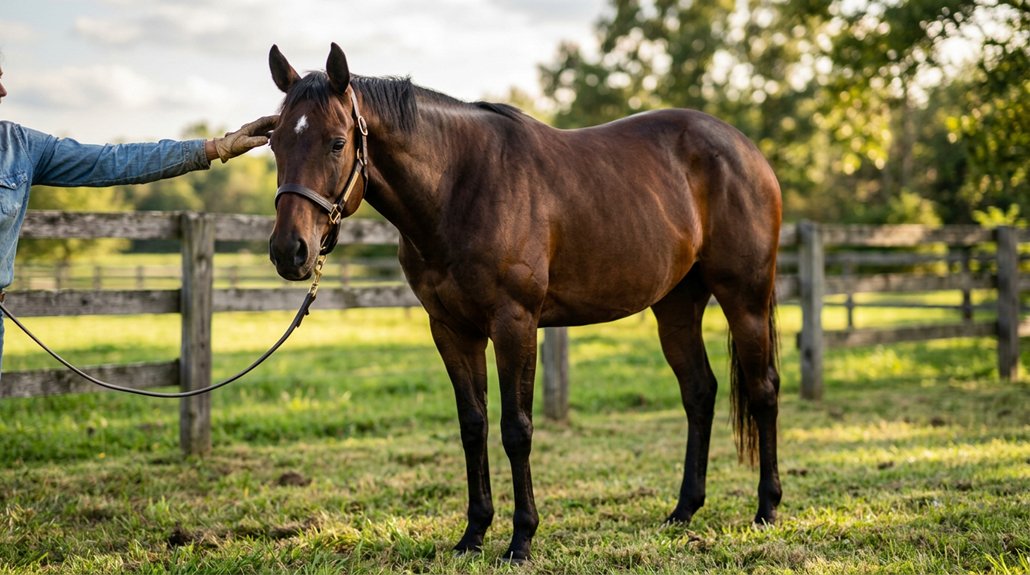
When selecting a horse as a beginner, aim for those aged 8 to 15 years old. Horses in this range generally possess the calmness and training needed for novice riders. Older, well-maintained horses can also be excellent choices, but they may incur additional upkeep costs. Pay attention to temperament and behavior traits to guarantee safety and compatibility. Consulting experts, like trainers and veterinarians, will guide you towards making a well-informed decision. There’s so much more to explore in this rewarding journey.
Key Takeaways
- Horses aged 8 to 12 years are ideal for new riders due to their developed skills and calm nature.
- Temperament and past training are crucial considerations regardless of the horse’s age.
- Novice riders should avoid “green” horses, opting for those aged 8 to 15 years.
- Older horses may suit beginners but come with higher upkeep costs.
- Expert advice and community support are essential for informed horse selection decisions.
What’s the Best Horse Age for New Riders? Your Options Explained
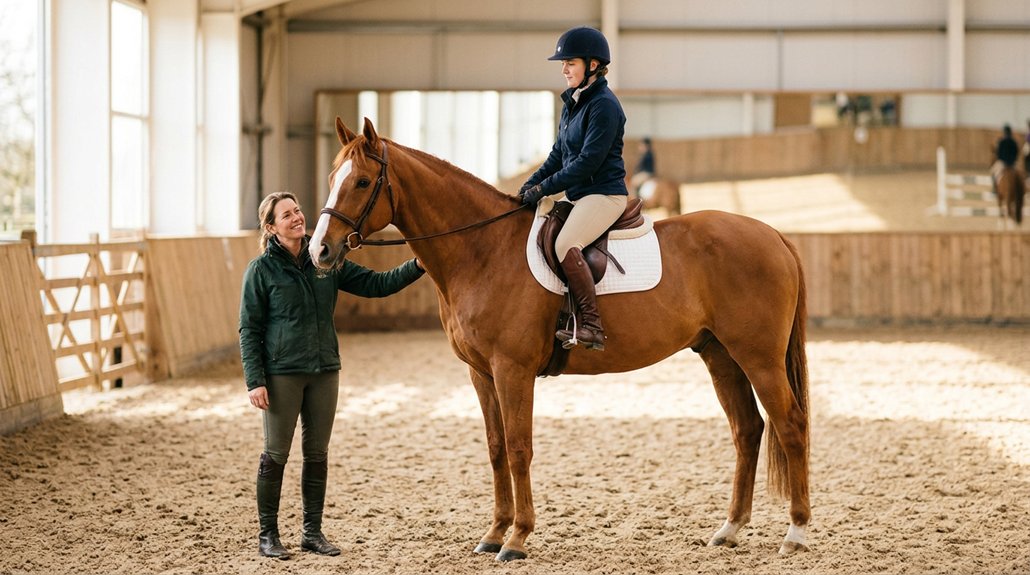
When choosing the best horse age for new riders, it’s important to weigh the balance between experience and temperament. Horses aged 8 to 12 are often ideal, thanks to their developed skills and calm nature. These seasoned horses usually have undergone significant horse training techniques, making them less reactive to novice mistakes. Although horses aged 10 and above are highly recommended, don’t overlook those in their teens or twenties, provided they’re well-maintained and still responsive. These mature horses typically possess the seasoned steadiness necessary for new riders. However, regardless of age, always assess temperament and past training. Some ideal horse breeds known for beginner-friendly nature include Quarter Horses and Morgans, each offering a dependable experience for novices.
Can You Handle It? Assess Your Skills and Goals
Selecting the ideal horse age is just one piece of the puzzle; now, it’s crucial to assess whether you’re ready for this responsibility and understand how your goals tie into your decision. Scrutinize your riding experience—novice riders might find those “green” horses challenging, risking the “Green + Green = Black & Blue” outcome. Clear riding goals set the direction for your horse selection, whether you’re enjoying leisurely trail rides or aiming for competitions. Opt for horses aged 8 to 15 for a balance of experience and calm temperament. Don’t overlook older horses; they can teach you well, but be prepared for more upkeep costs. Consult experienced trainers and veterinarians to guarantee your horse’s abilities and care requirements align with your skills and aspirations.
Finding Your Perfect Match: Temperament and Behavior Traits
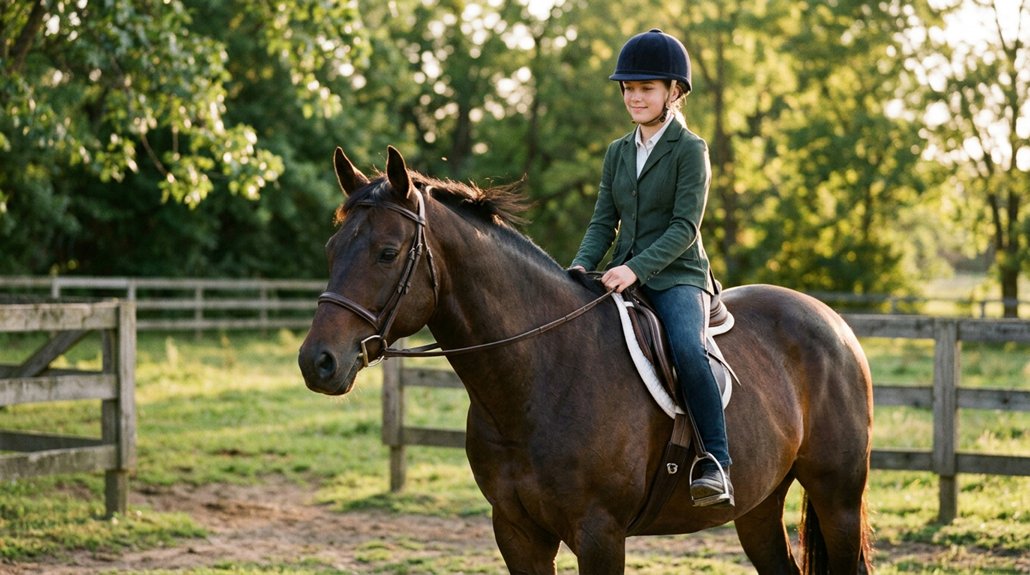
Choosing the right horse isn’t just about appearance; temperament and behavior traits play a vital role in ensuring a safe and positive experience for beginners. A horse with a calm demeanor sets the foundation for enjoyable learning. Here’s what to look for:
- Calm Demeanor: Opt for horses displaying calm and friendly behavior, which fosters a safer learning environment.
- Handling Skills: Select horses that stand tied quietly and lead willingly, ensuring they’re manageable for novice handlers.
- Cooperative Nature: Evaluate their response to personal space and hoof handling; a horse that cooperates is essential.
Hands-on interaction is important; each horse’s personality will influence how well they suit a beginner. Finding the right match elevates both your confidence and riding skills.
Managing Maintenance and Budget: What Beginners Need to Know
Budgeting is essential for all horse enthusiasts, but especially for beginners who may be unaware of the full scope of ongoing expenses. Beyond the initial purchase, routine care plays a significant role in your horse’s well-being. Older horses often need nutritional supplements and joint injections, so consider these costs. Regular veterinarian visits, dental care, and routine vaccinations should also be part of your budget. Essentials like grooming, hoof care, and feed management require both time and financial commitment. Be prepared for hidden costs—unexpected emergencies or equipment repairs can quickly inflate your expenditures. Effective budgeting minimizes surprises and guarantees you’re ready for all aspects of horse ownership, assuring your equine companion remains healthy and happy in the years to come.
Why Expert Tips and Community Chat Matter
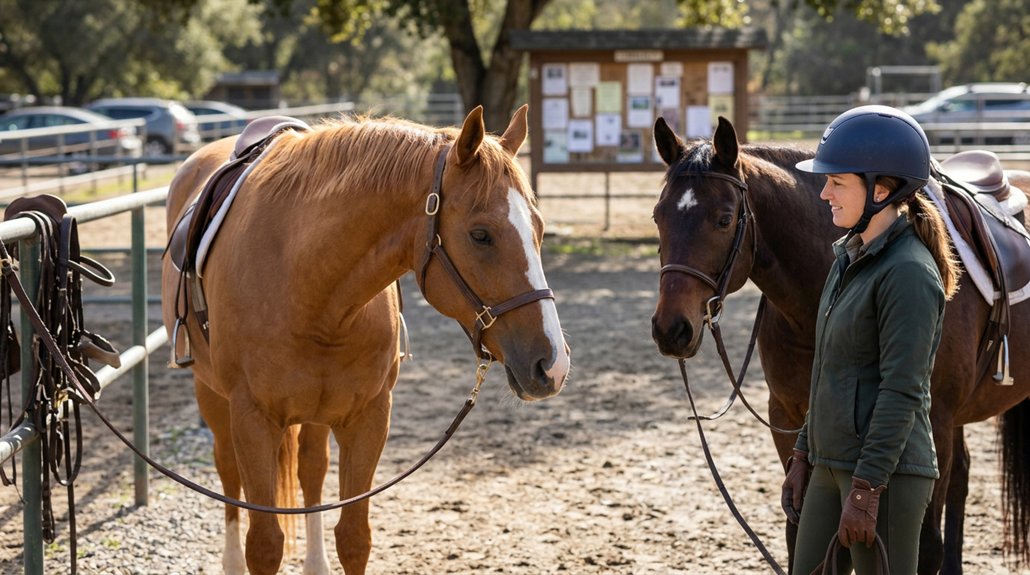
When you’re venturing into horse ownership, tapping into expert advice and active community discussions is indispensable. Expert insights are invaluable in evaluating a horse’s temperament and training history, guaranteeing compatibility with your beginner needs. Rely on these seasoned professionals and equestrians to guide you effectively.
Seeking expert advice and engaging in community discussions are crucial for new horse owners.
- Engage with experienced trainers: They offer detailed insights into a horse’s characteristics, focusing on calmness and reliability essential for new riders.
- Participate in community discussions: Sharing challenges and successes with others in the horse community fosters better decision-making about suitable horses.
- Consult with veterinarians: Confirm your horse’s health aligns with your experience level, backed by medical evaluations and expertise.
Harnessing expert insights and community support guarantees informed choices, aligning horse age and temperament with your skill level for a smoother start.
Frequently Asked Questions
What Is the Best Age to Buy a Horse for Beginners?
When buying a horse for beginners, consider those aged 8 to 12 years. This age range often guarantees balanced age considerations and a suitable horse temperament, marrying experience with patience for novice riders. Always assess individual temperament too.
What Is the 1/2/3 Rule for Horses?
The 1/2/3 rule guides horse training by ensuring you’re considering age-related horse behavior and training techniques. Horses under 3 need bonding, while those 4-7 balance training and learning new skills for various disciplines.
What Is the Calmest Horse to Ride?
To find the calmest horse to ride, explore calm breeds like Quarter Horses and Paints. Effective training methods enhance calmness, making them ideal. Select well-trained horses from these breeds, emphasizing stability and responsiveness for beginners.
What Smells Do Horses Love?
Horses love scents like apples and carrots for treats. They’re drawn to equine preferences such as pheromones for social bonding. Natural odors like hay and molasses offer comfort and attraction, creating a happy, familiar environment.
Conclusion
Choosing the right horse age as a beginner can shape your riding journey. Consider a 12-year-old gelding like Max, who’s patient and forgiving with new riders. His mature temperament affords you room to learn without added stress. Remember, an older horse often means a touch more maintenance, but the reliability they bring is invaluable. Engage with expert advice and connect with seasoned owners—this will enrich your understanding and guarantee you’re on the right path.