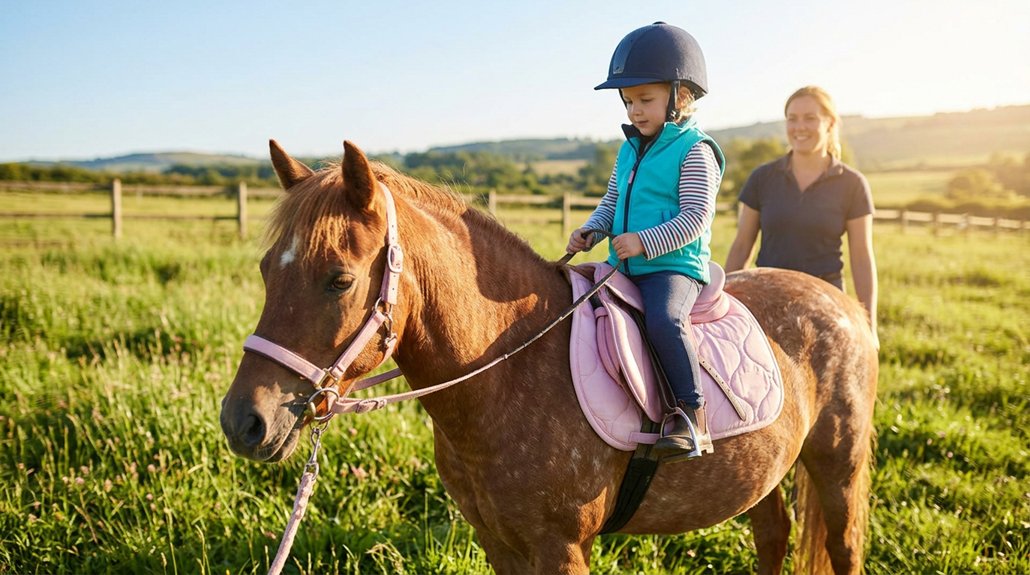
When selecting the best horse breeds for children and young riders, consider those renowned for calmness, gentle nature, and manageability. Welsh Ponies and American Shetlands are ideal with their compact sizes, providing confidence and control for beginners. Appaloosas are versatile and encourage strong bonds during training. American Paint Horses and Morgans offer gentle demeanors perfect for novice riders. Choosing the right breed aligns with your kid’s riding aspirations, guiding you to discover more about ideal equine companions.
Key Takeaways
- Welsh Ponies are versatile and calm, ideal for dressage, show jumping, and trail riding with young riders.
- American Paint Horses offer a gentle nature, making them suitable for beginners seeking a nurturing training environment.
- Haflingers provide versatility for pleasure riding and light competition, perfect for children’s diverse riding aspirations.
- American Shetland Ponies are small with lively personalities, catering well to young riders’ needs.
- Appaloosas, with their gentle demeanor and visual appeal, excel in trail riding, jumping, and Western events for children.
Essential Traits for Child-Friendly Horses
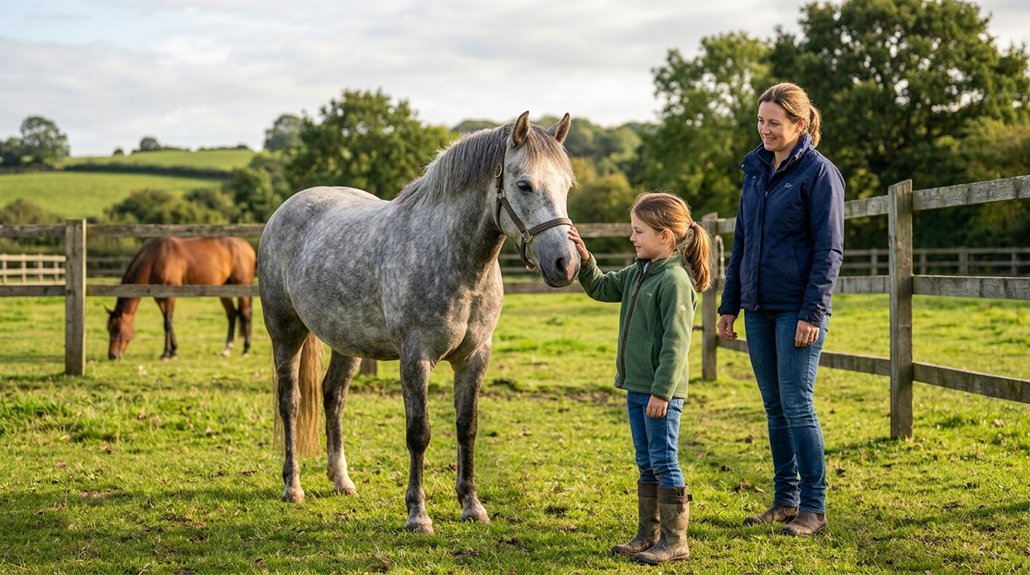
When considering the essential traits for child-friendly horses, temperament emerges as a vital factor. You want a horse with a calm demeanor, essential for maintaining trust with young riders. These horses shouldn’t startle easily, ensuring safety around sudden movements or noises. Patience levels are equally important—ideal horses are forgiving of novice mistakes. This fosters a supportive learning environment, vital for building confidence in young riders. You’ll typically find these traits in smaller breeds or ponies, like Shetland or Welsh Ponies. Their stature makes them easier to mount and dismount, minimizing fall risks. Horses experienced with children—often from lesson programs—are accustomed to their energies and behaviors, enhancing their suitability. Such horses also possess quick learning abilities, vital for adaptable training.
Caring for Your Horse: What to Know
When it comes to caring for your child’s horse, understanding the essentials of feeding, grooming, and health management is vital for ensuring its wellbeing. You’ll want to provide a balanced diet suited to its breed, age, and activity, along with regular grooming to maintain coat health and check for any potential issues. Additionally, proactive veterinary care, including vaccinations and dental check-ups, is key to preventing common equine illnesses.
Horse Feeding Essentials
While understanding your horse’s nutritional needs can seem challenging, keeping their diet balanced is crucial for their health and well-being. Start with careful hay selection, as it should form the bulk of their diet and supply necessary fiber. Opt for high-quality hay to support digestive health. Grain balance is important for providing additional energy and nutrients; however, it’s important to adjust grain intake based on your horse’s age, weight, and activity level to prevent overfeeding. Make certain they have access to fresh, clean water, as a horse typically drinks 5 to 10 gallons daily. Establish a consistent feeding schedule, ideally two to three times a day. Consider using supplements to fill any nutritional gaps, especially when dietary variety is limited.
Grooming and Maintenance Tips
Feeding your horse properly lays the groundwork for their overall health, but grooming and maintenance also play critical roles in their care. Implement regular grooming techniques to guarantee their coat care and hoof health. Invest in a basic grooming kit that includes essentials like a curry comb and hoof pick. These tools help manage the health of your horse’s coat and guard against problems such as thrush. Ascertain grooming occurs at least 2-3 times weekly to remove debris effectively. Hooves need inspection weekly for peak care.
Here’s why it matters:
| Feeling | Action |
|---|---|
| Pride | Keeping them clean |
| Connection | Grooming regularly |
| Happiness | Ensuring comfort |
| Responsibility | Maintaining health |
Grooming properly promotes the bond between you and your horse, essential for young riders.
Health Check Guidelines
A thorough health check for your horse is crucial to guarantee they remain healthy and active. Regular health monitoring with routine check-ups should include veterinary examinations for vaccinations, deworming, and dental care to prevent diseases and secure ideal oral health. A balanced diet, incorporating hay, grains, and specific supplements, can enhance performance and longevity. Daily grooming is integral not only for cleanliness but for early detection of skin conditions or injuries, aiding in immediate intervention. Regular visits from a qualified farrier are important for maintaining hoof health and preventing conditions like laminitis. Monitor your horse’s weight diligently, as obesity poses significant risks; adjust diet and exercise regimes accordingly. Implementing these guidelines will offer your horse a solid foundation for robust health and well-being.
Child’s Riding Goals and Suitable Breeds
Children’s riding goals set the foundation for selecting the most suitable horse breed, ensuring safety and enjoyment in their equestrian journey. Understanding your child’s aspirations, whether they involve leisurely trails or competitive events, is essential. To match these goals, evaluate breeds renowned for their specific strengths and temperaments. The Welsh Pony and Connemara Pony excel at eventing and endurance due to their agility and calm demeanor. Training techniques for these activities should prioritize child safety, focusing on controlled environments with gradual skill progression. For beginners, breeds like the American Paint Horse and Morgan offer a gentle nature and responsiveness suitable for casual riding. If versatility is key, the Haflinger provides opportunities across pleasure and light competition, fostering well-rounded development.
American Shetland Pony: Small Yet Versatile
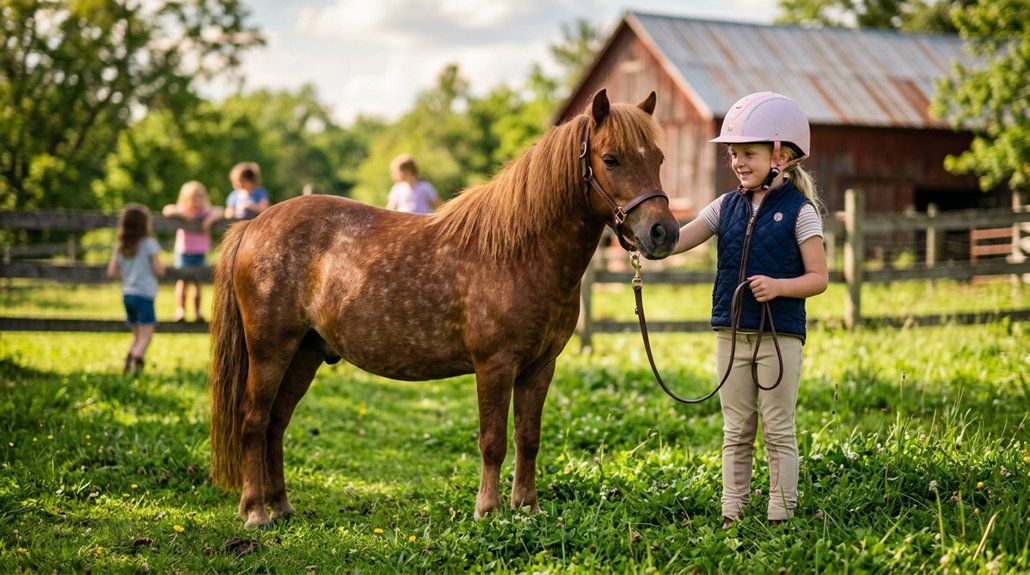
When considering a horse breed for your child, the American Shetland Pony stands out due to its small stature and lively personality, making it both manageable and engaging. Its adaptability shines through in various activities such as driving and jumping, providing a broad range of experiences for young equestrians. With a sturdy build and gentle nature, this pony offers a confidence-boosting introduction to horse riding for younger riders, while still requiring appropriate supervision and training.
Size and Playful Temperament
With a height ranging from 7 to 11.5 hands, the American Shetland Pony offers an ideal balance of size and strength for young riders. These ponies, weighing between 400 to 450 pounds, present an engaging challenge with their playful temperament. Understanding their pony personalities is key to effective training techniques, ensuring a positive learning experience for both pony and rider. Known as fun-loving and sometimes stubborn, they still thrive when guided properly. Here’s why they stand out:
- Approachable Size: Their diminutive stature makes them less intimidating for children.
- Manageable Strength: Their weight allows them to remain strong yet controllable.
- Engaging Companions: Playful nature keeps young riders actively involved.
- Learning Experience: They teach patience and persistence through gentle training.
Incorporating these elements maximizes the benefits of working with such charming creatures.
Versatility in Activities
Because of their adaptability, American Shetland Ponies offer an exceptional range of activities for young equestrians. Their size, typically between 7 and 11.5 hands, makes them perfect for children. Their playful, gentle disposition guarantees a safe and enjoyable riding experience. These ponies excel in event participation across various equestrian activities, including jumping, driving, and competitive events. With their ability to perform in both English and Western disciplines, you can explore diverse training techniques that cater to different riding interests and skill levels.
Their variety of unique coat patterns and colors not only makes them visually appealing but also adds an element of personal connection to young riders. Utilize their versatility in educational settings to teach horsemanship and responsibility, making learning both fun and engaging.
Suitability for Young Riders
The American Shetland Pony’s remarkable adaptability is matched by its suitability for young riders, providing an unrivaled experience that marries safety with excitement. This small, versatile breed is perfectly sized for children, ranging between 7 and 11.5 hands. Here are some technical insights into their suitability:
- Safety Considerations: Their compact size guarantees that young riders feel confident and secure.
- Training Techniques: Proper techniques can mitigate their occasional stubbornness, enhancing the riding experience.
- Versatile Activities: Ideal for jumping, driving, and competitive events, fostering thorough skill development.
- Temperament: Their friendly disposition makes them enjoyable companions, promoting a positive learning atmosphere.
Guarantee adult supervision when handling for added safety, and leverage appropriate training methods to maximize your pony’s potential.
Welsh Pony and Cob: Perfect for Various Riding Styles
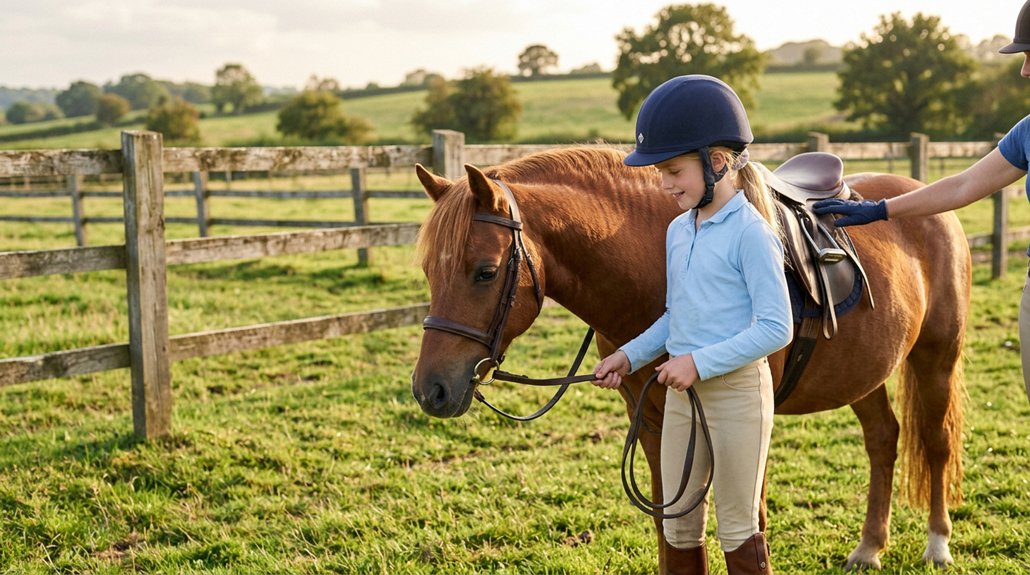
If you’re searching for a versatile and child-friendly equine companion, the Welsh Pony and Cob should be at the top of your list. Known for their Welsh versatility, these breeds excel in diverse riding disciplines like dressage, show jumping, and trail riding. Their sturdy build, ranging from 11 to 16 hands, comfortably accommodates young riders of varying sizes. With a calm Pony temperament, they’re easy to train and handle, making them ideal for beginners.
Their hardy and athletic nature guarantees they thrive in various environments, offering reliability in all conditions. Possessing high intelligence and a willingness to work, Welsh Ponies and Cobs foster strong bonds with riders. This enhances learning and growth, providing an enriching experience for children exploring equestrian pursuits.
Appaloosa: A Loyal Family Companion
While the Welsh Pony and Cob offer versatility in various riding styles, the Appaloosa stands out with its distinct spotted coat patterns and exceptional temperament. Renowned for their Appaloosa temperament, these horses provide a calm and gentle experience, ideal for young riders. Their intelligence and ability to form strong bonds make them a favorite for creating a nurturing training environment. Here’s why Appaloosas are a loyal family companion:
Appaloosas offer a calm, gentle riding experience, perfect for nurturing young riders and forming strong bonds.
- Visual Appeal: Appaloosas’ unique coats feature a striking array of patterns and colors.
- Size Consideration: Standing between 14 to 15 hands, they’re perfect for children improving their skills.
- Appaloosa Versatility: They excel in disciplines like trail riding, jumping, and Western events.
- Safety: Their gentle nature guarantees an enjoyable and secure experience for beginner riders.
How to Pick the Perfect Breed?
Choosing the right horse breed for your child can make all the difference in their riding experience and safety. Prioritize smaller breeds like ponies or cobs that measure less than 14.2 hands. These enhance rider safety, giving young riders confidence due to their manageable heights. Assess breed characteristics like temperament—opt for breeds known for their calmness and patience, such as the American Quarter Horse and Appaloosa.
Additionally, consider individual personality traits, guaranteeing the horse is willing to please and open to training. Factor in your child’s size, age, and riding goals. Collaborate with equestrian professionals to align the breed with riding styles. Here’s a quick guide to assist:
| Feature | Ideal Trait |
|---|---|
| Size | Less than 14.2 hands |
| Temperament | Gentle and forgiving |
| Professional Insights | Consult trainers/instructors |
This approach guarantees safety and a fulfilling riding experience.
Frequently Asked Questions
What Is the Most Kid Friendly Horse?
You’d find the American Quarter Horse stands out as the most kid-friendly due to its calm demeanor and adaptability. Prioritize friendly horse characteristics like this for maximum children riding safety and a positive learning experience.
What Is the Best Horse Breed for a Beginner Rider?
If you’re starting from scratch, an American Quarter Horse can be your best bet. They’re calm under pressure and respond well to beginner riding tips and horse training basics, ensuring you don’t have to reinvent the wheel.
What Is the 20% Rule for Horses?
The 20% rule suggests your horse shouldn’t carry more than 20% of its body weight, including tack. Proper training techniques and understanding horse temperament guarantee your horse remains healthy, preventing back and leg injuries through effective weight management.
What Is the Gentlest Horse to Ride?
You’re looking for a horse with a gentle temperament and easy disposition, making the Tennessee Walking Horse a top choice. Its smooth gaits and calm nature offer an enjoyable experience, particularly for newer riders battling confidence challenges.
Conclusion
Choosing the right horse for young riders is like selecting a harmonious dance partner; it’s about balance and synchronicity. Prioritize breeds that are steady on their feet yet gentle in spirit, such as the American Shetland, Welsh Pony, or Appaloosa. Immerse yourself in the art of nurturing these noble creatures—it’ll be an enriching journey. Keep an eye on your child’s riding aspirations, ensuring their equine companion grows with them, turning every ride into a seamless waltz of progress.