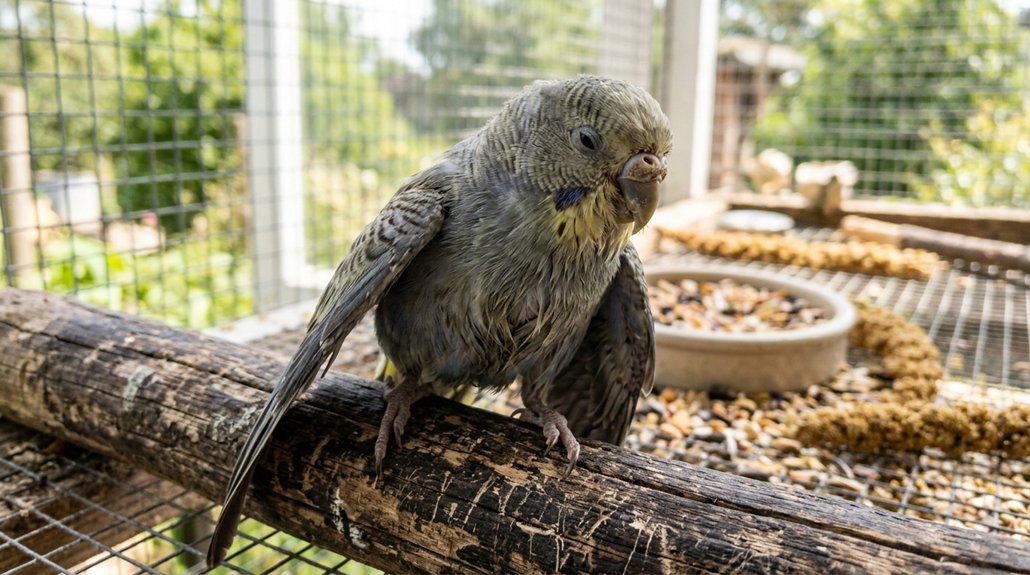
If your bird is quieter than usual, fluffed up for long periods, sleeping more, eating less, or sitting low on the perch, it may be sick. Watch for changes in droppings, eye or nose discharge, feather loss, aggression, or breathing changes like wheezing or tail-bobbing. If your bird is on the cage floor, can’t perch, or has open-mouth breathing, seek an avian vet right away. You can learn the next steps and warning signs to track.
Key Takeaways
- Early illness signs include quiet behavior, fluffed feathers, extra sleeping, reduced appetite, or sitting low on the perch.
- Emergency signs needing immediate avian vet care include open-mouth breathing, tail-bobbing, inability to perch, vomiting, or blood in droppings.
- Watch for changes in droppings, breathing, appetite, eyes, nose, feather loss, aggression, or balance.
- Keep the bird warm at 85–90°F, minimize handling, and isolate it in a secure ventilated carrier.
- Bring fresh droppings, recent weight, and symptom notes to the vet, and never give human medicines.
How to Spot a Sick Bird
How do you tell when a bird isn’t feeling right? You’ll often notice quiet behavior first: a bird that’s usually vocal may become subdued or stop calling, and it may eat less for a day. In small species, that change can precede rapid decline. Look at posture too. Fluffed feathers held for long periods, sitting low on the perch, or resting on the cage floor suggest your bird’s trying to conserve heat. Sleeping more than usual is another warning sign. Check droppings daily for changes in color, consistency, or frequency. Also watch breathing at rest for tail-bobbing, wheezing, or open-mouth breathing. Use monthly keel palpation to track body condition; a sharp keel or sudden abdominal change deserves prompt attention.
Bird Symptoms That Need a Vet
Certain symptoms mean your bird needs veterinary care without delay. If you see your bird sitting on the cage floor, fluffed up, and unable to perch, treat it as a medical emergency and call an avian vet today. Open-mouth breathing, wheezing, or strong tail-bobbing at rest signal respiratory distress and need immediate evaluation. A sudden loss of appetite for more than 24 hours in a small bird, or any refusal to eat in a larger parrot, also needs prompt assessment. Visible blood, repeated vomiting, or persistent watery droppings are urgent warning signs. Rapid weight loss, severe lethargy, behavior changes, loss of balance, or falling off the perch need urgent care. New feather loss can also deserve a prompt exam.
Common Bird Illness Symptoms
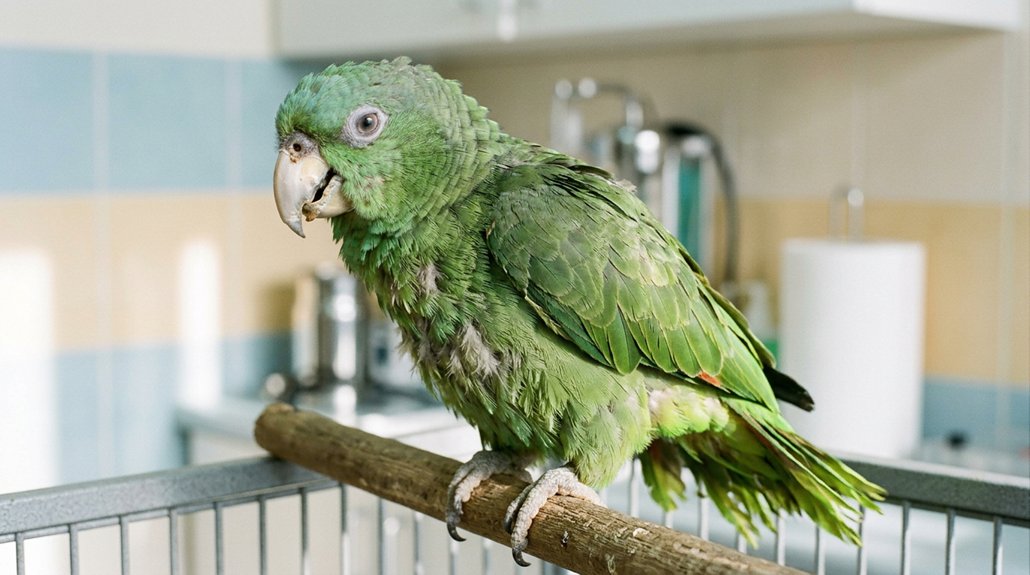
Beyond the emergency signs already noted, there are several common illness symptoms that can show up more subtly in birds and still deserve attention. You may notice fluffed feathers for long periods, sitting low on the perch, or resting on the cage floor; these often mean your bird’s trying to conserve heat. A reduced appetite, even for one day in small species, can signal metabolic decline. Watch for changes in droppings: color, consistency, frequency, or undigested food should be compared with your bird’s normal baseline. Lethargy, extra sleep, sudden aggression, visible weight loss, eye or nose discharge, and breathing changes are also concerning. Don’t dismiss feather molting if it’s paired with behavioral changes, because illness can mimic normal shedding.
What to Do Before the Vet Visit
Act quickly and keep your bird as stable as possible before the veterinary visit. Focus on warmth management: maintain about 85–90°F by covering part of the cage and using a wrapped heating pad or heat lamp on one side, so your bird can move away if needed. Minimize handling, reduce stress, and place food and water within easy reach; if it’s weak, use a low perch or towel-lined cage floor. Isolate it from other birds. Record appetite, droppings, breathing, activity, discharge, and weight if you can. Don’t give human or over-the-counter drugs; call your avian vet and follow instructions exactly. For transport prep, use a secure, ventilated carrier lined with a towel, keep it warm and quiet, and bring a fresh droppings sample and recent weight.
Bird First Aid and Prevention
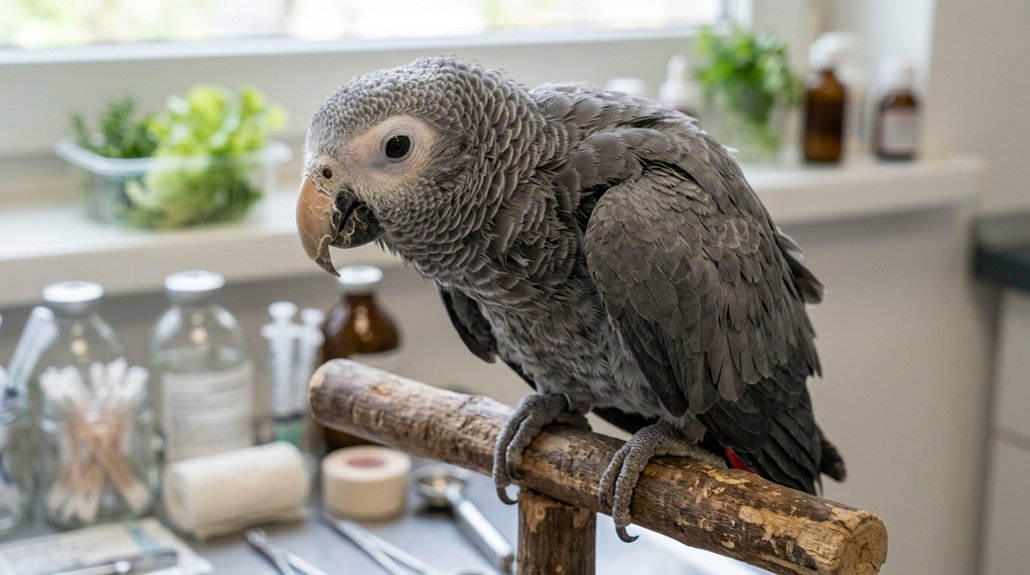
For first aid, a small, prepared setup can make a critical difference. Keep emergency preparedness simple: a digital scale, thermometer, clean towels, a small syringe for vet-directed meds, and a low-setting heating pad for a warm 85–90°F zone. If your bird looks cold or weak, wrap it gently in a towel and heat one side only so it can move away.
- A quiet towel nest
- A lit scale with daily weights
- A labeled carrier with records
Use medication avoidance: never give acetaminophen, ibuprofen, or other OTC drugs. Isolate the bird, reduce handling, and record appetite, droppings, breathing, and weight. Call your avian vet at once for bleeding, open-mouth breathing, or inability to perch. Keep a disaster kit ready for outages or travel.
Frequently Asked Questions
What Is the 3-3-3 Rule for Birds?
The 3-3-3 rule means you should seek help if your bird shows severe avian behavior changes for 3 hours, hasn’t eaten or droppings in 3 days, or still needs care after 3 weeks, reflecting flight adaptation concerns.
How to Help a Sick Pet Bird?
You should keep your bird warm, quiet, and isolated, then seek veterinary care promptly. Offer supportive feeding with softened foods and fresh water, monitor droppings and weight, and give medications only as prescribed.
How Do Birds Act When They Are Sick?
You’ll often notice behavior changes: they’re quieter, lethargic, fluffed up, hiding, or more aggressive. Appetite loss is common, too, and they may breathe oddly, bob their tail, or show unusual droppings.
Can a Sick Bird Recover on Its Own?
Sometimes, yes—but don’t count on it. Your bird’s immune response may clear a mild issue, and behavioral changes may fade, but if signs persist, worsen, or include breathing trouble, you’ll need veterinary care.
Conclusion
If you notice changes in your bird’s appetite, droppings, breathing, posture, or energy, don’t wait for a dramatic decline. Prompt observation and quick action can make a real difference, so contact an avian vet as soon as you suspect illness. While you can’t time-travel to prevent every problem, you can keep your bird safer with daily monitoring, a clean environment, and routine care. Your attention is often the earliest, most effective treatment.