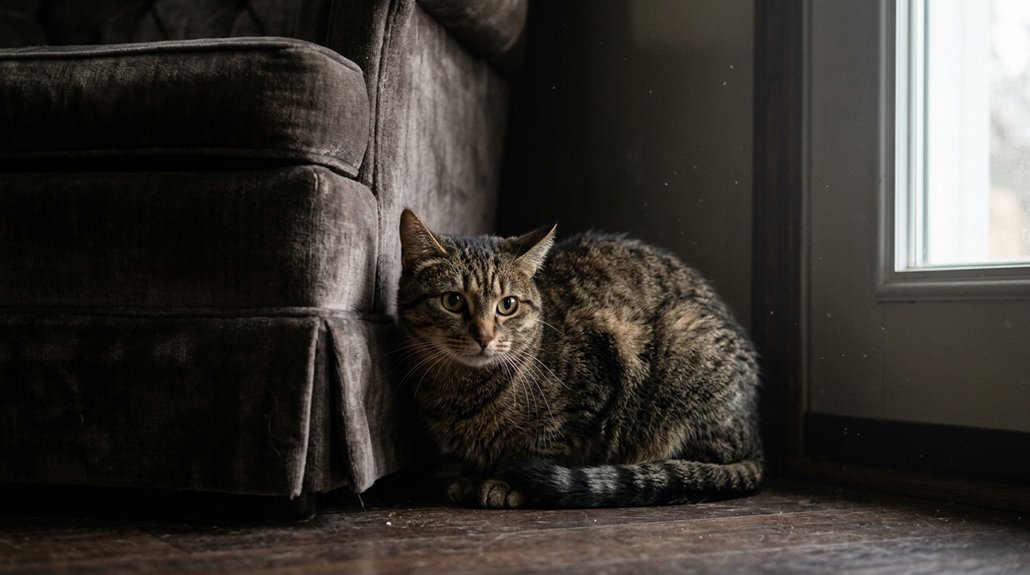
Cats hide as a natural instinct for safety and comfort, often choosing secluded spots. However, increased or excessive hiding can signal stress, environmental changes, or potential health issues. If your cat hides for over 24 hours, especially if they’re not eating or drinking, it may indicate a medical problem. Observing your cat’s behavior and body language closely is key. If unsure, consulting a vet or behavior expert is wise. Discover more about understanding this behavior.
Key Takeaways
- Cats hide due to instincts for safety, warmth, and to observe undetected.
- Stressors like loud noises or new environments often trigger increased hiding behavior in cats.
- Excessive hiding interfering with eating or lasting over 24 hours signals concern.
- Sudden increase in hiding, coupled with lethargy, may indicate health issues.
- Professional help is needed for persistent hiding with behavioral or physical changes.
Why Cats Hide: Normal Instincts and Preferences
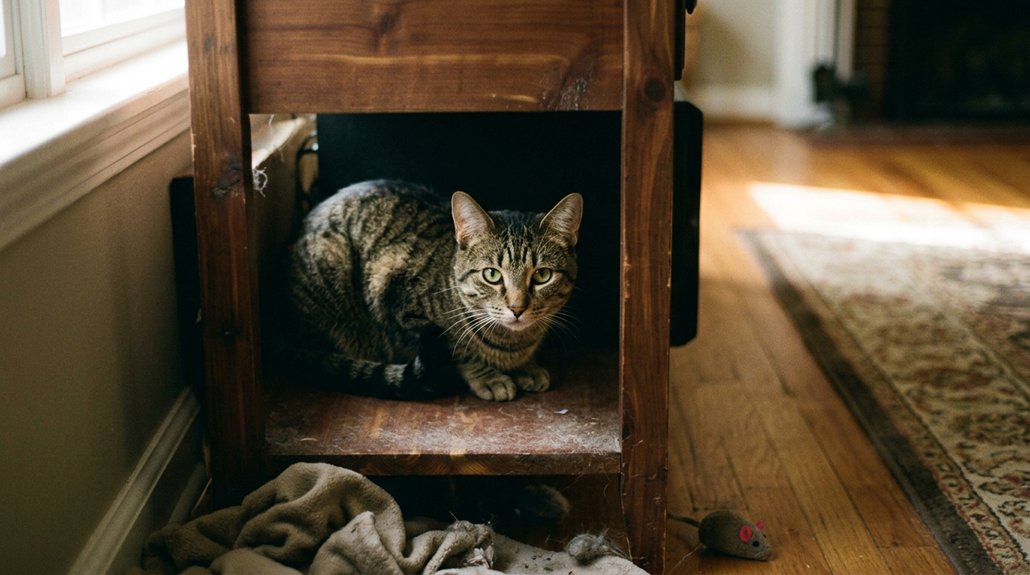
Hiding is a fundamental instinct in cats, providing them with an important means of protection and comfort. You’ve probably noticed your cat retreating to secluded, dark hiding places such as closets or under furniture. This behavior isn’t just about avoiding predators. It’s a vital aspect of feline behavior, offering warmth, security, and the opportunity to observe their surroundings undetected.
Cats’ natural affinity for hiding supports their hunting instincts, letting them stalk prey with precision. When they take refuge, it reflects both their preference for safety and their personality. By understanding your cat’s unique hiding behaviors, you’re better equipped to create an environment where they can feel secure and content. After all, respecting these instincts helps foster a happy, healthy kitty.
Common Reasons Cats Start Hiding More
When your cat starts hiding more frequently, it’s important to reflect on potential stressors in their environment, like new family members or heightened noise levels that may shake their sense of security. Behavioral changes such as retreating to quiet corners can also signal discomfort or illness, especially in older cats who might instinctively seek safety from perceived threats. Additionally, watch out for anxiety-inducing situations like loud fireworks or negative social dynamics with other pets, as these could be causing your cat’s increased seclusion.
Stressful Environment Changes
Cats are highly sensitive creatures whose behavior can be considerably impacted by changes in their environment. Environmental stressors like introducing new pets, household members, or even furniture can lead to insecurity, prompting hiding as a natural behavioral response. Similarly, loud noises such as construction, fireworks, and heavy traffic overwhelm them, causing them to seek safe spaces to manage their anxiety. Stressful situations, like moving or shifts in daily routine, can trigger additional hiding. They’re feeling threatened or uneasy due to unfamiliar visitors or altered household dynamics. To help mitigate this, create a calm environment. Allow your cat to acclimate at their own pace, providing cozy hiding spots. This empathetic approach fosters security, encouraging them to venture out confidently.
Illness or Discomfort Signals
Understanding increased hiding behavior in cats can be vital for their well-being, as it often indicates underlying health issues that cats instinctively conceal. Cats are masters at hiding pain, so behavioral cues like excessive hiding serve as health indicators. Common medical concerns such as dental pain, soft tissue injuries, or chronic conditions like arthritis might be the hidden culprits. Observing these cues early is important because significant changes in behavior often precede physical symptoms. If your cat consistently avoids its litter box while hiding, it may point to serious issues needing immediate veterinary attention. Watch for additional health indicators such as lethargy, refusal to eat, or signs of distress when moving. Prompt intervention guarantees the well-being of your feline friend.
Anxiety-Inducing Situations
Even the slightest changes in a cat’s environment can trigger anxiety, with hiding behavior commonly emerging as the first sign. Loud noises like fireworks or construction can serve as hiding triggers, leading your cat to seek refuge from perceived threats. Similarly, alterations in routine or surroundings, such as new family members or household items, heighten insecurity, urging your cat to hide more frequently. Overstimulation from interactions with other pets or people can further contribute to anxiety, driving your cat to their hiding spots for solace. Comfort measures, like creating quiet hideaways or maintaining a consistent routine, can reassure your cat during these stressful times. It’s essential to monitor their hiding habits, as prolonged seclusion might indicate underlying health issues needing attention.
When Is Cat Hiding Just Normal Behavior?
While not immediately apparent, hiding is often a normal and instinctual behavior for your feline friend, rooted in their evolutionary past and desire for security. Cats have inherited natural tendencies from their wild ancestors, seeking out cozy, secluded spots that offer a sense of safety. This normal hiding behavior is typically seen as they spend up to 12 or more hours sleeping, favoring areas where they feel both comfortable and undisturbed.
However, your cat’s environment can play a significant role in their hiding habits. Factors such as new pets, family members, or sudden loud noises might cause temporary increases in hiding. By observing these behaviors, you can gain insight into their typical patterns, helping you recognize when changes might signal deeper concerns.
How to Recognize When Hiding Is a Problem
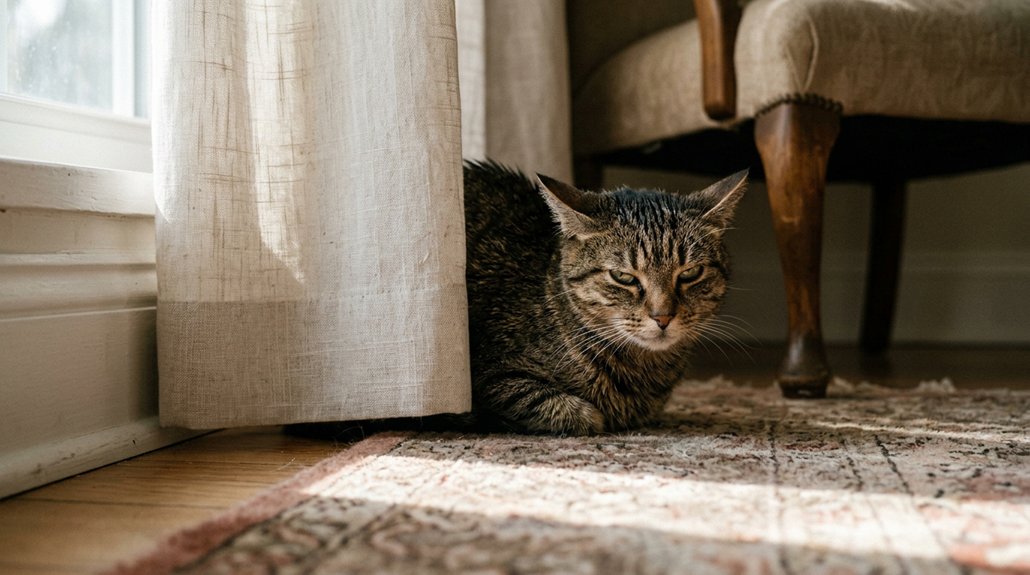
How do you determine when a cat’s hiding becomes problematic? Pay close attention to excessive hiding triggers that interfere with eating or drinking. If your cat stays hidden for over 24 hours, it could indicate stress, illness, or other serious concerns needing swift attention. A sudden increase in hiding behavior, paired with lethargy or appetite changes, signals possible health problems—immediate veterinary consultation is recommended. Also, monitor behavioral signals such as avoiding interaction with family members or other pets, as these may indicate environmental stressors or psychological issues. Regularly observing your cat’s habits helps discern between instinctual hiding and potential distress. Your vigilant care guarantees that what might seem normal doesn’t mask an underlying issue.
Comforting Cats: Effective Ways to Help Them Feel Safe
A cat’s environment plays an essential role in how secure they feel, and establishing comforting spaces is important for their well-being. Providing cozy hiding spots such as cardboard boxes can offer important hiding benefits, helping cats feel secure. Place them in quiet areas to reduce disturbances and stress. Utilize calming products, like Feliway® diffusers, near these spaces to foster a tranquil environment. Encourage exploration with high-value treats or toys but respect their need for secure environments. Monitor their behavior and let them emerge at their pace to build trust.
| Method | Benefit |
|---|---|
| Cardboard boxes | Enhances security feel |
| Quiet locations | Reduces stress |
| Calming diffusers | Tranquil environment |
| Treats/Toys nearby | Encourages exploration |
| Monitor hiding behavior | Fosters trust |
Design Safe Spaces Cats Will Love to Hide In
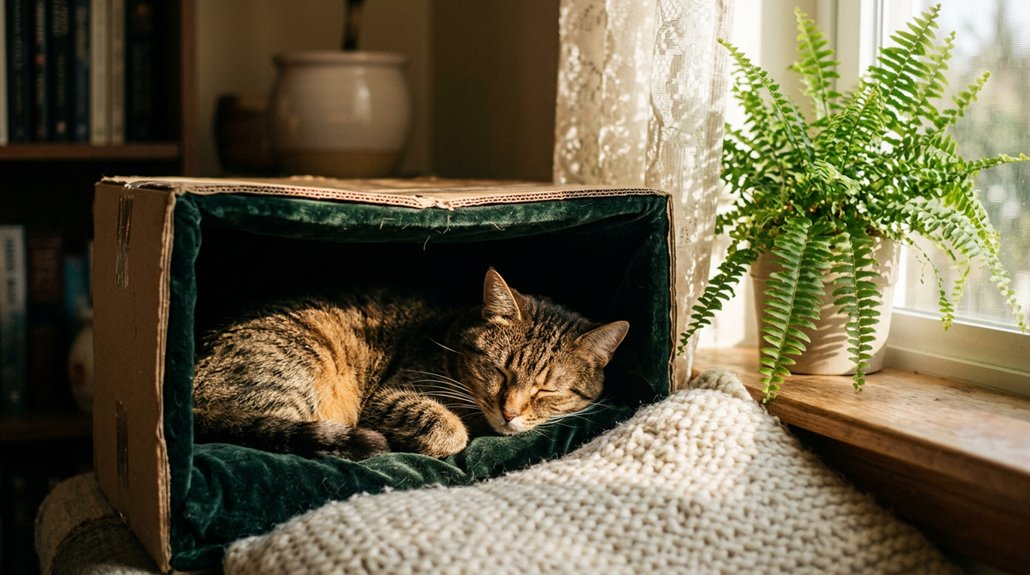
Crafting an environment where cats feel secure and comforted involves more than just offering cozy hiding spots. You should consider combining design with strategy to accommodate your feline friend’s natural instincts. Incorporate cat furniture such as elevated spaces or cozy corners crafted from safe materials to guarantee a comfortable retreat. Use soothing scents and familiar items to enhance the environment, encouraging your cat to relax and de-stress in these specially curated spaces. Regularly check these hiding spots to ensure they remain secure and free from loud disturbances.
- Igloo beds, cardboard boxes: Transform them into warm beds with soft bedding, offering a secure, enclosed retreat.
- Shelves, cat trees: Provide elevated spaces, enabling your cat to survey their territory.
- Scents, toys: Familiar items help infuse calm and reassurance.
When to Get Help From a Vet or Behavior Expert
If you’ve noticed your cat hiding more than usual, it might be time to contemplate seeking help from a vet or behavior expert. Excessive hiding, especially lasting over 24 hours, may indicate a medical issue needing attention. Sudden changes in hiding patterns can signal stress or illness, warranting a behavior assessment by a veterinarian. Accompanying symptoms like lethargy or loss of appetite make prompt evaluation vital, as they often suggest underlying health problems. Monitor your cat’s body language closely; if they seem uncomfortable or in pain, don’t hesitate to seek veterinary care. For persistent hiding without apparent cause, a behavioral expert can help identify environmental or psychological factors, offering strategies to improve your cat’s well-being and comfort.
Frequently Asked Questions
Should I Be Concerned if My Cat Is Hiding?
Yes, you should be concerned if your cat’s hiding behavior changes. Cats hide for various reasons, like stress or health issues. If hiding persists over 24 hours and is accompanied by other symptoms, consult a veterinarian.
What Is the 3-3-3 Rule for Cats?
The 3-3-3 rule for cats is a million times more enlightening than you’d think. It highlights cat behavior, reflecting feline instincts through three days to adjust, three weeks to thrive, and three months for complete comfort. Be patient.
What Are the Signs That a Cat Is About to Pass Away?
You’ll notice end-of-life signs like increased hiding, loss of appetite, grooming changes, lethargy, and litter box issues. These feline behaviors indicate distress, so it’s essential to monitor and provide comfort during this difficult time.
Why Is My Cat Suddenly Hiding but Acting Normal?
You’ve got a classic case of feline anxiety, it seems. Imagine your cat slipped into a speakeasy to cope with minor stressors. If their behavior, appetite, and grooming are normal, don’t sweat it. Keep an eye out, though.
Conclusion
Understanding your cat’s hiding behavior is essential for their well-being. While it’s normal for cats to hide, a staggering 60% increase in hiding can indicate stress or health issues. Be observant and empathetic; create safe spaces where they feel secure. If hiding becomes excessive or sudden, don’t hesitate to consult a vet or behavior expert. Your proactive approach guarantees your cat feels safe and cherished, fostering a harmonious living environment for both of you.