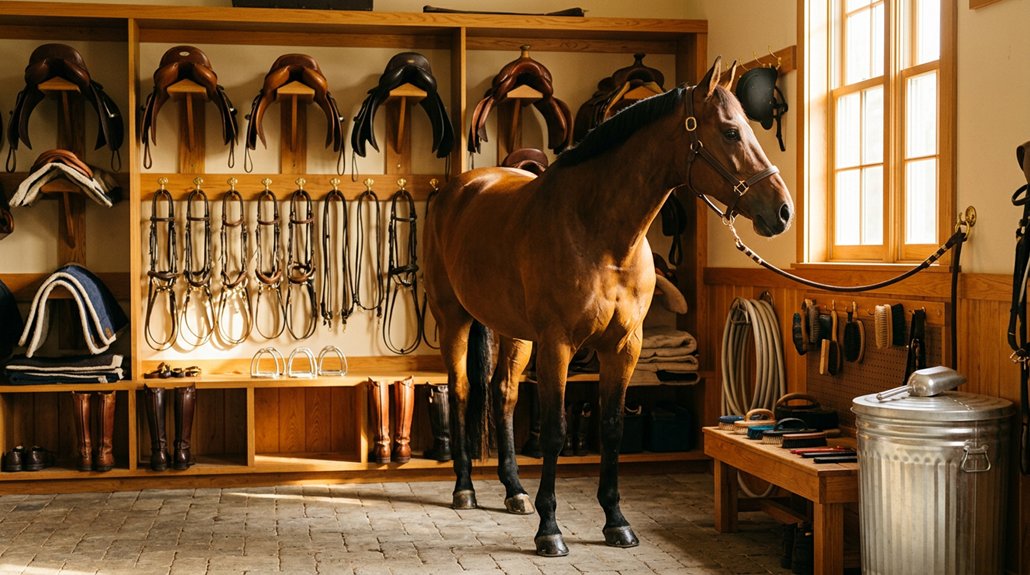
To own a horse, you’ll need essential supplies for care and comfort. Start with halters, lead ropes, feeding tools, and tack items like a well-fitted saddle and bridle. A grooming kit is crucial for health, while quality hay and storage guarantee nutrition. Weather items like blankets and stall maintenance tools are key for comfort. Don’t forget a first-aid kit with antiseptics. Organizing these essentials sets the foundation—uncover how each aspect enhances your horse’s well-being.
Key Takeaways
- Acquire halters, lead ropes, and a saddle fitting kit for safe handling and comfort during riding.
- Use grooming tools like curry combs and hoof picks to maintain the horse’s cleanliness and health.
- Secure feeding essentials such as high-quality hay and constant access to fresh water for balanced nutrition.
- Implement a first-aid kit with bandages, antiseptic, and emergency contacts for immediate health emergencies.
- Ensure weather essentials, like turnout blankets and fly masks, to protect against climate changes and insects.
Essential Starting Kit for New Horse Owners
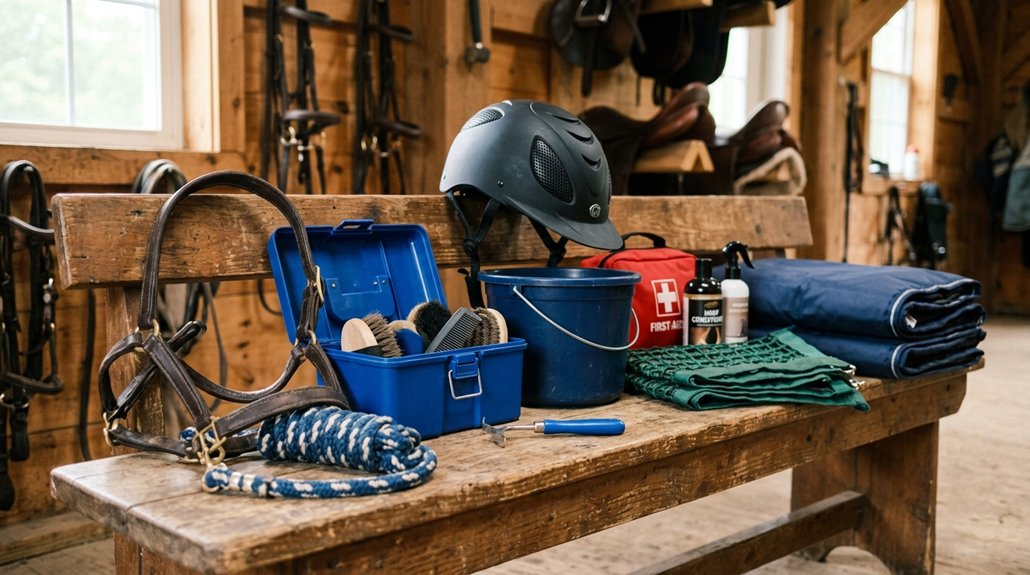
When you’re a new horse owner, ensuring you have the right starting kit is essential for your horse’s well-being and your peace of mind. Begin by setting up your barn with halters, lead ropes, and feeding equipment like sturdy buckets and troughs. Equally important is investing in proper saddle fitting—selecting saddles, girths, and bridles tailored to your horse’s size and riding discipline is critical for their comfort and performance. Don’t overlook an extensive first-aid kit stocked with bandages and antiseptic, ensuring you’re prepared for minor injuries. Regular health checks are essential; having a digital thermometer in your kit helps you monitor your horse’s condition effectively. These preparations will lead to a smoother shift and promote overall horse health.
Grooming Tools for a Healthy Horse
Your horse’s health shines through regular grooming, which requires a curated collection of essential tools like a curry comb, stiff and soft brushes, a hoof pick, and a mane/tail comb. These items not only keep your horse’s coat gleaming but also play an important role in stimulating circulation, revealing early signs of health issues, and guaranteeing hoof integrity. By organizing these essentials in a well-structured grooming tote, you’ll streamline your care routine and make sure every session is as effective as possible.
Essential Grooming Supplies
A well-stocked grooming kit is indispensable for maintaining a healthy horse, featuring must-have tools like curry combs, dandy brushes, and soft brushes that collectively guarantee a thorough clean. Regular grooming frequency is essential, ensuring coat health by gently removing dirt and debris while stimulating circulation. You’ll need a few essential tools:
- Curry Comb: Start with this tool to loosen embedded dirt and promote blood flow, enhancing skin health.
- Dandy Brush: With stiffer bristles, it’s perfect for lifting heavy debris from the horse’s coat, especially after a muddy romp.
- Soft Brush: It’s key for a gentle finish, bringing out a shine in the coat and checking for any signs of cuts or swelling.
Benefits of Regular Grooming
Though often overlooked, regular grooming is far more than a routine chore; it’s a cornerstone of equine health that offers a multitude of benefits. Maintaining a consistent grooming schedule with proper grooming techniques like using curry combs and stiff brushes enhances skin health by eliminating dirt and boosting circulation. This not only prevents skin issues but also maintains the horse’s coat and overall hygiene. As an owner, you’re responsible for ensuring your grooming frequency aligns with your horse’s needs. Daily sessions allow you to inspect for injuries and swiftly address any health concerns. Additionally, grooming fosters bonding benefits by developing trust, enhancing communication, and positively influencing horse behavior. A well-groomed horse is healthier, happier, and more likely to perform at its best.
Feeding and Watering Essentials for Nutrition
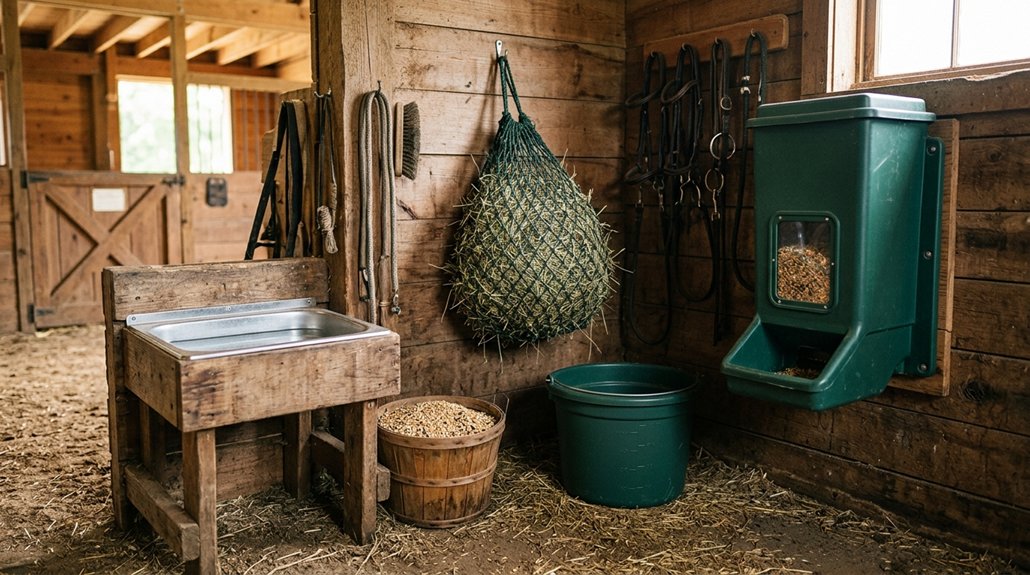
Making sure your horse receives proper nutrition is vital to its health and performance, so it’s important to equip yourself with feeding and watering essentials that meet these needs. Achieving the right nutrition balance starts with high-quality hay as the mainstay of their diet, supplemented by ration balancers tailored to your horse’s dietary needs. Here are some tips to guarantee the best care:
Proper nutrition ensures your horse’s health; prioritize high-quality hay and tailored ration balancers for optimal care.
- Feed Storage: Use a secure bin to keep feed dry and pest-free, protecting its nutritional quality.
- Hydration: Place two water buckets in the stall for constant access to fresh water, critical for hydration and health.
- Feeding Efficiency: Slow down eating and limit waste using hay nets or racks, which promote better digestion.
Always consult a vet to tailor feeding plans effectively.
Essential Horse Tack Items for Riding Comfort
When it comes to riding comfort for both you and your horse, selecting essential tack items requires careful consideration of fit, function, and quality. Saddle fitting is paramount to prevent discomfort and guarantee safety; it must align with your horse’s shape. Bridle selection involves choosing between bit or bitless options, tailored to your riding style and your horse’s needs. Don’t overlook the importance of girths; they must match your horse’s dimensions for stability. Complement these with properly sized saddle pads for necessary cushioning. Below is a concise overview:
| Tack Item | Purpose | Key Consideration |
|---|---|---|
| Saddle | Rider safety & horse comfort | Proper fitting |
| Bridle | Communication & control during riding | Type selection |
| Girth/Cinch | Secures saddle | Correct size |
| Saddle Pad | Cushions and protects horse’s back | Suitable size and material |
Weather Essentials for Your Horse
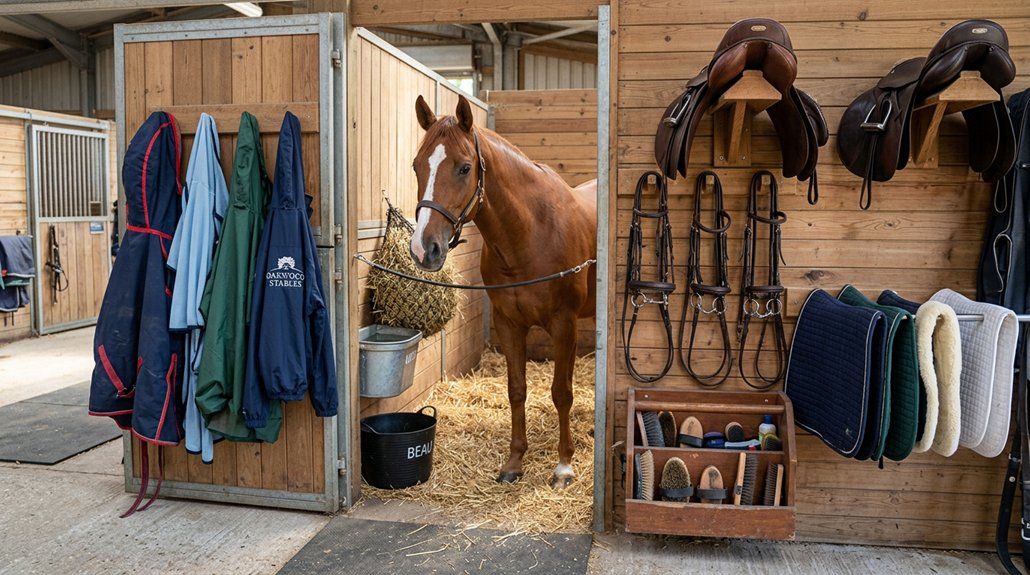
Managing your horse’s comfort in various weather conditions means prioritizing the right clothing options. You’ll need to choose the appropriate turnout blanket type, ensuring it provides enough insulation for your climate without compromising the horse’s mobility. Remember, a perfect fit isn’t just about comfort; it prevents health issues, making careful selection and regular adjustment critical.
Necessary Horse Clothing Options
Equipping your horse with the right clothing is essential to safeguarding their well-being against changing weather conditions. Understanding your horse’s needs regarding horse apparel and seasonal accessories is key:
- Turnout Blankets: These waterproof essentials vary from medium (200 grams fill) to heavyweight (400 grams fill) to keep your horse warm and dry in harsh weather.
- Stable Blankets: Designed for indoor comfort, these blankets should fit properly to prevent rubbing and discomfort, ensuring your horse stays cozy.
- Fly Protection: Insects can be relentless in warmer months. Use fly masks and sheets to shield your horse from bites and irritations, providing a hassle-free environment.
Always check for proper fit and remove blankets daily to assess your horse’s health and comfort.
Selecting Turnout Blanket Types
Understanding your horse’s clothing needs leads naturally to the next focus: selecting the appropriate turnout blanket to guarantee ideal protection in variable weather conditions. Choosing from varied turnout blanket types verifies you address specific climate challenges. Opt for waterproof options to keep your horse dry, essential during rainy or snowy spells. Consider the blanket’s weight: medium weight (200 grams fill) is suitable for milder conditions, while heavyweight (400 grams fill) provides warmth during harsher winter. Adjust according to your horse’s environment and individual needs, especially for older horses or those lacking proper shelter. Regularly monitor and adjust blankets as weather shifts to prevent overheating or discomfort. A well-chosen blanket supports your horse’s comfort and health year-round.
Importance Of Blanket Fit
When considering a turnout blanket for your horse, guaranteeing the proper fit is critical to preventing discomfort and skin irritation. Poorly fitted blankets can rub against their coat, leading to sores, so follow fitting guidelines religiously. Measure from the center of the chest to the tail in inches for precise sizing. Check daily for fit adjustments due to weight fluctuations. To maintain comfort and health, adopt these blanket maintenance tips:
- Daily Inspection: Regularly assess blanket fit and condition, adjusting for changes in body size or coat thickness.
- Weather Suitability: Make sure waterproof blankets are in top shape for harsh climates, while stable blankets cater to indoor comfort.
- Age and Environment Consideration: Older horses or those lacking adequate shelter may need thicker blankets more often.
Stay vigilant in your care!
Tools for a Clean Horse Stall
Although keeping a horse stall clean might seem like a straightforward task, having the right tools can greatly boost efficiency and effectiveness. A pitchfork is essential for mucking out stalls; it’s perfect for removing manure and dirty bedding. Pair it with a muck bucket or wheelbarrow to make waste transport seamless. Incorporating a sturdy shovel helps when moving bedding into the bucket or wheelbarrow for disposal. For stall organization tips, establish a cleaning schedule—daily cleaning prevents buildup and keeps the environment hygienic. Use a broom to sweep away residual debris, ensuring a neat appearance. Finally, replace old bedding with fresh shavings or straw. Fresh bedding not only absorbs moisture and odors but also increases comfort, enhancing your horse’s well-being.
First Aid and Safety Equipment for Horses
A well-stocked first aid kit is essential for effectively handling your horse’s minor injuries and ensuring their safety. It’s important to include basics like gauze pads, bandages, and antiseptic wound cleaner. Don’t forget a digital thermometer to monitor your horse’s temperature, a significant aspect of wound care. Equipping yourself with this kit allows you to manage minor health issues promptly, keeping your horse healthy and comfortable.
A well-stocked first aid kit is crucial for managing minor horse injuries and ensuring their safety.
Stay prepared by making sure:
- You have your veterinarian’s and nearest animal hospital’s emergency contacts easily accessible.
- Surgical gloves are available to maintain hygiene when treating wounds.
- You’re familiar with various bandages and wraps to effectively address injuries.
These essentials empower you to act swiftly during critical situations.
Comfort-Enhancing Horse Gear
First aid tools foster safety, while the right gear secures your horse’s comfort across varying conditions. Horse clothing, like waterproof turnout blankets, is essential for safeguarding your equine companion from the elements. Opt for medium (200 grams fill) or heavyweight (400 grams fill) versions depending on climate requirements. Stable blankets are critical for indoor warmth; guarantee a proper fit to avoid unnecessary friction. For older horses or those lacking shelter, more frequent blanketing might be necessary to maintain ideal body temperature. Daily removal of blankets is fundamental to monitor skin health and prevent moisture-related issues. In the warmer months, comfort accessories like fly masks and sheets shield your horse from pests and UV rays, enhancing overall well-being.
Frequently Asked Questions
What Are the Necessities for Owning a Horse?
You’ll need grooming tools like curry combs for coat care, feeding essentials including secure storage bins, and various saddle types for different riding styles. Stable requirements include blankets for comfort and waterproof turnout sheets for protection.
What Is the 1/2/3 Rule for Horses?
The 1/2/3 rule’s your horse care bible—spend a whopping third of its day grazing, not bonding with your riding equipment. Just make sure they also get exercise and some downtime. It’s hilariously straightforward but oh-so-effective!
Do Horses Cost $100,000?
Not typically. The horse value can vary, and while some high-performance horses may exceed $100,000 due to pedigree or market demand, most horses cost less. Don’t forget ongoing equine expenses like feed, veterinary care, and boarding.
Can You Ride a Horse With Epilepsy?
You can ride a horse with epilepsy, but it’s essential to prioritize epilepsy management and riding safety. Consult a vet for a specific plan, maintain a consistent environment, and be prepared for emergencies to guarantee everyone’s safety.
Conclusion
Owning a horse might seem intimidating, but with the right supplies, you’re ready to begin an incredible journey. Will your grooming tools maintain a healthy glow? Are your feeding essentials crafted for ideal nutrition? Each tack item must guarantee riding comfort, while weather gear prepares you for nature’s challenges. Will your stall-cleaning tools uphold your horse’s haven? First aid kits stand by for emergencies. As you step into this world, every thoughtful choice carries the promise of memorable equestrian adventures.