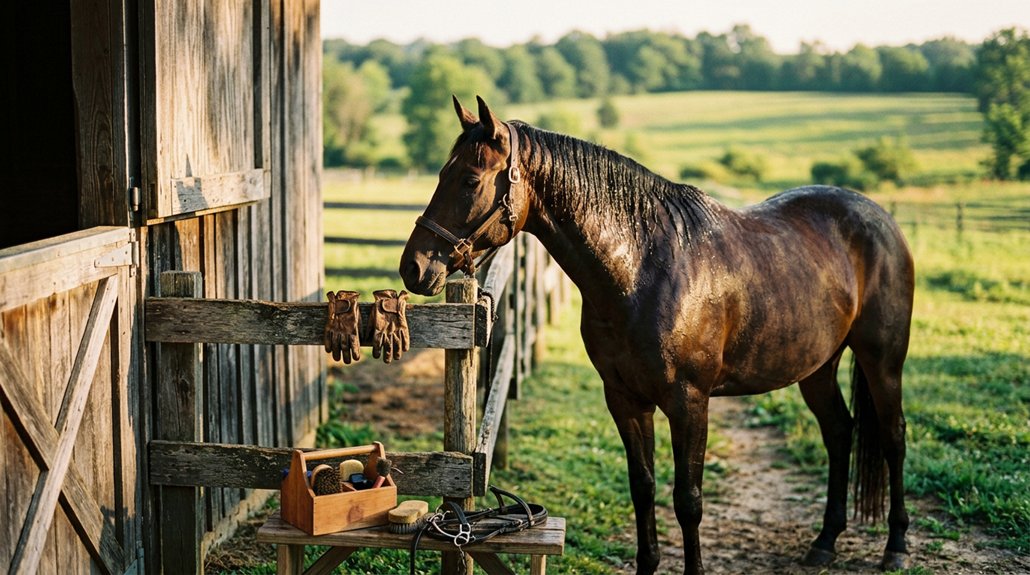
Owning a horse means committing to daily routines that begin early, focusing on feeding, grooming, and health checks. You’ll monitor hay and water and guarantee a clean stall to prevent hoof issues. Regular vet visits and nutritional care are essential. You’ll engage in training and bonding to maintain a healthy relationship with your horse. Managing seasonal changes will demand adjustments. With dedication and skill, you’ll discover valuable insights into deepening this rewarding equine journey.
Key Takeaways
- Daily care routines include early morning hay feeding, water monitoring, and evening grazing to maintain natural habits.
- Regular health checks and emergency protocols are crucial for early detection and management of equine health issues.
- Hoof maintenance with a farrier every 4-6 weeks prevents problems and ensures healthy hooves.
- Proper nutrition involves balancing hay, commercial feeds, and supplements for complete nutritional support.
- Bonding through grooming, play, and tailored training plans fosters a strong horse-caretaker relationship.
Daily Commitment to Horse Care
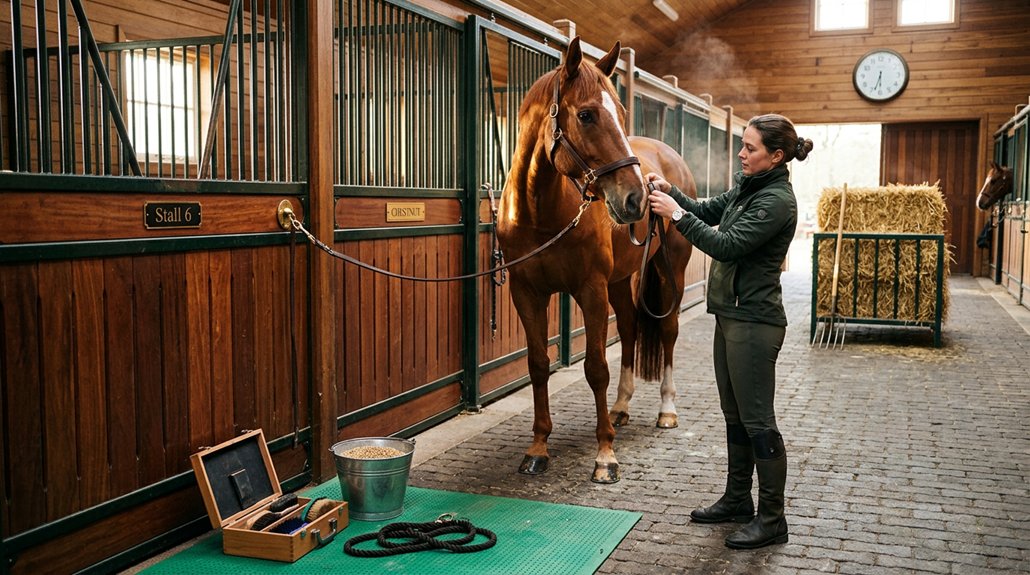
When you begin the journey of horse ownership, it’s essential to understand the daily commitment required to guarantee your horse thrives. Managing your time effectively is important, as your equine companion demands consistent attention to their environment and behavior. You’ll need to dedicate time each day to secure fresh hay and monitored water levels to foster proper nutrition. Cleaning stalls meticulously maintains a healthy living space, significant for their well-being. Observing equine behavior during these tasks helps you detect health issues early, preventing complications. Regular turnout in the pasture supports their physical and mental health, allowing for exercise and social interactions. Bonding activities entwined with daily care enhance your relationship, aligning with their needs and enriching your stewardship experience.
Starting the Day: Feeding and Grooming Basics
How do you start your day when you’re caring for a horse? Your morning routine kicks off at 6:45 a.m., guaranteeing your horses receive essential hay and water. This secures their hydration and nutrition are spot on. Soon after, at 8:00 a.m., it’s time to grab your grooming tools and explore the methodical task of grooming. 1. Inspect your horse for injuries and soundness, making this process crucial in maintaining their health. 2. Regular stall mucking out protects against hoof issues like thrush, keeping their living conditions impeccable. 3. Build a bond during grooming, nurturing the trust between you and your horse. In this routine, attentiveness to details guarantees a thriving and harmonious start, paving the way for a productive day.
Transition to Midday: Health Checks and Pre-ride Prep
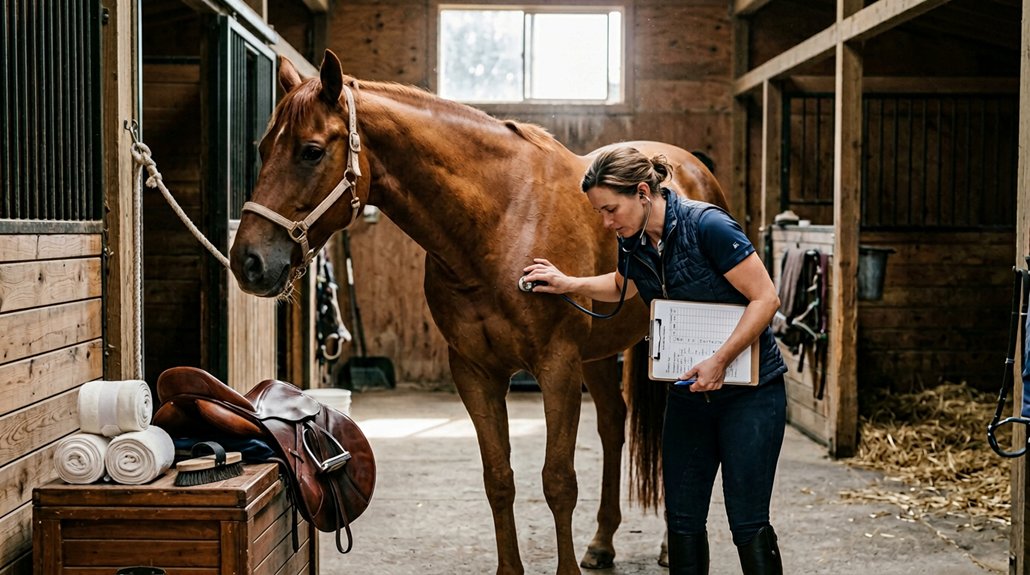
Even as the sun climbs higher toward midday, your focus intensifies on vital health checks and pre-ride preparations. At 11:00 a.m., you bring the horses back from the field, switching their rugs and providing fresh hay for comfort and nourishment. Health monitoring is essential; check for any signs of injury, swelling, heat, or lameness during stable time. As you groom each horse, apply precise grooming techniques to assess body condition and overall health. By 1:00 p.m., readiness for riding goes beyond grooming—verify tack and riding equipment are spotless and ready. Don’t forget hydration; replace water buckets to keep them refreshed after their pasture time. Your attentive care guarantees the horses are primed and healthy for the day ahead.
Afternoons With Your Horse: Training and Bonding
Once your horse is well-prepared for the afternoon, engage in a session that fosters both training and bonding. Start with bonding activities; grooming thoroughly not only promotes a deep connection but acts as a health check. 1) Schedule training techniques around your horse’s physical and mental stamina. Light groundwork exercises keep their mind active and ward off boredom. 2) Tack up calmly to reinforce trust. This technique fosters cooperation, ensuring both you and your horse enjoy the process. 3) After training, focus on cooling down — walk them out to soothe tired muscles, then hose off if necessary. Consider introducing play, such as liberty work, to blend training with leisure. This strengthens the bond, enhancing both the emotional and physical relationship with your horse.
Evening Routine: Feeding, Grooming, and Safety
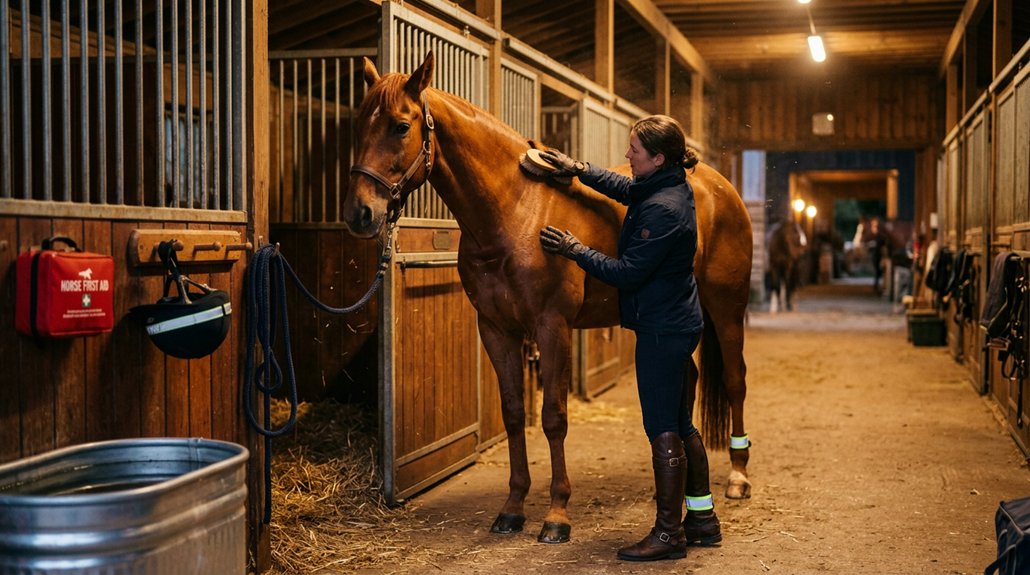
As dusk approaches, your evening routine requires precision and care, starting with feeding your horses promptly at 5:00 p.m. to complement their natural grazing instincts. Every detail matters, from ensuring water buckets are replenished to executing thorough safety checks at 10:00 p.m. for each horse, safeguarding their well-being through the night. This commitment not only fulfills their physical needs but also fortifies a lasting bond through attentive health monitoring and care.
Feeding and Watering Horses
Although caring for horses requires dedication, the evening routine, particularly feeding and watering, is fundamental for their health and happiness. Night feeding starts around 5:00 p.m. when you provide a balanced meal that replenishes their energy after a day’s activity. By 5:30 p.m., fresh hay is introduced, offering essential hay benefits such as promoting healthy digestion and satisfying their natural foraging instinct. At this time, a grooming session is important, offering you the chance to inspect for injuries or signs of illness while deepening the bond with your horse.
Later, at 10:00 p.m., a final water check guarantees clean, fresh water access all night. This three-step evening routine is critical for preventing dehydration and maintaining their overall well-being.
Evening Safety Checks
The evening routines don’t end with feeding and grooming; they encompass thorough safety checks essential for your horse’s security and comfort through the night. At 9:00 p.m. and 10:00 p.m., perform final checks to guarantee straw bedding is fresh and comfortable. Verify stall comfort by scanning for hazards and confirming each water bucket is full. Commit to this routine with passion and precision, understanding that each detail remarkably impacts your horse’s well-being.
| Time | Task | Purpose |
|---|---|---|
| 4:30 p.m. | Muck Stalls, Fill Water | Cleanliness, Hydration |
| 5:00 p.m. | Evening Feeding, Hay Supply | Nutrition, Sustenance |
| 6:00 p.m. | Grooming and Health Assessment | Wellness Check |
| 9:00 p.m. | Initial Safety Inspection | Immediate Security |
| 10:00 p.m. | Final Safety Confirmation | Overnight Comfort |
These checks are not just tasks—they’re commitments to your horse’s safety and comfort.
Adjusting Horse Care for Seasonal Changes
- Use fans during hot months to regulate their body temperature.
- In winter, blankets and altered turnout schedules protect against cold.
- Guarantee shelter, like run-in sheds, provides refuge during harsh weather.
Additionally, on a regular basis, you should monitor pastures and fencing; this is crucial as debris can emerge, posing risks during seasonal shifts. A proactive approach keeps horses safe and thriving in any climate.
Integrating Horse Care Into Personal Life
As you weave horse care into your personal life, it’s crucial to recognize the commitment involved. Daily routines, from feeding to health checks, demand precise time management. Efficiently slotting these tasks between your personal responsibilities is key. Seasonal shifts impose extra layers of complexity, requiring agile adjustments to your schedule. Morning, midday, and evening tasks are integral, with mucking out and health monitoring interspersed throughout the day. Financial planning heads the list, balancing expenses against lifestyle choices.
Engaging within a community enhances your journey, bringing mutual support and knowledge sharing. Strengthen community connections by participating in group activities or collaborating on daily tasks. These interactions elevate your horse care life, creating a shared tapestry of experience and camaraderie.
Meeting Nutrition Needs: Water, Forage, Supplements
Providing adequate nutrition for your horse is essential, as it directly influences their health, behavior, and performance. Effective water source management means ensuring constant access to clean, fresh water—particularly vital during warmer months when hydration impact is significant. Here’s how to meet your horse’s nutritional needs:
- Forage Quality Evaluation: Aim for a forage-based diet that constitutes 1.5-2.5% of their body weight daily. Conduct a hay analysis to spot any nutritional deficiencies.
- Supplement Scheduling: Complement with high-quality commercial feeds and supplements to fill any nutritional gaps, providing essential vitamins, minerals, and amino acids.
- Monitor Consumption: Regularly verify that your horse has access to sufficient forage to prevent potential health issues, especially in dry months.
Prioritize these areas and witness a thriving equine partner!
Professional Involvement in Daily Care Tasks
Engaging professionals in the daily care of your horse elevates their health and performance to new levels. Regular vet visits for exams and vaccinations should integrate seamlessly into your routine, guaranteeing thorough health monitoring. A skilled farrier is indispensable; adhere to farrier schedules for timely hoof maintenance, trimming every 4 to 6 weeks to prevent issues. Trainer consultations guide you in refining riding skills and tackling behavior assessments, enhancing your horse’s abilities and temperament. Nutrition planning, crafted with equine nutritionists, tailors diets for specific dietary or performance needs, fostering peak health. Reliable emergency care protocols and consultations with seasoned professionals guarantee rapid response to health concerns, rounding off a robust support system that enriches your horse’s day-to-day life.
Frequently Asked Questions
What Is the 1/2/3 Rule in Horses?
The 1/2/3 rule mandates feeding horses 1.5-2.5% of their body weight daily in forage. It includes two hours of turnout, fostering equine behavior, and three weekly health checks, ensuring balanced horse nutrition and wellness.
Can You Ride Horses if You Have Scoliosis?
Yes, you can ride horses with scoliosis, painting strength in your back like an artist. Consult experts, use supportive equipment, and hone riding techniques. Scoliosis benefits, such as core strengthening, acknowledge each rider’s uniqueness and adapt accordingly.
What Is “I Love You” in Horse Language?
In horse language, “I love you” is shown through body language like nuzzling or resting their head on you. Recognize equine emotions with soft eyes and gentle nickers, which demonstrate trust and affection in their own unique way.
Can Horses Help Lower Blood Pressure?
Yes, horses can help lower blood pressure. Engaging in equine therapy offers stress relief, boosts heart health, and transforms tension to tranquility. Your interactions with these animals release calming chemicals, promoting peaceful sentiments and enhancing overall wellness.
Conclusion
Owning a horse is a labor of love and commitment. As the adage goes, “You reap what you sow.” The daily routine—feeding, grooming, health checks, and training—requires dedication and passion. Adjusting care with the seasons and integrating these tasks into your life becomes second nature. Ensuring your horse’s nutrition is met while sometimes involving professionals keeps them happy and healthy. Embrace the journey, as every moment spent enriches both your life and your horse’s wellbeing.