
Deciding whether to board your horse or keep it at home involves analyzing costs, time commitments, and welfare priorities. Boarding provides consistent expenses with access to amenities like riding arenas and expert veterinary care, but limits daily interaction. Home care offers flexibility and potential property equity, yet involves significant initial investments and daily time commitments. Consider financial, logistical, and social factors carefully. Explore further to uncover expert insights on ideally balancing equine care options.
Key Takeaways
- Boarding offers structured amenities and expert services, ensuring comprehensive care and consistent feeding schedules for horses.
- Home care requires significant initial investments in land and facilities but allows for personalization and constant availability.
- Boarding facilities provide convenience by minimizing daily responsibilities and offering access to expert veterinary care and training.
- Home care incurs fluctuating costs but offers immediate accessibility and control over daily routines.
- Decision-making should consider cost stability, time commitment, and welfare priorities to align with personal lifestyle and equine care philosophy.
Decision-Making Framework for Horse Care Options
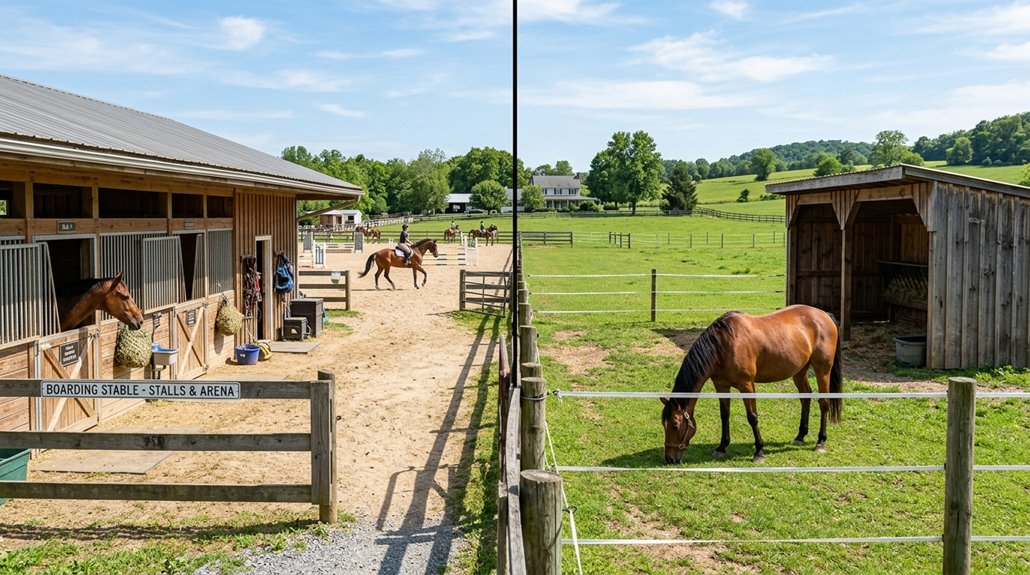
When evaluating whether to board your horse or keep it at home, a methodical approach is crucial. Horse ownership requires analyzing cost structures; boarding offers stable expenses but reduces flexibility, whereas home-keeping involves fluctuating costs tied to maintenance variabilities. Personal preferences greatly impact decision-making; some owners relish the hands-on experience and daily care demands of feed, grooming, and upkeep. Conversely, others might prioritize convenience, valuing boarding facilities for minimizing labor and enhancing leisure. Access to specialized services is paramount. Boarding provides stimulation, socialization, and professional networks, fostering an enriched equine environment. When determining horse care options, balancing financial outlays, time commitments, and welfare priorities guarantees a responsible selection aligned with your lifestyle and equine care philosophy.
The Benefits of Keeping Horses at Home
Although boarding facilities offer convenience, keeping horses at home confers significant benefits particularly for those seeking granular control over their animals’ care regimen. Creating a personalized horse sanctuary allows you to tailor equine nutrition plans, pasture management, and training opportunities that meet your horse’s unique needs. Landscape design plays a key role in optimizing mental stimulation through diverse environments and integrating effective security measures.
Home care means you bypass the hefty boarding fees while ensuring immediate emergency preparedness. The autonomy in scheduling allows spontaneous rides, enhancing your relationship with your horse through consistent, meaningful interactions. Direct control over daily routines fosters a structured environment that supports a holistic, enriching lifestyle, promoting socialization within a familiar herd while maintaining overall welfare.
Overcoming Challenges in Home Horse Care
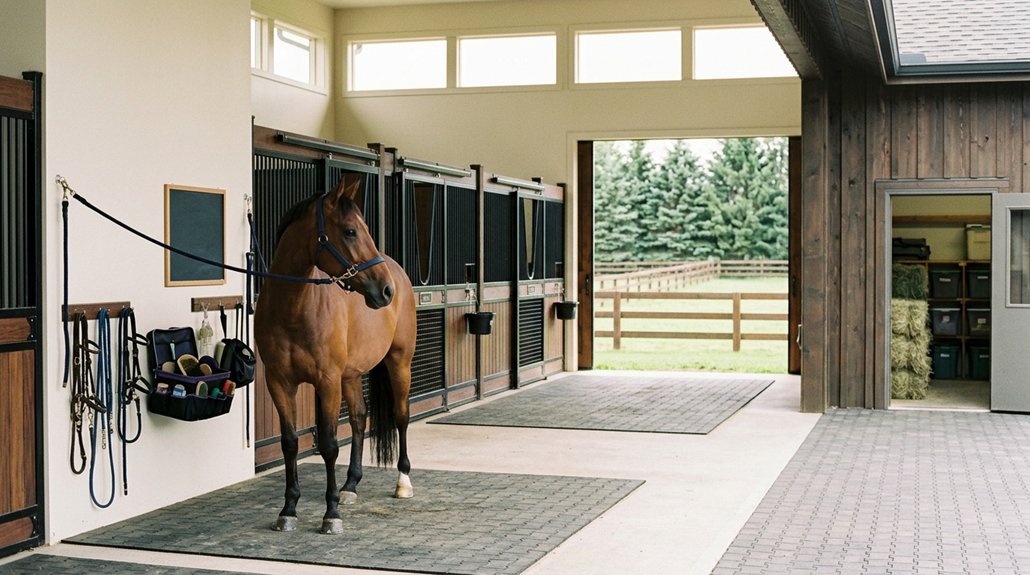
Establishing a home care environment for your horse isn’t without its challenges, demanding strategic planning and resource allocation. First, constructing a suitable facility often requires intensive investment, involving barn setup, secure fencing, and dependable water and electric supply. You’ll need to master time management for daily routines—feeding, mucking out stalls, and grooming—all requiring dedicated hours. Seasonal adjustments are critical; inclement weather can disrupt pasture access, demanding adaptive strategies to maintain consistent care. Familiarity with facility management is essential, focusing on efficient waste disposal, feed storage, and water systems to guarantee horse health and comfort. Cost fluctuations, resulting from variable feed prices and veterinary bills, call for prudent budgeting to accommodate your horse’s individual needs and service expenses.
Why Boarding Your Horse Could Be an Ideal Care Choice
When you choose to board your horse, you’ll benefit from professional equine care that guarantees meticulous health management and access to high-quality veterinary services, considerably reducing your daily responsibilities. Boarding facilities typically provide environments conducive to equine socialization, leveraging herd dynamics to promote psychological stimulation and overall wellness. Additionally, these facilities often include amenities such as riding arenas and trails, offering both practical and recreational benefits that might not be feasible with at-home care.
Access to Professional Care
Opting to board your horse at a professional facility not only provides access to expert care but also assures that your equine companion receives thorough attention from trained specialists. Routine health assessments are essential, guaranteeing early detection of potential issues. These facilities are equipped with emergency services, providing timely intervention when necessary. Ideal management practices assure adherence to specialized feeding regimens designed for your horse’s unique needs.
Moreover, professional facilities contribute appreciably to your horse’s social enrichment and psychological well-being, reducing stress levels. Regular socialization opportunities are available, promoting healthier behaviors.
- Expert routine health checks: Vital for early issue detection.
- Comprehensive emergency services: Immediate critical care availability.
- Tailored feeding programs: Customized to individual dietary needs.
- Socialization environments: Facilitates peer interaction.
- Horse well-being enhancements: Access to grooming and exercise amenities.
Reduced Daily Responsibilities
Boarding your horse at a professional facility greatly reduces your daily responsibilities, allowing you to focus on enjoying quality time with your equine companion. Expert management personnel handle essential tasks such as feeding, mucking, and routine health monitoring. This professional oversight allows you to efficiently prioritize time management, focusing on riding or leisure activities instead of exhaustive chore lists.
| Feature | Benefit | Outcome |
|---|---|---|
| Daily Care Handled | Time management | More riding time |
| Health Monitoring | Stress reduction | Reliable well-being |
| Facility Amenities | Cost efficiency | Enhanced convenience |
Access to riding arenas, grooming stations, and turnout fields streamlines care logistics, eliminating the burden of self-maintenance. Furthermore, knowing your horse is in capable hands minimizes stress, affording you the peace of mind to take vacations or handle other commitments responsibly.
Enhanced Socialization Opportunities
How essential is it for your horse to engage in regular social interactions? Ensuring your horse experiences playful interactions within a herd setting is fundamental for its mental health. Boarding facilities afford opportunities for daily socialization, vital to understanding herd dynamics, which enhance social bonds and mitigate stress.
- Boarding barns frequently host community-driven events, clinics, and group rides, which are beneficial for horses and owners alike.
- Horses engaged in natural herd dynamics in boarding pastures display fewer behavioral problems compared to solitary-kept horses.
- Access to skilled trainers and barn staff enriches the horse’s socialization and training experiences.
- Social bonds formed in a herd environment can lower anxiety and behavioral risk factors.
- Regular social interactions internally stabilize the horse’s cognitive function and emotional resilience.
Choosing boarding promotes your horse’s well-being.
Potential Downsides of Boarding Your Horse
When considering the complexities of horse boarding, it’s critical to be aware of its potential downsides, each having implications for both owner and horse. Boarding limitations often restrict your influence over essential aspects such as dietary routines and habitat modifications, which are commonly determined by facility protocols. This can lead to owner detachment, as you might find that your interaction with daily horse care is minimized, affecting your bond with your horse. Additionally, the commute to the boarding facility adds time constraints that might disrupt your schedule. Moreover, the risk of transmissible illnesses within communal environments can’t be overlooked, potentially compromising your horse’s health. Each factor requires careful evaluation to guarantee boarding aligns with your priorities and your horse’s well-being.
Comparing Costs: Boarding vs. Home Care
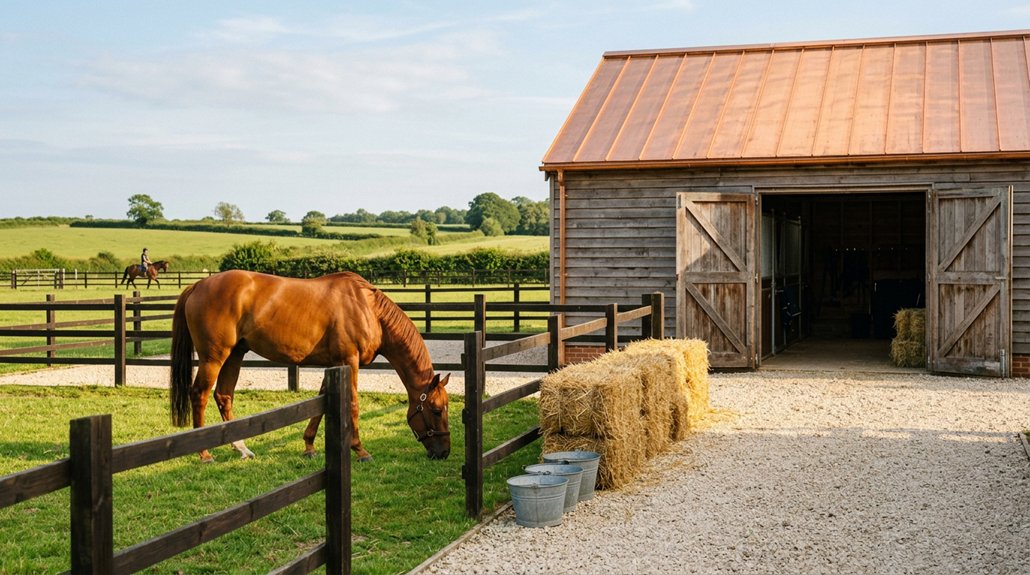
Evaluating the cost dynamics of horse care is essential for making informed decisions between boarding and home care. Monthly boarding fees usually range from $300 to over $1,000, depending largely on amenities and location. This cost often encapsulates services like feed, veterinary care, and turnout. On the other hand, home expenses include significant initial outlays for land and infrastructure, such as fencing and shelters. Ongoing costs typically involve fluctuating feed, hay, and maintenance expenses.
Here’s a detailed breakdown:
- Boarding includes utilities such as water and electricity in the monthly fee.
- Home care incurs ongoing utility costs.
- Boarding offers convenience with included services.
- Long-term financial gains possible through property equity.
- Market variability impacts both options differently.
Choices depend heavily on individualized financial forecasts.
Time vs. Convenience in Horse Care
Although boarding horses at a facility often minimizes daily responsibilities, keeping your equine companion at home grants immediate accessibility and intimate control over care routines. Home care demands meticulous management of daily routines, including feeding, mucking, and grooming, which can consume extensive time, impacting your daily time management. Conversely, travel logistics to a boarding facility might add travel time, potentially limiting interaction frequency.
| Option | Pros |
|---|---|
| Boarding | Time savings, professional daily care |
| Home Care | Immediate access, personalized routines |
| Boarding | Reduced daily task burden |
| Home Care | Flexible schedule, no travel needed |
| Boarding | Shared resources, less time on maintenance |
Opting for home care offers unique care flexibility, but at the cost of increased daily commitment.
Evaluating Amenities and Professional Support
How do the amenities and professional support at boarding facilities enhance the care and development of horses? Boarding facilities offer extensive resources like indoor arenas and wash racks necessary for ideal horse training and hygiene. Access to expert farriers and veterinarians guarantees the timely health management of your horse. These environments often provide specialized training facilities that attract competitive training opportunities for skill development. Engaging in community events at boarding locations can lead to networking, shared learning, and improved equestrian practices. Owners can enjoy riding without the burden of maintenance duties, and group discounts on veterinary services lower overall health costs. The sum of these amenities fosters an environment conducive to both horse and rider growth.
Maximizing Horse Welfare in Boarding vs. Home Settings
When deciding between boarding and home settings for your horse, it’s important to weigh how each environment can support or hinder equine welfare. Boarding facilities offer structured stabling options with benefits like consistent feeding schedules and professional oversight, enhancing horses’ physiological and psychological well-being. You’ll find services like regular veterinary care and pasture management aiding ideal horse welfare. Conversely, keeping a horse at home allows customized care regimens that reduce stress, accommodating specific needs through direct owner management. While home environments require proactive pasture management for nutrition and exercise, the reduced social interaction may need extra measures, such as playdates with other horses, to maintain mental health. Regardless, guarantee clean, safe, and enriching conditions in both settings for maximum welfare.
Choosing the Best Horse Care Option for You
Selecting the ideal environment for your horse requires evaluating practical considerations alongside personal preferences. Horse ownership encompasses decisions like boarding versus keeping at home, with each presenting distinct care preferences and financial commitments. Urban boarding fees may exceed $1,000 monthly, contrasting with fluctuating costs at home involving feed and property upkeep. Consider daily care duties at home versus the reduced immediate responsibilities at boarding facilities. These offer professional training, socialization, and flexible management. You should also assess initial setup costs for home facilities and ongoing veterinary expenses.
Evaluate practical needs and personal preferences in choosing between boarding or home horse care.
- Budget variations between urban and rural setups
- Time investment in daily horse maintenance at home
- Access to professional care and training at facilities
- Initial infrastructure investments at home
- Impact of lifestyle on horse interaction and care flexibility
Frequently Asked Questions
What Is the 1/2/3 Rule for Horses?
The 1/2/3 Rule for horses optimizes horse care and horse nutrition by recommending 1 acre for grazing, 2 hours of turnout, and 3 enrichment sources, promoting physical health, psychological enrichment, and minimizing behavioral issues through expert management practices.
Is It Better to Keep Horses at Home or Stables?
Deciding if keeping horses at home or stables is better might remind you of the Odyssey’s long journey. Stables offer advantages like stable amenities and consistent feeding schedules, whereas home offers personalized horse care and pasture space.
What Is “I Love You” in Horse?
“I love you” in horse communication is displayed through equine emotions like mutual grooming, nuzzling, and nickering. When a horse follows you, engages calmly, and seeks your attention, it’s expressing trust and a deep human-equine bond.
Which Smells Do Horses Hate?
Horses exhibit odor avoidance towards artificial fragrances, citrus scents, vinegar, and certain essential oils like tea tree and peppermint. Their scent preferences lean towards natural aromas, and they find smoke distressing due to its indication of danger.
Conclusion
Choosing between boarding your horse and keeping it at home is like selecting between two exceptional stables, each offering unique benefits and challenges. Imagine your horse as a finely-tuned instrument: at home, you’re the composer, orchestrating its daily needs but potentially missing expert touchpoints. Boarding, however, provides a symphony of professional care and amenities, though it might lack personal intimacy. Ultimately, prioritize your lifestyle, available resources, and your horse’s well-being to make the best decision.