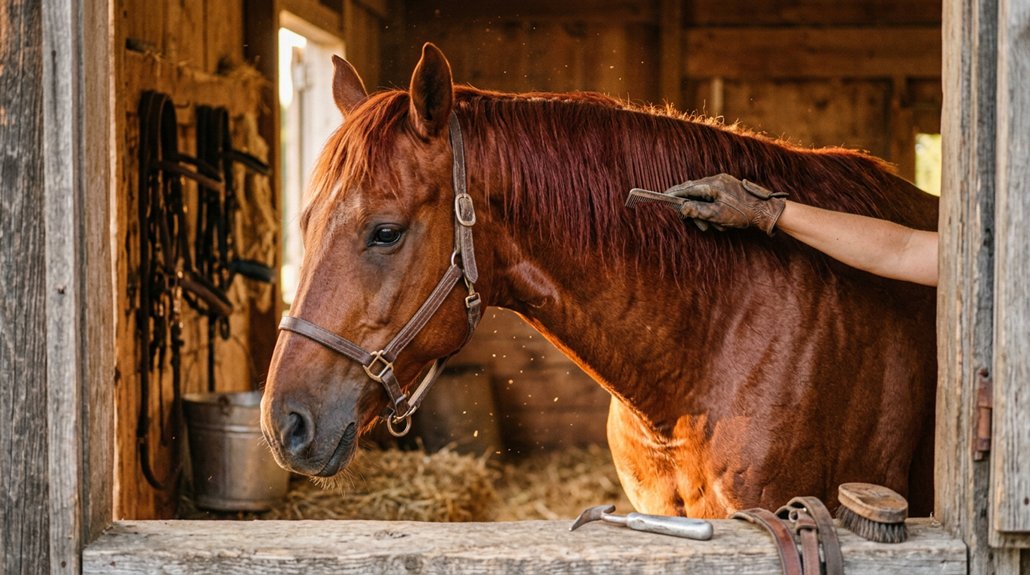
Caring for a horse requires a substantial time commitment, with at least 8-10 hours weekly for basic tasks. You’ll spend about 30 minutes daily on fundamental care, like feeding and health assessments. Weekly, plan for 40-minute grooming sessions four to five times, plus regular exercise. Efficient feeding involves multiple smaller meals, and bimonthly vet check-ups are essential for health management. Understanding how these elements fit into your schedule is important to ensuring your horse’s well-being.
Key Takeaways
- Basic horse care tasks require at least 8-10 hours of commitment per week.
- Daily essential care tasks take approximately 30 minutes in the morning and evening.
- Weekly grooming and stall maintenance can take up to 40 minutes per session.
- Regular feeding schedules and health assessments usually take around 14-15 hours weekly for passionate owners.
- Bimonthly veterinary check-ups and daily health checks are crucial for maintaining horse health.
Understanding the Long-Term Commitment of Horse Ownership
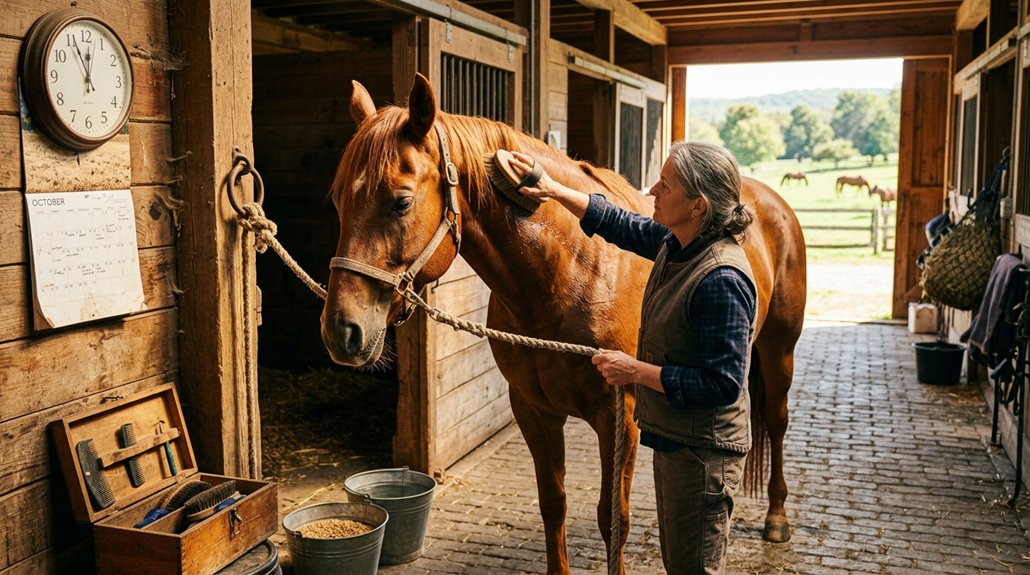
Though often romanticized, horse ownership is a formidable commitment that extends well beyond mere affection for the animal. You’re entering a lifelong dedication when you take on a horse, given their potential 30-year lifespan. This journey isn’t solely about the emotional bond but includes a steadfast commitment to their health and welfare. To foster this relationship, you need to invest a significant amount of time weekly—at least 8-10 hours for basic care. More passionate owners often spend 14-15 hours ensuring detailed attention to the horse’s needs. These figures reflect only a fraction of the responsibility; regular veterinary care, nutritional management, and maintaining a structured routine are non-negotiable tasks for the conscientious horse owner.
Daily Horse Care Essentials: Tasks and Time Management
A well-structured daily routine is essential for effective horse care, requiring at least 30 minutes each day for important tasks. Proper time allocation optimizes efficiency, allowing you to complete significant duties like feeding and wellness checks systematically. Here’s a precise breakdown of your daily care routine:
- Morning Tasks: Allocate 15-20 minutes for feeding grains, hay, water checks, and quick health assessments.
- Evening Tasks: Mirror morning efforts in another 15-20 minutes, focusing on feeding and injury inspections.
- Grooming: Though not daily, it’s critical for both bonding and coat health.
- Stall and Equipment Maintenance: Requires ongoing attention, integrated into weekly planning beyond daily tasks.
This strategic management guarantees thorough care within limited time.
Weekly Horse Care: Grooming and Maintenance Strategies
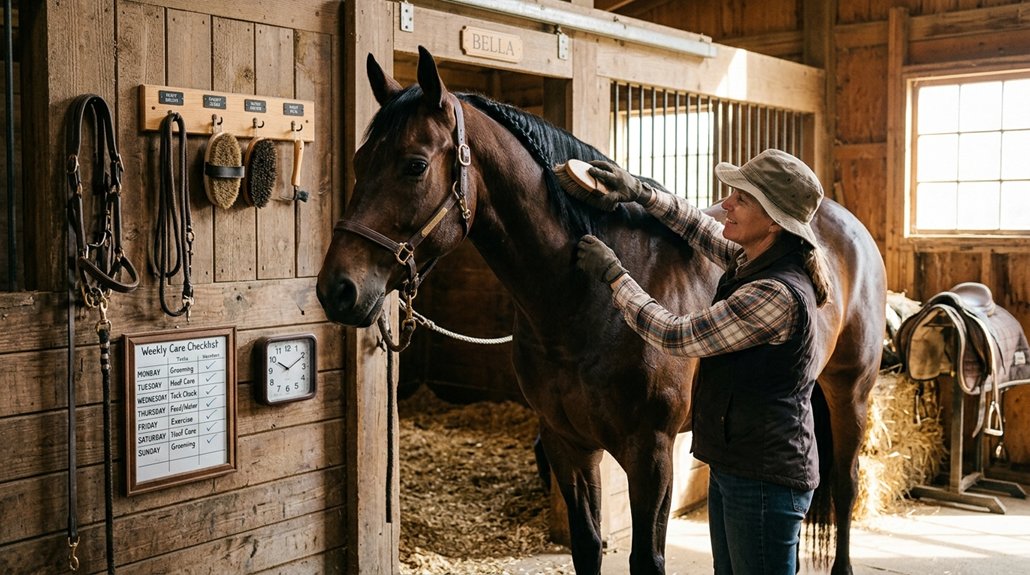
Effective weekly care for your horse involves a strategic blend of grooming and maintenance practices that enhance both the horse’s well-being and the bond between horse and owner. Prioritize grooming techniques four to five times weekly, allocating 40 minutes per session to guarantee coat health and strengthen your connection through intimate bonding activities. Additionally, conduct daily wellness checks, spending 5-7 minutes per horse to identify potential injuries or illnesses. Allocate roughly 30 minutes daily to clean stalls for three to four horses, focusing on removing manure and revitalizing bedding for ideal sanitation. Incorporate regular exercise into the weekly routine, allowing time for warm-up, cool-down, and riding sessions. Together, these refined strategies systematically support your horse’s physical health and fortify your reciprocal relationship.
Efficient Feeding: Balancing Nutrition and Time
While grooming and maintenance are essential to your horse’s health and relationship with you, feeding is equally important, requiring a strategic approach for efficiency. Implementing ideal feeding schedules involves providing three to four smaller meals, essential for energy levels and digestion. Efficient nutrition balancing guarantees forage constitutes 1.5-2% of the horse’s body weight daily. To prevent health issues and save time, you must regularly assess body condition and adjust the diet accordingly. Water management is critical, as horses can consume up to 13 gallons daily. Consider the following for a streamlined process:
Feeding requires strategic schedules and balanced nutrition; assess body condition and manage water efficiently.
- Smaller meals enhance digestion.
- Daily forage at 1.5-2% body weight.
- Monitor body condition for dietary adjustments.
- Constant, efficient water management.
Such strategic planning guarantees time-effective horse care.
Making Time for Your Horse’s Health: Veterinary Needs and More
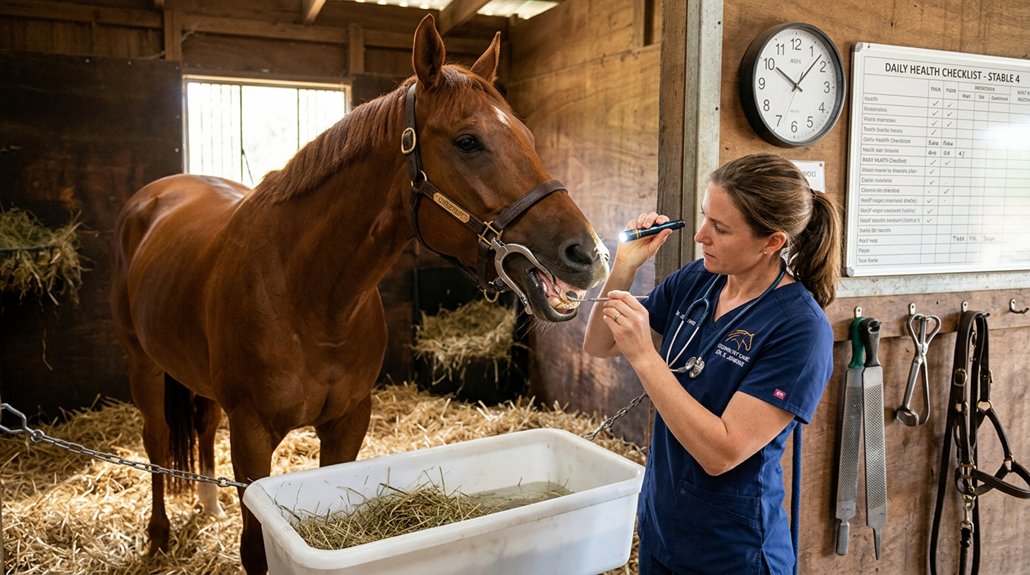
Attending to your horse’s health demands strategic scheduling and vigilance. Bimonthly veterinary check-ups are crucial to early detection of health issues. Horse vaccine schedules are critical; administering core vaccines like tetanus and rabies every six to eight weeks shields against disease. Daily health assessments guarantee swift responses to changes in behavior, appetite, or movement, preventing escalation of potential problems. Prioritize regular dental visits, ideally annually, to enhance chewing efficiency and comfort. Schedule these visits with a qualified veterinarian to secure professional oversight. Maintain thorough medication administration records as an essential part of ongoing care; these chronicles are indispensable for monitoring health trends and intervention efficacy. Allocate time meticulously to each task to safeguard your horse’s overall wellness.
Frequently Asked Questions
How Many Hours a Day to Take Care of a Horse?
You’ll spend around 1 to 2 hours daily on care for one horse, focusing on tasks like horse grooming and health monitoring. Basic daily care involves feeding, wellness checks, and maintaining cleanliness in their environment.
What Is “I Love You” in Horse Language?
In horse communication, “I love you” translates to equine body language like soft eye contact, nuzzling, and gentle nudging. Look for relaxed postures and a calm muzzle, signaling trust and affection from your equine companion.
What Is the 1/2/3 Rule for Horses?
Imagine a horse thriving under the 1/2/3 rule: one hour turnout, two hours grooming weekly, three meals daily. This approach guarantees balanced horse care, enhancing equine behavior, health, and well-being, offering structure and routine.
Can You Ride a Horse With Epilepsy?
You can ride a horse with epilepsy, but guarantee it’s under strict seizure management and horse health guidelines. Prioritize riding safety by monitoring horse behavior closely, consulting a vet regularly, and adapting to any health changes.
Conclusion
Owning a horse is akin to tending a living clockwork, where your commitment oils its gears. Each task—whether daily or weekly—is a cog in the greater mechanism of equine well-being. Time becomes your most valued currency, spent wisely on grooming, feeding, and health checkups. By weaving these responsibilities into the fabric of your routine, you’re not just maintaining a horse; you’re nurturing a partnership. Precision and dedication transform time into a bond that gallops beyond mere hours.