Choosing the right boarding stable for your horse starts with understanding its personality and needs, including dietary and medical requirements. Evaluate different boarding styles like full-service or self-care, based on your expertise and schedule. Prioritize safety through regular inspections and guarantee feeding protocols match your horse’s nutritional needs. Location and access to amenities like training areas are essential, and be sure to budget for all care expenses. By exploring further, you’ll discover tailored insights for your search.
Key Takeaways
- Assess your horse’s specific needs including personality, dietary, and medical requirements for a suitable boarding environment.
- Evaluate different boarding styles (full-service, self-care, partial care) based on your expertise and daily routine.
- Ensure the stable conducts regular safety inspections and has emergency protocols and trained staff in place.
- Verify consistent feeding schedules, access to forage, and staff expertise to meet your horse’s health needs.
- Consider location, access to essential services, and budget to ensure convenience and financial feasibility.
Understand Your Horse’s Needs
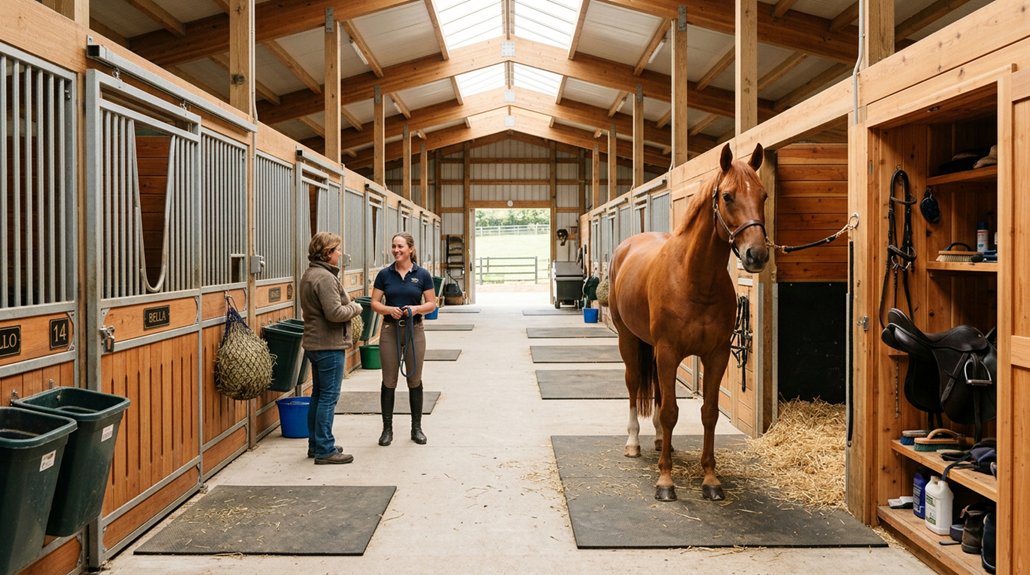
When selecting a boarding stable, understanding your horse’s needs is essential to guaranteeing its health and happiness. Begin by evaluating your horse’s personality in relation to herd dynamics. Is your horse dominant or more submissive? This insight will guide you in selecting a facility where your horse fits in harmoniously within the herd. Examine whether the stable’s feeding practices are aligned with providing ample hay and water, vital for maintaining your horse’s health. Consider any special requirements your horse may have, like dietary needs or medical care, and verify the facility can accommodate these. Finally, make sure there’s ample outdoor turnout time. This not only aids physical fitness but also supports mental well-being, contributing to your horse’s overall comfort and safety.
Find the Right Boarding Style
When considering boarding options, you’ll need to evaluate the range of services to determine which aligns best with your daily routine and level of expertise. Evaluating the owner responsibilities each style demands will help you decide if you’re ready to take on self-care or prefer the ease of full-service boarding. Above all, consider your horse’s wellbeing by ensuring the chosen facility fosters both physical health and mental enrichment.
Evaluate Boarding Services
While selecting a boarding stable for your horse, it’s essential to evaluate the various service levels available to find the right fit for your needs. With evolving boarding trends, service customization is key. Full-service options offer extensive care suited for the busy owner. Self-care requires time and proficiency, perfect for those seeking daily involvement. Partial care balances professional help with personal engagement, ideal for dipping your toes in horse management. Specialized facilities offer tailored services like training or rehabilitation, addressing unique equine requirements.
| Boarding Type | Ideal For | Services Included |
|---|---|---|
| Full-Service | Busy/New Owners | Feeding, stall cleaning, health monitoring |
| Self-Care | Experienced Owners | Owner-managed tasks |
| Partial Care | New/Intermediate Owners | Flexible – mix of owner and professional care |
| Specialized | Horses with Specific Needs | Training, rehabilitation, or retirement services |
Assess Owner Responsibilities
Selecting the right boarding style for your horse involves evaluating the extent of your involvement in their daily care. Consider your owner experience and time availability to determine the most suitable option. Full-service boarding is ideal if your schedule is tight or you’re a novice; this setup minimizes your daily tasks by handling feeding, stall cleaning, and health checks. For those with ample time and experience, self-care boarding offers full control, demanding hands-on management of all care aspects. Partial care boarding provides a balance, sharing responsibilities with the facility staff, perfect for gaining experience and maintaining some involvement without being overwhelmed. Additionally, specialized facilities offer tailored services, perfect for horses with unique requirements. Choose wisely based on your capacity and expertise.
Consider Horse Wellbeing
Considering your role in your horse’s care naturally sets the stage for evaluating their well-being and finding the right boarding style. Assess your horse’s personality and needs, knowing that herd dynamics can dictate if full-service, self-care, or specialized facilities are appropriate. Adequate outdoor turnout is essential; prioritize pastures allowing natural behaviors and social interaction. Evaluate each stable’s daily routines—consistent feeding, fresh hay, clean water—ensuring these meet your horse’s expectations. Scrutinize the barn staff’s expertise and their interaction frequency, as these impact your horse’s mental health and physical condition. Understand the choice between open barn/group boarding versus individual stalls. While open barns encourage social interaction, analyze potential challenges in herd dynamics to optimize environmental enrichment for your horse’s long-term well-being.
Check Safety and Maintenance Standards
When evaluating potential boarding stables, it’s vital to guarantee that the facility adheres to stringent safety and maintenance standards. Conduct regular safety inspections to confirm that fencing is secure and free from hazards, preventing injuries or escapes. Examine maintenance schedules to verify all indoor spaces, such as stalls, are clean, dry, and well-ventilated to avoid respiratory issues. Ensure that pastures and turnout areas are free of clutter and securely fenced, safeguarding your horse during exercise and grazing.
Probe further into the frequency of inspections for arenas, water sources, and overall facility infrastructure. Reliable maintenance routines, including organizing equipment areas, mitigate risks like fire hazards. These measures reflect the commitment to a high standard of care and safety in the facility you select.
Decipher Feeding and Health Protocols
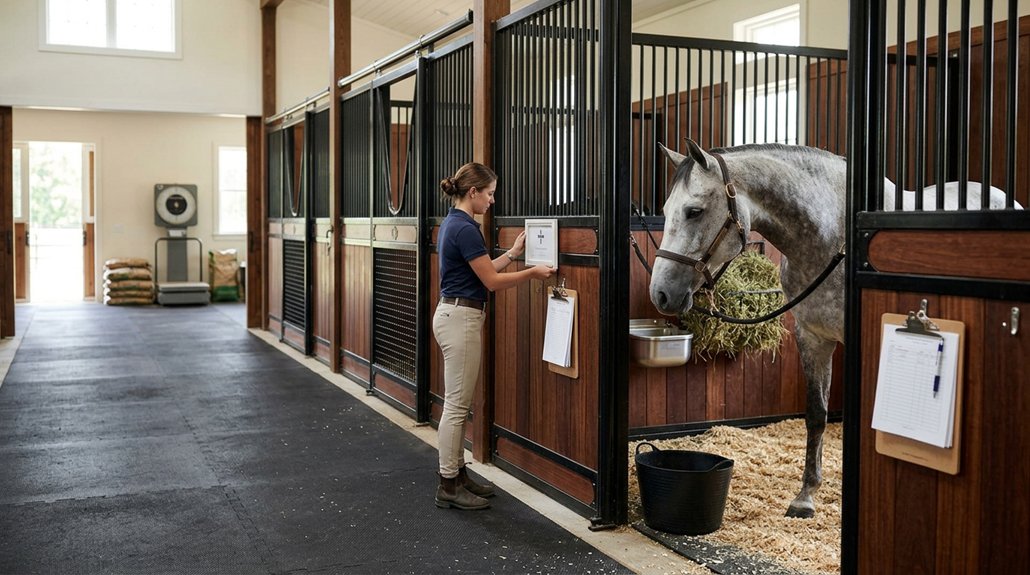
When choosing a boarding stable, make sure to assess the dietary provisions, ensuring the hay and grain options meet your horse’s nutritional needs and include provisions for special diets. Verify the facility follows consistent feeding times and offers free-choice access to forage, which are essential for maintaining your horse’s digestive health. Clarify the health procedures by confirming the regular upkeep of vaccination and deworming schedules, while understanding emergency protocols, including timely medical care and owner communication during health issues.
Assess Dietary Provisions
Why should you pay attention to dietary provisions when choosing a boarding stable for your horse? Understanding the feeding routine is essential, particularly the forage types and accommodations for dietary adjustments. Free-choice access to quality forage supports digestive health, mitigating stress-related behaviors. Inspect facilities for consistent feeding times, as routine notably impacts your horse’s well-being.
| Element | Importance | Questions to Ask |
|---|---|---|
| Forage Types | Digestive Health | Are there varied forage types available? |
| Dietary Adjustments | Individual Needs | Can dietary plans be customized? |
| Feeding Schedule | Routine Consistency | What are the feeding times? |
| Grain Provided | Nutritional Balance | Which grains are used, and why? |
Ensure the stable can make necessary dietary adjustments to align with your horse’s unique nutritional requirements.
Clarify Health Procedures
Guaranteeing the well-being of your horse at a boarding stable requires thorough vetting of feeding and health protocols. It’s vital to clarify how the facility approaches both health monitoring and medical preparations. Here’s what to evaluate:
- Feeding Routine: Inquire about the types of hay and grain provided. Confirm it aligns with your horse’s dietary needs, including free-choice forage for ideal digestive health.
- Health Protocols: Verify the existence of clear plans for vaccinations, deworming, and routine health checks. These elements are fundamental for your horse’s overall well-being.
- Veterinary Relationships: Ask about their connections with local veterinarians and the response times for addressing health issues, ensuring your horse receives timely and expert care when needed.
This detailed diligence secures your horse remains healthy and stress-free.
Understand Emergency Protocols
How can you confidently choose a boarding stable that adequately prepares for emergencies? Start by inquiring about the facility’s emergency training for staff. Verify if they can efficiently handle urgent situations, guaranteeing your horse’s safety and quick response to crisis. A stable should have a thorough emergency plan, outlining the steps and procedures in place when an incident arises. It’s essential to confirm the availability of a reliable, contactable veterinarian for immediate assistance. Regular health checks are critical—determine the frequency and type of assessments performed. Make sure that communication protocols are robust, enabling prompt updates on health concerns or emergencies. Remember, an adeptly prepared stable prioritizes both emergency readiness and your horse’s overall well-being.
Consider Location and Ease of Access
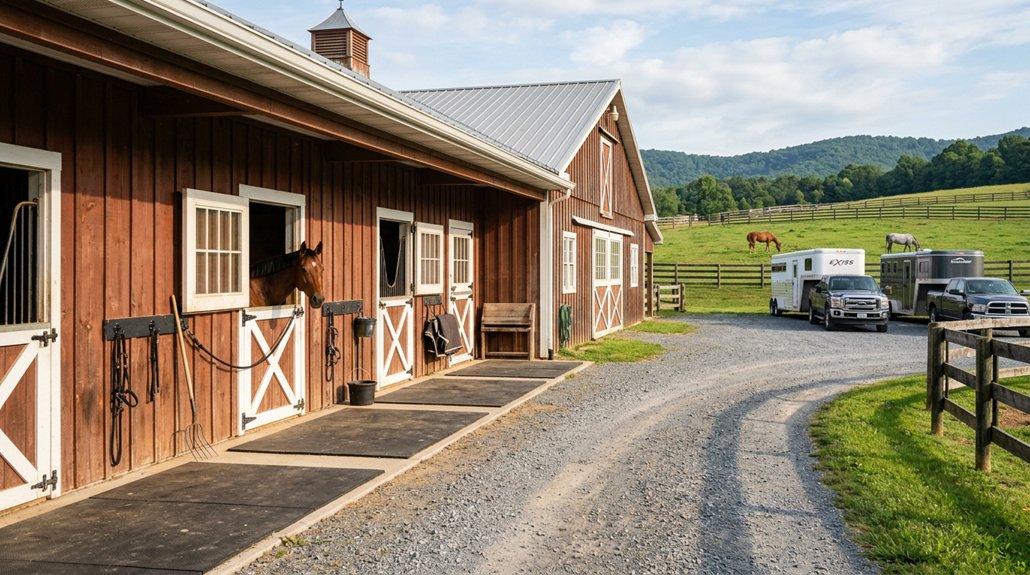
When choosing a boarding stable for your horse, it’s vital to contemplate its location and ease of access to maintain regular and hassle-free visits. Confirming a reasonable commuting time is imperative; aim for a stable within a 30-minute to 1-hour drive from your home or workplace. Equine care effectiveness also depends greatly on service accessibility, necessitating proximity to veterinarians and farriers for timely interventions and emergency responses. Additionally, easy access to riding areas and training facilities enhances your riding experience. Here’s a strategic approach for effective stable selection:
Proximity and access to services are key when selecting the ideal boarding stable for your horse.
- Utilize tools like Google Maps and EquineNows Boarding Directory to filter stables by distance.
- Assess travel time based on expected interaction frequency.
- Verify nearby services to guarantee thorough horse care.
Evaluate Staff Expertise and Interaction
Why is it paramount to evaluate the expertise and interaction of a stable’s staff when selecting a boarding facility for your horse? Proper [staff qualifications](https://example.com/staff-qualifications) and adept horse handling guarantee your horse receives high-quality care. Assess backgrounds, certifications, and training to verify knowledgeable professionals. Observe interactions during barn visits; gentle and respectful horse handling is a must. Consider the staff-to-horse ratio—a smaller ratio often means more personalized attention. Inquire about interaction frequency; staff should understand your horse’s behavior and preferences thoroughly. Effective communication practices are key; guaranteeing staff can update you and address concerns promptly safeguards your peace of mind.
“`markdown
| Criteria | Importance |
|---|---|
| Staff Qualifications | Guarantees informed equine care |
| Horse Handling | Ensures respectful treatment |
| Staff-to-Horse Ratio | Enhances individualized attention |
| Interaction Frequency | Familiarizes staff with behavior |
| Communication Practices | Facilitates timely updates |
“`
Budget for Board and Extra Costs
- Additional Expenses: Factor in costs for veterinary care, farrier visits, specialized feed, and training services.
- Establishing a Baseline Budget: Include non-negotiables like full turnout and regular farrier scheduling to cover essential care.
- Regular Reassessment: Periodically review your budget to adapt to your horse’s evolving needs and anticipate potential facility changes or unforeseen expenditures.
This approach guarantees financial preparedness while maintaining exceptional care.
Frequently Asked Questions
What Is the 1/2/3 Rule for Horses?
The 1/2/3 rule means providing 12 hours of turnout, 2 hours of exercise, and 3 types of forage to promote horse health. Prioritize feeding schedules and horse companionship to support physical activity and social interaction.
What Is “I Love You” in Horse Language?
In equine communication, “I love you” is like a telegram sent through horse body language—soft eyes, gentle nuzzles, relaxed ears, and mutual grooming. When they approach you willingly, it’s their heartfelt connection whispering, “You’re my person.”
Do Horses Prefer to Be Stabled at Night?
Horses’ stabling preferences at night vary; some thrive with the security stabling provides, aligning with their routines and offering protection. However, individual temperaments and night behavior patterns dictate whether they’d prefer social interactions over solitary stabling.
What Fruit Should Horses Not Eat?
Your horse shouldn’t eat illegal fruits like grapes, raisins, and avocados, as they’re toxic plants. Also, avoid fruits with pits like cherries. Introduce safe fruit types gradually to prevent digestive issues or adverse reactions.
Conclusion
Selecting the perfect stable isn’t just about convenience; it’s about connecting with conscientious caretakers. Prioritize your horse’s personal needs, and peruse boarding styles that best suit their spirit. Scrutinize safety standards to guarantee serenity for your steed, and analyze the adherence to proper feeding and health protocols. Factor in facility access and staff expertise, and weigh the wallet’s wellness with additional costs. By being discerning, you’ll discover a delightful dwelling for your devoted companion.