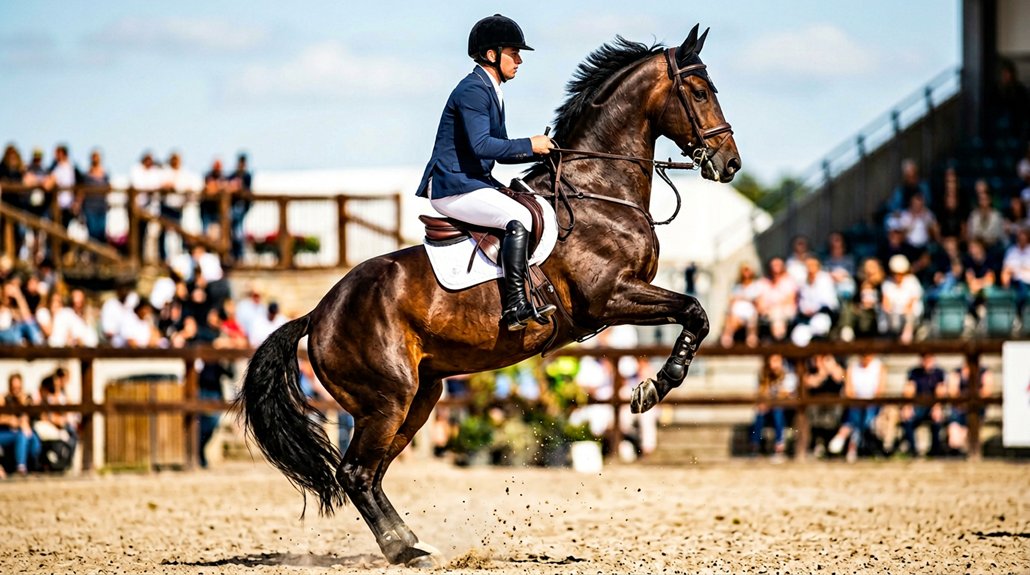
When choosing horse breeds for competitive riding, understanding each discipline’s demands is key. For hunter jumper events, consider versatile breeds like Westphalians or Holsteiners. Dressage enthusiasts often prefer Oldenburgs or Dutch Warmbloods, known for their superior movement and trainability. Eventers benefit from breeds like Trakehners or Irish Sport Horses, which excel in agility and endurance. Evaluating your skills and goals helps match the right breed, ensuring harmony and peak performance. For deeper insights, explore further.
Key Takeaways
- Thoroughbreds offer speed and intelligence, ideal for eventing and jumping competitions.
- Westphalians are athletic with cooperative natures, suitable for hunter jumper events.
- Oldenburgs excel in dressage due to their trainability and superior movement.
- Quarter Horses provide calmness and versatility, beneficial for various competitive disciplines.
- Trakehners possess stamina and agility, making them ideal for multifaceted eventing challenges.
Introduction to Competitive Horse Riding: Understanding the Disciplines
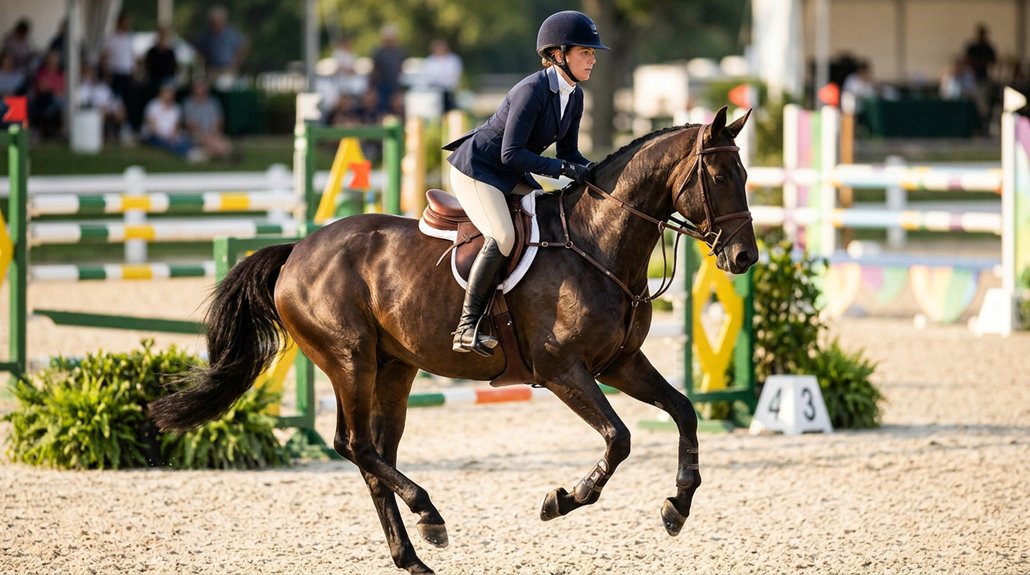
When delving into competitive horse riding, it’s crucial to understand the diverse disciplines that define the sport, each with unique demands and skill sets. A competitive riding overview highlights these distinctions. Discipline diversity is key, with hunter jumper, dressage, and eventing offering varied challenges. Hunter jumper events assess a horse’s consistency and form, focusing on elegance for hunters and speed for jumpers. Dressage demands advanced flat work, where a horse’s responsiveness and the rider’s subtle cues create harmonious, complex movements. Eventing combines cross country, show jumping, and dressage, requiring extensive versatility, stamina, and strong horse-rider partnerships. Each discipline values different horse characteristics, from athleticism in jumpers to grace in hunters, shaping your approach to competitive horse riding.
Essential Traits for Top Performance in Competitive Horses
When evaluating the vital traits for top-performing competitive horses, you’ll want to take into account temperament and compatibility, as these influence a horse’s ability to handle the pressures of competition and connect with their rider. Discipline-specific requirements also come into play, with certain breeds excelling in areas like speed, agility, or precision, and as a result, making breed selection essential. Beyond mental attributes, a horse’s physical and athletic traits—such as conformation and overall fitness—are imperative for sustaining peak performance across diverse competitive settings.
Temperament and Compatibility
Understanding the temperament and compatibility of a horse is essential for success in competitive riding. The horse’s temperament influences training outcomes and rider confidence. A calm, sensible horse fosters a positive training environment, enabling rider-horse compatibility to thrive. Here are key aspects to evaluate:
- Energy Levels: Horses with high energy are better suited for riders who can handle stress, making them fit for dynamic challenges.
- Trust and Understanding: Successful rider-horse compatibility results from mutual trust and understanding, boosting competitive performance.
- Personality Traits: Traits like willingness and calmness enhance competitive performance, streamlining training and competitions.
Discipline-Specific Requirements
Given the distinct requirements of competitive riding disciplines, selecting the right horse breed involves careful consideration of specific traits that enhance performance. Your breed selection should match the specific needs of each discipline. For hunters, you’ll need a horse that exudes elegance and maintains consistency, focusing on movement and form. Jumpers, on the other hand, demand breeds that prioritize speed and accuracy, invaluable during timed courses. When it comes to dressage, the horse must respond swiftly to subtle cues, making breeds known for trainability ideal. Experience in rider experience can also influence these selections, as seasoned riders might handle spirited breeds better. For eventing, the horse should be versatile, blending stamina, precision, and athleticism for varied challenges across disciplines.
Physical and Athletic Traits
Selecting the right breed is only part of the equation; an equal focus should be on the physical and athletic traits these horses embody. Thoroughbreds and Warmbloods excel in competitive settings due to their speed and agility. Key elements for top performance include:
- Balanced Build: Strong leg conformation and fitness are essential for efficient movement and endurance across disciplines.
- Temperament: A calm demeanor enhances focus and responsiveness, important for successful partnerships.
- Discipline-specific Conformation: Taller, leaner builds suit eventing while compact frames are advantageous for dressage.
Your horse’s conformation should align with its competitive focus. Conditioning strategies are fundamental for muscle development and optimizing lung capacity, positioning your horse to perform exceptionally in events. Understanding these traits guarantees your horse reaches its competitive potential.
Breeds for Hunter Jumper Competitions: What to Look For
When contemplating which breeds excel in Hunter Jumper competitions, you’ll often find that the Westphalian, Holsteiner, and Belgian Warmblood dominate the scene due to their impressive athleticism and elegance. The history of these breeds showcases a legacy of selective breeding aimed at enhancing performance, making them prime contenders in high-pressure environments. Proper competition preparation involves understanding each breed’s unique qualities; Westphalians are known for their cooperative nature, Holsteiners for their power, and Belgian Warmbloods for their balance.
Quarter Horses and Thoroughbreds also make notable appearances, with Quarter Horses appreciated for their calm demeanor and Thoroughbreds for their speed and intelligence. Consistent training and a strong partnership between horse and rider guarantee peak performance, while good conformation and movement enhance overall evaluation by judges.
Dressage Favorites: Breeds That Shine
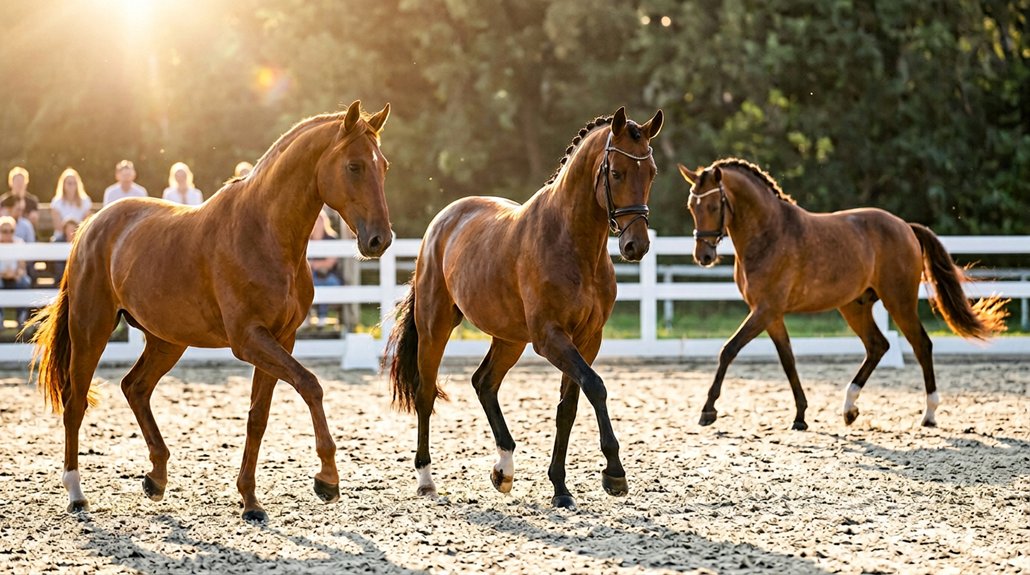
As you shift your focus from Hunter Jumper competitions to the intricate world of dressage, certain horse breeds stand out for their proficiency in this discipline. Mastering dressage techniques involves selecting the right breed as much as implementing effective training methods.
- Oldenburgs: Celebrated for trainability and superior quality of movement, they’re favored by both amateurs and professionals.
- Dutch Warmbloods: Known for their endurance and athleticism, these horses excel in international dressage events with their powerful gaits.
- Lusitanos: With an ideal temperament and willingness, they adeptly perform complex maneuvers with elegance.
Pairing a standout breed with robust training methods is essential. Additionally, fostering communication between horse and rider enhances performance in dressage’s demanding arena.
Eventing Challenges: Top Versatile Breeds
For riders seeking the best breeds to tackle the multifaceted challenges of eventing, some stand out for their unparalleled versatility. Eventing requires strategic matches; your horse must excel in cross country, dressage, and show jumping. The Trakehner is a prime candidate, known for stamina and agility, essential in executing effective eventing strategies. Similarly, Thoroughbreds bring natural speed and a strong competitive spirit, especially beneficial in cross country events. Irish Sport Horses are praised for their adaptability, seamlessly shifting between the varied demands of eventing disciplines. Though traditionally seen in Western arenas, the Quarter Horse’s athleticism and calm demeanor offer significant advantages in eventing competitions. Each of these breeds brings unique strengths, making them ideal for versatile eventing pursuits.
Key Endurance Riding Traits: What Breeds Excel
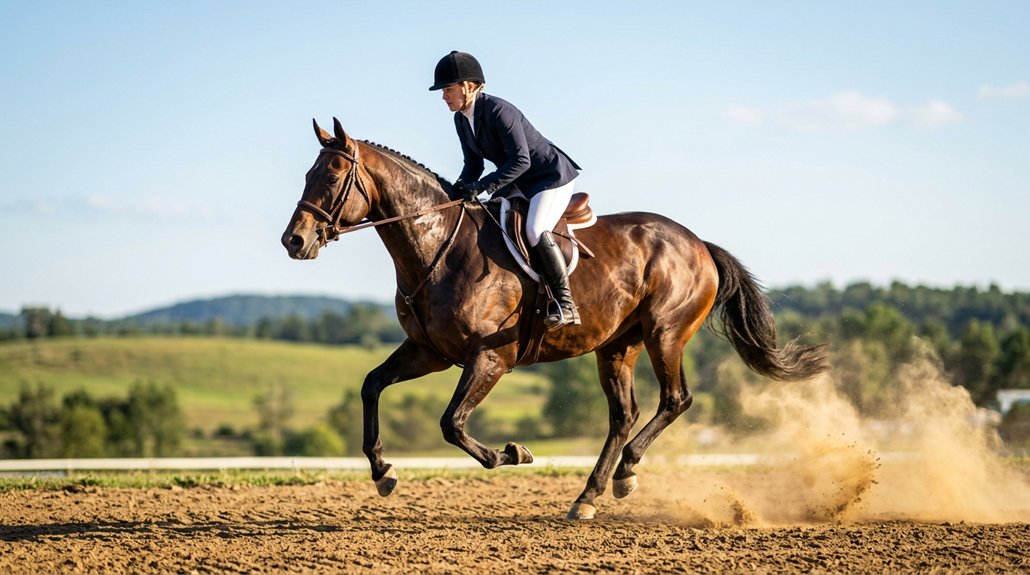
When evaluating breeds for endurance riding, you’ll want to focus on ideal physical characteristics like a lean body type and strong leg conformation, which are essential for sustained performance. Ideal temperaments include a calm and composed demeanor, helping horses handle the long distances with reduced fatigue. Additionally, choosing horses over 5 years old, preferably aged 7 or older, often provides a blend of maturity and developed stamina, necessary for achieving success in competitive endurance events.
Optimal Physical Characteristics
Understanding the traits that define the best endurance horses can be pivotal for competitive riders aiming to excel. Significant attention should be given to physical characteristics promoting breed versatility and endurance capabilities. Horses with efficient movement, emphasized by forward propulsion, offer higher stamina and agility, perfect for longer trails.
Essential traits include:
- Strong leg conformation and a balanced build to effectively handle diverse terrains.
- Lean and lithe body types found in breeds like Arabians and Thoroughbreds, known for maintaining speed and stamina.
- Horses aged 7 or older for mature physical conditioning and expertise in various conditions.
Recognizing these attributes helps you select and train horses proficient in endurance disciplines, marking a difference in competitive outcomes and achieving greater riding success.
Ideal Temperament Traits
While physical prowess undeniably lays the foundation for endurance riding success, it’s the horse’s temperament that often decides the outcome in competitive settings. You’ll find that breeds like the Arabian excel due to their calm demeanor and energetic enthusiasm. Their disposition enables them to maintain focus and adaptability during long rides, essential when tackling unpredictable terrain and weather conditions. An Arabian and its crosses, such as the Morab, exhibit an indomitable spirit, showing a strong willingness to continue despite mounting fatigue. This is important for maintaining stamina over long distances. Additionally, these breeds demonstrate excellent horse-rider compatibility, fostering mutual trust and effective communication. An ideal endurance riding horse balances calmness with spirited endurance, ensuring sustained performance throughout a grueling event.
Suitable Age and Training
To achieve success in competitive endurance riding, selecting a horse of suitable age and implementing structured training is essential. Understanding age requirements is vital; horses need to be at least 7 years old to handle the rigors of long-distance events. Such maturity enhances physical development and stamina. Training progression involves gradually increasing workload, allowing horses to build the necessary muscle and lung capacity. Arabians excel with their natural endurance, but breeds like Morgans, Appaloosas, and Tennessee Walkers also show promise. To excel, focus on:
- Conditioning horses progressively to prevent burnout
- Initiating limited distance rides around age 5
- Preparing horses for 100-mile events by age 9
Endurance steeds thrive with a balanced build, strong legs, and calm demeanor.
How to Pick the Best Breed for Your Skills
Selecting the right horse breed for your competitive riding skills involves analyzing several key factors tailored to your experience and objectives. Begin by evaluating your riding experience level. For recreational riding or those new to competitive disciplines, older horses with calm temperaments like Quarter Horses can provide stable learning experiences and ease of horse care. If you’re more advanced, consider athletic and spirited breeds such as Thoroughbreds or Arabians that match your desire for training challenges. Next, identify your riding goals. Breeds suitable for dressage require responsiveness, whereas jumping disciplines need agility and speed. Matching horse characteristics to discipline needs guarantees success, so choose wisely based on physical attributes and specific traits. A well-conformed horse often excels in competitive settings.
Balancing Performance and Personality in Your Breed Choice
Understanding the interplay between performance and personality is key to choosing the right horse breed for competitive riding. Achieving a performance balance involves analyzing both the athletic attributes required for your chosen discipline and the personality factors that enhance rider compatibility. Calm, sensible horses, like Quarter Horses or Thoroughbreds, are known for their blend of adaptability and friendliness, vital for fostering rider confidence.
Consider these aspects when selecting your breed:
- Temperament: Prioritize breeds with a calm demeanor to enhance rider assurance.
- Discipline-specific strengths: Match the breed’s athletic traits, whether for dressage, jumping, or eventing.
- Rider-horse bond: An essential performance factor, so focus on personality compatibility.
Balancing these factors guarantees a rewarding riding experience, tailored to both your aspirations and the horse’s natural capabilities.
Frequently Asked Questions
What Is the Best Competition Horse Breed?
Choosing the best competition horse breed depends on your specific goals. If you’re focused on racing and high-speed events, a Thoroughbred’s performance is unmatched. For versatile events like dressage and show jumping, Warmbloods offer exceptional versatility.
What Is the 20% Rule in Horse Riding?
The 20% rule in horse riding advises you to apply only 20% of your effort in communication, allowing the horse to perform through its instincts. This enhances correct riding techniques and horse training methods, promoting harmony and precision.
How Does a Horse Say “I Love You”?
Your horse screams “I love you” with subtle equine affection: it leans on you, nuzzles playfully, blinks slowly, follows you endlessly, and nickers joyfully. These are intricate layers of horse communication, conveying trust and connection effortlessly.
What Is the Calmest Horse to Ride?
When seeking the calmest horse breeds for riding anxiety relief, consider the American Quarter Horse, Thoroughbreds with gentle training, and Welsh ponies. These breeds offer stability and responsiveness, essential for overcoming your riding anxieties efficiently and confidently.
Conclusion
In the world of competitive horse riding, selecting the right breed is a delicate balance between performance prowess and personal compatibility. You might gravitate towards the precision of a Thoroughbred in eventing or the elegance of a Warmblood in dressage. Yet, don’t overlook the rugged stamina of an Arabian for endurance. It’s not just about the breed’s attributes; it’s about how they complement your unique skills. As you make this choice, remember: true harmony between rider and horse transforms challenges into success.