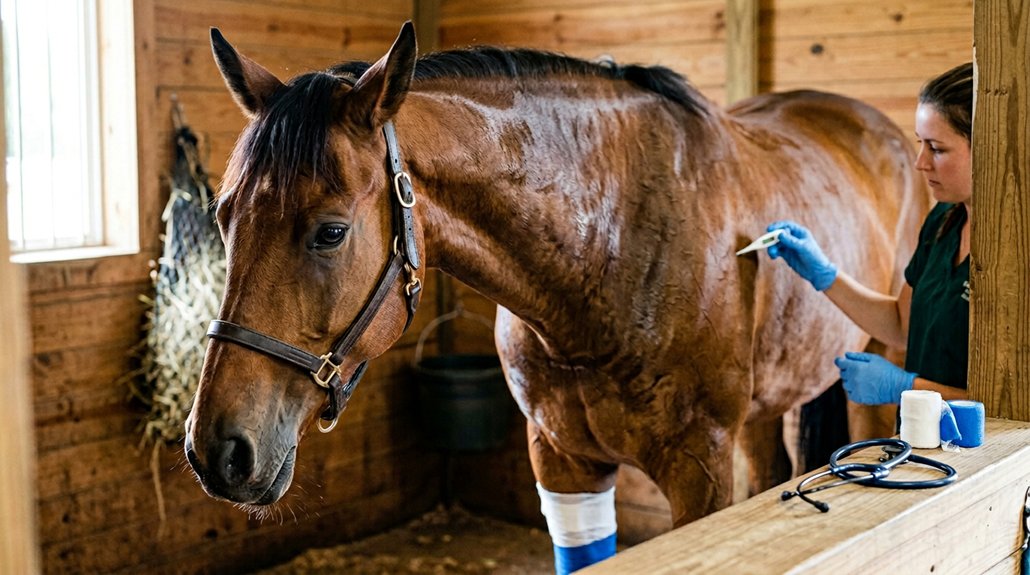
Your horse might be sick if you notice behavior changes, loss of appetite, or respiratory issues like coughing or nasal discharge. Physical symptoms to watch for include dull eyes or coat, and weight loss. Regularly check essential signs like temperature and pulse. Maintain a clean environment and conduct routine health checks, including dental exams and deworming. If symptoms persist, consult a vet immediately. There’s more crucial information to guarantee your horse’s well-being.
Key Takeaways
- Look for behavior changes like food refusal or lethargy as initial sickness symptoms.
- Check for respiratory signs, such as nasal discharge and coughing, indicating potential illness.
- Monitor physical symptoms, including dull or sunken eyes, signaling dehydration or health issues.
- Evaluate appetite and hydration by observing eating habits and ensuring access to fresh water.
- Consult a veterinarian for persistent appetite loss or fever above 101.5°F.
Common Signs of Illness in Horses
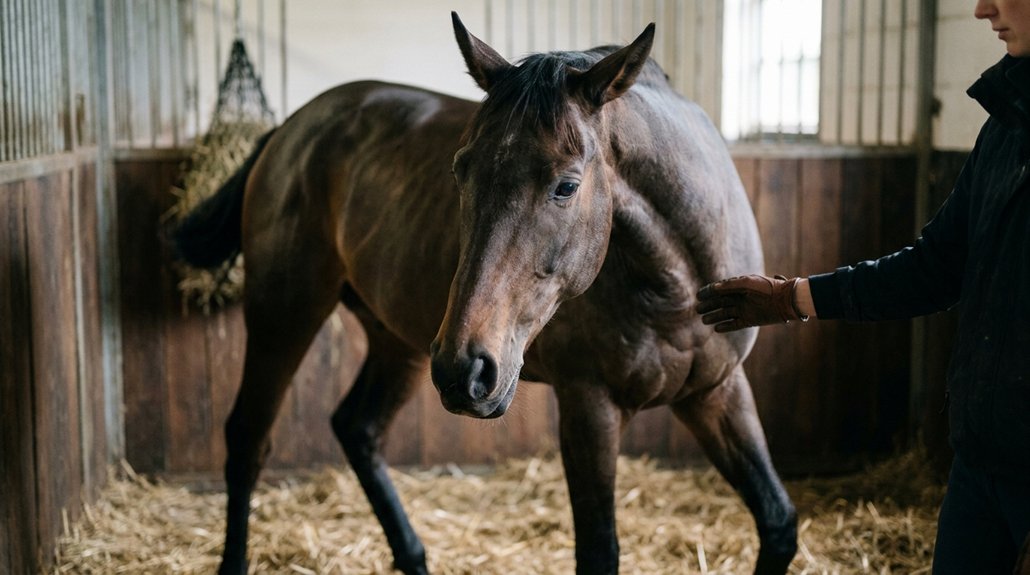
How can you tell if your horse is feeling under the weather? Paying attention to behavior changes is essential. If your horse suddenly refuses food or seems uninterested, it might be dealing with gastric ulcers or dental problems. Uncharacteristic lethargy could suggest another underlying issue. Watch for respiratory signs like nasal discharge, whether it’s clear, yellow, or green, and coughing—these may indicate a respiratory infection requiring prompt vet care. It’s also important to notice physical signs such as dull or sunken eyes, possibly indicating dehydration, often linked to liver or kidney dysfunction. An elevated heart rate or fever is another red flag, suggesting infection or inflammation. Prompt attention to these symptoms can help guarantee your horse’s swift recovery.
Preventative Measures and Routine Care
To guarantee your horse stays healthy and avoids common ailments, proactive preventative measures and routine care are essential. Here’s a guide to maintaining ideal health:
- Dental Health: Regular dental checks are vital, as up to 50% of horses face dental issues, which can lead to pain and weight loss if neglected.
- Deworming Protocol: Implement a routine deworming protocol grounded in fecal egg count assessments to effectively manage parasites impacting your horse’s health.
- Vital Signs Monitoring: Regularly check temperature, pulse, and respiration rates to detect health issues early. The normal resting temperature for an adult horse is between 99 and 101.5°F.
- Environment: Make sure living conditions are clean and dry to prevent skin conditions and respiratory problems. Regular observation of behavior and appetite also catches illnesses early.
Identify Physical Symptoms of Illness
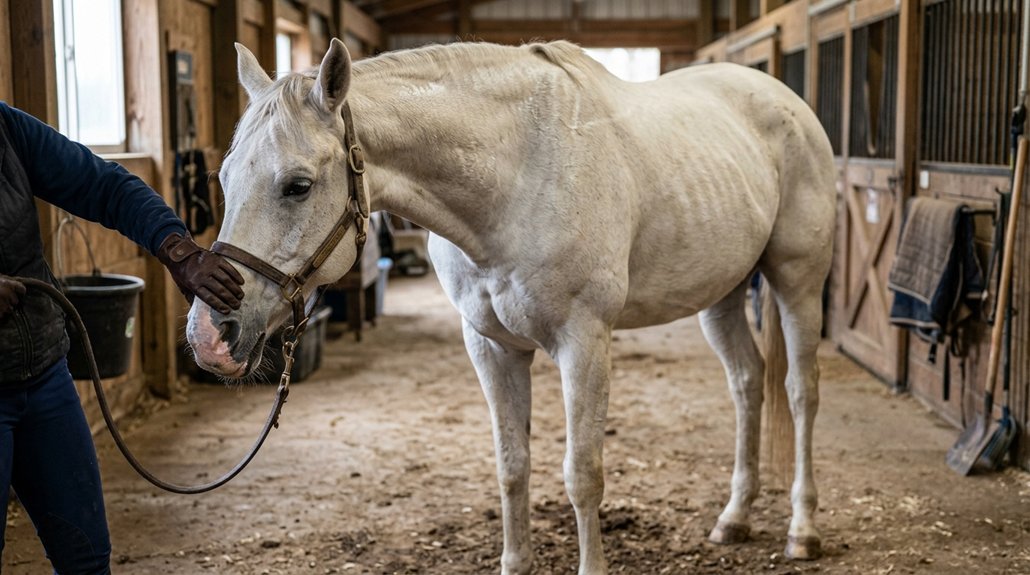
To identify physical symptoms of illness in your horse, it’s essential to regularly monitor weight changes and check their coat condition. A noticeable loss of weight can signal underlying health concerns like parasites or dental problems, while a dull coat might suggest nutritional deficiencies or metabolic issues. Keeping a keen eye on these signs will help you catch potential illnesses early and seek necessary veterinary care promptly.
Monitor Weight Changes
While monitoring your horse’s weight might seem routine, it’s essential in identifying potential health issues. Significant weight loss can signal digestive issues, dental problems, or more severe conditions like liver disease. Regular body condition assessments help you detect weight changes that might be overlooked. Here’s how you can monitor weight changes effectively:
- Regular Weigh-ins: Use a weight tape or scale regularly to note any unexpected decreases.
- Assess Body Condition: Visually inspect and feel for changes in fat cover around ribs and along the spine.
- Track Appetite: Notice any changes in feeding habits, which can lead to weight loss.
- Observe Behavior: Look for signs like restlessness, as these can accompany rapid weight loss, potentially requiring veterinary attention.
Check Coat Condition
When examining your horse’s health, don’t overlook the condition of its coat, as it can reveal potential underlying health issues. Initiate regular coat inspection using effective grooming techniques to detect problems early. A dull or patchy coat might signal poor nutrition, potentially hinting at digestive issues or infections. Notice any changes in coat quality, like excessive shedding or lack of shine? These could be symptoms of serious conditions such as equine Cushing’s disease or parasite infestations. Additionally, observe for clumping or matting, which might indicate skin infections needing veterinary care. Remember, a healthy coat not only boosts your horse’s appearance but also reflects overall well-being, prompting vigilant monitoring and consulting a veterinarian when necessary.
How to Evaluate Your Horse’s Appetite and Hydration
Curious about what might indicate your horse isn’t feeling their best? Evaluating eating habits and hydration is essential for spotting health issues. Here’s how to assess their well-being:
- Monitor Eating Habits: Sudden appetite loss can hint at dental issues, ulcers, or colic. Keep an eye on significant changes, as stress or feed quality might affect eating.
- Hydration Assessment: Check gum color and moisture—healthy gums should be pink and moist. Dry, pale gums suggest dehydration.
- Watch for Dehydration Signs: Sunken eyes and dark urine require immediate attention. Guarantee access to fresh water and consider electrolytes.
- Regular Body Evaluations: Frequent body condition checks can alert you to weight loss, helping catch nutritional or parasitic problems early.
Incorporate these strategies to maintain your horse’s health.
Temperature and Coat: When to Worry
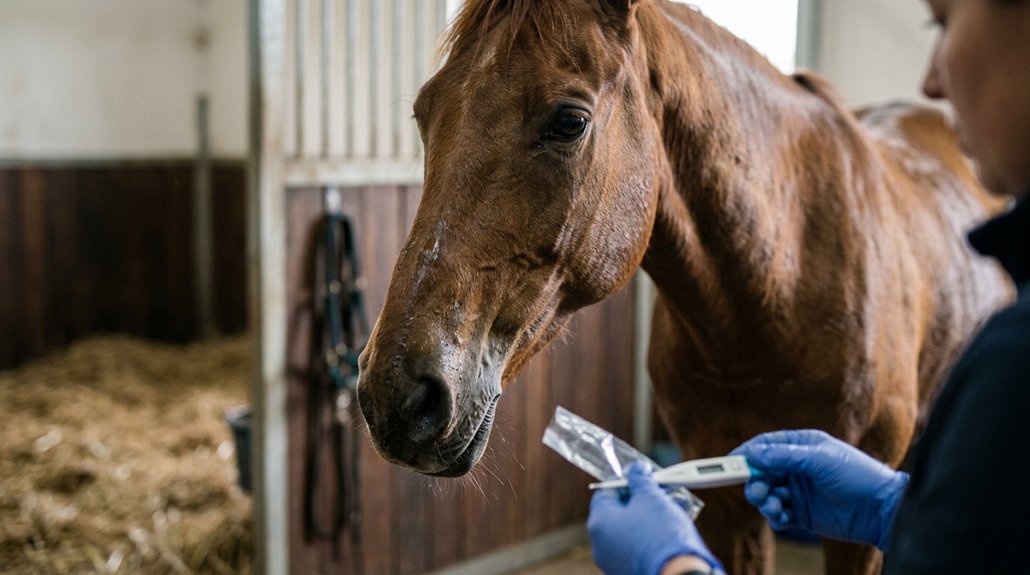
Even seasoned horse owners should pay close attention to two key indicators of their horse’s health: temperature and coat condition. Regularly monitoring your horse’s temperature can help you detect temperature spikes early, as a normal range for adults is between 99 to 101.5°F. Persistent elevations beyond this range may suggest an infection or illness. Performing a thorough coat assessment is equally important; a dull or patchy coat might indicate poor nutrition, infections, stomach ulcers, or even equine Cushing’s disease. Changes in your horse’s coat, like dryness or excessive shedding paired with abnormal temperature readings, can offer essential insights into their overall health. Quickly identifying these issues can allow for prompt intervention, preventing more severe health concerns.
When to Consult a Veterinarian
If your horse displays any troubling symptoms, it’s important to consult a veterinarian without delay. Prompt attention to urgent symptoms can be vital in preventing more serious health issues. Here are key signs indicating it’s time for professional help:
- Loss of appetite or significant weight loss: A sudden decrease in weight or lack of interest in food may suggest underlying health problems requiring diagnostic tests.
- Fever: Elevated body temperature beyond 101.5°F indicates possible infection or illness needing immediate veterinary intervention.
- Signs of colic: Restlessness or rolling may signal severe complications, necessitating urgent veterinary assessment.
- Respiratory issues: Coughing, nasal discharge, or labored breathing, especially with fever, are significant concerns best addressed by a veterinarian promptly.
Frequently Asked Questions
What Is the 1/2/3 Rule in Horses?
The 1/2/3 rule in horse health helps you monitor equine behavior, appetite, and weight. If your horse shows changes in these areas—like not eating for 24 hours or losing over 5% body weight—seek veterinary advice quickly.
What Is “I Love You” in Horse Language?
In equine communication, “I love you” might be nuzzlies or soft nickers. You’re in for a treat when your horse follows your every move or uses gentle grooming behavior—it’s love and trust wrapped up in horse behavior!
What Are the Most Common Illnesses in Horses?
You’ll find that common equine diseases include colic, respiratory issues, dental diseases, laminitis, and gastrointestinal conditions. Prioritizing equine healthcare by promptly addressing these can prevent complications and guarantee your horse’s well-being remains ideal.
What Are Five Major Symptoms of a Horse That Is Not Feeling Well?
Imagine a symphony disrupted by a missing note. For horses, temperature checks, behavior changes, appetite loss, respiratory issues, and mobility problems are signals. Don’t ignore these; they’re the horse’s way of saying, “I’m not well.”
Conclusion
With a keen eye and compassionate care, you can often catch signs of illness in your horse early, like reading the pages of a well-worn book. Prioritize routine check-ups to keep illness at bay, and always be mindful of physical changes, appetite shifts, and temperature fluctuations. Your horse relies on you, so trust your instincts and consult a veterinarian when necessary. In the dance of equine care, your proactive steps can make all the difference.