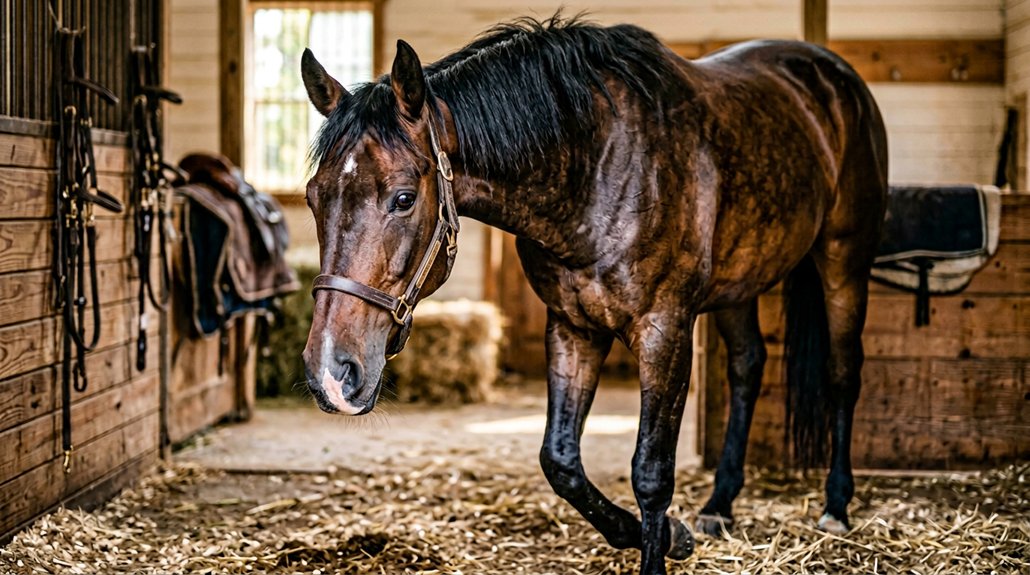
As a horse owner, you need to be aware of common health issues like colic, laminitis, and respiratory problems. Recognize colic signals such as restlessness and sweating promptly to intervene swiftly. For laminitis, focus on diet and regular hoof care. Watch for coughing and nasal discharge as they might indicate respiratory distress. Prevent gastric ulcers through dietary management and stress reduction. Guarantee annual dental check-ups. By exploring further, you’ll be equipped to better safeguard your horse’s well-being.
Key Takeaways
- Colic signs include restlessness and rolling, requiring swift veterinary action to prevent complications.
- Laminitis needs a forage-first diet and regular hoof trimming for effective management.
- Monitor coughing and nasal discharge to detect and manage respiratory issues early.
- Prevent gastric ulcers with dietary changes, access to hay, and stress reduction techniques.
- Annual dental check-ups are crucial for maintaining horse dental health and preventing significant issues.
Recognize Colic Quickly to Ensure Swift Recovery
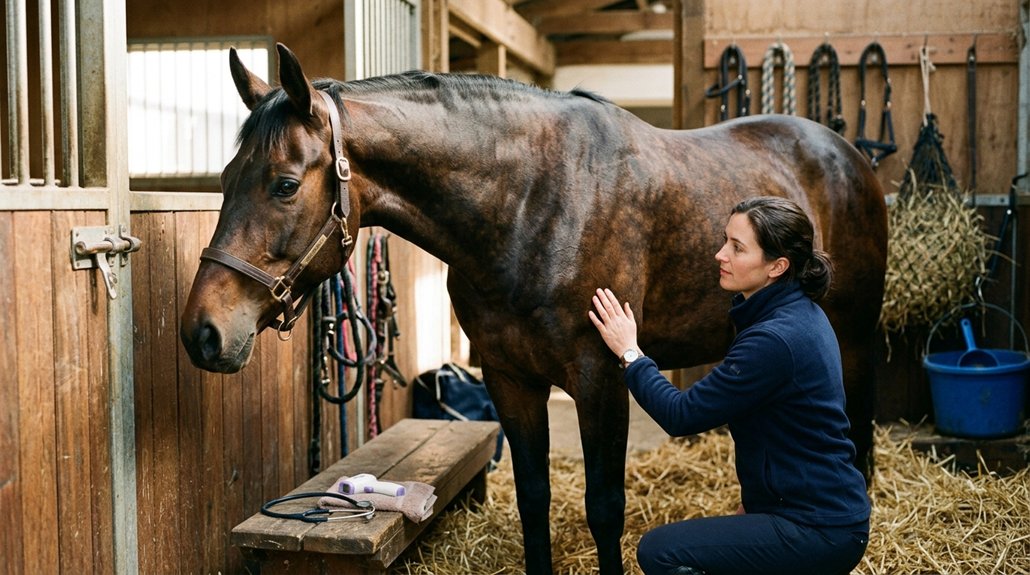
Colic serves as a critical indicator of abdominal distress in horses and demands immediate recognition to optimize recovery outcomes. Symptom identification is paramount; look for signs such as restlessness, pawing, rolling, and sweating. These manifestations suggest escalating abdominal pain requiring acute attention. Pain assessment is key—observe any subtle behavioral changes or shifts in eating habits as they may herald more severe issues. Prompt veterinary intervention is essential to counter the rapid progression of colic, with some cases necessitating surgical procedures to avert further complications. Understanding common causal factors like dietary changes, overeating, or dehydration aids in preemptive care. Swift action not only boosts recovery chances but also minimizes treatment costs, safeguarding the horse’s well-being efficiently.
Laminitis Management Strategies for Long-Term Hoof Health
Addressing colic’s urgent demands highlights the need for preventive health practices, particularly with conditions like laminitis that threaten long-term hoof health. Effective laminitis management hinges on strategic dietary adjustments to avoid excessive grain intake, which can inflame the laminae. Prioritize a forage-first diet with careful monitoring of caloric intake. Regular hoof trimming is non-negotiable; it guarantees proper balance and mitigates stress on the hooves. This routine should involve vigilant surveillance for any signs of discomfort. Actively manage your horse’s weight with consistent exercise and a controlled diet, as obesity considerably increases laminitis risk. Seek early veterinary intervention at the first signs of lameness, allowing for prompt assessment and tailored treatment, fortifying long-term hoof health through collaborative care.
Spotting Respiratory Issues Early: Key Signs to Watch
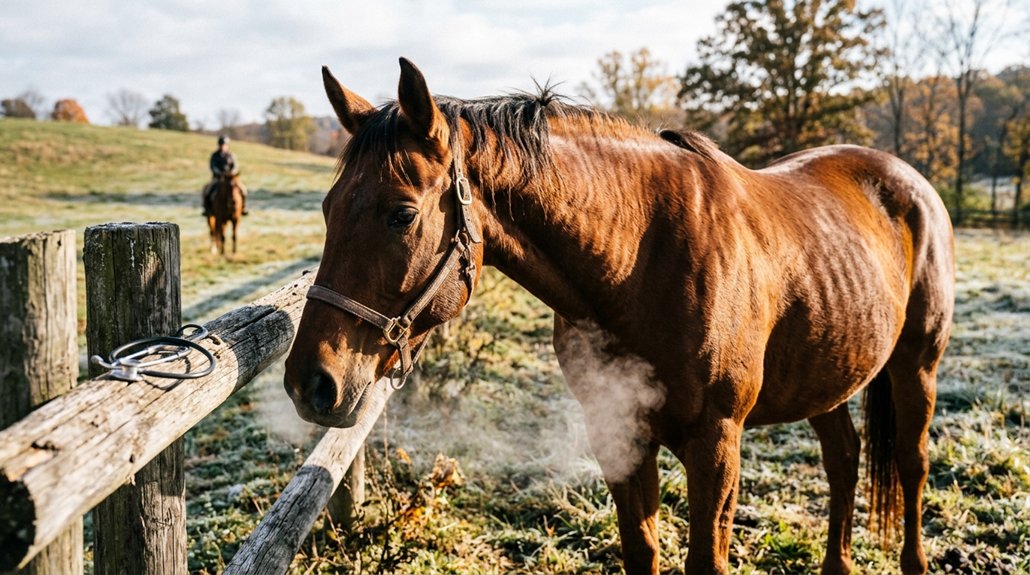
How can you swiftly identify respiratory issues in your horse to guarantee effective intervention? Focus on subtle signs like coughing causes, nasal discharge, and labored breathing. Coughing might stem from allergens, while nasal discharge often signals viral or bacterial infections. Stay vigilant about your horse’s exercise tolerance; reluctance or decreased stamina can indicate distress.
| Sign | Possible Cause | Action Needed |
|---|---|---|
| Coughing | Allergens, dust, asthma | Evaluate environment |
| Nasal discharge | Infection, inflammation | Seek veterinary advice |
| Labored breathing | Pneumonia, asthma | Immediate attention needed |
| Increased resp. rate | Stress, discomfort | Monitor closely |
| Reduced performance | Respiratory distress | Veterinary evaluation |
Address environmental factors like dust and mold, as they’re known triggers. Early detection aids in effective management and better outcomes.
How to Prevent and Treat Gastric Ulcers
Although gastric ulcers are prevalent in performance horses, affecting up to 90%, proactive measures can greatly mitigate risks and facilitate effective management. Start with dietary adjustments: increase forage intake and reduce grain, ensuring a consistent feeding schedule. Allow free access to hay, maintaining gastric health by buffering stomach acid. Include stress reduction techniques in your routine, such as optimizing exercise and stable management, to minimize ulcer exacerbation.
Diagnosing ulcers with gastroscopy is essential for visual confirmation. Treatment involves proton pump inhibitors and H2 antagonists to reduce stomach acidity and aid healing. Regular veterinary check-ups become indispensable, especially for high-stress performance horses. By diligently following these practices, you can notably decrease ulcer incidence and promote your horse’s overall well-being.
Routine Care to Combat Common Dental Problems
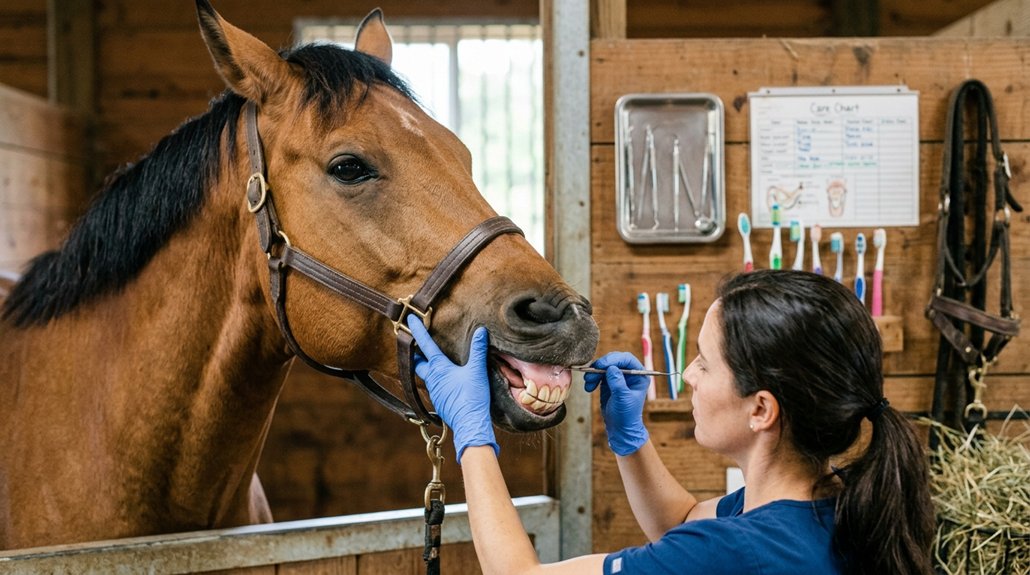
To effectively combat common dental problems in horses, schedule regular dental check-ups at least once a year. These examinations are essential for early detection of issues like sharp teeth points and periodontal disease, which can severely impact a horse’s health if left untreated. By committing to preventative care, you can enhance your horse’s nutrition, prevent discomfort, and reduce the risk of serious conditions like colic.
Importance of Regular Check-Ups
Ensuring regular check-ups for horses is essential, as nearly half of these animals are susceptible to dental problems that can escalate if ignored. Dental hygiene is a critical focus, with annual check-up frequency recommended to identify issues early. During these exams, veterinarians perform dental floats to smooth sharp points that cause significant discomfort and can lead to periodontal disease or tooth fractures. These routine evaluations not only maintain dental integrity but also prevent secondary gastrointestinal complications ensuing from inadequate mastication. Timely veterinary assessments are indispensable for a horse’s ideal performance and general health. By committing to consistent, proactive dental care, you can substantially mitigate the risk of severe health challenges, ensuring well-being and reducing potential veterinary costs over time.
Prevention Through Early Intervention
When you adopt a routine of early intervention for your horse’s dental care, you’ll effectively prevent common dental problems that can hinder their health and performance. Regular dental hygiene practices are essential, with annual routine assessments identifying issues like sharp points and periodontal disease before severe consequences arise. Dental conditions can impact up to 50% of horses, underlining the necessity of preventative care. Be vigilant for signs such as difficulty eating, weight loss, and bad breath, which necessitate immediate veterinary attention. Consistent dental care, including dental floats, enhances your horse’s well-being and performance by preventing complications like choke, caused by ineffective chewing due to untreated dental diseases. Therefore, early intervention through thorough dental examinations is vital for ideal horse health.
Managing Metabolic Disorders Effectively for Optimal Horse Health
There are critical steps every horse owner needs to understand about managing metabolic disorders effectively for their horse’s ideal health. Disorders like EMS and Cushing’s Disease manifest as obesity and laminitis. Improving insulin sensitivity is pivotal. Begin by implementing dietary adjustments; opt for low-sugar, low-starch feeds to keep glucose levels stable. Regular exercise is essential, supporting a healthy weight and preventing insulin resistance.
Diagnosis through blood tests—measuring insulin and glucose levels—guides these decisions. Schedule regular veterinary check-ups to monitor disorder progression and adapt treatment plans as necessary. Understanding the importance of early detection and education can’t be overstated, as proactive measures substantially enhance life quality and health outcomes for horses prone to these conditions.
Frequently Asked Questions
What Is the 1/2/3 Rule for Horses?
The 1/2/3 rule for horses helps you assess foal behavior. Stand in 1 hour, nurse in 2 hours, manure in 3 hours. Guarantee equine nutrition starts well for immunity and proper digestion. Veterinary help’s recommended if milestones aren’t met.
What Are the Most Common Health Problems in Horses?
You’ll frequently encounter lameness issues, digestive disorders, and respiratory infections in horses. Skin conditions and dental problems also arise often, while noise sensitivities may affect some. Each requires your attention to guarantee your horse stays healthy and comfortable.
What Are the 3 F’s for Horses?
You’ll find the “3 F’s”—Foal, Feed, and Feet—are critical. Coincidentally, they align with farrier fundamentals, feeding frequency, and fitness factors, ensuring ideal health. Don’t overlook first aid; it’s essential for extensive equine care.
How Does a Horse Say “I Love You”?
A horse conveys “I love you” through horse affection and equine communication by nuzzling, licking, and soft nickers. They may exhibit relaxed body language, follow you closely, or nudge you gently, demonstrating comfort and connection.
Conclusion
In the grand scheme of horse ownership, you’ve got to keep your eye on the ball to guarantee your horse’s health hums along at its best. By swiftly recognizing colic, managing laminitis, spotting respiratory issues, preventing gastric ulcers, maintaining dental care, and tackling metabolic disorders, you’re safeguarding your horse’s well-being. Each step you take not only addresses the immediate issue but also builds a strong foundation for long-term health, keeping your equine companion happy and thriving.