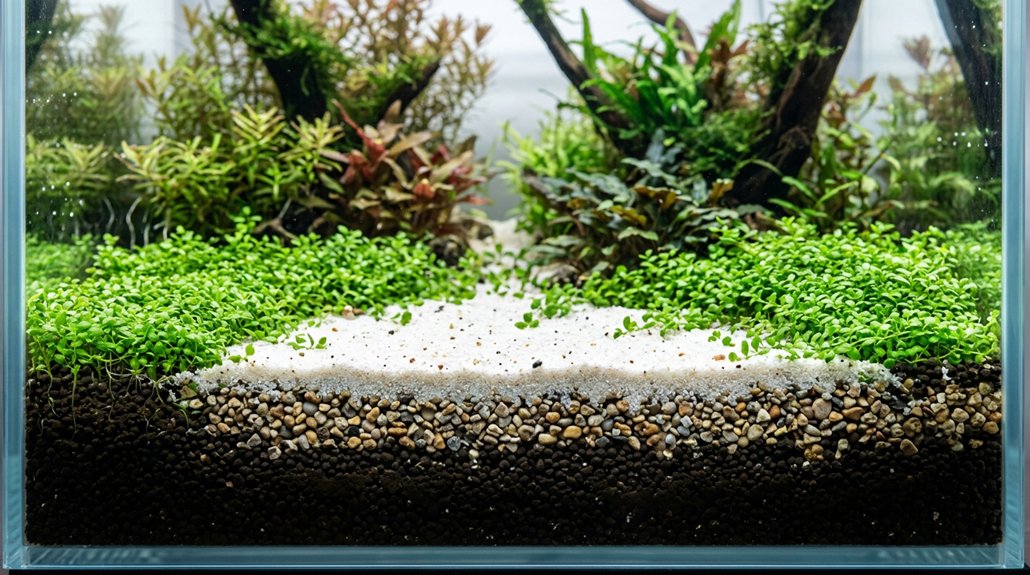
Choose your substrate by matching your fish, plants, and maintenance style. If you keep Corydoras or shrimp, use fine natural sand; for planted tanks, choose aquasoil or nutrient-rich soil, or use rounded 1–3 mm gravel with root tabs. Inert substrates are durable and easy to rescape, while aquasoil feeds roots better but can affect pH early on. Pick the right depth and grain size, and you’ll set up a tank that’s healthier and easier to maintain.
Key Takeaways
- Match substrate to your inhabitants: fine natural sand for Corydoras and shrimp, crushed coral for African cichlids.
- Choose by plant goals: aquasoil or nutrient-rich soil supports rooted plants better than inert gravel or sand.
- Use 1–3 mm grain size, ideally about 2 mm, for healthy root growth and good debris passage.
- Pick inert substrates for easy rescapes and stability; add root tabs or liquid fertilizer for plant nutrition.
- Maintain gently with regular vacuuming or raking, and avoid very fine sand or pea gravel in planted tanks.
What Is Aquarium Substrate?
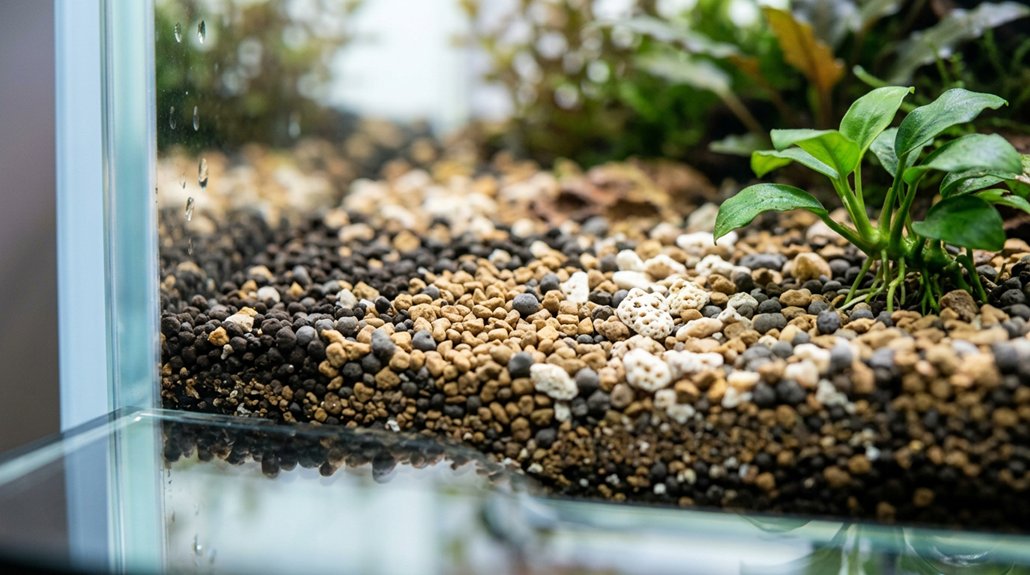
Aquarium substrate is the material that lines the bottom of your tank, and it does much more than fill space. You’re giving plants a place to root, burrowing animals a place to live, and beneficial bacteria a home. In the substrate microbiome, those bacteria break down waste and help turn trapped debris into nutrients your plants can use. Substrates can be inert, like silica sand, gravel, or fired clay, or nutrient-rich, like aquasoil and raw soil, which can also influence pH, GH, and KH. Grain size, weight, and porosity affect root growth and gas exchange. Many hobbyists use layered setups for visual layering, such as a nutrient base capped with sand or gravel, then maintain it with gentle vacuuming.
How to Choose the Right Aquarium Substrate
To choose the right substrate, start with what lives in your tank and what you want it to do. If you keep Corydoras or other sand-sifting fish, choose fine natural sand. For African cichlids, crushed coral or aragonite can support harder water. If you’re building a planted tank, aquasoil or a nutrient-rich soil base gives roots food and helps with biological filtration. For most setups, aim for 1–3 mm grains, about 2 mm ideal, so roots can grow and debris can pass through. Avoid very fine sand or pea gravel. Think about depth too: 1–2 inches of gravel with root tabs, or 3–5 cm of aquasoil. Darker tones boost substrate aesthetics, and mixed layers can balance looks, growth, and maintenance.
Inert Substrate vs Aquasoil: What’s the Difference?
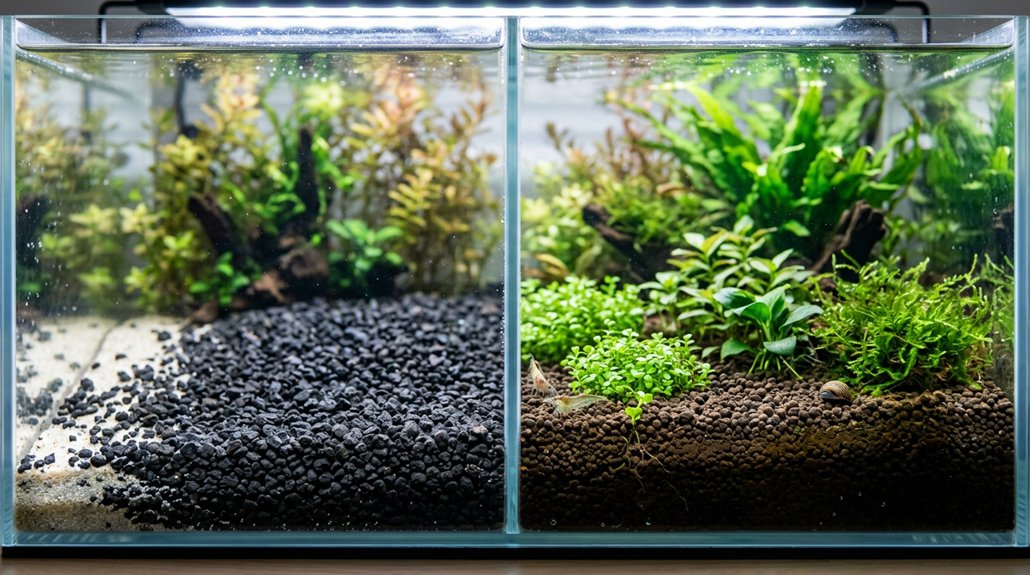
The biggest difference between inert substrate and aquasoil is simple: inert materials like gravel or silica sand stay chemically neutral and don’t feed plants, while aquasoil is made to nourish roots from day one. If you want low upkeep, inert choices are stable, but you’ll likely add root tabs or dose the water column. Aquasoil can boost growth fast, yet it may release ammonia early and shift pH or KH.
- Inert: long-lasting, easy to rescape, little nutrient support
- Aquasoil: porous, plant-focused, but softer and less durable
- Both: choose grain size that aids root oxygenation and your substrate microbiome
Pick inert if you value simplicity; choose aquasoil if you want stronger planted-tank performance and don’t mind more initial management.
Gravel as Aquarium Substrate
Gravel’s a practical, budget-friendly substrate that stays stable, won’t alter your water chemistry, and gives plant roots a solid base. If you’re keeping a planted tank, you’ll usually need to add nutrients with root tabs or liquid fertiliser since gravel doesn’t provide much on its own. Choose rounded, fine gravel for safety and plant growth, and plan on regular vacuuming to keep trapped waste from building up.
Gravel Benefits
A dependable foundation, aquarium gravel gives you an affordable, inert substrate that’s easy to find and easy to work with. It supports stable planting, anchors hardscape, and enhances aquarium aesthetics with colors from natural brown to bold black. Its gaps encourage bacterial colonization, helping your biological filtration establish. For planted tanks, choose 1–3 mm grain, ideally about 2 mm, so roots can spread without letting food sink too deeply.
- Good for root support
- Doesn’t add nutrients, so use root tabs or water-column fertilizer
- Heavier, fired-clay gravels usually plant better than very light mixes
You’ll get a practical base that suits many setups, but remember that gravel’s open structure can hold debris, so your scape benefits from thoughtful placement and balanced stocking.
Gravel Care
To keep gravel performing well in your tank, start with the right grain size and prep it properly before setup. Choose 1–3 mm gravel, with about 2 mm ideal for planted tanks, so roots can spread without compaction or obstruction.
| Step | Why it matters | Your move |
|---|---|---|
| Rinse | Cuts dust and cloudiness | Wash until water runs clear |
| Depth | Supports plants | Add 1–2 inches over tabs |
| Maintenance | Protects biology | Vacuum during water changes |
Good gravel aeration helps keep waste from settling and supports stable bacteria. For root entanglement prevention, avoid overly coarse stones. Skip carbonate gravels unless you need harder, higher-pH water. Fired-clay or porous options boost nutrient access; if you use inert gravel, add root tabs or dose the water column for hungry plants.
Is Sand Right for Your Tank?
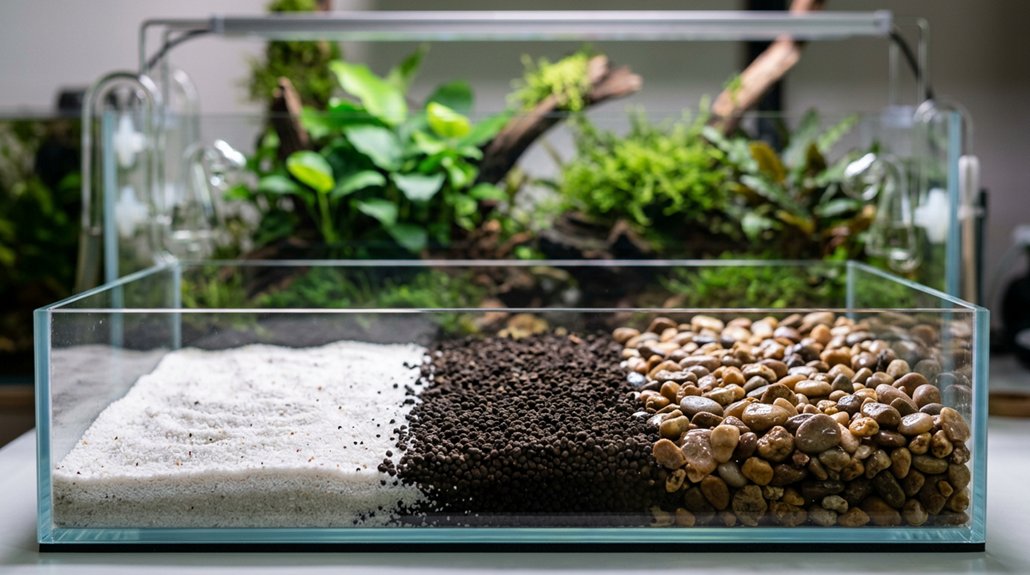
Sand can be an excellent choice if you want a natural look and have bottom dwellers like Corydoras or many shrimp, since its smooth texture is easy on delicate barbels and legs. It also offers strong shrimp suitability when you pick larger-grained natural sand instead of very fine white sand, which can compact.
- Keep sand maintenance simple with gentle vacuuming and weekly raking.
- Use natural colors; they hide detritus better than bright white.
- Shape it shallow in front and deeper toward the back.
You’ll need to watch for debris sitting on top, and very fine sand can trap anaerobic pockets. If you’re planting heavily, add root tabs or a nutrient layer underneath, because sand itself won’t feed roots.
When to Use Nutrient-Rich Soil
You’ll get the most benefit from nutrient-rich soil when you’re growing a planted tank with medium- to high-demand species like swords, crypts, or hygrophila, since it gives roots direct access to nutrients and can reduce how much you rely on water-column fertilizing. It’s also a smart choice if you want stronger early growth and easier plant establishment, but you should expect some initial cloudiness and plan for future nutrient top-ups as the substrate ages. Depending on the product, it can also affect pH and KH, so it’s worth checking how it’ll fit with your target water chemistry.
Best For Planted Tanks
For lush planted aquariums, nutrient-rich aquasoils are often the best starting point because they feed roots directly and support faster, stronger growth than inert substrates. If you’re building a dense aquascape, use substrate layering with root barriers to keep the cap tidy and nutrients where plants can reach them.
- Choose aquasoils for carpeting plants and heavy root feeders.
- Aim for 1–3 cm of fertilizing soil under a cap, or 3–5 cm total.
- Pick baked clay or mineralized soil, not raw potting mix, for cleaner, steadier performance.
Commercial options like ADA Amazonia, Tropica, or Fluval Stratum give you predictable results. They may need an early pre-cycle or frequent water changes, and when nutrients fade, root tabs can help you keep growth strong without rebuilding the tank.
Water Chemistry Effects
Nutrient-rich aquasoils can do more than feed roots—they can also change the water your fish and plants live in, so they’re best suited to tanks that benefit from softer, slightly acidic conditions. If you’re keeping Amazon swords, Cryptocoryne, or Vallisneria, you’ll like the extra root nutrition and less need for exact water-column dosing. Their pH buffering and ion exchange can lower KH and nudge pH down, which is great for many planted aquariums but not for African cichlids or other hard-water species. Inert gravel or sand won’t do this, so you’ll need root tabs or liquid fertilizer. New aquasoils may release ammonia, so rinse, cycle, and do early water changes. For mixed tanks, cap a thin soil layer with inert substrate.
Best Substrate for Planted Tanks and Bottom Dwellers
Balancing lush plant growth with the needs of bottom dwellers starts with choosing the right substrate: nutrient-rich aquasoils like ADA Amazonia or Tropica Soil, or a thin fertilizing soil layer under gravel, give rooted plants the best support in heavily planted tanks, while inert options such as 1–3 mm gravel or fired clay stay stable and easy to maintain but usually need root tabs or regular liquid fertiliser. For substrate aesthetics, choose grain size that matches your scape and fauna.
- Fine sand suits Corydoras and shrimp, but avoid ultra-fine silica.
- Mix 2 mm grains for easy planting and strong root grip.
- Use sloped aquasoil behind a capped front for depth and bioturbation impacts.
In mixed tanks, keep heavy granules away from delicate feeders and skip pea gravel, which can hinder rooting.
How to Keep Aquarium Substrate Clean
During weekly 20–30% water changes, you should vacuum the substrate gently so you can lift trapped detritus without uprooting plants or disturbing the bed too much. Use weekly siphoning with a gravel vacuum matched to your grain size; for fine sand, skim the surface instead of stirring it deeply. Focus on food, waste, and leaf litter in high-traffic spots near filters and décor. If you keep sand, rake it lightly each week for anaerobic prevention and to stop compaction. Remove and rinse filter floss, and check inlets or pumps for clogs from loose debris. In planted tanks, add root tabs instead of digging down. If you smell rot or see black patches, excavate and aerate the area right away.
Frequently Asked Questions
Is 2 Inches of Substrate Enough?
Yes, 2 inches can be enough for shallow plant roots or Corydoras, but you’ll need to watch water chemistry and add nutrients for heavier root feeders. For swords and crypts, 3–5 inches works better.
What Is the Easiest Substrate to Keep Clean in a Fish Tank?
Aquarium gravel’s your easiest clean choice—especially 2 mm coarse grain; debris falls through for easy siphoning. In a bare bottom setup, you’ll clean even faster, but gravel looks natural and still stays low-maintenance with weekly vacuuming.
How Much Substrate Should I Use for a 55 Gallon Tank?
For a 55-gallon tank, you’d use about 2–4 inches of substrate in planted areas, or 1–2 inches for fish-only setups. That gives good plant depth and supports bacterial colonization while staying manageable.
What Substrate to Use for a Tank?
You’ll want inert gravel for mixed tanks, natural sand for bottom-dwellers, nutrient-rich plant substrates for heavy planting, and biotope substrates like crushed coral only if you need harder, higher-pH water—don’t overthink it.
Conclusion
Choosing the right substrate comes down to your tank’s needs, not just looks. If you’ve heard that aquasoil is always best for planted tanks, that’s only partly true—it can be ideal for heavy plant growth, but inert gravel or sand may suit fish-only setups or bottom dwellers better. You’ll save time and avoid mistakes when you match substrate to your livestock, plants, and maintenance routine. The right base helps your aquarium stay healthier, cleaner, and easier to manage.