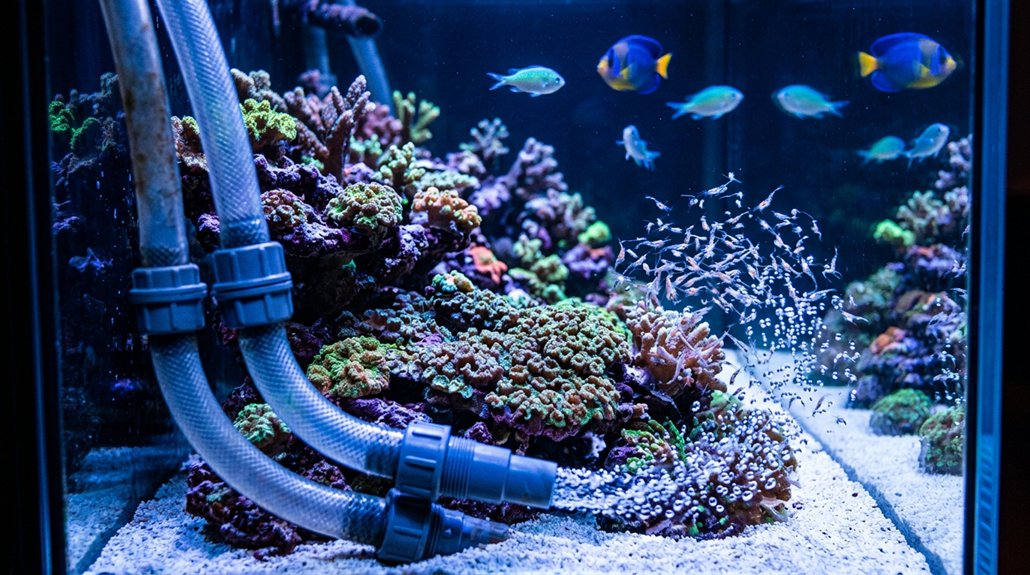
Saltwater aquariums aren’t inherently hard, but they do demand tighter control of salinity, temperature, feeding, and livestock choices than freshwater tanks. Nano reefs are not easier by default; their small water volume makes mistakes, evaporation, and leftover food affect water quality fast. Reef tanks don’t need zero nitrate or phosphate, just stable, measurable levels. Overfeeding, poor filtration, and skipped quarantine can quickly trigger algae or disease, and the details matter more than most myths suggest.
Key Takeaways
- Saltwater aquariums are not all hard to keep; beginner fish-only tanks with hardy livestock can be manageable.
- Small nano reefs are not easier; tiny water volume makes salinity, temperature, and nutrient swings happen faster.
- Zero nitrate and phosphate are not ideal; reefs need low, measurable nutrients for healthy coral growth.
- Overfeeding is never harmless; excess food quickly raises ammonia, nitrate, and phosphate, especially in small tanks.
- Water changes do not destroy biological filtration, and quarantine is far more reliable than garlic or UV for disease control.
Are Saltwater Aquariums Hard to Keep?
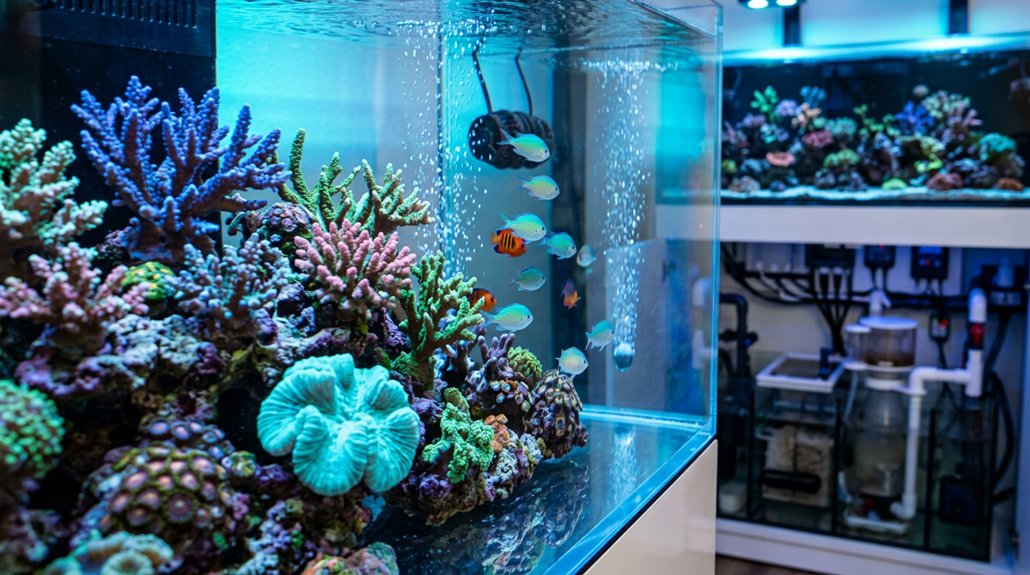
Saltwater aquariums aren’t inherently hard to keep; their difficulty depends mostly on the system you choose and how consistent you are. If you start with beginner setups, such as a fish-only tank with hardy livestock, you’ll need far less equipment and technical skill than for a mixed reef. Your main job is to keep salinity, temperature, lighting, and flow stable, then test regularly and maintain a fixed routine. Research species compatibility and adult size before you buy, because poor planning creates most problems. Quarantine new animals and let the tank cycle for 4–8 weeks before adding livestock. A small tank can work, but it demands tighter weekly control, while larger systems are more forgiving yet costlier. With patience, you can keep a thriving tank.
Why Nano Reef Tanks Aren’t Always Easier
Although nano reef tanks are small and cheaper to set up, they aren’t necessarily easier to maintain because the reduced water volume makes every change happen faster. In your system, evaporation, temperature shifts, and feeding errors can trigger rapid fluctuations within hours, not days. A teaspoon of leftover food can raise nitrate and phosphate far more in a nano than in a larger aquarium.
- A bare corner tank with coral frags
- A heater cycling beside a wavering thermometer
- Tiny flakes drifting through clear water
Because of space constraints, you may skip sumps, skimmers, or reactors, but then you’ll need strict weekly water changes and meticulous attention. Missed maintenance or dosing mistakes can push water quality down quickly. For beginners, a medium tank usually buffers mistakes better.
Do Reef Tanks Need Zero Nitrates and Phosphates?
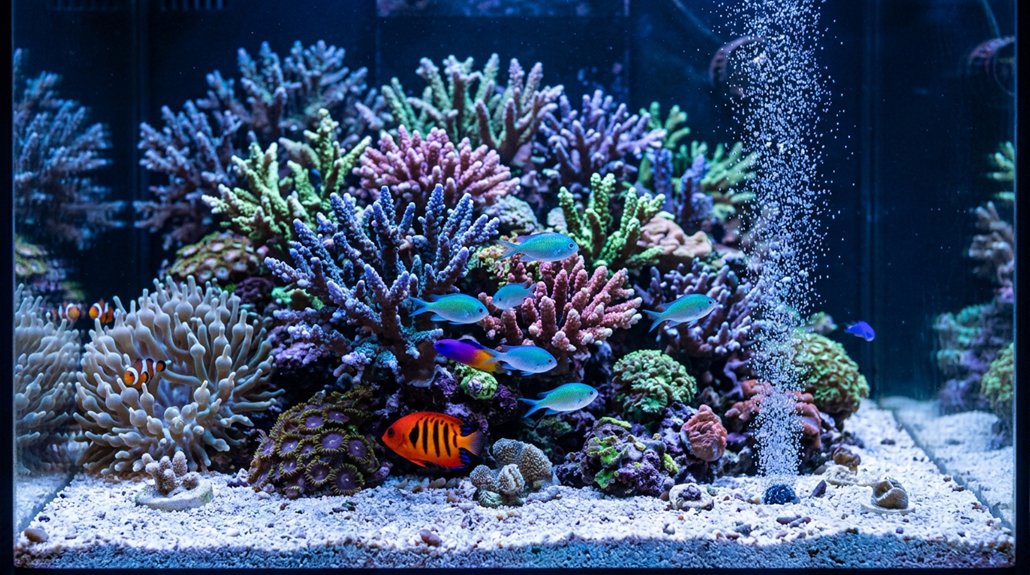
You don’t need zero nitrates or phosphates in a reef tank; very low but measurable levels, like 1–10 ppm nitrate and 0.02–0.1 ppm phosphate, usually support coral growth and microbial stability. If you drive these nutrients to absolute zero, you can stress corals, reduce calcification, and shift the tank toward imbalanced bacterial growth. Instead, you should test regularly and export nutrients gradually so you keep them stable in a low, non-zero range.
Why Zero Isn’t Ideal
Zero nitrates and phosphates aren’t the goal in a reef tank; very low, stable levels are. You’re managing nutrients, not erasing them. Nitrates and phosphates do feed nuisance algae, but trace amounts also support coral physiology and the reef microbiome. If you push them to undetectable levels, you can destabilize nutrient buffering, stress corals, and disrupt microbial balance.
- Clear water, not sterile water
- A skimmer pulling dark waste
- A refugium glowing under reef light
Use regular test kits to track trends, then adjust water changes, media, and export methods gradually. Sudden drops from chemical overuse can be more harmful than modest readings. Best practice is control, not elimination: keep nutrients low enough to suppress algae, but present enough to maintain stability.
Balanced Nutrients Support Growth
Balanced reef tanks don’t need zero nitrates and phosphates; they need consistently low, measurable levels that support coral growth without fueling nuisance algae. You’ll usually do better keeping nitrate around 1–10 ppm and phosphate around 0.02–0.10 ppm, because coral metabolism depends on nutrient synergy, not deprivation. Too little can starve corals, weaken bacterial balance, and reduce calcification. Too much, though, feeds algae, so your export strategy matters.
| Nutrient | Practical range | Effect |
|---|---|---|
| Nitrate | 1–10 ppm | Supports tissue growth |
| Phosphate | 0.02–0.10 ppm | Aids energy transfer |
| Excess | Rising trend | Encourages algae |
You should match export, bioload, and dosing so your tank stays productive, stable, and efficient.
Monitoring Nitrate And Phosphate
Track nitrate and phosphate as low, measurable nutrients rather than chasing absolute zero, because reef corals need a small, steady supply for metabolism, tissue growth, and bacterial stability. You should aim for roughly 1–5 ppm nitrate and 0.01–0.03 ppm phosphate, then verify with regular testing and sensor calibration. If readings fall to zero, you can starve corals, weaken calcification, and strip trace elements.
- A glassy reef with compact coral tips under crisp blue light
- A skimmer cup darkening with exported organics after a water change
- Chaeto tumbling in a refugium while numbers settle after seasonal fluctuation
Use protein skimming, refugiums, and measured dosing or media removal to prevent buildup. Watch tissue, color, and polyp extension; coral response tells you whether your nutrient balance is working.
Can Overfeeding Hurt Fish and Water Quality?
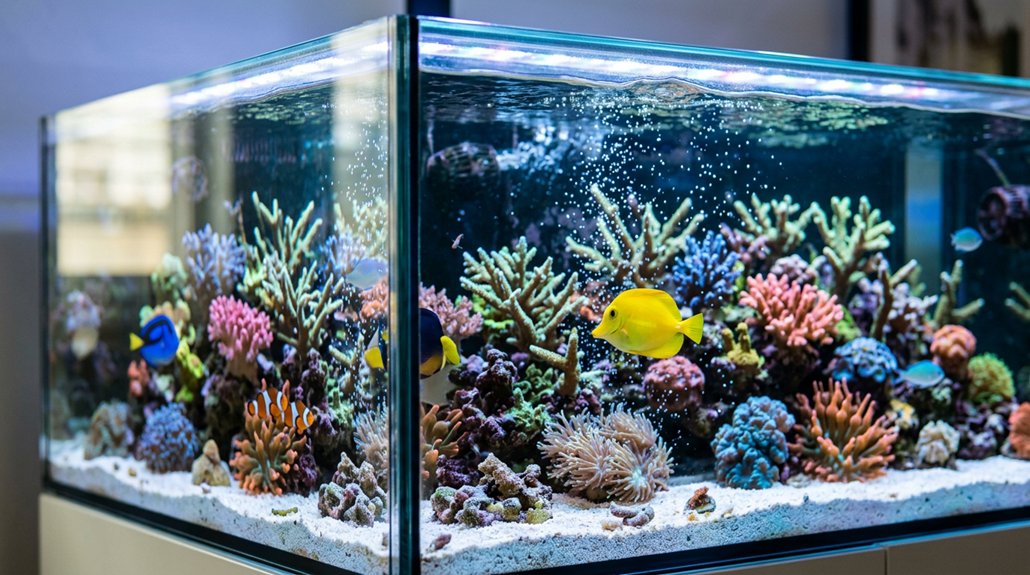
Overfeeding won’t make fish eat themselves to death, but it can quickly foul the water, because uneaten food and excess waste drive up ammonia and nitrate levels faster than your filtration can handle. You should match feeding frequency to species needs and tank size, offering only what’s consumed in 1–2 minutes once or twice daily. In a small nano tank, even a tablespoon of leftovers can raise nitrate within days; in a 90-gallon system, that same amount may be trivial. Prompt leftover removal limits decomposition, protects biological filtration, and reduces toxic spikes, algae growth, and stress. Even in a cycled aquarium, chronic overfeeding adds nitrate and phosphate, so monitor ammonia, nitrite, and nitrate, and keep up with water changes, detritus siphoning, and filter cleaning.
How Filtration and pH Really Affect Reef Tanks
Beyond feeding habits, reef stability depends heavily on how filtration and pH are managed. You won’t ruin biological filtration with routine water changes, because beneficial surface bacteria live on rock, sand, and filter media, not in the water itself. What you do need to watch is detritus in canister filters and pads; if you don’t clean them, trapped waste turns into nitrate.
- Protein skimmers strip dissolved organics before they decompose.
- Bright coral skeletons calcify better near pH 8.2–8.4.
- Dirty media can look like a harmless sponge, but it’s a nutrient factory.
Keep alkalinity and buffering steady so pH stays in the reef zone. In high-bioload tanks, protein skimmers become especially valuable for nutrient export.
Why Quarantine Beats Garlic and UV
When you add new fish, corals, or even live rock, quarantine is the control that actually blocks disease introduction, because it gives you 2–4 weeks of observation for common issues and longer isolation when parasites like ich are a concern. Garlic may boost appetite, but it doesn’t cure parasites or infections. UV sterilizers have clear UV limitations: they only affect free-floating stages, not organisms on fish, rock, or substrate.
| Method | What it affects | Reliability |
|---|---|---|
| Quarantine | Hitchhiking pathogens | High |
| Garlic | Appetite only | Low |
| UV | Water-column stages | Partial |
| Fallow tank | Ich cycle | High |
| Targeted treatment | Known pathogens | High |
Use quarantine benefits, then apply dips, baths, or medication. That’s how you protect your display tank and prevent outbreaks.
Frequently Asked Questions
What Are the Common Problems With Saltwater Aquariums?
You’ll commonly face ammonia spikes, unstable salinity, nutrient imbalances, algae blooms, Salt creep, disease introduction, equipment failures, and oxygen/pH swings. Small tanks magnify mistakes, so you’ve got to test, quarantine, and maintain consistently.
What Is Fish Tank Syndrome?
Fish tank syndrome is like a slow leak in your aquarium’s health—you’ll see stress, poor water quality, and disease risk. You’ll notice osmotic stress, saltwater ich, lethargy, gasping, and spikes in ammonia, nitrite, and nitrate.
Does an Aquarium Attract Negative Energy?
No, your aquarium doesn’t attract negative energy; feng shui myths aside, it’s mostly perception. You’ll avoid unpleasant effects by maintaining water quality, filtration, and cleaning, while spiritual cleansing isn’t scientifically necessary.
What Is a Fun Fact About Aquariums?
A fun fact about aquariums: you can spot ocean biomes in miniature, and your fish may recognize you for months. In exhibit design, proper salt mixes matter; 50% weekly changes keep nano tanks stable.
Conclusion
So, you can see that saltwater aquariums are not as mysterious as they seem. If you understand stability, stocking, and water chemistry, you can avoid many common mistakes. Don’t assume a nano tank is simpler or that zero nutrients are ideal. As the adage goes, “An ounce of prevention is worth a pound of cure,” so quarantine new livestock and manage feeding carefully to keep your reef healthy.