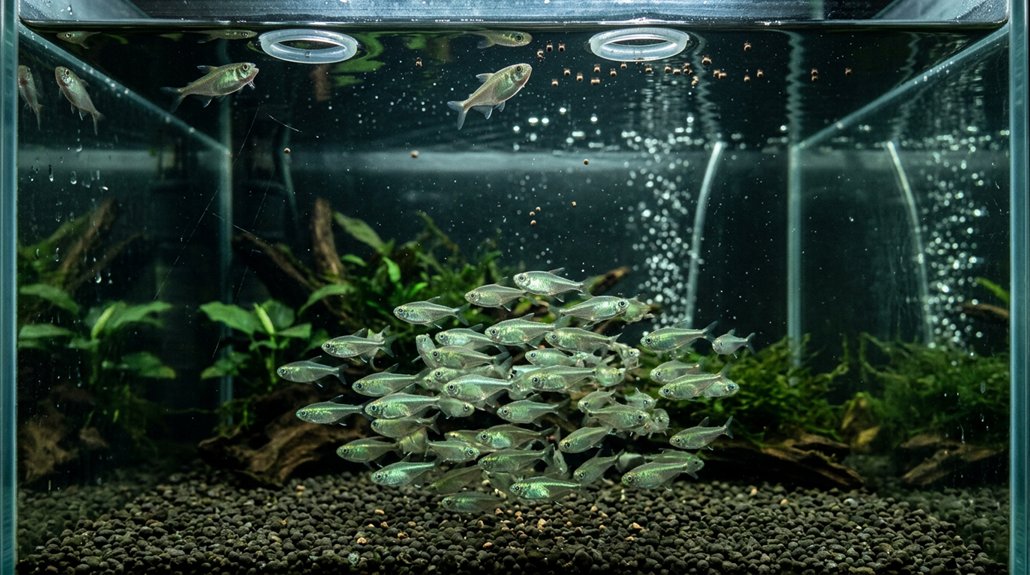
If your fish stop eating, you should treat it as a clinical sign, not a quirk. Check ammonia, nitrite, nitrate, pH, temperature, and oxygen first, because spikes or abrupt shifts can suppress appetite fast. Stress, transport, crowding, tankmate aggression, and low light can also shut feeding down. If they’re gasping, bloated, injured, or refusing food for more than 3–5 days, isolate them and assess for parasites or disease. More details can clarify what’s driving it.
Key Takeaways
- Poor water quality—especially ammonia, nitrite, or high nitrate—often causes fish to stop eating quickly.
- Temperature swings, low oxygen, or sudden lighting changes can suppress appetite and stress fish.
- Aggression, overcrowding, transport, and handling stress commonly reduce feeding, especially in new or quarantine tanks.
- Persistent refusal with lethargy, gasping, weight loss, lesions, or abnormal feces may signal disease or parasites.
- Test water immediately, stabilize conditions, and isolate fish if not eating for more than 3–5 days.
Common Reasons Fish Stop Eating
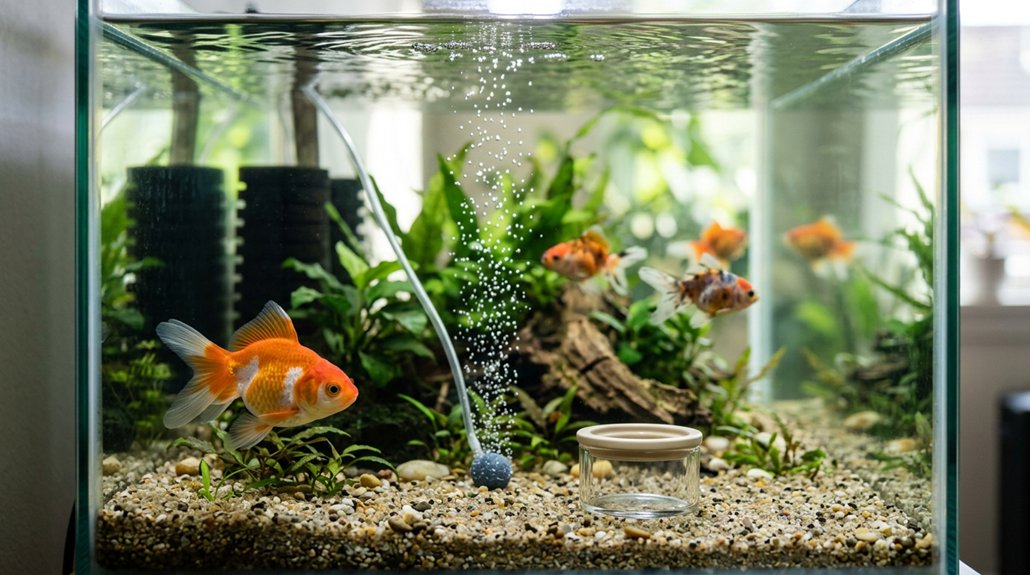
Fish often stop eating when water quality declines, especially if ammonia or nitrite spikes or nitrate remains elevated, because gill irritation and systemic stress can suppress appetite within days. You’ll also see reduced intake when temperatures swing outside the normal range; below about 22°C, or in warm water with low dissolved oxygen, metabolism slows and feeding drops. Stress from transport, sudden parameter shifts, handling, or aggressive tankmates can transiently inhibit digestion, so a new or disturbed fish may refuse food for 24–72 hours. Disease, parasites, and gill or mouth injury commonly cause prolonged anorexia, with lethargy, abnormal feces, or labored breathing. Overcrowding, poor hiding cover, unsuitable hardness or pH, and low-quality food can disrupt your fish’s feeding rhythm and seasonal cycles, leading to selective refusal.
Check Water Quality First
Before assuming a behavioral or dietary cause, check the water quality first, because ammonia and nitrite spikes can injure the gills and suppress appetite quickly, even when other symptoms are subtle. You should begin with ammonia testing and nitrite monitoring; if either value is above 0 ppm, treat the tank as unsafe and correct it immediately. Also verify nitrate, since persistent levels above 20–40 ppm, depending on species, often track with reduced feeding. In uncycled or overloaded quarantine systems, recheck kits, recalibrate them, and consider a partial water change if fish still refuse food. Confirm stable, species-appropriate temperature, because abrupt swings can impair appetite. Finally, inspect aeration, flow, and filter load; low dissolved oxygen can make swallowing uncomfortable and cause food refusal.
Stress, Acclimation, and Tankmates
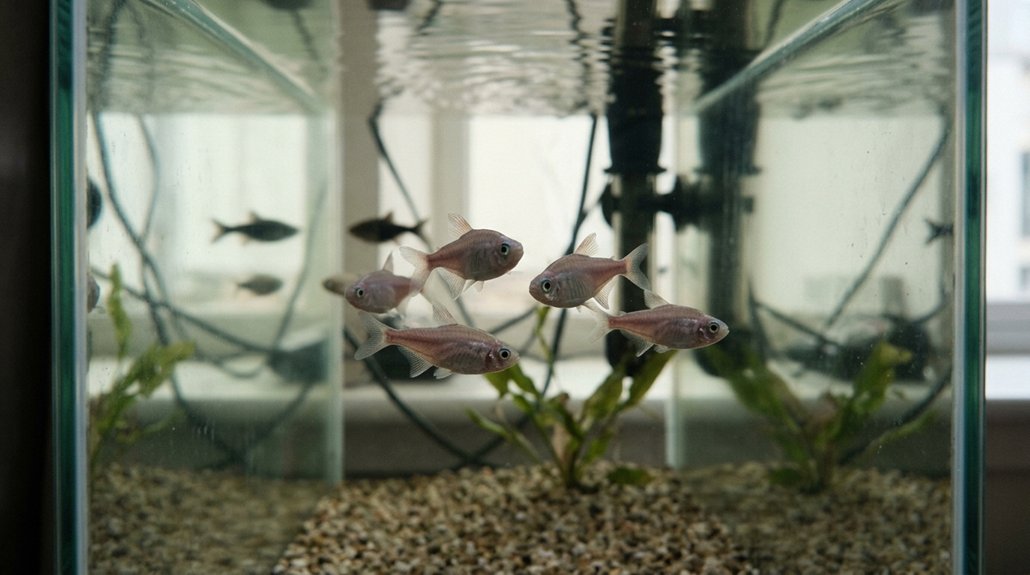
If you’ve just moved the fish or changed its environment, acclimation stress can suppress feeding for 24–48 hours or longer because its physiology shifts toward survival, not digestion. Aggressive or territorial tankmates can also trigger chronic harassment, which often reduces appetite even when water quality is normal. During this period, you should minimize handling, provide cover, and watch for chasing, nipping, or repeated disturbance.
Acclimation Stress
Acclimation stress commonly suppresses appetite after shipping or a recent move, because the fish is prioritizing survival over digestion; a 24–48+ hour feeding delay is normal, especially after extended fasting when gut motility slows. You should expect transient anorexia after temperature, pH, or hardness shifts. Behavioral imprinting can also alter feeding cues, and nocturnal feeding may resume before daytime interest returns.
| Trigger | Effect | Response |
|---|---|---|
| Shipping | Stress-mediated refusal | Wait 24–48+ h |
| Parameter shift | Physiologic instability | Match slowly |
| Small quarantine | Security deficit | Add hides |
| Lighting mismatch | Reduced confidence | Standardize light |
| Fasting | Slowed digestion | Feed later |
Minimize disturbance, stabilize chemistry, and avoid immediate feeding. Offer food the morning after arrival; if you see normal swimming and reduced hiding, appetite often returns once the fish feels secure.
Aggressive Tankmates
Aggressive tankmates can suppress appetite by keeping a fish in a constant stress state, especially when territorial males, larger established individuals, or incompatible species chase, pick, or block access to food. You’ll often see elevated cortisol, reduced foraging, and delayed feeding after territorial displays or male dominance conflicts. Newly added fish may also refuse food for 24–48 hours after transport or parameter shifts, but persistent refusal suggests social stress. Overcrowding and sparse cover worsen this by increasing dominance pressure and hiding. Frequent netting, tapping, or bright lights can trigger flight responses, so feeding stops or food is spat out. Watch for fin damage, male-to-male fights, and continuous hiding. If these signs persist, separate offenders or reconfigure the tank.
Water Temperature, Oxygen, and pH
Water temperature, dissolved oxygen, and pH are common causes of reduced appetite in aquarium fish. If your tank runs below about 22°C, many tropical species slow feeding; if it’s too warm, thermal stress can suppress intake.
- Watch for temperature fluctuations and stabilize them with a reliable heater and thermostat.
- In warm water, oxygen depletion is more likely because dissolved oxygen drops; fish may gasp, spit out food, or stop eating to breathe.
- Check pH swings and water hardness; use gradual pH buffering, not large chemical doses.
You should test temperature, dissolved oxygen, ammonia, nitrite, nitrate, and pH together when appetite falls. Correct deviations slowly, since abrupt shifts can trigger short-term anorexia and worsen overall stress.
Illness, Parasites, and Injuries
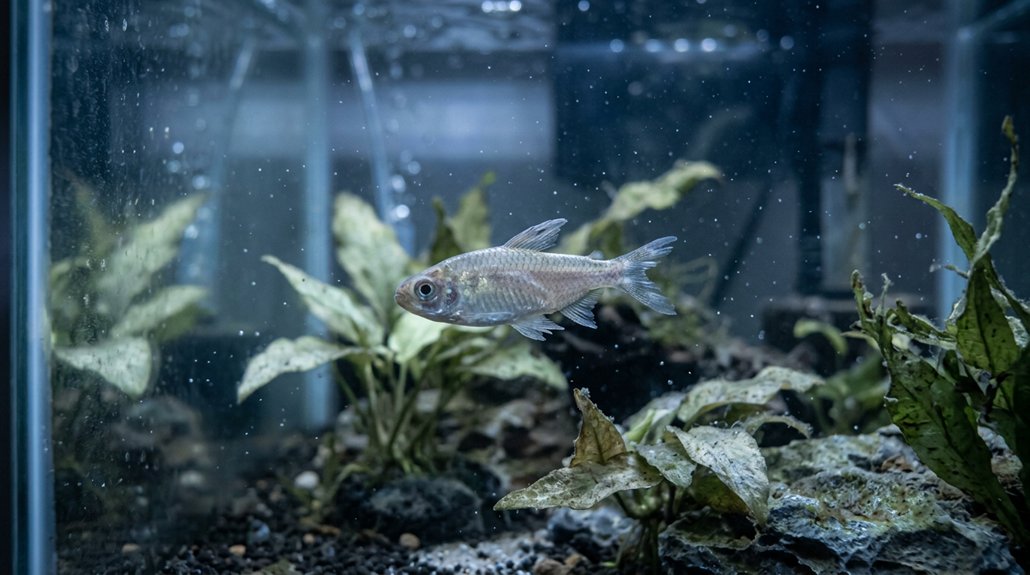
If your fish has gill infection, gill injury, or ammonia-related burn, it may breathe rapidly, act lethargic, and stop eating because swallowing hurts. Internal parasites and systemic disease can cause progressive appetite loss, weight loss, abdominal distension or a hollow body, and abnormal feces. Mouth, jaw, gut, or skin injuries and external parasites can also disrupt feeding by causing pain, irritation, obstruction, or stress.
Gill Infections And Injury
Gill infections or injuries can quickly suppress appetite because damaged gill tissue becomes painful and less efficient at gas exchange. You may see rapid breathing, surface gulping, or food refusal. Bacterial, fungal, or fluke-related irritation can progress to gill necrosis, while ammonia burns and chemical exposure make swallowing uncomfortable.
- Check respiration and gill color for pallor, excess mucus, frayed edges, or visible parasites.
- Perform parasite detection and water tests for ammonia, nitrite, and pH to identify the cause.
- If you’ve handled or fought fish, offer softer, smaller foods and monitor for secondary infection.
Treat the underlying lesion or water-chemistry problem promptly; until you do, appetite usually won’t normalize.
Parasites And Internal Disease
When gill irritation isn’t the whole story, reduced appetite often points to parasites or internal disease. You may see hidden protozoa such as Hexamita, with a hollow belly, weight loss, and chronic wasting; metronidazole is often used. Camallanus may appear as red threadlike worms and usually needs fenbendazole or levamisole. If you notice labored breathing, lethargy, or persistent refusal to eat, consider systemic bacterial disease or internal bacterial overgrowth; isolation and appropriate broad-spectrum antibiotics, such as Maracyn 2, can be indicated after diagnosis. Mouth, throat, or gill injury can make swallowing painful, so food gets spit out. Bloating, abnormal feces, and sudden anorexia suggest obstruction or heavy infestation; Epsom-salt baths and targeted antiparasitics may help.
When Fish Reject Food
Food refusal in fish is usually a sign of acute stress or an underlying health problem, not a feeding issue by itself. You should read visual cues and feeding rhythms against recent changes in the tank.
Food refusal in fish usually signals stress or illness, so interpret appetite changes alongside recent tank changes.
- Transport, sudden parameter shifts, aggression, or frequent disturbance can trigger survival mode, so new or stressed fish may stop eating.
- Ammonia, nitrite, elevated nitrate, and temperature extremes irritate gills, depress metabolism, and suppress appetite.
- Illness, mouth or gill injury, parasites, and some medications can make food painful or unappealing.
If one fish stops eating while others feed, isolate the pattern clinically. Persistent refusal with lethargy, gasping, or visible lesions isn’t normal and needs diagnostics, not guesswork.
How to Get Fish Eating Again Safely
Restoring appetite starts with correcting the environment: test ammonia, nitrite, nitrate, pH, and temperature immediately, and if ammonia or nitrite is above 0.25 ppm or nitrate exceeds 40 ppm, do a 25–50% water change and repeat daily until levels are safe. You should then reduce stress in a quiet hospital tank with matching water parameters, a bare bottom, gentle sponge filtration, hiding places, and dim light. Use strict feeding schedules: offer tiny portions of live or frozen brine shrimp, daphnia, or thawed bloodworms 3–5 times daily. If constipation seems likely, use one Epsom salt bath or peeled cooked pea halves once. If anorexia lasts >3–5 days, or you see labored breathing, lesions, weight loss, or abnormal feces, isolate and seek diagnostics; appetite stimulants or medicated food may be warranted.
Frequently Asked Questions
What Should I Do if My Fish Is Not Eating?
Test water quality immediately, then isolate the fish if needed. Check tankmates behavior, reduce stress, and offer live or frozen foods. If it doesn’t eat within 48–72 hours, seek diagnostic evaluation.
How Long Can Your Fish Go Without Eating?
Most adult fish can go 1–2 weeks without food; juveniles only 24–72 hours. Your temperature tolerance and fasting schedules matter, and you should intervene if weight loss, lethargy, or abnormal breathing appears.
What Does It Mean if a Fish Is Not Eating?
It usually means you’re seeing stress indicators: poor water, disease, or temperature swings. Like a dimmed lantern, your fish’s appetite signals trouble. Check social dynamics, oxygen, pH, and food quality; it isn’t normal if persistent.
How to Encourage Fish to Eat?
You can encourage fish to eat by stabilizing water temp, then using a consistent feeding schedule with 3–5 tiny meals daily, varied live or frozen foods, reduced flow, and added hiding cover to lower stress.
Conclusion
If your fish stop eating, don’t assume the food is the problem; often, the water is. Clear water can still be chemically unstable, and a calm tank can still hide stress, parasites, or injury. Check temperature, oxygen, and pH first, then observe behavior closely. You can’t force feeding back safely, but you can remove the cause. With prompt correction and careful monitoring, you’ll often see refusal turn into normal feeding again.