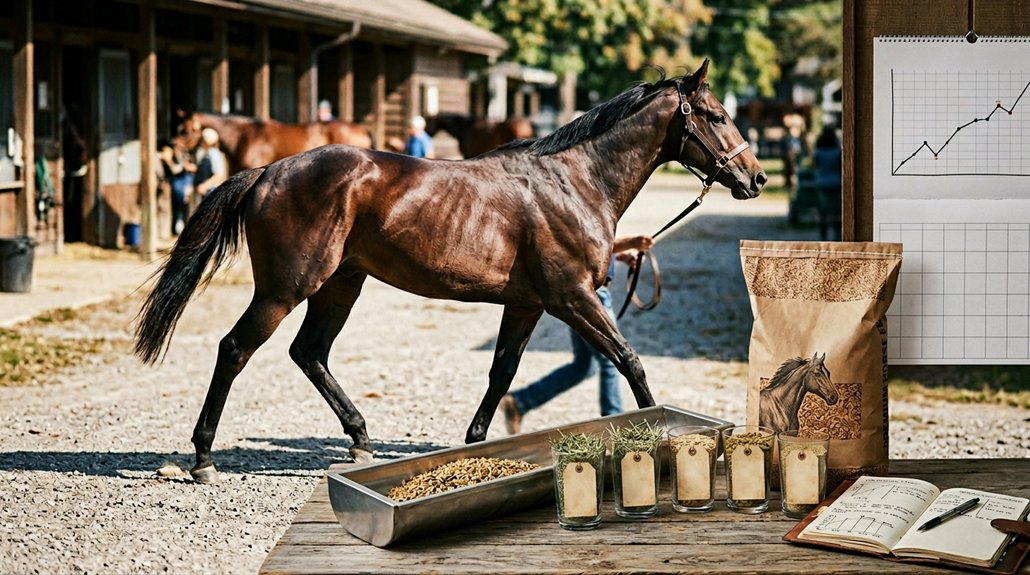
Your horse’s diet is vital for its performance and health. Prioritize fiber-rich forage to align with natural grazing instincts, preventing sugar spikes and related health issues. Avoid high-grain diets as they can lead to colic, ulcers, and behavioral issues. Guarantee a balance of essential nutrients, adequate hydration, and electrolytes to support muscle function and recovery. Veterinary consultations are key for personalized nutrition plans. Explore further to discover the nuances of optimizing your horse’s diet for peak performance.
Key Takeaways
- A forage-first diet stabilizes energy levels and supports digestive health, reducing the risk of metabolic disorders and behavioral issues.
- High-grain diets can cause sugar spikes, hyperactivity, and increase the risk of colic, gastric ulcers, and laminitis.
- Essential amino acids and proper hydration are critical for muscle recovery, energy consistency, and overall performance.
- Nutritional deficiencies manifest as weight loss, dull coat, irritability, muscle soreness, and compromised hoof condition.
- Veterinary consultations ensure tailored nutritional plans to prevent deficiencies and optimize equine health and performance.
Understanding Why Nutrition Matters for Horse Performance
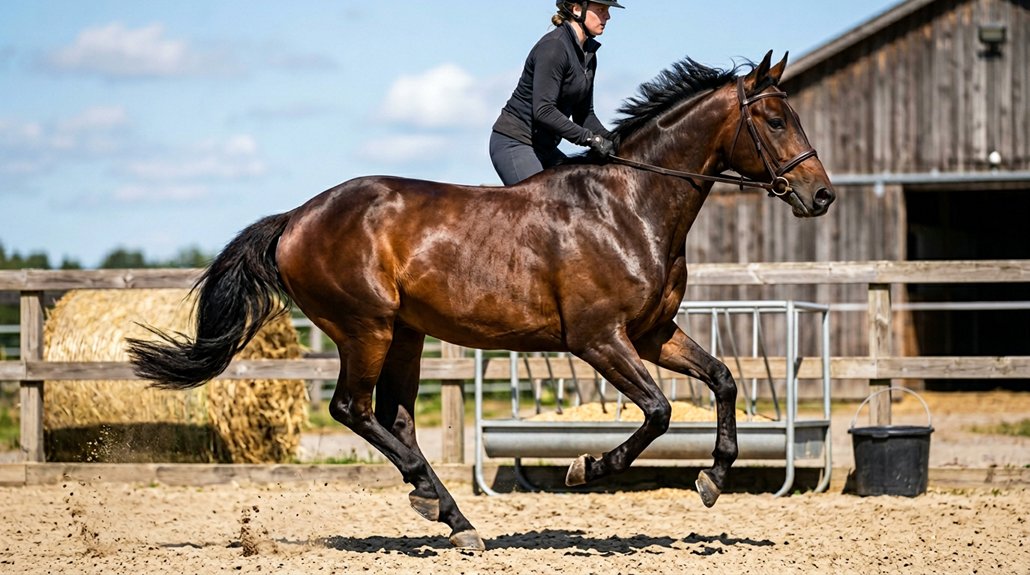
When it comes to enhancing a horse’s performance, understanding the pivotal role nutrition plays is essential. You need to prioritize the right nutritional sources and feeding schedules to guarantee your horse thrives. Over half of a horse’s diet should consist of fiber to aid digestion and maintain stable energy levels. High-grain diets often cause sugar spikes, leading to hyperactivity and anxiety, so privileging forage-first can stabilize behavior. Protein isn’t just about muscles; essential amino acids aid in recovery and development, especially for hardworking equines. Hydration, often overlooked, supports digestion and stamina, necessitating up to 15-20 gallons daily. Remember, nutritional deficiencies manifest in lethargy and irritability, highlighting the need for a rounded vitamin and mineral intake to sustain peak performance.
Balanced Diets vs. Grain Overload: What’s the Impact?
When you’re managing your horse’s diet, understanding the impact of their natural grazing habits and the risks of grain overfeeding is essential. Horses thrive on a forage-first diet that mimics their constant grazing instincts, preventing spikes in sugar and starch that can lead to laminitis and metabolic disorders. Conversely, high-grain diets disrupt digestion, increase the risk of colic and gastric ulcers, and may lead to behavioral issues from sugar-induced excitability.
Grazing Habits Importance
Balanced diets are crucial for equine health, contrasting greatly with the detrimental effects of grain overload. Effective grazing strategies are important in maintaining a horse’s digestive health and overall well-being. By allowing your horse to consume small, consistent portions of forage types throughout the day, you support a natural dietary rhythm that prevents digestive disturbances. In contrast, high-grain meals can spike sugar and starch levels, disrupting equilibrium. With a forage-first approach, at least 50% of the diet’s fiber content stabilizes energy levels and fosters gut health. Grazing habits that emphasize varied forage types, combined with proper hydration, help mitigate risks like colic and laminitis, ensuring your horse remains healthy and performs at its best. Always, provide clean, fresh water to maintain your horse’s health.
Risks of Grain Overfeeding
A forage-centered diet supports equine health, yet an imbalance caused by excessive grain can severely disrupt a horse’s digestive stability. You might notice severe digestive issues like colic arising from grain toxicity due to their systems being evolved for constant fiber intake. Overfeeding grain can elevate your horse’s risk of gastric ulcers, as excessive starch increases stomach acid, damaging gastrointestinal health. Additionally, large grain meals may cause sudden spikes in sugar and starch, raising laminitis risk, consequently crippling your horse’s hooves. Hyperactivity follows these sugar fluctuations, impacting behavior and performance unfavorably. To mitigate these risks, adhere to strategic feeding schedules, keeping grain portions minimal and dispersed throughout the day. This mimics natural grazing, preserving your horse’s health and performance.
Nutritional Balance Benefits
While maintaining an ideal diet for your horse, the importance of nutritional balance cannot be overstated. Implementing effective nutritional strategies, with a focus on forage benefits, greatly enhances your horse’s performance. A balanced diet that prioritizes fiber supports energy maintenance and guarantees a steady demeanor rather than erratic behavior seen with grain overload. Feed frequency is vital; offering hay or pasture intermittently throughout the day mimics natural grazing and optimizes health by preventing metabolic issues like laminitis. This routine promotes digestion improvement, reducing risks such as colic and gastric ulcers often associated with large grain meals. Ultimately, a diet with nutrients from forage maximizes digestion, offering unparalleled performance enhancement and health optimization for your horse’s training and competitions.
Identifying Symptoms of Nutritional Deficiencies in Horses
When evaluating a horse’s health, it’s essential to recognize signs of nutritional deficiencies that can impair performance. You’ll want to pay attention to symptoms like weight loss, a dull coat, or lethargy, which may indicate energy or vitamin deficiencies. Additionally, hoof issues, dry skin, and poor coat condition can point to mineral imbalances or a lack of essential nutrients, necessitating a detailed dietary review.
Identifying Energy Deficiency Signs
Even subtle signs of energy deficiency in horses, such as low energy or lethargy, can drastically affect their performance, primarily due to insufficient caloric intake or poor-quality forage. Recognizing energy deficiency signs is essential for maintaining your horse’s health and performance. Equine behavioral changes like irritability and nervousness may surface, often linked to high-sugar diets or insufficient magnesium levels. These irritabilities can disrupt training and competition performance. Additionally, muscle soreness or stiffness suggests inadequate protein or amino acid intake, impeding muscle repair and recovery. Don’t overlook a dull coat or excessive shedding, often hinting at nutrient deficits affecting overall well-being. Regularly assess hoof condition, as issues like cracks can indicate nutrient shortfalls, impacting mobility and overall function.
Recognizing Vitamin Deficiency Indicators
Poor overall condition in horses can often be traced back to vitamin deficiencies, which manifest through various physical and behavioral symptoms. Effective vitamin absorption and nutrient synergy are essential for maintaining a horse’s health and performance. Look for these signs:
- Low energy levels or lethargy may hint at insufficient calorie intake, affecting vitamin absorption.
- A dull coat with excessive shedding suggests a lack of vitamins A, E, or biotin, vital for skin and coat health.
- Behavioral changes like irritability could point to nutritional imbalances impacting nervous system support.
- Muscle soreness in working horses often results from inadequate nutrients needed for proper muscle function.
- Hoof problems, such as cracks, can indicate a need for specific vitamins aiding in hoof strength.
Monitoring these indicators can help optimize your horse’s nutritional regime.
Detecting Mineral Imbalances
While managing a horse’s diet, consider the impact of mineral imbalances, which can drastically undermine your horse’s health and performance. Symptoms like irritability and nervousness may point to magnesium deficiency, often linked to high-sugar diets. Low energy or lethargy could suggest insufficient caloric intake or poor forage quality, highlighting potential nutrient deficiencies. Muscle soreness often indicates inadequate protein or essential amino acids. A dull coat or excessive shedding suggests possible mineral deficiencies, affecting overall health. Hoof problems such as cracks often result from copper and zinc deficiencies. To detect these issues, mineral testing is crucial. Based on results, make necessary dietary adjustments to optimize health. Monitoring these signs guarantees your horse maintains peak performance and well-being.
Why Forage-First Diets Keep Energy Levels Stable
How does a forage-first diet contribute to maintaining stable energy levels in horses? A diet based on high-quality forage capitalizes on key forage characteristics to guarantee steady energy provision. The essential fiber benefits make up about 50% of energy needs, supporting ideal digestive health and promoting energy consistency. Horses on forage diets often exhibit behavioral calmness due to minimized sugar spikes, in contrast to high-starch diets. Grazing patterns that reflect natural behaviors facilitate consistent nutrient absorption and equine well-being. Incorporating small, frequent feedings aligns with their instinctual feeding frequency, further stabilizing energy release and minimizing digestive issues.
- Ideal digestive health supports energy balance.
- Natural grazing leads to behavioral calmness.
- Fiber-rich diets sustain energy consistency.
- Frequent feedings align with horse instincts.
- Prevents spikes and health complications.
Adapting Horse Diets for Age, Activity, and Health
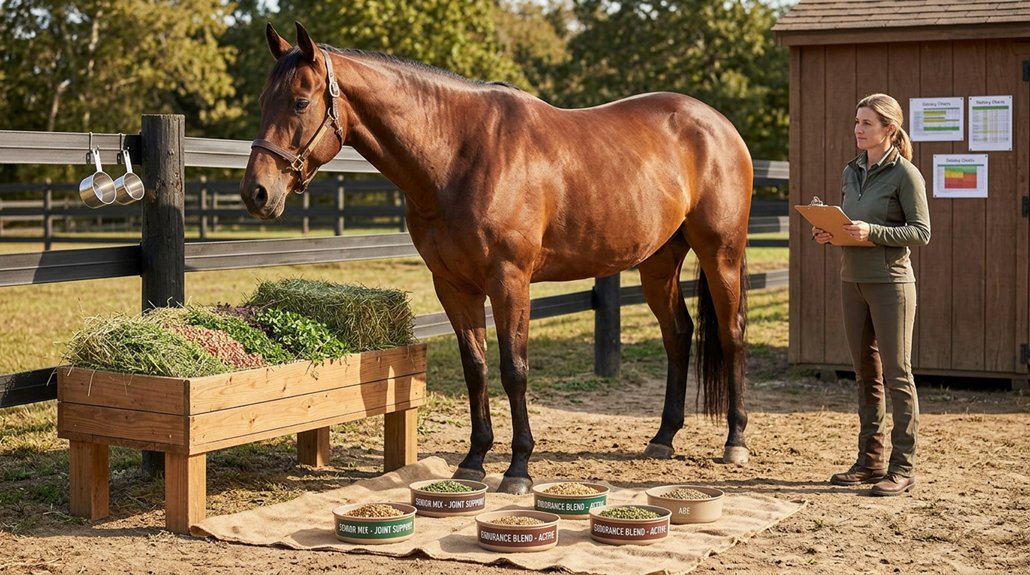
A horse’s dietary needs can change markedly based on age, activity level, and health status, demanding a tailored approach that optimizes performance and well-being. Senior nutrition emphasizes high-fiber, low-sugar feeds tailored for dental issues. As activity increases, adjust feed quality and nutrient density to match energy needs. Health concerns like gastric ulcers necessitate custom diets with specific forage types to bolster digestive health. Seasonal changes also impact nutritional requirements, where cold months may demand higher caloric intake. A precise evaluation of individual horses guarantees an ideal diet.
| Age & Needs | Suggested Diet Options |
|---|---|
| Senior | High-fiber, soft pelleted feeds |
| High Activity | Energy-dense feeds, increased calorie intake |
| Gastric Ulcers | Calcium-rich forage, small frequent meals |
| Cold Weather | Increased calories to meet higher energy needs |
Customizing diets enhances overall well-being.
Hydration and Electrolyte Essentials for Optimal Health
Proper hydration and a balanced electrolyte intake are essential for a horse’s peak health and performance, especially under conditions of strenuous activity. You’ve got to make sure horses drink 15-20 gallons of water daily, especially when working hard. Enhancing hydration strategies by providing water at 20°–26°C (68°–78°F) guarantees they’ll stay hydrated. Electrolyte supplementation is vital when they sweat, as it replenishes essential minerals like potassium, sodium, chloride, and calcium. Without it, muscle function and hydration suffer, potentially causing muscle cramps or colic. Consider creating a homemade electrolyte mix using these components:
- Table salt
- “Lite” salt
- Bone meal or calcium carbonate
- Blackstrap molasses
- Regular administration during strenuous activities
These steps support peak performance and health, preventing dehydration hazards.
Post-Exercise Nutrition Tips for Recovery
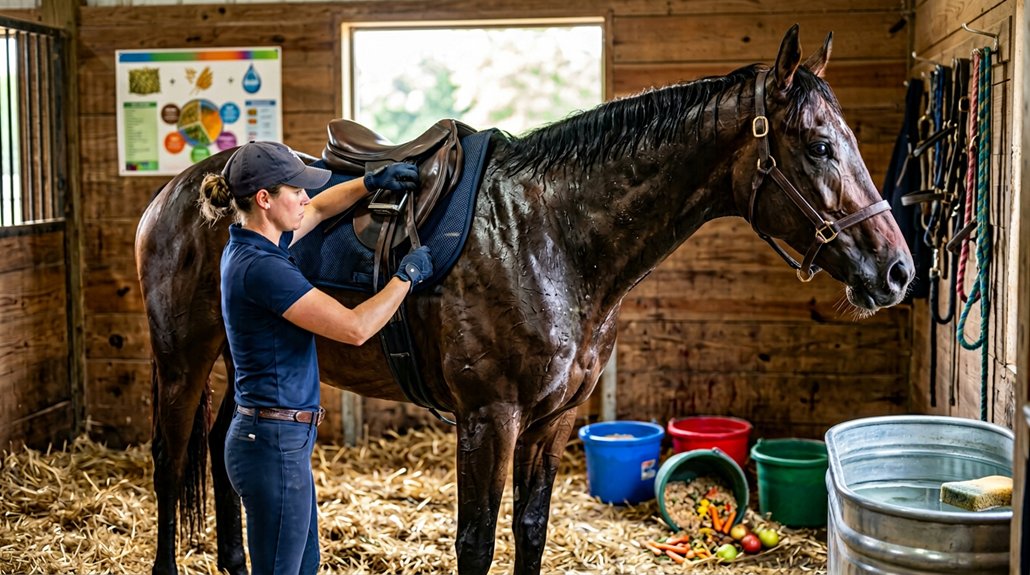
After a strenuous workout, ensuring your horse receives appropriate nutrition is vital for recovery and performance sustainability. Implement effective recovery strategies, starting with cooling protocols to normalize body temperature. Once cooled, strategically manage grain timing by offering a small amount (1 lb. or less) to replenish energy stores. Maintaining electrolyte balance is important; administer a homemade supplement of 30-60 ml orally per hour during exercise to replace minerals lost through sweating. Providing access to quality forage like hay or pasture supports digestive health and encourages gradual recovery. Prioritize frequent water availability as hard-working horses may require 15-20 gallons daily to prevent dehydration.
| Aspect | Recommendation | Purpose |
|---|---|---|
| Grain Timing | 1 lb. post-exercise, post-cooling | Replenish energy stores |
| Electrolyte Balance | 30-60 ml orally/hour | Replace lost minerals |
| Cooling Protocols | Cool before feeding | Normalize body temperature |
| Water Availability | 15-20 gallons/day | Prevent dehydration |
| Forage Intake | Quality hay or pasture | Support digestive health |
Why You Should Consult Your Vet About Your Horse’s Diet
Numerous benefits come from consulting your veterinarian about your horse’s diet, as their expertise is pivotal in crafting a tailored nutrition plan. Through thorough dietary assessments, vets address factors like age, workload, and health conditions to guarantee nutritional needs are met. Relying on veterinary recommendations prevents deficiencies or excesses; both can be detrimental to your horse’s health.
Consulting your veterinarian ensures your horse’s nutritional needs are precisely met, preventing detrimental deficiencies or excesses.
- Customized feeding plans guarantee superior nutrition tailored to your horse’s unique needs.
- Regular check-ups track body condition, prompting necessary dietary changes.
- Guidance for performance horses maximizes energy levels and recovery.
- Management of health issues like metabolic disorders maintains well-being.
- Proactive health management through veterinary oversight mitigates risks like laminitis or hyperactivity.
Ultimately, veterinary guidance is key for sustaining your horse’s long-term wellness.
Frequently Asked Questions
What Is the 1/2/3 Rule for Horses?
The 1/2/3 rule advises balancing a horse’s feeding schedule with 1% body weight in forage, 0.5% in concentrate, and up to 0.3% in grain, ensuring nutrient balance essential for digestive health and ideal performance.
What Is “I Love You” in Horse Language?
In horse language, “I love you” often translates to nuzzling or nickering softly. You’ll notice an emotional connection through their relaxed body language and willingness to stay close, highlighting their unique communication and bonding methods with you.
What Smells Do Horses Love?
Horses love scents like fresh grass, apples, and hay, which align with their food preferences. You might think these are too common to be favorites, but they’re effective in training rewards and provide calming aromas, enhancing performance.
What Is the Best Diet for a Performance Horse?
You’ll want a diet that prioritizes fiber, maintaining eating patterns with small meals. Balance nutrients by including quality hay, grains, and proteins, while monitoring water and electrolytes. Evidence supports balanced diets for peak performance and health.
Conclusion
In summary, your horse’s performance and health are intricately tied to its diet—like a well-tuned instrument needing the right notes to create harmony. Always prioritize forage-first diets to maintain steady energy and prevent nutritional deficiencies. Adjust diets based on age, activity, and health, ensuring hydration and electrolyte balance for peak performance. Don’t hesitate to consult your vet; they’re invaluable guides in this journey. Invest in proper nutrition and watch your horse thrive, both in health and performance.